






Popular
What is the significance of the haunted house in the first episode?
How does the character of the mother cope with her family's haunting experiences?
What role does the character of the father play in the family's haunting?
What specific events trigger the family's haunting in the series?
How do the children react to the haunting, and what does it reveal about their characters?
Should I watch it?
Ask Your Own Question

What is the plot?
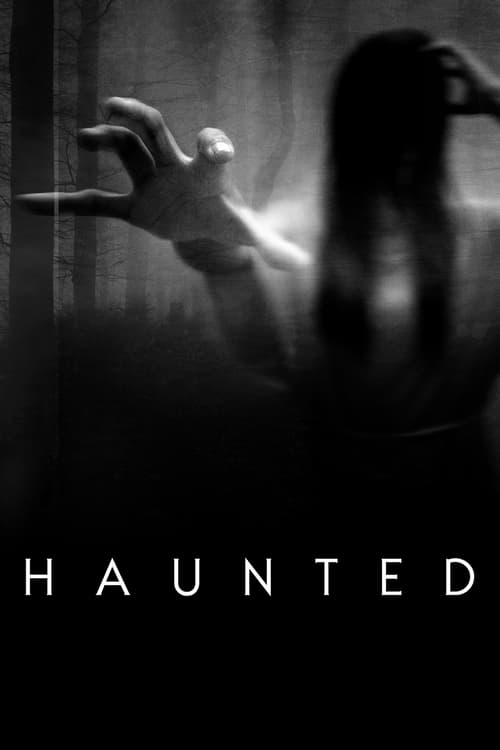
"Haunted" is an anthology series that features different stories in each episode, focusing on real-life experiences of individuals who have encountered supernatural events. The first episode, titled "The Haunting of the Houghton House," follows a family that moves into a new home with a dark past.
The story begins with the Houghton family, consisting of parents, a teenage daughter named Claire, and a younger son named Max, moving into an old, seemingly charming house. As they unpack, Claire feels an unsettling presence in the house, but her parents dismiss her feelings as typical teenage angst. The family is excited about their new beginning, but Claire's unease grows as she starts to notice strange occurrences, such as cold spots and flickering lights.
One night, while exploring the attic, Claire discovers an old trunk filled with photographs and letters from the previous owners. Among the items, she finds a diary belonging to a girl named Sarah, who lived in the house decades earlier. The diary reveals that Sarah experienced similar feelings of dread and isolation, hinting at a tragic event that occurred in the house. Claire becomes obsessed with uncovering the truth about Sarah's life and the dark history of the Houghton House.
As Claire delves deeper into the diary, she begins to have vivid nightmares about Sarah's life, experiencing her emotions and fears. These dreams intensify, leading Claire to feel a strong connection to Sarah. Meanwhile, Max starts to see apparitions of a young girl in the house, which terrifies him. He confides in Claire, who believes that the girl is Sarah's spirit trying to communicate.
The family's dynamics begin to shift as Claire becomes more withdrawn, consumed by her investigation. Her parents grow concerned about her mental state, especially when she starts to act out and argue with them. They suggest that she needs to focus on her new school and make friends, but Claire feels increasingly isolated and misunderstood.
One evening, Claire decides to confront the spirit she believes is haunting the house. She sets up a séance in the living room, inviting her family to join her. During the séance, the atmosphere becomes charged, and the lights flicker violently. Claire calls out to Sarah, asking her to reveal what happened. Suddenly, the room grows cold, and a shadowy figure appears, causing panic among the family members. The figure seems to be trying to communicate, but the family is too frightened to understand.
After the séance, Claire becomes determined to find out what happened to Sarah. She visits the local library to research the history of the house and discovers that Sarah had a tragic fate; she was believed to have drowned in a nearby lake under mysterious circumstances. Claire learns that Sarah's family had been torn apart by grief, and the house was left abandoned for years.
Feeling a sense of urgency, Claire returns home and confronts her parents about the history of the house. They finally acknowledge her fears and agree to help her investigate further. Together, they visit the lake where Sarah drowned, hoping to find answers. At the lake, Claire feels a strong connection to Sarah and begins to understand the pain and sorrow that the spirit carries.
As the family continues their investigation, they uncover more details about Sarah's life and the events leading up to her death. They learn that Sarah had been bullied at school and felt isolated, much like Claire. This revelation deepens Claire's empathy for Sarah, and she resolves to help the spirit find peace.
In the climax of the episode, Claire decides to hold a final séance in the house, inviting Sarah to communicate one last time. The atmosphere is tense as the family gathers, and Claire calls out to Sarah, expressing her understanding and compassion. The room fills with a powerful energy, and Sarah's spirit appears, revealing her tragic story. Claire promises to honor Sarah's memory and help her find closure.
As the séance concludes, the atmosphere in the house shifts. The oppressive feeling lifts, and the family feels a sense of relief. Claire realizes that by acknowledging Sarah's pain, she has helped the spirit move on. The episode ends with the Houghton family feeling a renewed sense of hope and connection, having faced the darkness of the past together.









What is the ending?
In the ending of "Haunted," the stories of the participants culminate in a series of emotional revelations and confrontations with their past traumas. Each character faces the ghosts of their experiences, leading to a mix of acceptance and unresolved pain. The series concludes with a sense of lingering unease, as the characters grapple with their haunting memories.
As the final episodes unfold, we see the participants revisiting their traumatic experiences. The atmosphere is thick with tension and emotional weight. Each character is confronted by their past, and the ghosts that haunt them manifest in various forms, both literal and metaphorical.
In the first scene, we focus on the character of a woman named "Sarah." She recounts her childhood experience of being haunted by the spirit of her deceased mother. The setting is a dimly lit room filled with old photographs and mementos. Sarah's voice trembles as she describes the feeling of her mother's presence, a mix of love and fear. The emotional turmoil is palpable as she struggles to reconcile her memories with the pain of loss.
Next, we shift to "Mark," who shares his story of a traumatic event from his teenage years. The scene transitions to a dark, abandoned house where Mark faced a life-altering incident. The atmosphere is heavy with regret as he relives the moment, his face contorted with anguish. The ghost of his past appears, representing his guilt and the choices he made. Mark's confrontation with this specter is intense, filled with tears and anger, as he seeks forgiveness from himself.
Following Mark's story, we see "Lisa," who has been haunted by the betrayal of a close friend. The scene is set in a vibrant park, contrasting with the darkness of her memories. As she recounts the betrayal, the colors around her seem to fade, reflecting her emotional state. Lisa's confrontation with her friend's ghost is filled with raw emotion, as she expresses her feelings of hurt and abandonment. The scene crescendos with Lisa finally finding her voice, leading to a cathartic release.
The final character, "David," shares his experience of a near-death encounter. The setting shifts to a hospital room, sterile and cold. David's recounting is filled with fear and vulnerability as he describes the moment he thought he would die. The ghost of his near-death experience looms large, representing his fear of mortality. In a powerful moment, David confronts this ghost, ultimately finding peace within himself.
As the series concludes, the participants gather to reflect on their experiences. The atmosphere is somber yet hopeful, as they share their insights and the lessons learned from their hauntings. Each character has faced their ghosts, but the emotional scars remain. The final scene leaves viewers with a sense of unresolved tension, as the characters acknowledge that while they have confronted their pasts, the journey of healing is ongoing.
In the end, Sarah, Mark, Lisa, and David each walk away with a deeper understanding of themselves, but the shadows of their pasts linger, suggesting that while they have made progress, the journey of confronting one's demons is never truly over. The series closes on a haunting note, emphasizing the complexity of trauma and the enduring nature of memory.
Is there a post-credit scene?
The TV show "Haunted," produced in 2018, does not feature post-credit scenes. Each episode concludes with the story of a different individual recounting their real-life experiences with the supernatural, and the format is designed to wrap up the narrative without additional scenes after the credits. The focus remains on the chilling tales and the emotional impact of the experiences shared by the participants.
What is the significance of the haunted house in the first episode?
In the first episode, the haunted house serves as a central character in itself, embodying the fears and traumas of the family that once lived there. The house is depicted with peeling wallpaper, creaking floors, and an oppressive atmosphere that reflects the emotional turmoil of the characters. As the family recounts their experiences, the house becomes a vessel for their memories, revealing how the past continues to haunt them. The emotional weight of the house is palpable, as it symbolizes unresolved grief and the struggle to move on.
How does the character of the mother cope with her family's haunting experiences?
The mother in the series is portrayed as a strong yet deeply affected individual. Throughout the episodes, her coping mechanisms are revealed through her interactions with her children and her attempts to maintain a semblance of normalcy. She often appears anxious and overwhelmed, her eyes reflecting a mix of determination and fear. In moments of vulnerability, she confides in her friends, expressing her feelings of isolation and helplessness. Her emotional journey is marked by a desire to protect her children while grappling with her own trauma, leading to poignant scenes where she confronts the supernatural elements in their lives.
What role does the character of the father play in the family's haunting?
The father is depicted as a pragmatic figure, often trying to rationalize the supernatural occurrences that plague the family. His internal conflict is evident as he struggles between disbelief and the undeniable experiences his family faces. He often tries to shield his children from the horrors, but his skepticism creates tension within the family. As the haunting escalates, his emotional state shifts from denial to fear, culminating in moments where he must confront the reality of their situation. His character arc reflects the struggle between protecting his family and facing the truth of their haunted existence.
What specific events trigger the family's haunting in the series?
The haunting is triggered by a series of traumatic events that the family experiences, including the loss of a loved one and the subsequent emotional fallout. These events are depicted through flashbacks, showcasing the family's disintegration and the buildup of unresolved grief. The supernatural occurrences begin subtly, with objects moving and strange noises, escalating to more terrifying manifestations as the family's emotional state deteriorates. Each event is intricately tied to their past, revealing how their unresolved issues manifest in the haunting, creating a chilling atmosphere that underscores the connection between trauma and the supernatural.
How do the children react to the haunting, and what does it reveal about their characters?
The children exhibit a range of reactions to the haunting, reflecting their individual personalities and emotional states. The eldest child often takes on a protective role, trying to reassure their younger siblings while grappling with their own fear. This character's determination to understand the haunting reveals a deep sense of responsibility and maturity beyond their years. The younger siblings, on the other hand, display a mix of curiosity and terror, their wide eyes and trembling voices capturing the innocence of childhood juxtaposed with the horrors they face. Their reactions highlight the impact of the haunting on their development, showcasing themes of resilience and vulnerability.
Is this family friendly?
"Haunted," produced in 2018, is a horror anthology series that features real people recounting their terrifying experiences with the supernatural. While the show is designed to evoke fear and suspense, it may not be suitable for children or sensitive viewers due to several potentially objectionable aspects:
-
Graphic Descriptions of Trauma: Many episodes include detailed accounts of traumatic events, which can be distressing for younger audiences.
-
Supernatural Themes: The show explores themes of ghosts, hauntings, and other supernatural occurrences that may be frightening for children.
-
Intense Emotional Reactions: The participants often display intense fear, anxiety, and distress while recounting their experiences, which can be unsettling.
-
Dark Atmosphere: The overall tone of the series is dark and eerie, with unsettling visuals and sound design that contribute to a sense of dread.
-
Paranormal Activity: Scenes depicting paranormal events, such as objects moving on their own or apparitions, may be frightening for sensitive viewers.
-
Potential for Nightmares: The nature of the stories told can lead to nightmares or fear of the dark, which is a common concern for children.
Given these elements, "Haunted" is generally not considered family-friendly and may be better suited for older teens and adults who can handle horror content.