


Popular
What specific issues does Hasan Minhaj address in the episode about immigration?
How does Hasan Minhaj use personal anecdotes in the episode about the Saudi government?
What are the key points Hasan Minhaj makes about the Indian government's policies in the episode on India?
What role does humor play in Hasan Minhaj's discussion of the opioid crisis?
How does Hasan Minhaj address the topic of climate change in his episode on the environment?
Should I watch it?
Ask Your Own Question

What is the plot?
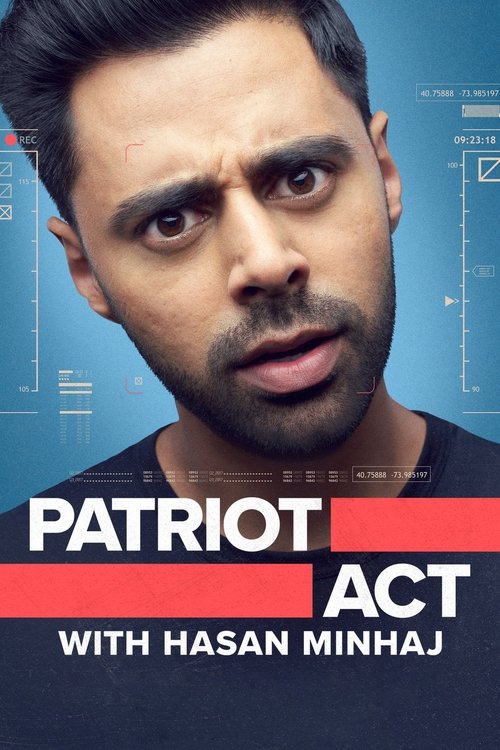
"Patriot Act with Hasan Minhaj" is a weekly comedy show that aired on Netflix, where Hasan Minhaj explores various political and social issues through a comedic lens. Each episode focuses on a specific topic, and the structure is consistent across the series, with Minhaj delivering a monologue interspersed with visual aids, interviews, and comedic sketches.
In the first episode, titled "The Muslim Ban," Minhaj opens with a personal story about his family's experience with immigration, setting the emotional tone. He discusses the implications of the travel ban imposed by the Trump administration, highlighting the confusion and fear it caused among Muslim communities. He uses humor to illustrate the absurdity of the situation, showing clips of news coverage and public reactions. Minhaj emphasizes the impact on individuals, sharing anecdotes of people affected by the ban, including his own family members.
In the second episode, "Saudi Arabia," Minhaj dives into the complex relationship between the United States and Saudi Arabia. He begins with a comedic take on the lavish lifestyle of the Saudi royal family, juxtaposed with the country's human rights issues. He discusses the murder of journalist Jamal Khashoggi, detailing the events leading up to and following his death. Minhaj uses visual aids to present statistics on arms sales and the humanitarian crisis in Yemen, driving home the contradictions in U.S. foreign policy. The episode culminates in a powerful call to action, urging viewers to hold their leaders accountable.
The third episode, "The College Admissions Scandal," focuses on the recent scandal involving wealthy parents bribing college officials to secure spots for their children. Minhaj opens with a humorous take on the absurd lengths some parents went to, including faking athletic credentials. He highlights the systemic inequalities in the college admissions process, contrasting the experiences of privileged students with those from underrepresented backgrounds. The episode features interviews with students and experts, providing a deeper understanding of the issue. Minhaj concludes with a poignant message about the importance of meritocracy and fairness in education.
In the fourth episode, "The Immigration Debate," Minhaj tackles the contentious topic of immigration in the United States. He begins with a personal narrative about his own family's immigration story, using it as a lens to explore broader themes of identity and belonging. The episode features clips of political debates and public opinions on immigration, showcasing the divisive nature of the issue. Minhaj emphasizes the contributions of immigrants to American society, using humor to challenge stereotypes and misconceptions. The episode ends with a heartfelt message about the importance of empathy and understanding.
The fifth episode, "The Climate Change Debate," sees Minhaj addressing the urgent issue of climate change. He opens with a comedic take on the various ways people react to climate change, from denial to activism. Minhaj presents scientific data and expert opinions, illustrating the dire consequences of inaction. He highlights the role of corporations and governments in perpetuating the crisis, using visual aids to emphasize key points. The episode concludes with a call to action, encouraging viewers to engage in environmental activism and hold leaders accountable for their actions.
In the sixth episode, "The Future of Work," Minhaj explores the impact of automation and technology on the job market. He begins with a humorous look at the rise of robots and artificial intelligence, discussing the potential consequences for workers. The episode features interviews with experts and workers affected by automation, providing a nuanced perspective on the issue. Minhaj emphasizes the need for policy changes to protect workers and ensure a fair transition to a tech-driven economy. The episode ends with a hopeful message about the potential for innovation to create new opportunities.
Throughout the series, Minhaj's storytelling is characterized by a blend of humor, personal anecdotes, and critical analysis of complex issues. Each episode builds on the previous ones, creating a cohesive narrative that engages viewers while addressing important social and political topics. The show concludes with a sense of urgency, encouraging viewers to stay informed and take action on the issues that matter most.









What is the ending?
"Patriot Act with Hasan Minhaj" is a weekly comedy show that does not have a traditional narrative structure with a defined ending like a movie or a scripted series. Each episode tackles a different topic, often related to politics, culture, or social issues, and Hasan Minhaj uses humor and storytelling to engage the audience. The show concluded its run in 2020, but there is no singular ending to summarize as it is an anthology of episodes rather than a continuous storyline with characters and a plot arc.
However, I can provide a detailed summary of the final episode of the show, which aired on March 8, 2020, titled "The Future of Work."
In this episode, Hasan Minhaj opens with a personal anecdote about his own experiences with work and the changing landscape of employment in the modern world. He sets the stage by discussing how technology has transformed the workplace, highlighting the rise of gig economy jobs and the impact of automation on traditional employment.
Scene 1: The episode begins with Hasan standing in front of a vibrant backdrop, filled with images of various jobs and workers. He shares a humorous story about his first job, emphasizing the lessons he learned about responsibility and hard work. The audience laughs as he recounts the awkward moments of his youth, establishing a relatable tone.
Scene 2: Transitioning into the main theme, Hasan discusses the gig economy, illustrating how platforms like Uber and TaskRabbit have changed the way people work. He presents statistics on the growth of gig jobs, using visual aids to emphasize the rapid increase in freelance work. The audience is engaged as he highlights both the flexibility and the precariousness of gig work, showcasing interviews with gig workers who share their experiences.
Scene 3: The narrative shifts to automation and its implications for the workforce. Hasan uses a mix of humor and serious commentary to discuss how robots and AI are replacing jobs, particularly in manufacturing and service industries. He shares clips of robots performing tasks traditionally done by humans, eliciting a mix of awe and concern from the audience.
Scene 4: Hasan introduces the concept of universal basic income (UBI) as a potential solution to the challenges posed by automation. He explains UBI through a series of animated graphics, making the concept accessible and engaging. He interviews experts who advocate for UBI, presenting their arguments alongside counterpoints from critics, creating a balanced discussion.
Scene 5: The episode culminates in a call to action, urging viewers to consider the future of work and the importance of adapting to these changes. Hasan emphasizes the need for policy changes to protect workers in an evolving job market. He ends on a hopeful note, encouraging the audience to think critically about their roles in shaping the future of work.
In conclusion, "The Future of Work" episode encapsulates the overarching themes of "Patriot Act" by blending humor with serious social commentary. While there are no traditional characters with fates to discuss, the episode serves as a reflection on the collective experiences of workers in a rapidly changing world, leaving the audience with thought-provoking questions about the future.
Is there a post-credit scene?
"Patriot Act with Hasan Minhaj" does not feature post-credit scenes in the traditional sense that many films or some television shows do. Each episode typically concludes with Hasan Minhaj delivering a final thought or a humorous wrap-up related to the episode's theme, but there are no additional scenes or content that play after the credits roll. The focus remains on the main content of the episode, which is a blend of comedy, storytelling, and social commentary. Each episode stands alone, with Minhaj addressing various political and cultural issues, leaving viewers with a poignant or thought-provoking message as the credits begin to roll.
What specific issues does Hasan Minhaj address in the episode about immigration?
In the immigration episode, Hasan Minhaj delves into the complexities of the U.S. immigration system, focusing on the experiences of immigrants, particularly those from Muslim-majority countries. He highlights the emotional turmoil faced by families separated by immigration policies, shares personal stories of individuals affected by deportation, and critiques the political rhetoric surrounding immigration. Minhaj uses humor and poignant anecdotes to illustrate the human impact of these policies.
How does Hasan Minhaj use personal anecdotes in the episode about the Saudi government?
In the episode focused on the Saudi government, Hasan Minhaj shares personal anecdotes about his own experiences as a Muslim American and his family's background. He discusses the complexities of his identity while critiquing the Saudi regime's human rights violations. Minhaj recounts a story about his father's reaction to the murder of journalist Jamal Khashoggi, which serves to illustrate the emotional weight of the issue and the broader implications for freedom of speech and expression.
What are the key points Hasan Minhaj makes about the Indian government's policies in the episode on India?
In the episode on India, Hasan Minhaj addresses the rise of Hindu nationalism and the implications of the Citizenship Amendment Act (CAA). He discusses how the CAA discriminates against Muslim refugees, contrasting it with India's secular constitution. Minhaj uses historical context and personal stories to emphasize the emotional stakes involved, particularly for those who feel their identity is under threat. He also highlights the protests against these policies, showcasing the resilience of the Indian people.
What role does humor play in Hasan Minhaj's discussion of the opioid crisis?
In the episode about the opioid crisis, Hasan Minhaj employs humor to tackle a serious and often tragic subject. He uses comedic storytelling to break down the statistics and the personal stories of those affected by addiction. Minhaj juxtaposes the light-heartedness of his delivery with the gravity of the crisis, making the audience laugh while also prompting them to reflect on the systemic issues that contribute to the epidemic, such as pharmaceutical companies' greed and inadequate healthcare responses.
How does Hasan Minhaj address the topic of climate change in his episode on the environment?
In the climate change episode, Hasan Minhaj addresses the urgency of environmental issues with a mix of humor and stark reality. He discusses the impact of climate change on marginalized communities and critiques the inaction of political leaders. Minhaj uses visual aids and statistics to illustrate the dire consequences of climate change, while also sharing personal stories that connect the audience emotionally to the topic. His motivation is to inspire action and awareness, emphasizing that the fight against climate change is a collective responsibility.
Is this family friendly?
"Patriot Act with Hasan Minhaj" is a satirical comedy show that addresses various political and social issues, often using humor to tackle serious topics. While it can be insightful and entertaining, it may not be considered family-friendly for younger audiences or sensitive viewers due to several aspects:
-
Language: The show includes strong language and occasional profanity, which may not be suitable for children.
-
Political Commentary: Some segments discuss controversial political issues, which might be confusing or upsetting for younger viewers who may not fully understand the context.
-
Graphic Imagery: Certain episodes may include visuals or descriptions of violence, injustice, or other distressing topics that could be unsettling.
-
Adult Themes: The show often touches on mature themes such as immigration, racism, and economic disparity, which may be heavy for younger audiences.
-
Satire and Irony: The use of satire can sometimes lead to misunderstandings, especially for those who may not grasp the nuances of the humor.
Overall, while "Patriot Act" is thought-provoking and engaging, it is best suited for older teens and adults who can appreciate its commentary and humor.