









Popular
What is the significance of the Pact in Carnival Row?
How does Philo's true identity impact his relationship with Vignette?
What role does the character of Agreus play in the story?
How does the character of Inspector Absalom Breakspear influence the plot?
What is the significance of the murders of the fae in the story?
Should I watch it?
Ask Your Own Question

What is the plot?
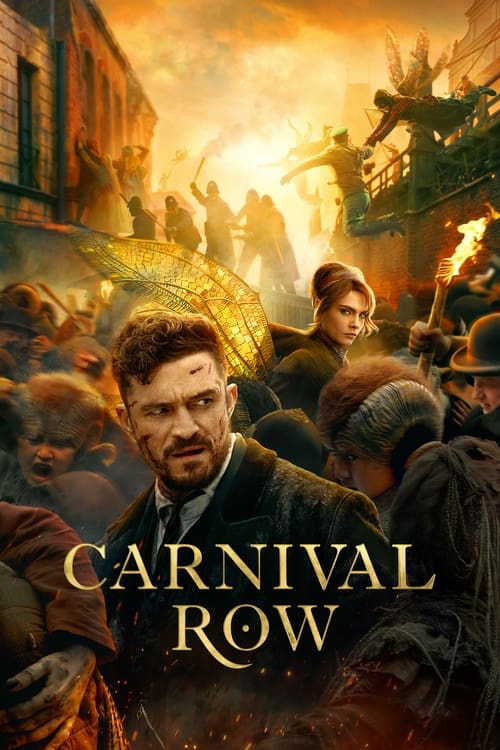
In the city of Burg, a war-torn metropolis, the story begins with the arrival of a group of refugees from the fae realm, fleeing from the brutal conflict with the Pact, a militaristic faction. Among them is Vignette Stonemoss, a faerie who is determined to find her lost love, Philo, a human detective. As she arrives in Burg, she witnesses the harsh treatment of her kind by the human populace, who view them with suspicion and disdain.
Philo, who is now working as a detective in Burg, is haunted by his past and the memories of Vignette. He is tasked with investigating a series of gruesome murders of fae creatures, which leads him to uncover a deeper conspiracy involving the powerful elite of Burg. His investigation is complicated by his feelings for Vignette, who he believes is dead, and his desire to protect her from the dangers of the city.
Vignette, meanwhile, struggles to adapt to life in Burg. She finds work in a brothel owned by a woman named Imogen Spurnrose, who is also navigating her own challenges in a society that marginalizes fae. Vignette's presence in the brothel creates tension, especially with Imogen's brother, who harbors deep-seated prejudices against fae. Despite this, Vignette forms a bond with Imogen, who becomes an ally in her quest to find Philo.
As Philo delves deeper into the murder investigation, he discovers that the killings are linked to a powerful figure named Absalom Breakspear, the Chancellor of Burg. Breakspear is revealed to be involved in a secretive organization that seeks to control the fae population and exploit their magic. Philo's pursuit of justice puts him at odds with the corrupt political system, and he begins to question his own loyalties.
Vignette eventually learns that Philo is alive and begins to search for him. Their reunion is fraught with emotion, as they confront the changes that have occurred in their lives since they were separated. Philo reveals the truth about the murders and the conspiracy surrounding them, and Vignette vows to help him expose the corruption in Burg.
As tensions rise in the city, the fae community becomes increasingly restless. A group of fae rebels, led by a character named Darius, begins to take action against the oppressive human regime. Vignette is torn between her desire for peace and her loyalty to her people, who are desperate for change. Philo, meanwhile, is caught in the middle, trying to protect Vignette while also seeking justice for the murdered fae.
The situation escalates when a public demonstration by the fae turns violent, leading to a brutal crackdown by the human authorities. Philo and Vignette are forced to flee the city, seeking refuge in the outskirts. During their escape, they encounter various dangers, including bounty hunters sent by Breakspear to eliminate them.
In a climactic confrontation, Philo and Vignette return to Burg to confront Breakspear and expose his crimes. They gather evidence of his involvement in the murders and the exploitation of the fae. However, their plan is thwarted when Breakspear captures Vignette, using her as leverage against Philo.
Philo, driven by love and desperation, devises a plan to rescue Vignette. He infiltrates Breakspear's stronghold, facing off against guards and navigating through traps set to protect the Chancellor. In a tense showdown, Philo confronts Breakspear, revealing the truth about his actions to the public. The confrontation culminates in a violent struggle, where Philo ultimately defeats Breakspear, but not without significant cost.
In the aftermath, the power dynamics in Burg begin to shift. The fae community rallies together, emboldened by the exposure of Breakspear's corruption. Vignette and Philo, now united, face an uncertain future as they navigate the complexities of their relationship and the societal changes around them.
The series concludes with a sense of hope and resilience among the fae, but also a recognition of the ongoing struggles they will face in a world that remains divided. Philo and Vignette's journey is one of love, sacrifice, and the fight for justice in a world that seeks to oppress them.




What is the ending?
In the ending of "Carnival Row," Philo confronts the truth about his past and the identity of the killer terrorizing the city. Vignette faces a difficult choice regarding her future with Philo. The conflict between the humans and the magical creatures escalates, leading to a significant climax that affects all characters involved. Ultimately, Philo and Vignette's paths diverge, and the fate of the city hangs in the balance as tensions rise.
As the final episodes of "Carnival Row" unfold, the tension in the city of Burg is palpable. The streets are filled with unrest as the humans grow increasingly hostile towards the fae. Philo, played by Orlando Bloom, is on a quest for truth, driven by his desire to uncover the identity of the killer who has been targeting the magical creatures. His investigation leads him to a shocking revelation about his own past, intertwining his fate with that of the fae.
In a dimly lit alley, Philo confronts the enigmatic Aisling, who reveals the dark truth about the murders. The weight of this knowledge bears heavily on him, as he grapples with the implications of his own heritage. The emotional turmoil is evident on his face; he feels a mix of anger, betrayal, and a desperate need for justice. This moment is pivotal, as it forces Philo to reconcile his identity as both a human and a fae.
Meanwhile, Vignette, portrayed by Cara Delevingne, is torn between her love for Philo and her loyalty to her people. She stands at a crossroads, contemplating her future in a world that seems increasingly hostile to her kind. In a poignant scene, she meets with her fellow fae, who are rallying for their rights and safety. The camaraderie among them is strong, but Vignette's heart is heavy with the knowledge that her relationship with Philo may not survive the growing divide.
As the conflict escalates, the city erupts into chaos. The humans, led by the ambitious and ruthless Absalom, take drastic measures against the fae, leading to violent confrontations. Philo, caught in the middle, must navigate his loyalties while trying to protect Vignette and the other fae. The stakes are high, and the emotional intensity of the scenes is palpable as Philo fights not just for justice, but for the love he holds for Vignette.
In a climactic showdown, Philo confronts Absalom, leading to a fierce battle that showcases the desperation of both sides. The streets are filled with the sounds of clashing metal and cries of anguish, painting a vivid picture of the turmoil engulfing Burg. Philo's determination shines through as he fights not only for his own survival but for the future of the fae.
As the dust settles, the aftermath leaves a profound impact on all characters. Philo, having uncovered the truth about his lineage and the killer, is left to ponder his place in a world that seems to reject him. Vignette, witnessing the devastation, realizes that her love for Philo may not be enough to bridge the chasm between their worlds. In a heart-wrenching farewell, they part ways, each carrying the weight of their choices and the uncertainty of what lies ahead.
The final scenes depict a city on the brink of change, with the fate of the fae hanging in the balance. Philo stands alone, looking out over the city he once called home, filled with a sense of loss and determination. Vignette, surrounded by her fellow fae, prepares to fight for their rights, embodying the resilience of her people. The ending leaves viewers with a sense of unresolved tension, highlighting the ongoing struggle between love and duty, identity and acceptance, as the characters face an uncertain future in a divided world.
Is there a post-credit scene?
Carnival Row does not have a post-credit scene. The series concludes its first season with a dramatic finale that wraps up the main story arcs and character developments without any additional scenes after the credits. The final moments focus on the resolution of key conflicts and the emotional states of the characters, particularly Philo and Vignette, as they confront the consequences of their choices and the ongoing struggles in their world. The absence of a post-credit scene allows the audience to reflect on the themes of love, prejudice, and the fight for freedom that permeate the series.
What is the significance of the Pact in Carnival Row?
The Pact is a crucial element in Carnival Row, representing the agreement between humans and the fae after the war. It symbolizes the fragile peace and the underlying tensions between the two races. The Pact allows the fae to live in the city of The Burg, but it also enforces strict limitations on their rights and freedoms, leading to resentment and conflict.
How does Philo's true identity impact his relationship with Vignette?
Philo's true identity as half-fae significantly complicates his relationship with Vignette. Initially, he hides this part of himself, fearing rejection and the societal stigma attached to being of mixed heritage. When Vignette discovers the truth, it creates a rift between them, as she grapples with her feelings of betrayal and the societal implications of their love.
What role does the character of Agreus play in the story?
Agreus is a wealthy faun who challenges societal norms by seeking acceptance in human society. His character embodies the struggle for equality and acceptance, as he faces prejudice and discrimination despite his wealth. His relationship with Imogen, a human, further complicates the narrative, highlighting the themes of love across societal divides and the personal sacrifices made for acceptance.
How does the character of Inspector Absalom Breakspear influence the plot?
Inspector Absalom Breakspear is a pivotal character whose actions drive much of the conflict in Carnival Row. As a high-ranking official, he embodies the corrupt and oppressive nature of the human government. His investigation into the murders of fae and his personal vendetta against Philo create tension and danger, revealing the darker side of power and the lengths individuals will go to maintain control.
What is the significance of the murders of the fae in the story?
The murders of the fae serve as a catalyst for the events in Carnival Row, highlighting the systemic violence and discrimination faced by the fae community. These killings not only create a sense of urgency and danger but also expose the deep-seated prejudices within The Burg. The investigation into these murders intertwines with Philo's quest for truth and justice, ultimately revealing larger conspiracies at play.
Is this family friendly?
"Carnival Row," produced in 2019, is not considered family-friendly due to its mature themes and content. The show contains several potentially objectionable or upsetting elements, including:
-
Violence: There are scenes of physical violence, including fights and murders, which can be graphic and intense.
-
Death and Trauma: Characters experience loss and trauma, with emotional scenes that may be distressing for younger viewers.
-
Sexual Content: The series includes sexual situations and nudity, which are depicted in a way that is explicit and not suitable for children.
-
Dark Themes: The narrative explores themes of oppression, discrimination, and societal conflict, which may be heavy and unsettling for sensitive viewers.
-
Substance Abuse: There are references to drug use and addiction, which are portrayed in a serious context.
-
Mature Language: The dialogue includes strong language that may not be appropriate for younger audiences.
Overall, the combination of these elements makes "Carnival Row" more suitable for adult viewers rather than children or sensitive individuals.