






































Popular
What are the main character's motivations throughout the series?
How does the relationship between Seo Jung-woo and his mother evolve?
What role does the family restaurant play in the characters' lives?
How does the character of Han Seung-jae impact the storyline?
What are the key turning points in Seo Jung-woo's character development?
Should I watch it?
Ask Your Own Question

What is the plot?
The story begins with the introduction of the main character, a woman named Han Seung-jo, who is a successful and ambitious career woman. She is deeply focused on her work and has little time for personal relationships. Seung-jo's life takes a turn when she receives a mysterious package containing a vintage watch that belonged to her late father. This watch has the ability to transport her back in time to pivotal moments in her past.
As Seung-jo experiments with the watch, she finds herself transported back to her high school days. In this time, she encounters her younger self and her first love, a boy named Joon-woo. The emotional weight of seeing her past self and the innocence of young love stirs up feelings she thought she had buried. Seung-jo begins to relive moments with Joon-woo, experiencing the joy and heartbreak of their relationship anew.
During one of her time travels, Seung-jo witnesses a significant event: the moment she and Joon-woo broke up. This moment is pivotal as it sets the course for her future. Seung-jo feels a strong urge to intervene and change the outcome, believing that if she can alter this moment, her life will be better. However, she grapples with the moral implications of changing the past and the potential consequences it may have on her present life.
As Seung-jo continues to use the watch, she becomes more entangled in her past. She meets her friends from high school, including her best friend, who is struggling with her own issues. Seung-jo's interactions with her friends reveal the complexities of their relationships and the impact of time on their lives. She begins to understand the importance of these connections and how they shaped her into the person she is today.
In a critical moment, Seung-jo decides to confront Joon-woo about their breakup. She expresses her feelings and regrets, hoping to rekindle their relationship. Joon-woo, however, is hesitant and reveals that he has moved on with his life. This confrontation forces Seung-jo to face the reality of her choices and the pain of unrequited love. The emotional turmoil she experiences during this encounter is profound, leading her to question her current life and the decisions she has made.
As the story progresses, Seung-jo's use of the watch becomes more reckless. She begins to jump back and forth in time, trying to fix various aspects of her life, including her strained relationship with her mother and her career struggles. Each time she returns to the present, she finds that her actions have unintended consequences, leading to a series of complications that affect not only her life but also the lives of those around her.
In a climactic moment, Seung-jo realizes that she cannot continue to manipulate time without facing the repercussions. She decides to make one final trip back to the moment of her father's death, hoping to say goodbye and find closure. This journey is emotionally charged, as she confronts her grief and the unresolved feelings she has carried for years. The encounter with her father is bittersweet, filled with love and sorrow, and ultimately helps her find peace.
Returning to the present, Seung-jo is transformed. She understands that while she cannot change the past, she can learn from it and move forward. The experience has deepened her relationships with her friends and family, and she begins to prioritize what truly matters in her life. The final scenes depict Seung-jo embracing her present, ready to face the future with a renewed sense of purpose and connection to those she loves.






What is the ending?
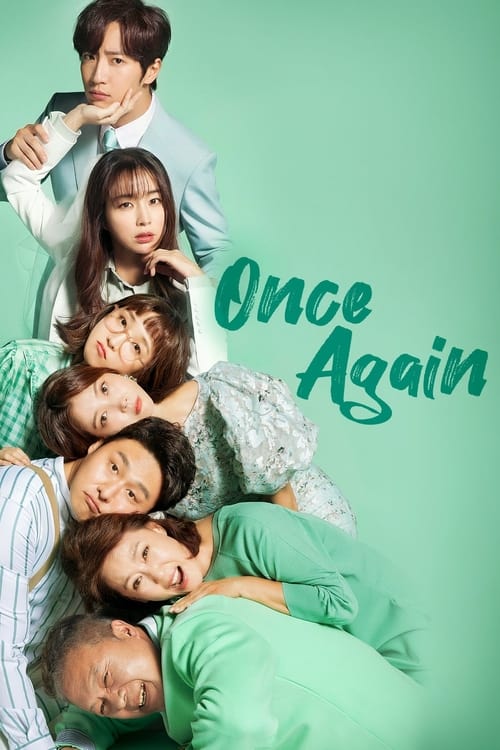
In the ending of "Once Again," the story culminates in a heartfelt resolution where the main characters confront their pasts and make choices about their futures. The protagonist, a woman named Seo Jung-eun, ultimately finds closure with her past relationships and embraces a new beginning with her love interest, while her family members also reconcile their differences and move forward in their lives.
As the final episodes unfold, we see Seo Jung-eun grappling with her feelings for her ex-husband, who has returned to her life, and her current partner. The emotional tension builds as she reflects on her past decisions and the impact they have had on her family. In a pivotal scene, she has a heartfelt conversation with her ex-husband, where they acknowledge their shared history and the pain they caused each other. This moment of honesty allows them to part ways amicably, giving Seo Jung-eun the freedom to pursue her happiness.
Meanwhile, her family members, including her children, also face their own challenges. They confront their fears and insecurities, leading to moments of growth and understanding. The series concludes with a sense of hope and renewal, as Seo Jung-eun and her family embrace the future with open hearts.
In the expanded narrative:
The final episodes of "Once Again" begin with a palpable tension in the air. Seo Jung-eun stands in her kitchen, the sunlight streaming through the window, illuminating her conflicted expression. She stirs a pot of soup, but her mind is elsewhere, caught in a whirlwind of memories and emotions. The camera captures her furrowed brow, a visual representation of her internal struggle as she contemplates her past with her ex-husband, who has re-entered her life unexpectedly.
In the next scene, we see her ex-husband, Lee Sang-woo, sitting in a café, nervously tapping his fingers on the table. He glances at the door, waiting for Seo Jung-eun to arrive. When she finally walks in, the atmosphere shifts. Their eyes meet, and a flood of unspoken words hangs between them. They sit down, and the conversation begins hesitantly, filled with awkward pauses. As they reminisce about their shared history, the tension slowly dissipates, replaced by a bittersweet nostalgia. Seo Jung-eun's voice trembles as she admits her regrets, and Lee Sang-woo listens intently, his expression softening as he acknowledges his own mistakes.
The scene transitions to Seo Jung-eun's children, who are grappling with their own issues. Her daughter, who has been struggling with her identity and self-worth, has a breakthrough moment when she confronts her fears during a school presentation. The camera captures her determination as she stands in front of her classmates, her voice steady and confident. This moment of empowerment is mirrored by her brother, who also faces his insecurities and finds the courage to express his feelings to a girl he likes.
As the series nears its conclusion, Seo Jung-eun makes a pivotal decision. In a quiet moment of reflection, she stands on her balcony, looking out at the city skyline. The wind gently tousles her hair, symbolizing the change that is about to come. She realizes that she must let go of the past to embrace her future. In a final meeting with Lee Sang-woo, they share a heartfelt goodbye, filled with gratitude for the lessons learned and the love they once shared. Their parting is not one of bitterness but of mutual respect and understanding.
The series wraps up with a family gathering, where Seo Jung-eun's children and their friends come together to celebrate a new beginning. Laughter fills the air as they share stories and create new memories. The camera pans out, capturing the warmth and joy of the moment, symbolizing the healing that has taken place within the family.
In the final scene, Seo Jung-eun stands alone, looking out at the horizon, a serene smile on her face. She has found closure, not just with her past relationships but also within herself. The screen fades to black, leaving the audience with a sense of hope and the promise of new beginnings for all the characters involved. Each character has faced their challenges, learned from their experiences, and is now ready to step into the future with renewed strength and clarity.
Is there a post-credit scene?
In the 2020 TV show "Once Again," there is no post-credit scene. The series concludes its narrative without any additional scenes after the credits roll. The final moments of the show focus on the resolution of the main characters' arcs, emphasizing themes of love, family, and the importance of second chances. The absence of a post-credit scene allows the audience to reflect on the journey of the characters and the emotional growth they have experienced throughout the series.
What are the main character's motivations throughout the series?
The main character, Seo Jung-woo, is driven by a deep desire to reconnect with his estranged family and to find his place in the world after years of feeling lost. His journey is marked by emotional turmoil as he grapples with his past mistakes and seeks redemption.
How does the relationship between Seo Jung-woo and his mother evolve?
Initially, Seo Jung-woo's relationship with his mother, who has been a source of pain and misunderstanding, is strained. As the series progresses, they begin to communicate more openly, leading to moments of reconciliation and understanding that highlight their shared struggles and love.
What role does the family restaurant play in the characters' lives?
The family restaurant serves as a central hub for the characters, symbolizing both their shared history and the challenges they face. It becomes a place of conflict, nostalgia, and ultimately healing, as the characters work together to keep it running while confronting their personal issues.
How does the character of Han Seung-jae impact the storyline?
Han Seung-jae, a childhood friend of Seo Jung-woo, plays a pivotal role in the narrative as he represents both a connection to the past and a catalyst for change. His presence forces Jung-woo to confront unresolved feelings and motivates him to take action in his life.
What are the key turning points in Seo Jung-woo's character development?
Key turning points in Seo Jung-woo's development include his decision to return to his hometown, the confrontation with his mother about their past, and moments of vulnerability that reveal his fears and desires. These moments are crucial as they lead him to embrace his identity and take responsibility for his actions.
Is this family friendly?
"Once Again," produced in 2020, is a family drama that revolves around the complexities of family relationships, love, and the passage of time. While the show is generally suitable for a family audience, there are a few aspects that may be considered objectionable or upsetting for children or sensitive viewers:
-
Emotional Turmoil: The series delves into themes of heartbreak, loss, and familial conflict, which may evoke strong emotional responses. Characters often experience sadness and frustration, which could be intense for younger viewers.
-
Divorce and Separation: The show addresses the impact of divorce on family dynamics, showcasing the struggles and emotional pain that can arise from such situations. This may be difficult for children to understand or process.
-
Conflict and Arguments: There are scenes depicting heated arguments between family members, which could be distressing for sensitive viewers. The portrayal of conflict may resonate with personal experiences of familial strife.
-
Health Issues: The narrative includes elements related to health concerns and aging, which may be unsettling for some viewers, particularly younger audiences who may not be familiar with these topics.
-
Romantic Relationships: The exploration of romantic relationships includes themes of infidelity and emotional betrayal, which may not be appropriate for younger viewers or those who are sensitive to such topics.
Overall, while "Once Again" is a heartfelt exploration of family life, its emotional depth and mature themes may require parental guidance for younger audiences.









