





Popular
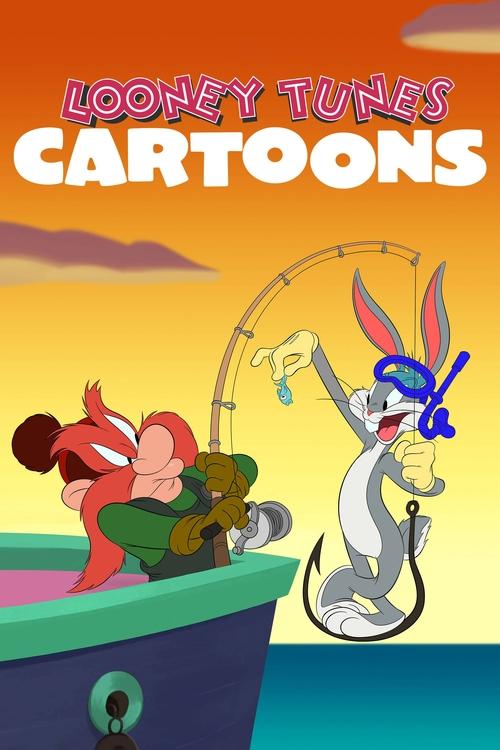
What are some of the main antics of Bugs Bunny in the 2020 Looney Tunes Cartoons?
How does Daffy Duck's personality manifest in the 2020 series?
What role does Porky Pig play in the 2020 Looney Tunes Cartoons?
How does Tweety Bird interact with Sylvester in the 2020 series?
What unique situations does Lola Bunny find herself in during the 2020 series?
Should I watch it?
Ask Your Own Question

What is the plot?
In the episode "Daffy Gets a Job," the story begins with Daffy Duck waking up in his messy apartment, surrounded by chaos. He is frustrated with his lack of employment and decides that he needs to find a job to improve his life. Daffy puts on a suit and tie, determined to impress potential employers. He practices his interview skills in front of a mirror, showcasing his over-the-top confidence and exaggerated charm.
Daffy heads out into the city, where he encounters various job opportunities. He first tries to apply at a fast-food restaurant, but his antics lead to chaos in the kitchen. Daffy accidentally sets off a series of mishaps, including a food fight that leaves the restaurant in disarray. The manager, exasperated by Daffy's incompetence, kicks him out.
Undeterred, Daffy continues his job search and stumbles upon a high-end office building. He manages to charm his way into an interview with a stern-looking boss. During the interview, Daffy tries to impress the boss with his exaggerated qualifications and wild stories, but his lack of real experience becomes evident. The boss, unimpressed, dismisses Daffy, who leaves the office in a huff, vowing to prove himself.
Next, Daffy decides to take a different approach and tries to become a delivery driver. He gets behind the wheel of a delivery truck, but his reckless driving leads to a series of comedic accidents. Daffy crashes into various obstacles, including a park fountain and a group of unsuspecting pedestrians, all while trying to deliver a package. His chaotic driving results in a massive pile-up, and he is once again fired from the job.
Feeling defeated, Daffy returns home, where he reflects on his day. He realizes that he may need to change his approach to finding a job. In a moment of desperation, he decides to create his own job by starting a business. Daffy sets up a lemonade stand outside his apartment, but his lack of business acumen leads to more comedic failures. He accidentally spills lemonade all over himself and attracts a swarm of bees, causing further chaos.
As the episode progresses, Daffy's determination to succeed leads him to try one last time. He decides to become a motivational speaker, believing he can inspire others with his own story of perseverance. Daffy sets up a stage in a park and begins to give a speech, but his over-the-top delivery and ridiculous anecdotes only serve to confuse and annoy the audience. Instead of inspiring them, he ends up being chased away by an angry mob.
In the final moments of the episode, Daffy returns to his apartment, exhausted and defeated. He reflects on his day and realizes that perhaps he is not cut out for traditional jobs. Just as he is about to give up, he receives a call from a friend who offers him a job as a mascot for a local sports team. Daffy's eyes light up with excitement, and he eagerly accepts the offer, ending the episode on a hopeful note as he prepares for his new role.

What is the ending?
Looney Tunes Cartoons does not have a singular ending as it is an anthology series featuring various short episodes, each with its own self-contained story. Each episode typically concludes with a humorous twist or a gag that reflects the characters' personalities and the comedic style of the series.
In a more detailed narrative, let's take a specific episode, "The Duxorcist," as an example to illustrate the ending:
The episode begins with Daffy Duck, who is determined to rid his home of a pesky ghost that has been haunting him. As he sets up various traps and devices, his frustration grows, leading to a series of slapstick failures. Daffy's motivation is clear: he wants peace and quiet in his home, free from the disturbances caused by the ghost.
As the episode progresses, Daffy's antics escalate. He tries everything from ghost-busting gadgets to elaborate schemes involving Bugs Bunny, who is initially uninterested but eventually gets roped into Daffy's chaotic plans. The tension builds as Daffy becomes increasingly desperate, showcasing his determination but also his comedic ineptitude.
In the climax, Daffy finally confronts the ghost, which turns out to be a harmless apparition. In a moment of realization, Daffy's fear transforms into a mix of annoyance and acceptance. The ghost, rather than being a malevolent force, simply wants to have fun and play tricks, much like Daffy himself.
The episode concludes with Daffy reluctantly accepting the ghost as a new roommate, leading to a humorous final scene where they both engage in playful antics together. Bugs Bunny, witnessing this, shakes his head in disbelief, delivering a classic one-liner that encapsulates the absurdity of the situation.
In this ending, Daffy's fate is one of reluctant acceptance, as he learns to coexist with the ghost rather than eliminate it. Bugs, on the other hand, remains the ever-cynical observer, highlighting the comedic dynamic between the characters. The episode wraps up with a sense of chaotic harmony, emphasizing the series' theme of embracing the absurdity of life and the unexpected friendships that can arise from it.
Is there a post-credit scene?
In the 2020 series "Looney Tunes Cartoons," there are no consistent post-credit scenes across the episodes. Each episode typically concludes without additional content after the credits roll. The focus remains on the main animated shorts, which feature classic characters like Bugs Bunny, Daffy Duck, and Porky Pig engaging in various comedic scenarios. The humor and antics are self-contained within each episode, allowing viewers to enjoy the classic Looney Tunes charm without the expectation of a post-credit reveal.
What are some of the main antics of Bugs Bunny in the 2020 Looney Tunes Cartoons?
In the 2020 Looney Tunes Cartoons, Bugs Bunny showcases his classic wit and charm through a series of clever antics. In one episode, he finds himself in a battle of wits with Elmer Fudd, who is determined to catch him. Bugs employs a variety of disguises and tricks, including dressing as a female rabbit to distract Elmer and using a series of elaborate traps that backfire hilariously. His internal motivation is to outsmart Elmer while maintaining his laid-back demeanor, often breaking the fourth wall to engage with the audience.
How does Daffy Duck's personality manifest in the 2020 series?
Daffy Duck's personality in the 2020 series is characterized by his over-the-top self-importance and relentless pursuit of fame. In one episode, he attempts to become a movie star, leading to a series of slapstick failures as he tries to impress a director. His internal conflict arises from his desire for recognition versus the reality of his comedic misadventures, which often leave him in embarrassing situations. The visual gags highlight his exaggerated expressions of frustration and determination, making his journey both humorous and relatable.
What role does Porky Pig play in the 2020 Looney Tunes Cartoons?
Porky Pig serves as a lovable, albeit often flustered, character in the 2020 Looney Tunes Cartoons. In one episode, he tries to host a talent show, but chaos ensues as various characters, including Daffy and Bugs, disrupt the proceedings with their antics. Porky's internal motivation is to maintain order and showcase talent, but his stuttering and nervousness lead to comedic mishaps. The visual contrast between his earnest attempts to keep things together and the wild behavior of his friends creates a delightful tension throughout the episode.
How does Tweety Bird interact with Sylvester in the 2020 series?
In the 2020 Looney Tunes Cartoons, Tweety Bird and Sylvester's dynamic remains a classic cat-and-bird chase. In one episode, Sylvester devises an elaborate plan to catch Tweety, involving a series of traps and disguises. However, Tweety's cleverness and ability to outsmart Sylvester lead to a series of humorous reversals. Sylvester's internal motivation is driven by his hunger and determination, while Tweety's calm demeanor and quick thinking showcase his confidence. The visual storytelling emphasizes the slapstick nature of their interactions, with exaggerated movements and expressions that heighten the comedic effect.
What unique situations does Lola Bunny find herself in during the 2020 series?
Lola Bunny in the 2020 Looney Tunes Cartoons is portrayed as a confident and athletic character who often finds herself in humorous predicaments. In one episode, she participates in a basketball game against Bugs and Daffy, where her competitive spirit leads to a series of comedic misunderstandings and over-the-top plays. Lola's internal motivation is to prove her skills while navigating the antics of her teammates. The visual gags highlight her athleticism contrasted with the absurdity of the situations, showcasing her determination and charm as she tries to keep the game under control.
Is this family friendly?
"Looney Tunes Cartoons" produced in 2020 is generally considered family-friendly, maintaining the classic humor and slapstick style of the original series. However, there are a few aspects that might be potentially objectionable or upsetting for some children or sensitive viewers:
-
Slapstick Violence: The series features exaggerated cartoon violence, such as characters getting hit with various objects, falling from heights, or engaging in physical confrontations. While this is presented in a humorous context, it may be intense for some viewers.
-
Mild Frightening Situations: Certain episodes may include scenes that could be startling or frightening, such as characters encountering ghosts or other spooky elements, though these are typically played for laughs.
-
Character Antics: Some characters engage in mischievous or chaotic behavior that could be seen as inappropriate, such as stealing or tricking others, which might not align with positive moral lessons for younger viewers.
-
Silly Scenarios: The absurdity of some situations, like characters being chased or trapped in bizarre predicaments, might be overwhelming for very young children.
Overall, while the show retains a lighthearted tone, parents may want to preview episodes to ensure they align with their comfort levels for their children.