










Popular
How does the setting influence the characters' actions and decisions?
What motivates Susan to take drastic actions in the story?
How does Christopher's character evolve throughout the series?
What role do the police play in the unfolding of the plot?
What is the significance of the relationship between Susan and her parents?
Should I watch it?
Ask Your Own Question

What is the plot?
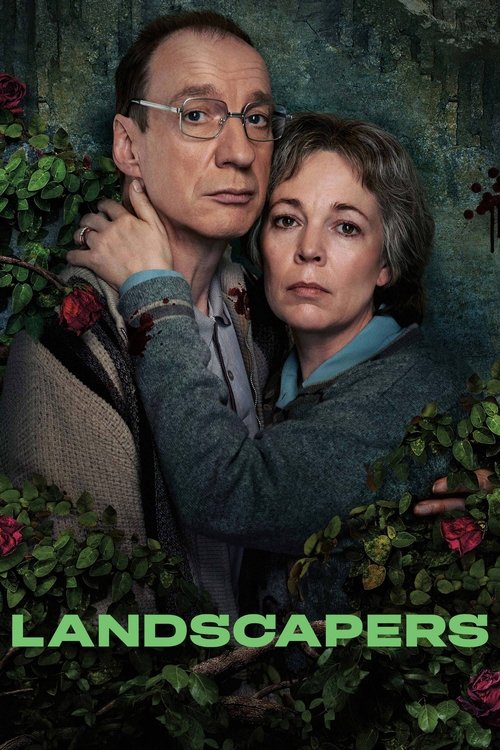
In the opening scenes of "Landscapers," we are introduced to Susan and Christopher Edwards, a seemingly ordinary couple living in Nottingham, England. The couple is depicted as deeply in love, sharing a quiet life filled with mundane routines. However, there are hints of their troubled past, particularly surrounding Susan's strained relationship with her parents. The narrative begins to unfold as we see Susan's emotional state, marked by a sense of isolation and longing for acceptance.
As the story progresses, we learn that Susan and Christopher have a dark secret. Flashbacks reveal that Susan's parents, William and Patricia, went missing years ago. The couple had been living under the shadow of this unresolved mystery, and their lives are further complicated by the financial struggles they face. The tension builds as we see Susan's mental state deteriorate, leading to increasingly erratic behavior.
The plot thickens when the police receive an anonymous tip about the Edwards' involvement in the disappearance of Susan's parents. This prompts a police investigation, and detectives begin to dig into the couple's past. The narrative shifts between the present-day investigation and flashbacks that provide insight into the couple's history, revealing the circumstances surrounding the disappearance of Susan's parents.
As the investigation intensifies, the couple's facade begins to crack. Susan and Christopher are shown grappling with their guilt and fear of being discovered. They attempt to maintain their normal lives, but the pressure of the investigation weighs heavily on them. Susan's emotional turmoil is palpable as she oscillates between moments of calm and panic, reflecting her internal struggle.
In a pivotal moment, the police discover human remains buried in the garden of the Edwards' home. This shocking revelation leads to the couple's arrest, and the narrative delves into the psychological impact of the situation on both Susan and Christopher. The couple's bond is tested as they face the reality of their actions and the consequences that follow.
As the trial approaches, the story explores the dynamics of their relationship under the strain of public scrutiny. Susan's mental health continues to decline, and she becomes increasingly detached from reality. Christopher, on the other hand, tries to support her while grappling with his own feelings of guilt and responsibility for their actions.
During the trial, the prosecution presents evidence that paints the couple in a negative light, emphasizing their financial motives and the premeditated nature of the crime. The defense attempts to argue that Susan's mental state was compromised, but the evidence against them is overwhelming. The courtroom scenes are tense, filled with emotional outbursts and moments of vulnerability from both Susan and Christopher.
As the verdict is delivered, the couple's fate is sealed. They are found guilty of murder, and the emotional weight of the verdict hits them hard. The final scenes depict their separation as they are taken away to serve their sentences, leaving behind the life they once knew. The story concludes with a haunting sense of loss and the lingering question of how love can intertwine with darkness, leaving the audience to reflect on the complexities of their relationship and the choices that led them to this tragic end.









What is the ending?
In the ending of "Landscapers," Susan and Christopher Edwards are arrested for the murder of Susan's parents, whose bodies were discovered buried in their garden. The couple's relationship is tested as they face the consequences of their actions, ultimately leading to their separation. Susan is sentenced to life in prison, while Christopher is given a lesser sentence. The story concludes with a sense of unresolved tension, highlighting the complexities of their love and the dark secrets that bind them.
As the final episodes unfold, the tension escalates. The scene opens with the police arriving at the Edwards' home, where they have unearthed the remains of Susan's parents. The atmosphere is thick with dread as Susan and Christopher, initially in disbelief, begin to realize the gravity of their situation. The couple's bond is palpable, yet cracks begin to show as the reality of their actions weighs heavily on them.
In the following scene, we see Susan in a police interrogation room, her demeanor shifting from defiance to vulnerability. She struggles to articulate her feelings, torn between her love for Christopher and the horror of what they have done. The camera captures her internal conflict, her eyes darting as she grapples with the truth. Meanwhile, Christopher, in a separate room, is also being questioned. His expressions reveal a mix of fear and loyalty, as he tries to protect Susan while also confronting the reality of their crimes.
As the investigation unfolds, flashbacks reveal the couple's life leading up to the murders, showcasing their deep connection but also the mounting pressures they faced. The narrative intersperses these memories with the present-day interrogation, creating a stark contrast between their past innocence and current predicament. The emotional weight of their shared history becomes increasingly evident, as they both reflect on the choices that led them to this moment.
The climax arrives when the couple is formally charged. The courtroom scene is tense, filled with onlookers and media frenzy. Susan's stoic facade begins to crack as she hears the details of the prosecution's case. Christopher, sitting beside her, reaches for her hand, a silent gesture of support amidst the chaos. However, the reality of their situation becomes undeniable as the judge pronounces their sentences. Susan is sentenced to life in prison, while Christopher receives a lesser sentence due to his cooperation with the authorities.
In the final moments, the camera lingers on Susan as she is led away in handcuffs, her expression a mix of resignation and sorrow. Christopher watches her go, his face a mask of anguish and helplessness. The scene fades to black, leaving viewers with a haunting sense of the couple's tragic fate. The story concludes without resolution, emphasizing the complexities of love, guilt, and the consequences of their actions, leaving a lingering question about the nature of their bond and the darkness that ultimately consumed them.
Is there a post-credit scene?
The TV show "Landscapers," produced in 2021, does not feature a post-credit scene. The series concludes its narrative without any additional scenes after the credits roll. The final moments of the show focus on the emotional resolution of the main characters, Susan and Christopher Edwards, as they confront the consequences of their actions and the reality of their situation. The absence of a post-credit scene allows the audience to reflect on the complex themes of love, guilt, and the impact of choices made throughout the series.
How does the setting influence the characters' actions and decisions?
The setting of the series, particularly the stark contrast between the idyllic countryside and the dark events that unfold, plays a significant role in shaping the characters' actions. The picturesque environment serves as a backdrop that juxtaposes the internal turmoil of Susan and Christopher. The isolation of their home amplifies their feelings of entrapment and desperation, influencing their decisions and ultimately leading them down a path of no return.
What motivates Susan to take drastic actions in the story?
Susan's motivations are deeply rooted in her troubled past and her desire for a life free from the constraints of her previous existence. As the narrative unfolds, it becomes clear that her relationship with Christopher is both a source of comfort and a catalyst for her more extreme decisions. The emotional weight of her past, coupled with her longing for a sense of belonging and love, drives her to make choices that ultimately lead to tragic consequences.
How does Christopher's character evolve throughout the series?
Christopher's character is portrayed as a complex individual who oscillates between being a supportive partner and a passive participant in Susan's decisions. Initially, he appears to be the more grounded of the two, but as the story progresses, his internal conflict becomes evident. He grapples with his loyalty to Susan and the moral implications of their actions, leading to moments of tension and vulnerability that reveal his deeper fears and desires.
What role do the police play in the unfolding of the plot?
The police serve as a critical force in the narrative, representing the external pressure that ultimately forces Susan and Christopher to confront the reality of their situation. Their investigation is depicted with a sense of urgency and tension, as they piece together the clues surrounding the disappearance of Susan's parents. The interactions between the couple and law enforcement highlight the growing sense of paranoia and desperation that envelops them, adding layers of suspense to the story.
What is the significance of the relationship between Susan and her parents?
The relationship between Susan and her parents is fraught with tension and unresolved issues, which significantly impacts her emotional state and decision-making throughout the series. Their strained dynamic is explored through flashbacks and memories, revealing a history of neglect and emotional abuse. This complicated relationship serves as a driving force behind Susan's actions, as she seeks to escape the shadows of her past while grappling with feelings of guilt and betrayal.
Is this family friendly?
"Landscapers," produced in 2021, is not considered family-friendly due to its mature themes and content. The show contains several potentially objectionable or upsetting aspects, including:
-
Violence and Crime: The narrative revolves around a double murder, which is central to the plot. There are discussions and depictions of violent acts that may be distressing.
-
Mature Themes: The show explores complex themes such as guilt, mental health issues, and the impact of crime on relationships, which may be difficult for younger viewers to understand.
-
Emotional Distress: Characters experience significant emotional turmoil, including anxiety, paranoia, and grief, which could be unsettling for sensitive viewers.
-
Dark Humor: The series employs dark humor that may not be appropriate for children and could be misinterpreted by younger audiences.
-
Graphic Imagery: There are moments that may include graphic descriptions or implications of death and the aftermath of violent events.
Overall, the show's tone and subject matter are geared towards an adult audience, making it unsuitable for children or those who are sensitive to such themes.