

Popular
What is the significance of the duel between the Ronin and the Sith in 'The Duel' episode?
How does the character of the Village Bride reflect the themes of duty and sacrifice?
What motivates the twins in 'The Twins' episode to fight each other?
What role does the Force play in the relationship between the characters in 'Tatooine Rhapsody'?
What is the backstory of the character in 'The Elder' and how does it influence his actions?
Should I watch it?
Ask Your Own Question

What is the plot?
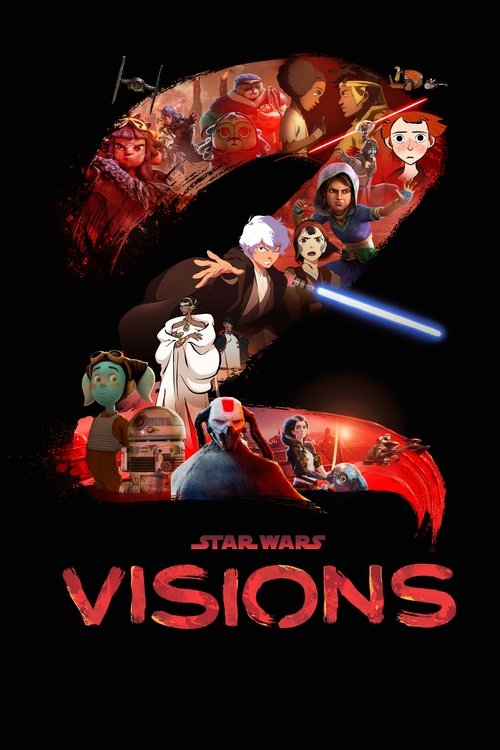
"Star Wars: Visions" is an anthology series consisting of nine short films, each with its own unique story, characters, and animation style. Below is a detailed plot summary of each episode in chronological order.
Episode 1: "The Duel" The story opens in a desolate, rain-soaked landscape where a lone traveler, a mysterious Ronin, walks through a village plagued by bandits. The villagers are terrified as a group of Sith bandits, led by a menacing figure wielding a red lightsaber, terrorizes them. The Ronin arrives just in time to confront the bandits. He draws his own lightsaber, which is revealed to be a unique, glowing blue blade. A fierce duel ensues between the Ronin and the Sith leader, showcasing their mastery of the Force and lightsaber combat. The Ronin uses clever tactics and agility to outmaneuver the Sith, ultimately defeating him. As the dust settles, the Ronin spares the remaining bandits, choosing to let them flee rather than kill them. The villagers express their gratitude, but the Ronin remains distant, hinting at a troubled past.
Episode 2: "Tatooine Rhapsody" The episode begins with a young musician named Jay, who dreams of becoming a famous rock star. He is captured by the Hutt gang and brought before the notorious Jabba the Hutt. Jay's friend, a former Jedi named Gee, is also captured. In a moment of desperation, Jay performs a song to entertain Jabba, hoping to win his favor and save himself and Gee. The performance is vibrant and filled with energy, showcasing Jay's passion for music. Jabba is initially amused but soon grows bored. Just as Jabba orders their execution, Jay's song inspires the audience, leading to a rebellion among the captives. A chaotic escape ensues, with Jay and Gee fighting their way out. They manage to escape, but not without a confrontation with Jabba's guards. The episode ends with Jay and Gee vowing to continue their musical journey together.
Episode 3: "The Twins" The story follows two powerful siblings, Am and Karre, who are born from the dark side of the Force. They are both equipped with massive starships and are on a mission to harness the power of the Force. Am, driven by ambition, seeks to dominate the galaxy, while Karre, conflicted by their dark upbringing, wishes to break free from their fate. The episode showcases a dramatic space battle between their ships, filled with stunning visuals of lightsaber duels and explosions. Am attempts to overpower Karre, but Karre's internal struggle leads him to rebel against Am. In a climactic moment, Karre sacrifices his ship to destroy Am's, leading to a devastating explosion. The episode concludes with Karre floating in space, contemplating his choices and the path ahead.
Episode 4: "The Village Bride" Set on a remote planet, the episode introduces a village preparing for a wedding. The bride, a young woman named Ahsoka, is filled with joy but also a sense of foreboding. The village is soon threatened by a group of raiders who demand tribute. A mysterious Jedi, who has been observing the village, decides to intervene. As the raiders attack, the Jedi reveals herself and engages in a fierce battle with them. The villagers watch in awe as the Jedi uses her skills to protect them. The fight is intense, with the Jedi showcasing her agility and mastery of the Force. After defeating the raiders, the Jedi encourages the villagers to stand up for themselves. The episode ends with the wedding taking place, symbolizing hope and resilience.
Episode 5: "The Ninth Jedi" The episode begins with a young girl named Kara, who is the daughter of a lightsaber smith. She is tasked with delivering lightsabers to a group of Jedi who have been summoned to a remote temple. As she arrives, she discovers that the Jedi are actually a group of Sith in disguise. Tension builds as the Sith reveal their true intentions to eliminate the Jedi. Kara, realizing the danger, uses her wits to escape and seeks help from her father. Together, they forge a new lightsaber for her, which is imbued with the power of the Force. In a climactic showdown, Kara confronts the Sith, using her newfound abilities to fight back. The episode concludes with the remaining Jedi rallying together, united against the Sith threat.
Episode 6: "T0-B1" The story follows a young droid named T0-B1, who dreams of becoming a Jedi. He lives on a peaceful planet with his creator, a kind scientist. T0-B1 discovers a hidden lightsaber and begins to train himself in the ways of the Force. However, their peaceful existence is shattered when an Imperial force arrives, seeking to conquer the planet. T0-B1's creator is captured, and T0-B1 must summon all his courage to rescue him. The episode features a series of action-packed sequences as T0-B1 uses his ingenuity and newfound skills to outsmart the Imperials. In a final confrontation, T0-B1 faces off against the Imperial commander, showcasing his growth and determination. The episode ends with T0-B1 successfully rescuing his creator and vowing to protect their home.
Episode 7: "The Elder" The episode begins with a young Jedi named Dan and his master, who are on a mission to investigate a disturbance in the Force. They arrive on a remote planet and encounter an ancient Sith known as the Elder. The Elder, a powerful and cunning adversary, challenges the Jedi to a duel. The fight is intense, with the Elder showcasing his mastery of the dark side. Dan's master is ultimately defeated, leaving Dan to confront the Elder alone. Fueled by anger and determination, Dan engages in a fierce battle, using all his training to overcome the Elder. In a moment of clarity, Dan realizes that the Elder is not just a foe but a reflection of his own fears. The episode concludes with Dan defeating the Elder, but not without a sense of loss and the weight of his choices.
Episode 8: "Lop and Ocho" The story follows a young girl named Lop, who is adopted by a family on a planet under threat from the Empire. Lop, a rabbit-like creature, forms a close bond with her adoptive sister, Ocho. As the Empire's influence grows, Ocho becomes increasingly aligned with their ideals, while Lop fights to protect their home. The conflict between the sisters escalates as Ocho chooses to side with the Empire, believing it to be the path to power. Lop, heartbroken, stands against Ocho in a climactic confrontation. The fight is emotional, filled with the weight of their shared history. Ultimately, Lop defeats Ocho but chooses not to kill her, instead offering a chance for redemption. The episode ends with Lop vowing to continue the fight for their home, despite the rift between them.
Episode 9: "Akakiri" The final episode begins with a Jedi named Tsubaki, who is haunted by visions of his former love, a princess named Misa. Tsubaki is drawn back to her planet, where he discovers that she is in danger from a dark force. As he arrives, he finds Misa under the control of a Sith lord. Tsubaki struggles with his emotions, torn between his duty as a Jedi and his love for Misa. In a desperate attempt to save her, Tsubaki confronts the Sith lord in a dramatic duel. The fight is filled with emotional stakes, as Tsubaki fights not only for Misa's life but also for his own redemption. In a tragic twist, Tsubaki succumbs to the dark side in a moment of weakness, ultimately leading to Misa's demise. The episode concludes with Tsubaki left alone, consumed by grief and regret, embodying the tragic consequences of his choices.




What is the ending?
Star Wars: Visions is an anthology series consisting of nine short films, each with its own unique story and characters. As such, there is no singular ending to summarize. Each episode concludes its narrative arc independently, showcasing different themes and styles within the Star Wars universe.
For an expanded answer, I will summarize the endings of a few selected episodes, detailing the final scenes and the fates of the main characters involved.
1. The Duel (Episode 1)
The story culminates in a fierce battle between a lone Ronin and a Sith bandit leader. After a tense duel, the Ronin ultimately defeats the Sith, revealing his own connection to the Force. As the Ronin walks away, he reflects on the nature of his journey, leaving the audience with a sense of ambiguity about his future.
2. Tatooine Rhapsody (Episode 2)
The climax sees the band of misfits, led by the former Jedi, facing off against a powerful Hutt. In a dramatic turn, the band performs a song that resonates with the Hutt, leading to a change of heart. The episode ends with the band escaping, and the former Jedi finding a new purpose in music, while the Hutt spares their lives, showcasing themes of redemption and the power of art.
3. The Twins (Episode 3)
In a climactic battle aboard a massive Star Destroyer, the twin siblings, who are both strong in the Force, confront each other. The sister, having turned against the dark side, ultimately sacrifices herself to save her brother, who is consumed by his ambition. The episode concludes with the brother left alone, surrounded by the remnants of their battle, signifying the cost of power and the loss of familial bonds.
4. The Village Bride (Episode 4)
The story reaches its peak as the Jedi, F, intervenes to protect a village from a band of marauders. In a display of courage and sacrifice, the bride-to-be, who has been central to the narrative, stands up against the oppressors. The episode ends with the village liberated, and the Jedi leaving, having fulfilled her duty, while the bride embraces her new role as a leader, symbolizing hope and resilience.
5. Akakiri (Episode 9)
The final episode concludes with a tragic twist. The Jedi, Tsubaki, is faced with a choice between saving his love, who has been captured, and succumbing to the dark side. In a heartbreaking moment, he chooses to save her, but this act leads to his own downfall as he is consumed by darkness. The episode ends with a haunting image of Tsubaki, now a servant of the dark side, leaving viewers with a sense of despair and the cyclical nature of conflict.
Each episode of Star Wars: Visions presents a unique narrative, exploring different aspects of the Star Wars universe, and the endings reflect the diverse themes of hope, sacrifice, redemption, and the consequences of choices made by the characters.
Who dies?
In "Star Wars: Visions," several characters face death across the various short films, each with unique circumstances and emotional weight. Here are the notable deaths:
- The Elder (from "The Elder"):
- Circumstances: The Elder is an ancient Sith who seeks to test his strength against a Jedi. He encounters a young Jedi named Dan and his master, Tajin.
- When: The climax of the episode.
-
How: After a fierce duel, Dan, fueled by his desire to protect his master and prove himself, ultimately defeats The Elder. The Elder, realizing he has been bested, accepts his fate with a sense of calm, acknowledging the cycle of life and death in the Force.
-
The Village Elder (from "The Village Bride"):
- Circumstances: The Village Elder sacrifices herself to protect her village from the oppressive forces of the Sith.
- When: During the confrontation with the Sith, as the village is threatened.
-
How: She steps forward to confront the Sith, demonstrating her bravery and selflessness. Her death serves as a catalyst for the village to rise against their oppressors, showcasing the theme of sacrifice for the greater good.
-
The Jedi (from "The Duel"):
- Circumstances: In this episode, a lone Jedi faces a Sith bandit leader in a desolate landscape.
- When: Near the end of the episode.
-
How: The Jedi is ultimately defeated in battle, showcasing the struggle between light and dark. His death is poignant, as it highlights the loneliness and sacrifice of a Jedi in a galaxy filled with conflict.
-
The Sith (from "The Twins"):
- Circumstances: The Sith, who is one of the twin siblings, is consumed by ambition and the dark side.
- When: During the climactic battle between the twins.
-
How: In a moment of betrayal and desperation, the Sith sibling is ultimately defeated by their twin, who chooses to embrace the light. The death is symbolic of the internal conflict between the dark and light sides of the Force.
-
The Bandit Leader (from "The Ninth Jedi"):
- Circumstances: The Bandit Leader, who is part of a group of Jedi hunters, meets his end during a confrontation with the true Jedi.
- When: Towards the end of the episode.
- How: He is defeated in a lightsaber duel, showcasing the consequences of his choices and the relentless pursuit of power.
Each of these deaths serves to deepen the narrative, exploring themes of sacrifice, the struggle between light and dark, and the impact of individual choices within the larger conflict of the galaxy. The emotional weight of these moments resonates with the characters' motivations and the overarching story of "Star Wars: Visions."
Is there a post-credit scene?
"Star Wars: Visions," produced in 2021, does not feature a post-credit scene. Each of the nine episodes stands alone, presenting unique stories and styles inspired by the Star Wars universe, but there are no additional scenes or content after the credits of any episode. The series focuses on the individual narratives and artistic interpretations of various creators, allowing each story to conclude without further continuation or epilogue.
What is the significance of the duel between the Ronin and the Sith in 'The Duel' episode?
In 'The Duel,' the Ronin, a mysterious figure wielding a lightsaber, confronts a Sith bandit leader. The duel is significant as it showcases the Ronin's mastery of the Force and his internal struggle with his past. The clash is not just a physical battle but also a confrontation of ideologies, with the Ronin representing a path of redemption and the Sith embodying the darkness of the past. The emotional weight of the duel is heightened by the Ronin's memories of loss and his desire to protect the innocent.
How does the character of the Village Bride reflect the themes of duty and sacrifice?
In 'The Village Bride,' the character of the bride grapples with her duty to her village and her personal desires. As she prepares for her wedding, she learns of a looming threat from a group of raiders. Her emotional state shifts from joy to anxiety as she realizes the weight of her responsibilities. Ultimately, she chooses to stand with her village, showcasing her willingness to sacrifice her happiness for the greater good, which highlights the theme of selflessness in the face of adversity.
What motivates the twins in 'The Twins' episode to fight each other?
In 'The Twins,' the twin siblings, born from the dark side of the Force, are driven by their contrasting desires for power and connection. The male twin, seeking to prove his strength and dominance, is motivated by a deep-seated need to surpass his sister, who embodies a more balanced approach to the Force. Their emotional conflict escalates as they engage in a fierce battle, revealing their internal struggles with identity, loyalty, and the consequences of their choices, ultimately leading to a tragic confrontation.
What role does the Force play in the relationship between the characters in 'Tatooine Rhapsody'?
In 'Tatooine Rhapsody,' the Force serves as a subtle yet powerful undercurrent in the relationship between the former Jedi, Gee, and his bandmates. As they navigate the challenges of performing for a Hutt, the Force manifests in their emotional connections and the bond they share through music. Gee's struggle with his past as a Jedi and his desire to protect his friends highlights the theme of redemption, while the music itself becomes a conduit for expressing their hopes and fears, illustrating how the Force can influence relationships beyond combat.
What is the backstory of the character in 'The Elder' and how does it influence his actions?
In 'The Elder,' the character of the Elder is an ancient Sith who has lived for centuries, seeking out strong opponents to test his skills. His backstory reveals a deep-seated loneliness and a thirst for challenge, which drives him to confront the young Jedi, Dan. The Elder's actions are influenced by his desire to relive the thrill of battle and to find meaning in his existence. This quest for purpose leads to a climactic duel with Dan, where the Elder's motivations are laid bare, revealing a tragic figure consumed by the darkness of his own making.
Is this family friendly?
"Star Wars: Visions" is an anthology series that presents various stories set in the Star Wars universe, each created by different animation studios. While the series is generally family-friendly, there are some elements that may be considered objectionable or upsetting for children or sensitive viewers. Here are a few aspects to be aware of:
-
Violence and Combat: Many episodes feature lightsaber battles, space dogfights, and confrontations that can be intense. The action sequences may include characters being injured or defeated, which could be distressing for younger viewers.
-
Dark Themes: Some stories explore themes of loss, betrayal, and the struggle between good and evil. These themes can evoke strong emotions and may be heavy for sensitive audiences.
-
Death and Sacrifice: Several episodes touch on the concepts of sacrifice and the loss of loved ones, which can be poignant and potentially upsetting for children.
-
Emotional Turmoil: Characters often experience significant emotional struggles, including fear, anger, and sadness, which may resonate deeply and could be overwhelming for some viewers.
-
Supernatural Elements: The presence of the Force and its darker aspects, such as temptation and corruption, may be unsettling for those sensitive to supernatural themes.
Overall, while "Star Wars: Visions" offers a rich and imaginative experience, parents may want to preview episodes to determine their suitability for younger audiences.







