
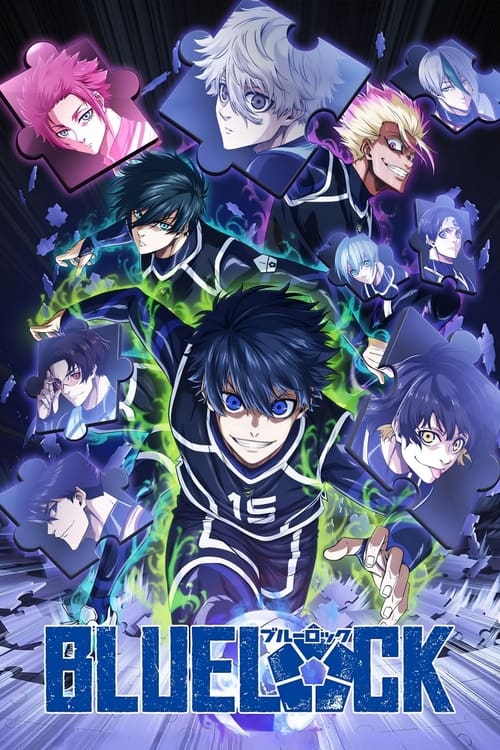









Popular
What motivates Isagi Yoichi to join the Blue Lock program?
How does the rivalry between Isagi and Bachira develop throughout the series?
What role does Ego Jinpachi play in the Blue Lock program?
How does the concept of 'ego' influence the characters' development in Blue Lock?
What challenges do the players face during the first selection round of Blue Lock?
Should I watch it?
Ask Your Own Question

What is the plot?
In the year 2022, the story of "Blue Lock" begins with Japan's national soccer team suffering a humiliating defeat in the 2018 World Cup. This loss prompts the Japan Football Union to take drastic measures to improve the country's soccer performance. They decide to implement a radical training program called "Blue Lock," aimed at creating the world's best striker. The program is spearheaded by the enigmatic and ruthless coach Jinpachi Ego, who believes that Japan needs a player who can take the initiative and score goals, rather than relying on teamwork alone.
The first major event occurs when 300 high school strikers are invited to the Blue Lock facility, where they are informed that only one of them will be selected to play as the striker for the national team. The participants are introduced to the intense and competitive environment of Blue Lock, where they must face various challenges and tests to prove their worth. Among the participants is Yoichi Isagi, a talented but uncertain player who reflects on his past experiences and the missed opportunity that led to his team's loss in a crucial match.
As the training begins, the first test is a series of matches where players are divided into teams. Isagi's team, consisting of several other strikers, faces off against another group. During the match, Isagi struggles with his self-doubt but ultimately has a breakthrough moment when he realizes the importance of making decisive plays. He uses his keen sense of positioning to score a goal, showcasing his potential. However, the match ends with his team losing, leading to the first elimination round.
Following the elimination, the remaining players are subjected to a series of psychological and physical tests designed to push them to their limits. Isagi begins to form bonds with other players, including the confident and skilled striker, Rin Itoshi, and the passionate and determined player, Kunigami. These relationships are tested as the competition intensifies, and players are forced to confront their own motivations and fears.
In the next round, the players are divided into smaller teams for a new series of matches. Isagi's team faces off against a group led by Itoshi, who is known for his exceptional skills. The match is intense, with both teams showcasing their abilities. Isagi, driven by his desire to prove himself, takes risks and makes bold plays. He learns to trust his instincts and begins to understand the importance of individual brilliance in soccer.
As the competition progresses, Isagi faces various challenges, including injuries and the pressure of elimination. He witnesses the ruthless nature of the Blue Lock program, where friendships are tested, and players are eliminated based on their performance. The emotional toll of the competition weighs heavily on him, but he remains determined to succeed.
In a pivotal match against a team led by a player named Nagi, Isagi's strategic thinking comes into play. He realizes that he must adapt his style of play to counter Nagi's strengths. The match is filled with high-stakes moments, and Isagi's growth as a player is evident as he makes crucial decisions that lead to his team's victory. This win solidifies his place in the program and boosts his confidence.
As the series continues, the players face increasingly difficult opponents, and the stakes rise with each match. Isagi's rivalry with Rin Itoshi deepens, as both players strive to outdo each other. Their encounters are marked by intense competition and a mutual respect that develops over time. Isagi learns to channel his emotions into his gameplay, becoming more assertive and focused.
The climax of the series occurs during a final tournament where the best players from Blue Lock compete against each other. Isagi's team faces off against Itoshi's team in a highly anticipated match. The tension is palpable as both teams showcase their skills. Isagi's strategic mind and ability to read the game are put to the test as he navigates the complexities of the match.
In the final moments of the match, Isagi makes a bold decision to take a shot on goal, despite the odds stacked against him. This moment encapsulates his growth as a player and his understanding of what it means to be a striker. The match concludes with a dramatic finish, leaving the outcome uncertain and setting the stage for future developments in the story.
As the series wraps up, the players reflect on their experiences in Blue Lock. Isagi, having faced numerous challenges and grown as a player, is left contemplating his future and the path he must take to achieve his dreams. The story ends with a sense of anticipation for what lies ahead, as the players prepare to take their skills to the next level in the world of soccer.



What is the ending?
In the ending of the TV show "Blue Lock," the final match of the Blue Lock program culminates in a fierce showdown between Team Z and Team W. Isagi Yoichi, the protagonist, faces off against his rival, Rin Itoshi, in a high-stakes game that tests their skills, strategies, and resolve. Ultimately, Isagi's growth as a player and his ability to adapt lead him to score the decisive goal, securing victory for Team Z. The series concludes with Isagi and his teammates reflecting on their journey, their dreams of becoming the best strikers, and the friendships forged through competition.
As the final match begins, the atmosphere is electric with tension. The stadium is packed, and the stakes are higher than ever. Isagi Yoichi stands on the field, his heart racing as he prepares to face Team W, led by the formidable Rin Itoshi. The whistle blows, and the game kicks off with both teams displaying their skills. Isagi's internal monologue reveals his determination to prove himself, not just to his teammates but to himself. He recalls the struggles and challenges he faced throughout the Blue Lock program, fueling his desire to become the best striker.
The first half of the match is intense, with both teams exchanging blows. Team W showcases their superior teamwork and strategy, putting Team Z on the defensive. Isagi feels the pressure mounting as he struggles to find his rhythm. He watches Rin, who plays with an air of confidence and skill, and it ignites a fire within him. Isagi realizes that he must adapt and think outside the box if he wants to turn the tide in favor of his team.
As the second half begins, Isagi's resolve strengthens. He starts to communicate more with his teammates, encouraging them to push forward. The game becomes a battle of wits, with Isagi analyzing the movements of his opponents and looking for openings. He recalls the lessons learned from his fellow Blue Lock participants, particularly the importance of instinct and seizing opportunities.
In a pivotal moment, Isagi makes a daring play, drawing the attention of multiple defenders. This creates space for his teammate, who takes a shot but misses. Frustrated yet undeterred, Isagi reflects on his journey and the sacrifices made by his teammates. He understands that this moment is not just about individual glory but about the collective effort of Team Z.
As the clock winds down, Isagi's determination reaches its peak. He positions himself strategically, anticipating Rin's next move. In a breathtaking sequence, Rin attempts to score, but Isagi intercepts the ball, showcasing his growth as a player. With a burst of speed and precision, he makes a break for the goal, channeling all his training and experiences into this one moment.
In the final seconds of the match, Isagi takes a shot that defies expectations. The ball sails past the goalkeeper, hitting the back of the net. The stadium erupts in cheers as Team Z secures their victory. Isagi collapses to the ground, overwhelmed with emotion. He reflects on the journey that brought him here, the friendships forged, and the lessons learned.
As the dust settles, the members of Team Z embrace one another, celebrating their hard-fought victory. Isagi looks around at his teammates, each of them having grown in their own right. He acknowledges the importance of their bond and the shared dream of becoming the best strikers in the world.
In the aftermath, Isagi and his teammates are left with a sense of purpose. They understand that this victory is just the beginning of their journey. Each character, including the likes of Kunigami, Chigiri, and Bachira, contemplates their next steps, driven by their aspirations and the desire to continue improving. The series concludes with Isagi standing on the field, looking ahead to the future, ready to face whatever challenges lie ahead in pursuit of his dream.
Is there a post-credit scene?
In the 2022 anime series "Blue Lock," there is no post-credit scene following the episodes. The series focuses on the intense training and competition among the young strikers as they strive to become the best in Japan. Each episode concludes with a buildup of tension and anticipation for the next stage of their journey, but there are no additional scenes or content after the credits that expand on the story or characters. The narrative remains tightly focused on the main plot and character development throughout the series.
What motivates Isagi Yoichi to join the Blue Lock program?
Isagi Yoichi is driven by a deep desire to become the best striker in Japan and to surpass his peers. After a pivotal moment in a high school match where he realizes he could have scored the winning goal if he had made a different decision, he becomes determined to hone his skills and prove his worth. This internal conflict fuels his ambition as he enters the Blue Lock program.
How does the rivalry between Isagi and Bachira develop throughout the series?
The rivalry between Isagi and Bachira evolves as they both strive to become the top striker. Initially, Bachira's free-spirited and creative playstyle contrasts with Isagi's analytical approach. However, as they face challenges in the Blue Lock program, they begin to understand and respect each other's strengths, leading to a competitive yet supportive relationship that pushes them to improve.
What role does Ego Jinpachi play in the Blue Lock program?
Ego Jinpachi serves as the enigmatic and ruthless director of the Blue Lock program. His unorthodox methods and harsh training regimens are designed to break down the players' egos and rebuild them into the ultimate strikers. Ego's belief in the survival of the fittest creates a high-stakes environment where players must confront their weaknesses and push beyond their limits, making him a pivotal figure in the narrative.
How does the concept of 'ego' influence the characters' development in Blue Lock?
The concept of 'ego' is central to the characters' development in Blue Lock. Each player must confront their own ego, which represents their self-worth and ambition. As they compete against each other, they learn to harness their egos to fuel their performance, leading to moments of self-discovery and growth. This internal struggle shapes their identities as players and influences their interactions with one another.
What challenges do the players face during the first selection round of Blue Lock?
During the first selection round of Blue Lock, players face intense pressure as they compete in a series of matches where only the top performers will advance. The matches are designed to test their skills, teamwork, and ability to adapt under stress. Players must navigate their own insecurities and the fierce competition among their peers, leading to emotional highs and lows as they fight for their dreams of becoming the best striker.
Is this family friendly?
"BLUE LOCK," produced in 2022, is primarily focused on intense competition and the psychological aspects of sports. While it is an engaging series for many viewers, there are several elements that may be considered objectionable or upsetting for children or sensitive individuals:
-
Intense Rivalry and Pressure: The show portrays extreme pressure on young athletes, which can lead to anxiety and emotional distress. Characters often face intense competition that can be overwhelming.
-
Violent Imagery: There are scenes depicting physical confrontations and aggressive behavior during soccer matches, which may be unsettling for younger viewers.
-
Mental Struggles: Characters experience significant emotional turmoil, including feelings of inadequacy, despair, and obsession with success. This can be heavy for sensitive viewers.
-
Dark Themes: The overarching theme of survival of the fittest in a high-stakes environment can be quite intense, as characters are eliminated based on their performance, leading to feelings of failure and rejection.
-
Mature Language: There are instances of strong language and insults exchanged between characters, reflecting the competitive nature of the environment.
These aspects contribute to a narrative that, while compelling and thought-provoking, may not be suitable for all audiences, particularly younger children or those sensitive to themes of competition and emotional distress.









