












Popular
What motivates Higuchi Akira to become a police officer?
How does Higuchi Akira's relationship with his partner evolve throughout the series?
What are the key challenges Higuchi Akira faces in solving the major case of the season?
What role does the supporting cast play in Higuchi Akira's investigations?
How does Higuchi Akira deal with the emotional toll of his job?
Should I watch it?
Ask Your Own Question

What is the plot?
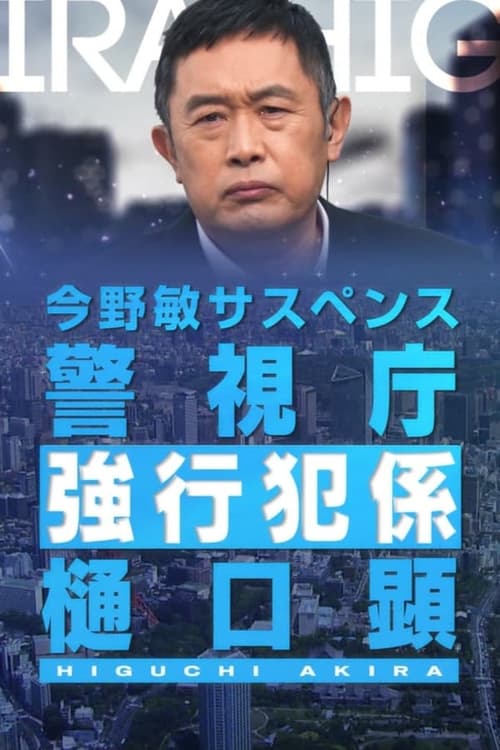
In the opening scene of "Keishicho Kyokohan Gakari Higuchi Akira," we are introduced to the protagonist, Higuchi Akira, a dedicated and somewhat unconventional police officer in the Tokyo Metropolitan Police Department. The camera follows him as he navigates the bustling streets of Tokyo, showcasing his keen observational skills. He is seen analyzing the behavior of pedestrians, hinting at his sharp instincts and attention to detail. His internal monologue reveals his commitment to justice and a desire to solve crimes that others overlook.
The story kicks into gear when a series of mysterious thefts occur in a wealthy district of Tokyo. Higuchi is assigned to the case, and he quickly gathers his team, which includes his partner, a more by-the-book officer named Kato, and a tech-savvy analyst, Sato. The trio begins their investigation by interviewing victims and examining crime scenes. Higuchi's unorthodox methods, such as re-enacting the thefts in his mind, lead to initial breakthroughs, but they also create tension with Kato, who prefers a more traditional approach.
As they delve deeper into the case, Higuchi discovers a pattern linking the thefts to a notorious gang known for their elaborate heists. The gang's leader, a cunning figure named Takeda, becomes the primary suspect. Higuchi's determination to catch Takeda intensifies, and he begins to obsess over the case, often working late into the night. His personal life suffers as he neglects relationships, particularly with his supportive girlfriend, who expresses concern over his well-being.
In a pivotal scene, Higuchi and Kato stake out a location believed to be a hideout for the gang. They witness a suspicious exchange and decide to intervene. A tense confrontation ensues, with Higuchi displaying his physical prowess as he engages in a fight with one of the gang members. The scene is filled with dynamic camera angles and quick cuts, emphasizing the urgency and danger of the situation. Despite their efforts, the gang manages to escape, leaving Higuchi frustrated and more determined than ever.
The investigation takes a turn when Sato uncovers a lead that suggests Takeda may be planning a major heist at a high-profile event. The team scrambles to gather intelligence and prepare for the operation. Higuchi's leadership shines as he coordinates with other units, but his obsession with capturing Takeda begins to alienate his team. Kato confronts Higuchi about his reckless behavior, leading to a heated argument that strains their partnership.
On the night of the event, the atmosphere is electric, filled with glitz and glamour. Higuchi and his team are on high alert, monitoring the crowd for any signs of the gang. As the heist unfolds, the tension escalates. Takeda and his crew execute their plan with precision, but Higuchi's instincts kick in. He spots a familiar face in the crowd and realizes it's one of Takeda's accomplices. A chase ensues through the venue, with Higuchi navigating through throngs of guests, showcasing his agility and determination.
The chase culminates in a dramatic showdown in a secluded area of the venue. Higuchi confronts the accomplice, leading to a physical altercation. The fight is intense, with both men exchanging blows, and Higuchi's emotional state is palpable as he channels his frustration and desperation into the confrontation. Ultimately, he subdues the accomplice, but not before learning that Takeda has escaped with a significant amount of stolen goods.
In the aftermath, Higuchi grapples with feelings of failure and guilt. He reflects on the toll the case has taken on his personal life and relationships. Kato, seeing Higuchi's distress, offers a moment of reconciliation, acknowledging the importance of teamwork and balance. This moment of vulnerability allows Higuchi to reassess his priorities.
The final act of the series sees Higuchi and his team regrouping to strategize their next move against Takeda. They analyze the information gathered from the accomplice and begin to piece together a plan to finally bring down the gang. The tension builds as they prepare for a final confrontation, leading to a climactic showdown that tests their resolve and teamwork.
In the series finale, the team executes their plan, leading to a high-stakes raid on Takeda's hideout. The action is fast-paced, with multiple angles capturing the chaos of the operation. Higuchi's leadership is put to the test as they encounter unexpected resistance from the gang. The fight scenes are choreographed with precision, showcasing each character's strengths and weaknesses.
As the dust settles, Higuchi faces Takeda in a final confrontation. The emotional stakes are high, with Higuchi confronting his own motivations and the impact of his obsession. The scene is charged with tension as they exchange words before engaging in a fierce battle. Ultimately, Higuchi prevails, capturing Takeda and bringing him to justice.
The series concludes with Higuchi reflecting on his journey, the importance of his team, and the balance between his personal and professional life. The final shot captures him walking through the streets of Tokyo, a renewed sense of purpose in his stride, hinting at the ongoing challenges he will face as a dedicated officer.
More TV Shows Like This
Browse All TV Shows →




What is the ending?
In the ending of "Keishicho Kyokohan Gakari Higuchi Akira," the main character, Higuchi Akira, confronts the mastermind behind a series of crimes that have plagued the city. After a tense showdown, justice is served, and the team reflects on their growth and the bonds they've formed. The series concludes with a sense of closure for the characters, particularly for Higuchi, who has found a renewed sense of purpose.
As the final episode unfolds, the scene opens in a dimly lit warehouse, where Higuchi Akira stands face-to-face with the antagonist, a cunning criminal who has eluded capture for years. The atmosphere is thick with tension, the air heavy with the weight of their shared history. Higuchi's heart races, a mix of determination and fear coursing through him. He knows that this confrontation is not just about the case; it's personal.
The camera shifts to the antagonist, who smirks, confident in their ability to manipulate the situation. They taunt Higuchi, reminding him of past failures and the lives affected by their actions. Higuchi's fists clench, his internal struggle evident as he grapples with the memories of those he couldn't save. This moment is pivotal; it encapsulates his journey from a rookie officer to a seasoned detective, driven by a desire for justice.
As the confrontation escalates, the scene cuts to Higuchi's team, who are monitoring the situation from a nearby command center. Each member is on edge, their faces illuminated by the glow of computer screens. They share worried glances, knowing that Higuchi is risking everything. The camaraderie among them is palpable; they have become a family, united by their shared mission.
Back at the warehouse, the standoff reaches a climax. Higuchi, fueled by the support of his team, finally confronts the antagonist with unwavering resolve. He recalls the faces of the victims, the families torn apart, and the weight of his badge. In a moment of clarity, he realizes that he must not only capture the criminal but also confront his own fears and doubts.
The fight that ensues is intense, a physical manifestation of Higuchi's internal battle. He dodges blows, his movements a blend of agility and desperation. The choreography of the fight is raw and visceral, showcasing Higuchi's growth as a fighter and a detective. With a final surge of strength, he manages to subdue the antagonist, handcuffing them as the weight of the moment settles in.
As the dust begins to clear, the scene transitions to the aftermath. Higuchi stands outside the warehouse, the sun rising on the horizon, casting a warm glow over the city. His team joins him, their expressions a mix of relief and pride. They share a moment of silence, acknowledging the challenges they've faced together. Higuchi looks at each of them, gratitude filling his heart. He realizes that he is not alone in this fight; they are a team, and together they can face whatever comes next.
In the final scenes, the characters reflect on their journey. Higuchi visits the families of the victims, offering them closure and a promise to continue fighting for justice. The emotional weight of these encounters is profound, as he sees the impact of his work on the lives of others. Each family member expresses their gratitude, and Higuchi feels a renewed sense of purpose.
The series concludes with a montage of the team working together, solving cases, and supporting one another. Higuchi stands at the forefront, a symbol of resilience and hope. The screen fades to black, leaving viewers with a sense of fulfillment and the understanding that while the fight for justice is ongoing, the bonds formed through shared struggles are unbreakable.
In summary, Higuchi Akira emerges as a stronger, more determined individual, having faced his fears and embraced the support of his team. The antagonist is captured, bringing a sense of justice to the victims' families. Each character finds their place within the team, solidifying their commitment to their roles as protectors of the city. The ending encapsulates themes of growth, camaraderie, and the relentless pursuit of justice.
Is there a post-credit scene?
In "Keishicho Kyokohan Gakari Higuchi Akira," there is indeed a post-credit scene that adds an intriguing layer to the narrative.
As the credits roll, the screen fades back in to reveal a dimly lit room filled with various police equipment and case files scattered across a large table. The camera pans slowly, capturing the remnants of a recent investigation. The atmosphere is tense, underscored by a low, suspenseful score that hints at unresolved mysteries.
In the center of the room, we see Higuchi Akira, portrayed with a look of deep contemplation. He is staring at a particular file, his brow furrowed, indicating the weight of the case on his mind. The file contains photographs and notes related to a cold case that has haunted him throughout the series. His fingers trace the edges of the photographs, revealing images of a crime scene that has remained unsolved.
Suddenly, the door creaks open, and his partner, a fellow officer, steps in. There's a palpable tension as they exchange glances. The partner, with a mix of concern and determination, asks Higuchi if he's ready to tackle the case again. Higuchi's expression shifts from contemplation to resolve, a flicker of hope igniting in his eyes. He nods slowly, indicating that he is ready to dive back into the investigation.
The scene ends with a close-up of the file, the camera lingering on a particular photograph that hints at a new lead, before fading to black. This moment not only teases future developments but also encapsulates Higuchi's relentless pursuit of justice, showcasing his internal struggle and unwavering commitment to solving the mysteries that plague him. The post-credit scene leaves viewers with a sense of anticipation, eager to see how these unresolved threads will unfold in potential future narratives.
What motivates Higuchi Akira to become a police officer?
Higuchi Akira is driven by a deep sense of justice and a personal desire to protect the innocent. His backstory reveals that he witnessed a crime in his youth that left a lasting impact on him, fueling his determination to ensure that others do not suffer the same fate.
How does Higuchi Akira's relationship with his partner evolve throughout the series?
Initially, Higuchi's relationship with his partner is marked by tension and misunderstandings, as they have different approaches to policing. However, as they face various challenges together, they begin to understand and respect each other's strengths, leading to a strong bond built on trust and camaraderie.
What are the key challenges Higuchi Akira faces in solving the major case of the season?
Higuchi Akira encounters numerous obstacles, including bureaucratic red tape, a lack of evidence, and the cunning tactics of the criminal mastermind behind the case. His determination is tested as he navigates these challenges, often putting himself in danger to uncover the truth.
What role does the supporting cast play in Higuchi Akira's investigations?
The supporting cast, including fellow officers and forensic experts, provide crucial assistance to Higuchi Akira. Each character brings unique skills and perspectives that help him piece together clues, while also adding depth to the narrative through their own personal stories and interactions with Higuchi.
How does Higuchi Akira deal with the emotional toll of his job?
Throughout the series, Higuchi Akira struggles with the emotional weight of his responsibilities. He often reflects on the cases he works on, feeling the burden of the victims' stories. To cope, he seeks solace in his friendships and occasionally engages in hobbies that allow him to unwind, though he often finds it difficult to fully escape the pressures of his role.
Is this family friendly?
"Keishicho Kyokohan Gakari Higuchi Akira" is a police procedural drama that contains elements that may not be suitable for younger audiences or sensitive viewers. Here are some potentially objectionable or upsetting aspects:
-
Crime Scenes: The show features depictions of crime scenes, which may include blood, violence, and the aftermath of criminal activities. These visuals can be intense and unsettling.
-
Mature Themes: The narrative explores themes such as betrayal, loss, and the moral complexities of law enforcement, which may be difficult for children to understand.
-
Emotional Turmoil: Characters often experience significant emotional distress, including grief, anger, and anxiety, which may resonate deeply and be upsetting for sensitive viewers.
-
Confrontations: There are scenes of confrontations between police and suspects that may involve aggressive behavior or threats, which could be alarming.
-
Realistic Portrayal of Crime: The show does not shy away from the darker aspects of society, including discussions of criminal motives and the impact of crime on victims and their families.
These elements contribute to a more mature viewing experience, making it less suitable for children or those who may be sensitive to such content.









