





























Popular
What challenges does the main character face in their personal life throughout the series?
How does the relationship between Jin Ho-gae and his colleagues evolve over the series?
What specific incidents highlight the dangers faced by first responders in the show?
How does the show portray the psychological impact of being a first responder on its characters?
What role does teamwork play in the success of the first responders in critical situations?
Should I watch it?
Additional Questions
Ask Your Own Question

What is the plot?
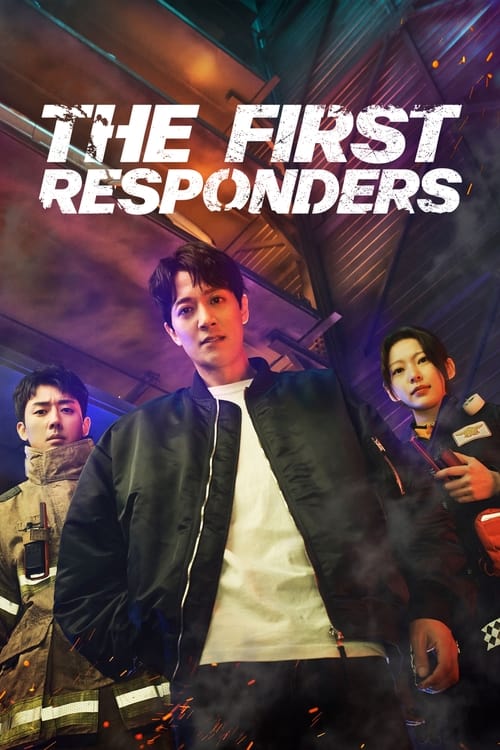
The series "The First Responders" begins with a dramatic scene where a fire breaks out in a high-rise building. Firefighters rush to the scene, showcasing their teamwork and urgency. Among them is the seasoned firefighter Jin Ho-gae, who is determined to save as many lives as possible. As they enter the building, the smoke is thick, and visibility is low. Jin Ho-gae leads his team, making quick decisions about which floors to search first. They encounter a trapped family on the upper floors, and Jin Ho-gae's instincts kick in as he reassures them while coordinating the rescue.
Meanwhile, the paramedics, including the skilled and compassionate paramedic Song Seung-jo, are on standby outside, ready to assist the injured as they are brought out. Seung-jo is shown to have a strong emotional connection to his work, often reflecting on the lives he saves. As the firefighters bring out the first victims, Seung-jo springs into action, assessing their injuries and providing immediate care. The tension escalates as they receive reports of more people trapped inside, prompting Jin Ho-gae to make the difficult decision to send in additional teams.
As the rescue operation continues, the narrative shifts to the police department, where Officer Kim Ki-joon is dealing with a domestic violence case. He is portrayed as a dedicated officer, but the emotional toll of his job weighs heavily on him. Ki-joon receives a call about the fire and rushes to the scene, where he finds chaos and confusion. He quickly assesses the situation and begins to help manage the crowd, directing people away from danger while keeping an eye out for any potential threats.
Back at the fire scene, Jin Ho-gae and his team face a critical moment when a structural collapse occurs, trapping one of their own. The team must work quickly to rescue their colleague while also ensuring the safety of the civilians still inside. Jin Ho-gae's leadership is tested as he balances the urgency of the rescue with the risk of further collapse. The emotional stakes rise as they manage to free their teammate, but not without injuries and close calls.
As the fire is finally brought under control, the aftermath reveals the toll it has taken on everyone involved. Jin Ho-gae reflects on the lives lost and saved, grappling with feelings of guilt and responsibility. Seung-jo tends to the injured, showcasing his emotional resilience but also revealing cracks in his facade as he processes the trauma of the day. Ki-joon, witnessing the devastation, feels a renewed sense of purpose but also questions the effectiveness of his role in preventing such tragedies.
In subsequent episodes, the series delves deeper into the personal lives of the first responders. Jin Ho-gae struggles with his relationship with his family, often prioritizing his job over personal connections. Seung-jo faces challenges in his romantic life, as his dedication to work strains his relationship with his girlfriend. Ki-joon deals with the fallout from the domestic violence case, which leads him to confront his own vulnerabilities and the systemic issues within the police force.
The series also introduces new emergencies, including a major traffic accident and a natural disaster, each requiring the first responders to work together under extreme pressure. The dynamics between the characters evolve as they face these challenges, revealing their strengths and weaknesses. Jin Ho-gae's leadership is further tested as he must navigate conflicts within his team, while Seung-jo's compassion becomes a double-edged sword as he struggles to maintain his emotional health.
As the season progresses, the characters confront their pasts, leading to moments of reckoning. Jin Ho-gae faces a traumatic event from his early career that resurfaces, forcing him to confront his fears. Seung-jo's relationship reaches a breaking point, leading to a heartfelt confrontation that forces both characters to reevaluate their priorities. Ki-joon finds himself in a moral dilemma when he must choose between following orders and doing what he believes is right.
The climax of the season builds towards a catastrophic event, a massive explosion at a chemical plant that puts the entire city at risk. The first responders are called into action once again, and the stakes are higher than ever. Jin Ho-gae leads the charge, coordinating efforts between firefighters, paramedics, and police. The chaos of the explosion creates a race against time as they work to evacuate civilians and contain the disaster.
In the final moments of the season, the characters are pushed to their limits. Jin Ho-gae faces a life-or-death decision that could save many but endanger his own life. Seung-jo must confront his emotional barriers to provide critical care to victims, while Ki-joon grapples with the consequences of his choices in the face of overwhelming danger. The season ends on a cliffhanger, leaving the characters' fates uncertain and setting the stage for further exploration of their journeys in the next season.







What is the ending?
In the ending of "The First Responders," the main characters face a series of intense situations that test their resolve and commitment to their roles as first responders. The climax revolves around a significant emergency that requires their collective efforts. By the conclusion, they manage to overcome the challenges, but not without personal sacrifices and emotional revelations. Each character's journey culminates in a moment of reflection, showcasing their growth and the bonds they've formed through their experiences.
As the final episode unfolds, the scene opens with the sun setting over the city, casting a warm glow that contrasts with the tension in the air. The first responders are gathered at the station, their faces etched with fatigue but determination. They receive a call about a major incident--a building collapse in a densely populated area. The urgency in the air is palpable as they gear up, adrenaline coursing through their veins.
Scene break. The camera follows the team as they rush to the scene, sirens blaring and lights flashing. The chaos of the collapsed building is overwhelming; debris is strewn everywhere, and the cries for help echo through the dust-filled air. The team splits up, each member taking on specific roles. The lead paramedic, driven by a sense of duty, pushes through the rubble, searching for survivors. His internal struggle is evident; he grapples with the weight of responsibility and the fear of failure.
Scene break. Meanwhile, another character, a firefighter, works tirelessly to clear debris, his muscles straining as he lifts heavy pieces of concrete. He is motivated by the memory of a loved one he lost in a similar incident, fueling his determination to save others. His emotional state is raw, and the audience can see the conflict within him as he fights against the clock.
Scene break. As the rescue efforts continue, the team faces setbacks--aftershocks and the risk of further collapses threaten their safety. Tension mounts as they receive updates about trapped individuals, and the pressure intensifies. The camera captures close-ups of their faces, revealing fear, hope, and unwavering resolve. Each character's backstory is briefly highlighted through flashbacks, showcasing their motivations and the personal stakes involved.
Scene break. In a pivotal moment, the lead paramedic discovers a survivor trapped under the rubble. The emotional weight of this discovery is immense; he must make a split-second decision to save the individual while risking his own safety. The scene is charged with suspense as he communicates with the trapped person, offering reassurance while coordinating with his team to execute a rescue plan.
Scene break. As the rescue unfolds, the team works in unison, showcasing their growth and the trust they've built in one another. They manage to free the survivor, but not without sustaining injuries themselves. The emotional release is palpable as they pull the survivor to safety, and the team shares a moment of triumph amidst the chaos.
Scene break. The episode concludes with the first responders returning to the station, exhausted but fulfilled. They share a quiet moment of reflection, acknowledging the toll their work takes on them. Each character expresses their gratitude for one another, solidifying the bonds formed through their shared experiences. The lead paramedic, now more introspective, contemplates the fragility of life and the importance of their mission.
In the final moments, the camera pans out, capturing the first responders as they stand together, united in purpose. The screen fades to black, leaving the audience with a sense of hope and the understanding that while their work is challenging, the connections they forge and the lives they save make it all worthwhile. Each character's fate is intertwined with the lessons learned throughout their journey, emphasizing the resilience of the human spirit in the face of adversity.
Is there a post-credit scene?
In the 2022 series "The First Responders," there is no post-credit scene. The show focuses on the intense and emotional experiences of first responders as they navigate various emergencies and personal challenges. Each episode concludes with a resolution to the immediate crisis, but there are no additional scenes after the credits that expand on the story or characters. The narrative is tightly woven around the main events, leaving viewers with a sense of closure at the end of each episode.
What challenges does the main character face in their personal life throughout the series?
The main character, Jin Ho-gae, faces significant challenges in his personal life, particularly with his estranged relationship with his father. This tension is compounded by the demands of his job as a firefighter, where he often grapples with the emotional toll of his profession. His dedication to saving lives often puts a strain on his ability to connect with his family, leading to moments of introspection and regret.
How does the relationship between Jin Ho-gae and his colleagues evolve over the series?
Throughout the series, Jin Ho-gae's relationship with his colleagues, particularly with his partner, is tested by various emergencies and personal crises. Initially, there is a sense of camaraderie, but as they face life-threatening situations, underlying tensions surface. Moments of vulnerability and shared trauma lead to deeper bonds, showcasing their growth from mere coworkers to a tight-knit family.
What specific incidents highlight the dangers faced by first responders in the show?
Several incidents throughout the series vividly illustrate the dangers faced by first responders. One notable scene involves a massive building fire where Jin Ho-gae and his team must navigate through thick smoke and collapsing structures to rescue trapped civilians. The intense heat and chaos create a palpable sense of urgency and fear, emphasizing the physical and emotional risks they endure daily.
How does the show portray the psychological impact of being a first responder on its characters?
The psychological impact of being a first responder is portrayed through various characters' struggles with PTSD and anxiety. For instance, after a particularly traumatic rescue, Jin Ho-gae experiences flashbacks and nightmares, which affect his performance at work and his relationships. These moments are depicted with raw emotional depth, showcasing the internal battles that often go unnoticed by the public.
What role does teamwork play in the success of the first responders in critical situations?
Teamwork is a central theme in the series, illustrated through various rescue operations where the characters must rely on each other's strengths. In one critical scene, during a multi-vehicle accident, the team coordinates their efforts seamlessly, with each member taking on specific roles. This collaboration not only highlights their skills but also reinforces the emotional support they provide one another, ultimately leading to successful outcomes.
Is this family friendly?
"The First Responders," produced in 2022, is a drama series that focuses on the lives of emergency responders, showcasing their challenges and the intense situations they face. While the show aims to highlight the bravery and dedication of these individuals, it does contain elements that may not be suitable for all audiences, particularly children or sensitive viewers.
Potentially objectionable or upsetting aspects include:
-
Intense Emergency Situations: The show features graphic depictions of accidents, fires, and medical emergencies that can be distressing. Scenes may include injuries, trauma, and the aftermath of disasters.
-
Emotional Turmoil: Characters often grapple with high-stress situations, leading to emotional breakdowns, anxiety, and moments of despair that may be heavy for younger viewers.
-
Death and Loss: The series addresses themes of mortality, including the loss of life in emergency scenarios, which can be particularly upsetting.
-
Realistic Portrayals of Violence: There are instances of violence, whether in the context of accidents or confrontations, that may be unsettling.
-
Substance Abuse and Addiction: Some characters may struggle with personal issues, including substance abuse, which could be a sensitive topic for some viewers.
-
Strong Language: The dialogue may include strong language or adult themes that are not appropriate for children.
Overall, while "The First Responders" aims to portray the heroism of first responders, its intense and sometimes graphic content may not be suitable for a family-friendly viewing experience.
спойлер ко 2 сезону и 5 серии
В пятой серии второго сезона "Первых респондентов" разворачивается напряженная и эмоциональная история, которая затрагивает как профессиональные, так и личные аспекты жизни главных героев.
Сцена 1: Начало эпизода открывается с яркого утреннего света, проникающего в окна пожарной станции. Мы видим, как команда готовится к новому дню. Ли, один из главных персонажей, выглядит уставшим и озабоченным. Его внутренние переживания связаны с недавними событиями, когда он не смог спасти человека во время вызова. Это чувство вины становится основным мотивом его действий в этой серии.
Сцена 2: Вскоре поступает тревожный вызов о пожаре в жилом районе. Команда спешит на место происшествия. По пути Ли пытается сосредоточиться, но его мысли все еще возвращаются к прошлому. Он чувствует, что должен доказать себе и команде, что способен справиться с любыми трудностями.
Сцена 3: На месте пожара царит хаос. Пламя охватывает здание, и люди в панике пытаются выбраться. Ли и его напарники действуют быстро и слаженно, но в процессе спасения он сталкивается с женщиной, которая пытается спасти своего ребенка, оставшегося внутри. Это вызывает у него сильные эмоции, и он понимает, что не может позволить себе снова потерять кого-то.
Сцена 4: Внутри здания Ли находит ребенка, но путь к выходу заблокирован. Он испытывает страх и решимость одновременно. В этот момент он вспоминает о своих коллегах и о том, как они всегда поддерживают друг друга. Это придаёт ему сил, и он находит способ выбраться с ребенком, несмотря на опасность.
Сцена 5: После успешного спасения команда возвращается на станцию, но радость от выполненной миссии омрачена потерей нескольких людей в пожаре. Ли чувствует, что его внутренние демоны не оставляют его в покое. Он решает поговорить с психологом, чтобы разобраться в своих чувствах и научиться справляться с виной.
Сцена 6: Эпизод завершается сценой, где Ли и его команда собираются вместе, чтобы обсудить произошедшее. Они делятся своими переживаниями и поддерживают друг друга, что подчеркивает важность командной работы и взаимопомощи в их профессии. Ли понимает, что не одинок в своих чувствах, и это придаёт ему надежду на будущее.
Эта серия глубоко затрагивает темы вины, потери и силы командного духа, показывая, как герои справляются с трудностями, которые приходят с их работой.









