














Popular
Why does James Marsden’s character get sequestered with the jury in Jury Duty?
Who is Ronald Gladden, and why is he the only person who doesn’t know the trial is fake?
What is the role of Noah in Jury Duty, and what does he try to do with Ronald?
What happens with the fake trial’s defense, and why is it important to the story?
What is the deal with the hotel room bathroom incident involving James Marsden?
Should I watch it?
Ask Your Own Question

What is the plot?
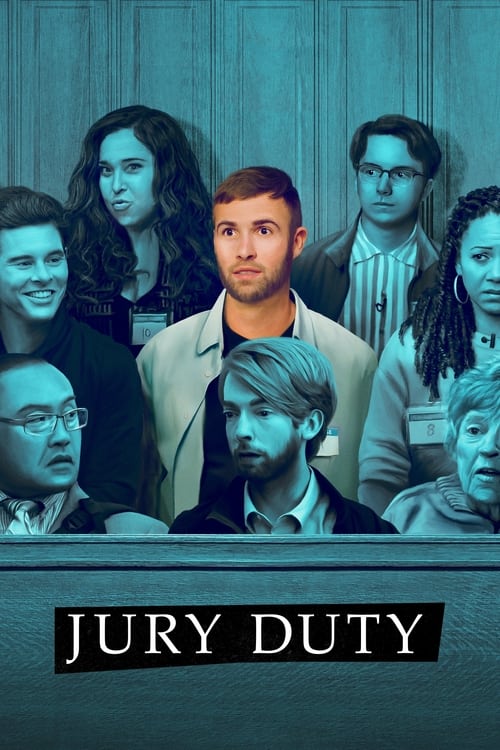
Ronald Gladden arrives at the Huntington Park Superior Court in Los Angeles to serve on a civil jury, believing he is taking part in an ordinary real case, while every other participant around him is actually an actor in a staged production.
He is introduced to the other jurors and to the courtroom process, and the early part of the series follows the ordinary rhythms of jury selection, introductions, and the opening days of what appears to be a standard civil trial.
As the mock trial begins, Ronald participates as a conscientious juror, taking the process seriously and forming impressions of the people around him, including fellow jurors and the attorneys in the case.
The series then shows the court proceedings continuing as if they were genuine, with the actors maintaining the illusion of a real legal conflict while Ronald remains unaware that the entire environment has been constructed for him.
Outside the courtroom, Ronald continues building relationships with the other jurors and getting pulled into everyday social situations created around the trial setting, all of which are carefully staged to keep him inside the fake reality.
At the same time, the fake case itself develops like an actual lawsuit, with testimony, argument, and jury-room discussion designed to make Ronald believe he is helping decide a real verdict.
Ronald's personality becomes central to the story because he repeatedly responds with patience, empathy, and sincerity, and the people around him keep reacting to the choices he makes in ways that reinforce the illusion.
As the trial advances, the staged events escalate in complexity, and Ronald is placed in more awkward and emotionally loaded situations that test how he behaves in front of the supposed judge, attorneys, and his fellow jurors.
The show continues toward its finale by sustaining the courtroom deception long enough for a complete trial to occur in the renovated courtroom set, with Ronald still not knowing that everything has been planned in advance.
In the final episode, the truth is revealed to Ronald: the "trial" has been fake, everyone around him except him has been acting, and the production has been constructed entirely to document his reactions.
The reveal lands as an emotional shock because Ronald has spent the entire series treating the people and events as real, and his response becomes the center of the ending.
After the reveal, the series focuses on Ronald's emotional reaction and the cast and crew's explanation of what has happened, closing the story on the moment when he finally understands that the case, the courtroom, and the relationships built around him were all part of the same elaborate setup.







What is the ending?
The ending of Jury Duty shows Anthony learning that the whole experience was staged, and he reacts with shock, confusion, and then visible emotion as the crew reveals how the production was built around him. The story closes with Anthony being recognized for how he handled everything, and the people around him parting with him after the prank is fully exposed.
In the final stretch, the fake company-retreat story reaches its last crisis. The employees race to stop Doug Womack Sr. from selling the company, and Anthony once again steps into the middle of the conflict, acting loyally toward the people and the place he believes are real. The situation is engineered so the fake setups keep blocking the plan, and Anthony's actions help carry the ending forward.
Then comes the reveal. Anthony is told that everyone around him was acting and that the entire situation had been constructed for him. He initially cannot accept it, because the scale of the deception is so large that he keeps reacting as if there must still be some other explanation. The emotional force of the scene comes from watching him process that every argument, every task, and every friendship he thought he had during the retreat was part of the performance.
After that, the production shows him the behind-the-scenes machinery, making clear how the fake world was maintained and how the crew managed the illusion over time. The ending also emphasizes the human side of the cast and crew, who appear genuinely affected by saying goodbye to him after living inside the deception for so long. One report says he is given a $100,000 check and then shown the hidden-camera setup that had been recording him throughout the experience.
The fate of the main participants at the end is straightforward. Anthony learns the truth, survives the emotional reveal, and leaves the story as the person at the center of the whole experiment. Doug Womack Sr. remains part of the final company conflict, but the sale attempt is prevented within the staged story's ending. Dougie Jr. is revealed as part of the fake corporate chaos and is left behind once the reveal happens. The actors and crew step out of character and part from Anthony after the deception is exposed, with the final scenes focused on the aftermath of the prank and his reaction to it.
Is there a post-credit scene?
Yes -- Jury Duty does have a post-credit scene, but it is not a fictional extra plot twist. After the final episode, the show shifts into a behind-the-scenes reveal that shows how the prank was constructed and how Ronald Gladden reacted once he learned the truth.
The post-credit material functions as a reveal and epilogue: it shows the production crew, the actors, and Ronald watching back parts of what happened, making the emotional payoff about his reaction and the scale of the hoax rather than about a new story beat. The credits/reveal material also confirms the premise that Ronald was unknowingly placed in a fully staged jury experience with actors around him, including James Marsden.
If you want, I can also describe the exact final reveal sequence episode by episode.
Why does James Marsden’s character get sequestered with the jury in Jury Duty?
James Marsden's fictionalized version of himself is caught up in a paparazzi incident tied to the fake trial, and that incident forces the whole jury to be sequestered for the duration of the two-week case. This is one of the core plot mechanics that puts him in Ronald Gladden's orbit and keeps the deception going.
Who is Ronald Gladden, and why is he the only person who doesn’t know the trial is fake?
Ronald Gladden is the nonactor juror at the center of the show, described as a deeply normal man from San Francisco who answered a Craigslist ad for a supposed documentary about jury duty. Everyone else in the courtroom knows the case is staged, so Ronald becomes the single unwitting participant around whom the entire story is built.
What is the role of Noah in Jury Duty, and what does he try to do with Ronald?
Noah, played by Mekki Leeper, is one of the actors in the jury and also one of the writers on the show. According to the breakdown of behind-the-scenes plotting, the writers considered having Noah lure Ronald into repeating a Family Guy-style claim about being racist to get out of jury duty, but they ultimately scrapped that plan because it felt too unbelievable.
What happens with the fake trial’s defense, and why is it important to the story?
The fake trial's defense is described as a disaster, which matters because the legal absurdity helps push the improvised comedy and increases the pressure around the staged proceedings. The weak defense is part of the deliberately shaky courtroom setup that keeps Ronald reacting to increasingly strange events.
What is the deal with the hotel room bathroom incident involving James Marsden?
One of the show's more infamous side plots involves James Marsden disappearing into the bathroom for a long time, after which Ronald returns to find an awful smell and Marsden claiming the toilet is full of giant, unflushable turds. It is presented as a separate comic thread running alongside the trial and helps show how the show mixes courtroom deception with awkward, physical comedy.
Is this family friendly?
No--Jury Duty is not especially family-friendly for young children. It is more suitable for older teens because it includes frequent strong language, sexual references, and some crude humor.
Potentially objectionable or upsetting elements include: - Strong profanity and bleeped expletives throughout. - Sexual innuendo and sexual references, including talk about sexual activity, masturbation, and sending nudes. - A brief sexual scene without nudity, according to the NZ classification. - Alcohol use, plus references to cocaine, cannabis, and prescription drug misuse. - Bathroom humor and generally crude behavior. - A scene involving an intoxicated person vomiting.
If you want, I can also give a parental-age recommendation by age group like "safe for 10+, 13+, 15+" without spoilers.