



























Popular
What motivates Jin-tae to enlist in the army despite his initial reluctance?
How does the relationship between Jin-tae and Jin-seok evolve throughout the film?
What are the circumstances that lead to Jin-seok being captured by North Korean forces?
What sacrifices does Jin-tae make for his brother throughout the film?
How does the film depict the impact of war on the soldiers' mental states, particularly Jin-tae?
Should I watch it?
Ask Your Own Question

What is the plot?
Sorry, we aren't able to watch and write up a full detailed plot yet. Check back in a few days.

What is the ending?
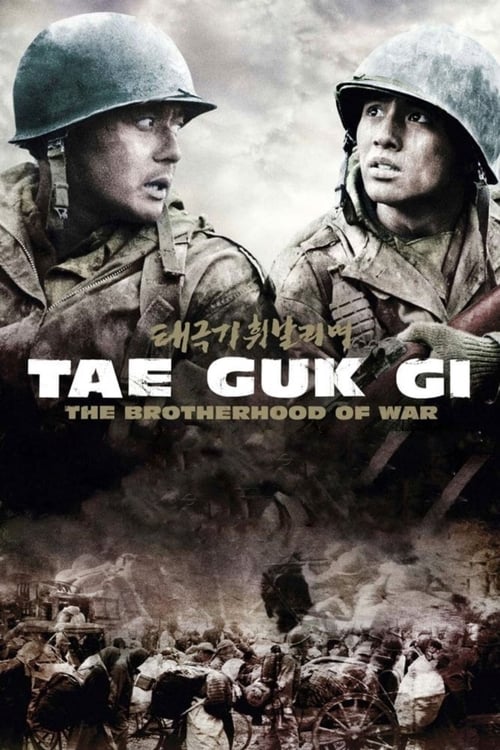
In the ending of "Tae Guk Gi: The Brotherhood of War," Jin-tae sacrifices himself to save his brother Jin-seok, who is captured by North Korean forces. Jin-seok, devastated by the loss of his brother, survives the war but is left haunted by the memories of the conflict and the sacrifice made by Jin-tae. The film concludes with Jin-seok visiting Jin-tae's grave, reflecting on their bond and the horrors of war.
As the film approaches its climax, the tension escalates on the battlefield. Jin-tae, played by Won Bin, and his younger brother Jin-seok, portrayed by Dong-gun Jang, find themselves entrenched in the chaos of the Korean War. The brothers, who initially joined the army to protect their family, have been torn apart by the brutal realities of war.
In a pivotal scene, Jin-seok is captured by North Korean soldiers during a fierce skirmish. The camera captures the desperation in Jin-tae's eyes as he realizes the gravity of the situation. He knows that his brother's life is in jeopardy, and the weight of their familial bond drives him to make a harrowing decision. Jin-tae, who has already endured immense suffering and loss, is determined to save Jin-seok at any cost.
As the narrative unfolds, Jin-tae embarks on a perilous mission to rescue his brother. The film portrays the harrowing landscape of war, with explosions and gunfire echoing in the background, emphasizing the chaos surrounding them. Jin-tae's internal struggle is palpable; he is torn between his duty as a soldier and his love for his brother. The audience witnesses his transformation from a man fighting for survival to a brother willing to sacrifice everything.
In a heart-wrenching moment, Jin-tae confronts the North Korean soldiers holding Jin-seok captive. The tension is thick as he pleads for his brother's release, but the soldiers are unyielding. In a desperate act of bravery, Jin-tae engages in a fierce battle, showcasing his determination and love. The cinematography captures the raw emotion of the fight, with close-ups of Jin-tae's face reflecting his anguish and resolve.
Ultimately, Jin-tae's sacrifice comes to fruition when he makes the ultimate choice to save Jin-seok. In a climactic scene, he throws himself into the line of fire, allowing Jin-seok to escape. The camera lingers on Jin-tae's face as he realizes the finality of his decision, a mix of fear and acceptance washing over him. The sound of gunfire fades as he falls, leaving Jin-seok to witness the heartbreaking loss of his brother.
The film then shifts to a quieter moment, where Jin-seok, now a survivor of the war, grapples with the emotional aftermath of the conflict. He visits Jin-tae's grave, a poignant scene that encapsulates the film's exploration of sacrifice and brotherhood. The cemetery is serene, contrasting sharply with the chaos of war. Jin-seok kneels before the grave, tears streaming down his face as he reflects on their shared memories and the bond that was irrevocably altered by the war.
In the final moments, the camera pulls back, revealing Jin-seok alone in the cemetery, a symbol of the countless lives affected by the war. The film closes on a somber note, emphasizing the enduring impact of loss and the deep scars left by conflict. Jin-seok's fate is one of survival, but it is marked by the haunting memory of his brother's sacrifice, leaving the audience to ponder the true cost of war.
Is there a post-credit scene?
"Tae Guk Gi: The Brotherhood of War" does not have a post-credit scene. The film concludes with a powerful and emotional ending that encapsulates the tragic consequences of war and the bond between the two brothers, Jin-tae and Jin-seok. After the intense and harrowing events of the Korean War, the film leaves the audience with a poignant reflection on sacrifice, loss, and the enduring impact of conflict on families. The final moments focus on the aftermath of their struggles, emphasizing the themes of brotherhood and the scars left by war, without any additional scenes following the credits.
What motivates Jin-tae to enlist in the army despite his initial reluctance?
Jin-tae, played by Won Bin, is initially reluctant to enlist in the army due to his deep sense of responsibility towards his younger brother, Jin-seok, and his family. However, his motivation shifts dramatically when he learns that enlisting could help protect his brother from the horrors of war. His love for Jin-seok drives him to join the military, hoping to shield him from danger and ensure his safety.
How does the relationship between Jin-tae and Jin-seok evolve throughout the film?
The relationship between Jin-tae and Jin-seok is central to the narrative. Initially, they share a close bond, with Jin-tae acting as a protective older brother. As the war progresses, their relationship becomes strained due to the harsh realities of combat and the choices they must make for survival. Jin-tae's transformation into a hardened soldier, driven by the need to protect his brother at all costs, leads to moments of conflict and emotional turmoil, particularly when Jin-seok is forced to confront the darker side of war and his brother's actions.
What are the circumstances that lead to Jin-seok being captured by North Korean forces?
Jin-seok is captured by North Korean forces during a chaotic battle scene where the South Korean troops are overwhelmed. In a desperate attempt to survive and protect his brother, Jin-tae fights fiercely, but the chaos of war leads to Jin-seok being separated from him. The capture occurs when Jin-seok is left vulnerable amidst the confusion, and he is taken prisoner, which becomes a pivotal moment that drives Jin-tae's subsequent actions and decisions.
What sacrifices does Jin-tae make for his brother throughout the film?
Jin-tae makes numerous sacrifices for Jin-seok throughout the film, showcasing his deep love and commitment. He risks his life repeatedly on the battlefield, often putting himself in harm's way to protect his brother. As the war intensifies, Jin-tae's sacrifices become more profound; he even goes so far as to commit morally questionable acts, including killing fellow soldiers, to gain favor and ensure Jin-seok's safety. His transformation from a caring brother to a ruthless soldier highlights the emotional toll of war and the lengths he is willing to go for family.
How does the film depict the impact of war on the soldiers' mental states, particularly Jin-tae?
The film powerfully depicts the psychological impact of war on soldiers, particularly through Jin-tae's character. As he witnesses the brutality and loss of life around him, his mental state deteriorates. Initially portrayed as a loving brother, the horrors of combat and the choices he makes to protect Jin-seok lead to a transformation marked by guilt, anger, and desperation. The film captures his internal struggle as he grapples with the consequences of his actions, ultimately portraying the devastating effects of war on the human psyche.
Is this family friendly?
"Tae Guk Gi: The Brotherhood of War" is a war film that contains several scenes and themes that may not be suitable for children or sensitive viewers. Here are some potentially objectionable or upsetting aspects:
-
Graphic Violence: The film depicts intense and realistic battle scenes, including gunfire, explosions, and hand-to-hand combat, which can be quite graphic and disturbing.
-
Death and Injury: There are numerous scenes showing the aftermath of war, including injured soldiers and civilian casualties, which can be emotionally distressing.
-
Emotional Trauma: Characters experience significant emotional pain, loss, and suffering, which may be difficult for younger viewers to process.
-
War Atrocities: The film addresses the harsh realities of war, including the impact on families and the moral dilemmas faced by soldiers, which can be heavy themes for sensitive audiences.
-
Strong Language: There are instances of strong language and harsh dialogue that may not be appropriate for younger viewers.
-
Themes of Brotherhood and Sacrifice: While these themes are central to the story, they are explored in the context of war, which can be intense and may evoke strong emotions.
Overall, the film's portrayal of war is raw and unflinching, making it more suitable for mature audiences.








