










Popular
How does Walter White's relationship with Jesse Pinkman evolve throughout the series?
What is the significance of the blue meth in Breaking Bad?
What role does Hank Schrader play in the story, and how does his character develop?
What motivates Walter White to start cooking meth?
How does the character of Saul Goodman influence the events of Breaking Bad?
Should I watch it?
Ask Your Own Question

What is the plot?
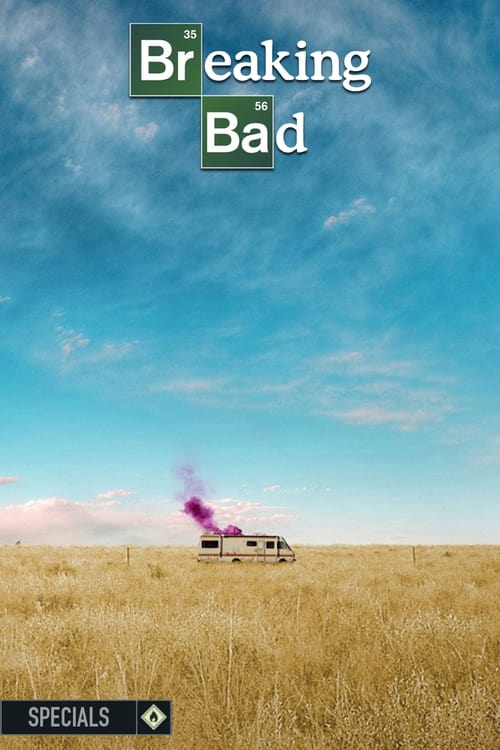
"Breaking Bad: Specials" consists of a series of short segments that provide additional context and behind-the-scenes insights into the making of the show, rather than a traditional narrative plot.
The first segment features a behind-the-scenes look at the creation of the series, showcasing the initial concept and the development of the characters. Vince Gilligan, the creator, discusses the transformation of Walter White from a mild-mannered chemistry teacher to a drug kingpin. The audience is introduced to the motivations behind Walter's actions, particularly his desire to secure his family's financial future after being diagnosed with terminal cancer.
In another segment, the casting process is highlighted, focusing on Bryan Cranston's audition for the role of Walter White. The casting directors recount their initial doubts about Cranston's suitability for the role, given his background in comedy. However, his audition ultimately impresses them, showcasing his ability to convey the character's complexity and depth.
The series also delves into the character of Jesse Pinkman, played by Aaron Paul. The creators discuss how Jesse was initially intended to be killed off early in the series, but due to Paul's compelling performance, the character was kept alive and developed further. This decision significantly impacts the narrative, as Jesse becomes a crucial partner in Walter's drug operation.
Another segment focuses on the visual style of the show, with cinematographer Michael Slovis explaining the use of color and composition to reflect the characters' emotional states. The creators emphasize the importance of visual storytelling in conveying the themes of the series, such as morality and the consequences of choices.
The special features also include interviews with the cast, where they share their experiences working on the show. Bryan Cranston reflects on the challenges of portraying Walter's descent into darkness, while Aaron Paul discusses the evolution of Jesse's character and his relationship with Walter.
The final segments provide a glimpse into the production process, including set design and location shooting. The creators express their commitment to authenticity, using real locations in Albuquerque to ground the story in reality. The attention to detail in the sets and props is highlighted, showcasing how they contribute to the overall atmosphere of the series.
Overall, "Breaking Bad: Specials" serves as a comprehensive exploration of the creative process behind the show, offering fans a deeper understanding of the characters, themes, and production choices that define "Breaking Bad."









What is the ending?
In the ending of "Breaking Bad," Walter White confronts his fate after a series of intense and violent events. He returns to Albuquerque to settle scores, ultimately freeing Jesse Pinkman from captivity and confronting the gang that held him. In a final act of defiance, Walter uses a remote-controlled machine gun to eliminate his enemies. Mortally wounded in the process, he dies in the meth lab, surrounded by the equipment that defined his life, while Jesse escapes to freedom.
Now, let's delve into the ending in a detailed, chronological narrative.
The final episodes of "Breaking Bad" unfold with Walter White, now a shadow of his former self, returning to Albuquerque. He is driven by a mix of desperation and determination, knowing that his time is limited. The scene opens with Walter in a car, the cold wind whipping through the open window as he drives through the familiar streets, a sense of nostalgia and regret washing over him. He is a man on a mission, his face etched with the weight of his choices.
Walter's first stop is to visit his former business partner, Elliott Schwartz. In a tense conversation, Walter demands that Elliott and his wife set up a trust fund for his children, ensuring they will receive the money he earned through his illicit activities. The scene is charged with tension, as Walter's desperation is palpable, and Elliott's reluctance is evident. Walter's manipulation is clear; he is still the master of his own fate, even as he faces the consequences of his actions.
Next, Walter confronts Skyler, his estranged wife. The scene is emotionally charged, filled with unspoken words and lingering resentment. Skyler is wary, her eyes reflecting a mix of anger and sadness. Walter tries to explain his actions, but the emotional distance between them is vast. Skyler's protective instincts for their children are evident, and she stands firm against Walter's attempts to justify his past. This confrontation highlights the deep rift in their relationship, a culmination of years of deceit and betrayal.
Walter's journey leads him to the compound where Jesse is being held captive by a gang of neo-Nazis. The tension escalates as Walter devises a plan to rescue Jesse. He arrives at the compound, his demeanor cold and calculated. The scene is dark and foreboding, the atmosphere thick with impending violence. Walter uses a remote-controlled machine gun hidden in the trunk of his car, a final act of ingenuity and desperation. As the gun fires, chaos erupts; the gang members are caught off guard, and the sound of gunfire echoes through the compound.
In the midst of the chaos, Walter finds Jesse, who is visibly traumatized and broken. Their reunion is fraught with emotion; Jesse's eyes reflect a mix of relief and anger. Walter offers Jesse a chance to escape, but Jesse, still grappling with the horrors he has endured, hesitates. Walter's desperation to save Jesse is evident, but so is Jesse's desire to break free from Walter's influence once and for all.
As the dust settles, Walter is left alone in the meth lab, the very place where his empire was built. Mortally wounded from a stray bullet, he stumbles through the lab, touching the equipment with a sense of bittersweet nostalgia. The scene is haunting; the blue meth glistens under the fluorescent lights, a symbol of both his success and his downfall. Walter's breathing becomes labored, and he collapses, the weight of his choices finally catching up to him.
In his final moments, Walter reflects on his life, the choices he made, and the people he hurt. The camera lingers on his face, capturing the complexity of his emotions--regret, pride, and a sense of inevitability. As he lies on the floor, the sound of sirens approaches in the distance, a reminder that his time has run out. The series closes with Walter's lifeless body surrounded by the very symbols of his ambition, leaving viewers with a haunting image of a man who sought power but ultimately lost everything.
In the end, Walter White dies alone, a tragic figure consumed by his own choices. Jesse Pinkman, on the other hand, escapes, driving away into the night, a symbol of hope and the possibility of redemption, albeit scarred by his experiences. The fates of these two characters encapsulate the central themes of the series: the consequences of ambition, the complexity of morality, and the enduring impact of choices made in the pursuit of power.
Is there a post-credit scene?
In the "Breaking Bad" specials, there is no traditional post-credit scene as one might expect in contemporary television. Instead, the specials primarily consist of behind-the-scenes footage, interviews, and insights into the making of the show. These segments provide a deeper understanding of the characters, the creative process, and the themes explored throughout the series.
The specials include a variety of content, such as cast and crew reflections, discussions about character development, and the impact of the show on its audience. They serve to enhance the viewer's appreciation of the series rather than introduce new plot elements or scenes that would typically be found in a post-credit sequence.
Overall, the focus is on celebrating the show's success and providing fans with a closer look at the artistry behind "Breaking Bad," rather than advancing the storyline or revealing new information about the characters.
How does Walter White's relationship with Jesse Pinkman evolve throughout the series?
Walter and Jesse's relationship begins as a partnership based on mutual benefit, with Walter acting as a mentor to Jesse. However, as the series progresses, their dynamic shifts dramatically. Walter's manipulation and control over Jesse lead to feelings of betrayal and resentment. Jesse's emotional turmoil and struggle with guilt over their actions create a complex bond filled with both loyalty and conflict.
What is the significance of the blue meth in Breaking Bad?
The blue meth, produced by Walter White and Jesse Pinkman, symbolizes the unique and high-quality product that sets them apart in the drug trade. It becomes a marker of their success and notoriety, representing Walter's transformation from a mild-mannered chemistry teacher to a ruthless drug lord. The blue color also serves as a visual cue for the audience, highlighting the consequences of Walter's choices.
What role does Hank Schrader play in the story, and how does his character develop?
Hank Schrader, Walter's brother-in-law and a DEA agent, serves as both a comedic relief and a significant antagonist to Walter's drug empire. His relentless pursuit of the 'Heisenberg' identity creates tension, especially as he unknowingly investigates Walter. Hank's character development is marked by his determination and eventual realization of the truth, leading to a tragic confrontation that highlights the personal stakes of the drug war.
What motivates Walter White to start cooking meth?
Walter White is initially motivated by a terminal cancer diagnosis and the desire to secure his family's financial future. His pride and feelings of inadequacy as a provider push him to take drastic measures. As he delves deeper into the drug trade, his motivations shift from altruistic to power-driven, revealing his darker ambitions and the lengths he will go to maintain control.
How does the character of Saul Goodman influence the events of Breaking Bad?
Saul Goodman, the flamboyant criminal lawyer, introduces a new level of cunning and resourcefulness to the series. His legal expertise and connections provide Walter and Jesse with crucial support in navigating the criminal underworld. Saul's character embodies the moral ambiguity of the series, often prioritizing profit over ethics, which influences Walter's decisions and further entangles him in illegal activities.
Is this family friendly?
"Breaking Bad: Specials" contains several elements that may not be suitable for children or sensitive viewers. Here are some potentially objectionable aspects:
-
Drug Use and Manufacturing: The series revolves around the illegal drug trade, showcasing the production and use of methamphetamine, which may be disturbing for younger audiences.
-
Violence: There are scenes depicting violence, including confrontations and threats that can be intense and graphic.
-
Strong Language: The dialogue includes frequent use of profanity, which may not be appropriate for children.
-
Mature Themes: The show explores complex themes such as morality, family dynamics under stress, and the consequences of crime, which may be heavy for younger viewers to process.
-
Emotional Distress: Characters experience significant emotional turmoil, including fear, desperation, and betrayal, which could be upsetting for sensitive individuals.
-
Death and Loss: The series addresses themes of mortality and loss, with characters facing life-threatening situations and the impact of death on families.
These elements contribute to the overall mature tone of the series, making it more suitable for adult audiences.