
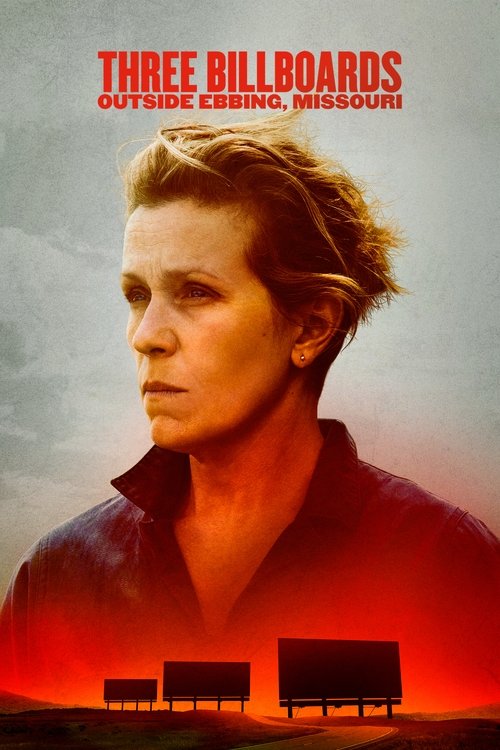































Popular
What motivates Mildred Hayes to rent the billboards?
How does Chief Willoughby react to the billboards?
What is the significance of the character Dixon in the story?
How does Mildred's relationship with her son, Robbie, evolve throughout the film?
What role does the town of Ebbing play in the story?
Should I watch it?
Ask Your Own Question

What is the plot?
Sorry, we aren't able to watch and write up a full detailed plot yet. Check back in a few days.






What is the ending?
In the ending of "Three Billboards Outside Ebbing, Missouri," Mildred Hayes and Officer Jason Dixon confront their unresolved issues after a series of violent and emotional events. The film concludes with them driving together, contemplating the possibility of seeking justice for the murder of Mildred's daughter, Angela.
As the film approaches its conclusion, the tension between Mildred Hayes and the local police reaches a boiling point. After a series of confrontations, Mildred's relentless pursuit of justice for her daughter Angela, who was brutally murdered, leads to a tragic escalation.
In the penultimate scenes, Mildred learns that Officer Jason Dixon, who has been deeply affected by the events surrounding her billboards, has been involved in a violent incident that resulted in the death of a man. This incident weighs heavily on him, and he struggles with his own demons, including his past behavior and the way he has treated Mildred.
Mildred, still grappling with her grief and anger, decides to take matters into her own hands. She confronts the local police chief, Willoughby, who has been diagnosed with terminal cancer. Willoughby, despite his flaws, has shown a degree of compassion towards Mildred, but he is ultimately unable to provide her with the answers she seeks. His death leaves a void in the investigation, and Mildred feels increasingly isolated in her quest for justice.
In a pivotal moment, Mildred and Dixon have a confrontation that reveals their shared pain and the complexity of their situations. Dixon, who has been on a path of redemption, seeks to help Mildred find the true killer of her daughter. This moment of connection between them is fraught with tension but also hints at the possibility of healing.
The film culminates in a scene where Mildred and Dixon are in a car together, driving away from Ebbing. They discuss the possibility of taking action against the man they believe is responsible for Angela's murder. Mildred expresses her desire to confront him, while Dixon, who has undergone a transformation, suggests that they should not resort to violence.
As they drive, the weight of their shared experiences hangs in the air. Mildred's determination is palpable, but so is Dixon's newfound sense of morality. The film ends ambiguously, leaving the audience to ponder whether they will follow through with their intentions or find a different path.
In this final scene, Mildred's fate remains uncertain, as does Dixon's. They are both at a crossroads, grappling with their pasts and the choices that lie ahead. The film closes on a note of unresolved tension, emphasizing the complexities of grief, justice, and the human condition.
Is there a post-credit scene?
Three Billboards Outside Ebbing, Missouri does not have a post-credit scene. The film concludes with a powerful and emotional climax that leaves the audience reflecting on the characters' journeys and the unresolved tensions between them. The final moments focus on Mildred Hayes and her complex relationship with her own grief and the choices she has made, rather than providing a traditional post-credit sequence. The film ends on a note of ambiguity, inviting viewers to ponder the implications of the characters' actions and the themes of justice, revenge, and redemption.
What motivates Mildred Hayes to rent the billboards?
Mildred Hayes, portrayed by Frances McDormand, is driven by her deep grief and anger over the unsolved murder of her daughter, Angela. Feeling that the local police, particularly Chief Willoughby, have failed to bring justice, she decides to take matters into her own hands by renting three billboards that call attention to the case and challenge the authorities to act.
How does Chief Willoughby react to the billboards?
Chief Willoughby, played by Woody Harrelson, initially responds to the billboards with a mix of frustration and understanding. He recognizes Mildred's pain and the validity of her anger, but he also feels the pressure of the community's response. In a poignant scene, he reaches out to Mildred, explaining the complexities of the investigation and expressing his own struggles with terminal cancer.
What is the significance of the character Dixon in the story?
Dixon, portrayed by Sam Rockwell, is a troubled and aggressive police officer who initially embodies the worst aspects of law enforcement. However, as the story unfolds, he experiences significant character development. After a violent incident and a turning point in his life, he begins to show signs of redemption, ultimately becoming more empathetic and taking a more active role in seeking justice for Angela.
How does Mildred's relationship with her son, Robbie, evolve throughout the film?
Mildred's relationship with her son, Robbie, played by Lucas Hedges, is strained due to the trauma of Angela's death. Robbie feels the weight of his mother's grief and her relentless pursuit of justice, which creates tension between them. As the film progresses, Robbie's concern for his mother's well-being grows, and he ultimately supports her quest, showcasing a bond that is tested but ultimately rooted in love.
What role does the town of Ebbing play in the story?
The town of Ebbing serves as a microcosm of the various reactions to grief, justice, and community dynamics. The townspeople's responses to Mildred's billboards range from support to hostility, reflecting their own struggles and biases. The setting amplifies the emotional stakes of the narrative, as it becomes a character in its own right, influencing the actions and motivations of Mildred, the police, and the community at large.
Is this family friendly?
"Three Billboards Outside Ebbing, Missouri" is not considered family-friendly due to its mature themes and content. Here are some potentially objectionable or upsetting aspects that may affect children or sensitive viewers:
-
Violence and Death: The film deals with the aftermath of a brutal crime, including discussions of murder and its impact on the victim's family.
-
Strong Language: The dialogue includes frequent use of profanity, which may be inappropriate for younger audiences.
-
Emotional Turmoil: Characters experience intense grief, anger, and frustration, leading to confrontational and emotionally charged scenes that may be distressing.
-
Racial Slurs and Discrimination: The film addresses issues of racism and includes derogatory language that may be upsetting.
-
Police Brutality: There are scenes depicting police misconduct and violence, which can be disturbing.
-
Substance Abuse: Some characters struggle with addiction, which is portrayed in a raw and realistic manner.
-
Mental Health Issues: The film explores themes of depression and suicidal thoughts, which may be triggering for some viewers.
These elements contribute to the film's overall tone and message, making it more suitable for mature audiences.









