

















Popular
What is the significance of the Dragon Warrior's training in Kung Fu Panda: Secrets of the Masters?
How does Po learn about the history of kung fu masters in the film?
What role do the Furious Five play in Po's journey in this installment?
What challenges does Po face while training with the past masters?
How does Master Oogway's philosophy influence Po's development in the film?
Should I watch it?
Ask Your Own Question

What is the plot?
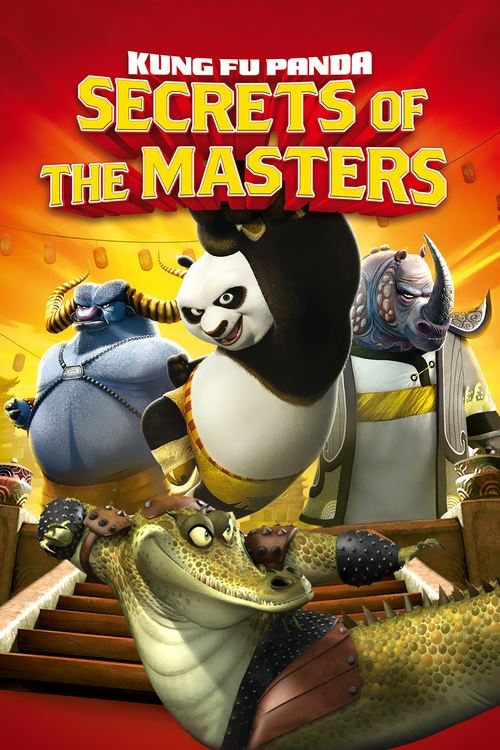
Po starts the short by sneaking Tigress and Mantis into the new Masters' Council exhibit in the dead of night, pretending there is some kind of emergency just to get them alone with the story he wants to tell. The exhibit is filled with tributes to Master Thundering Rhino, Master Storming Ox, and Master Croc, and Po's mischief immediately sets the tone: Tigress is irritated, Mantis is suspicious, and Po is delighted by the chance to spin another legend in his own dramatic way. He gestures at the statues and memorials as if he is unveiling a mystery that has been hidden in plain sight, and the frame story quickly dissolves into his retelling of how these three celebrated masters first come together.
The story jumps back to Jinzhou, a rough city where kung fu is not yet a noble discipline but a brutal sport and street business. Rhino, Ox, and Croc are not legendary protectors yet; they are loud, self-absorbed pit fighters who know how to throw down, but have no larger purpose. Rhino fights with overwhelming force and carries a deep need to win his father's respect. Ox is sharp and greedy, always looking for a better deal. Croc is proud and flashy, enjoying the attention his strength brings him. They are all skilled, but in the way of men who have never been asked to serve something greater than themselves. Their opening fight is a three-way clash so competitive that it seems less like a battle than a test of egos, each one trying to prove superiority and failing to create anything meaningful from the violence.
Master Oogway watches them from the sidelines and is distinctly unimpressed. He sees talent, but he also sees that the trio is wasting it on vanity and profit. Then the world shifts around him: the Wu Sisters have escaped from confinement, and the threat they pose gives Oogway a reason to act. The Wu Sisters are not merely criminals in the background; they are a looming force trying to gather gangs and power, and their escape becomes the spark that transforms the three street fighters' lives. Oogway decides that Rhino, Ox, and Croc are exactly the kind of reckless, powerful, and selfish warriors who might be redirected if he can trick them into caring about something outside themselves.
So Oogway approaches them with carefully chosen half-truths. He does not ask them to be noble. He tempts them. He dangles the promise of riches and adventure, speaking in a vague, almost cryptic way that each of them hears through the filter of his own greed. The trio does not sign up because they want to save China; they sign up because they think they may get rewarded. That is the first major twist of the story: the future guardians of Gongmen City begin as opportunists, not heroes. Oogway knows this, and rather than rejecting them for their selfishness, he uses it as the starting point for their growth.
They set off together toward Hubei Volcano, the Wu Sisters' stronghold, with Oogway leading the way. The journey is tense almost immediately, because the three fighters cannot stop bickering over what they think they are owed. Croc wants respect. Ox wants profit. Rhino wants validation. They snap at one another at every opportunity, and Oogway responds with patience that borders on mischief of his own. He stays calm while the others grumble, and his silence suggests he is playing a much longer game than they realize. The route itself becomes part of the lesson. Oogway guides them onto an extremely dangerous path, one that is less a road than a trial. Every step is hazardous, every crossing a test, and the environment seems designed to punish impatience. The message is not spoken directly at first, but it becomes clear that the journey matters as much as the destination.
As they struggle onward, the trio's selfishness repeatedly threatens to undo them. They assume the "riches" Oogway promised are literal treasure, and they continue to argue over what they will take once the mission is over. Then the truth begins to dawn on them: Oogway's riches are metaphorical. The reward was never gold. It was purpose. It was unity. It was becoming something greater than money or status. Their protests turn ugly when they realize they have been manipulated, but Oogway does not apologize. Instead, he forces them to confront the danger in front of them, because the real lesson is not in what they expected to find, but in how they behave when their expectations collapse.
That is when the climax begins to gather force. The trio's argument distracts them at the worst possible time, and they end up trapped on a river of lava, heat shimmering around them as the ground becomes unstable and the situation turns deadly. The scene is framed as a literal descent toward disaster and a symbolic plunge into the consequences of their selfishness. Oogway intervenes and gets them to safety, but in doing so he appears to sacrifice himself. He falls into the lava and seems to die, and for the characters in the story, this is a devastating moment. Rhino, Ox, and Croc have spent the entire journey thinking only about themselves, and now the mentor who forced them into this trial is gone because of their failure to understand what he was teaching them.
The apparent death of Master Oogway is the emotional turning point of the short. It is the moment when the trio finally has to reckon with the fact that they were not on a treasure hunt at all. Rhino is especially shaken, because beneath his bravado is a son desperate for honor. Croc and Ox are equally stunned, their confidence stripped away by the realization that their narrow ambitions have nearly cost them everything. Oogway's parting lesson lands like a final blade: "Remember the path." It is a simple line, but it carries the entire meaning of the story. The path is the dangerous road they crossed, the journey that forced them to cooperate, and the larger moral road they must choose from now on. It is also Oogway's last instruction before he falls from sight, leaving the trio to survive the consequences of what they have learned.
The short does not linger on mourning. Instead, it closes the loop by revealing what this experience becomes. Rhino, Ox, and Croc are changed by the ordeal, and the selfish fighters who began in Jinzhou eventually become the founders of the Masters' Council in Gongmen City. The revelation reframes everything that came before it. Their pride, greed, and vanity do not vanish overnight, but the story makes it clear that the journey to Hubei Volcano marks the beginning of their transformation from violent opportunists into protectors worthy of tribute. The legend that Po tells is not about them being chosen because they were already noble. It is about them being shaped into nobility through danger, humiliation, and Oogway's deliberate, sometimes maddening guidance.
The narrative then snaps back to the present night at the exhibit. Po finishes his story with the same energy he brought into the break-in, while Tigress and Mantis absorb the legend in spite of themselves. The hall is quiet again, but the statues now feel different because the audience understands the history behind them. That calm does not last long. Master Shifu discovers Po, Tigress, and Mantis at the damaged exhibit and immediately sees what has happened. Tigress and Mantis are dismissed, but Po is not so lucky. He is ordered to repair the roof he broke during the stunt, and Shifu notes that the exhibit opens in twenty minutes, turning Po's grand adventure into a comic punishment. The final image restores the playful frame of the short: Po has told the story he wanted to tell, but now he must deal with the aftermath of his own "emergency." The legend is complete, the masters' origin is revealed, Oogway's lesson has been passed down, and the short ends with Po caught between admiration for the old heroes and the practical consequences of being Po.









What is the ending?
In the ending of "Kung Fu Panda: Secrets of the Masters," Po learns valuable lessons from the legendary masters, including the importance of teamwork and the power of believing in oneself. The film concludes with Po and his friends successfully overcoming their challenges, showcasing their growth and unity as a team.
As the story unfolds towards its conclusion, we find Po, the Dragon Warrior, reflecting on the teachings he has received from the legendary masters. The atmosphere is charged with anticipation as Po prepares to face the final challenge alongside his friends, the Furious Five. Each character is filled with a mix of determination and anxiety, knowing that their skills and teamwork will be put to the ultimate test.
In the climactic scenes, Po and the Furious Five confront a formidable enemy, a manifestation of their fears and doubts. The tension is palpable as they engage in a fierce battle, showcasing their unique fighting styles and the lessons they have learned from their mentors. Po, embodying the spirit of the Dragon Warrior, leads the charge, demonstrating his growth not only as a fighter but as a leader.
As the battle rages on, the characters experience moments of doubt and fear, but they also find strength in each other. The visuals are vibrant, with dynamic fight sequences that highlight the fluidity of kung fu movements. The emotional stakes rise as each member of the Furious Five faces their own personal challenges, but they ultimately rally together, embodying the essence of teamwork.
In a pivotal moment, Po recalls the wisdom imparted by the masters, reminding himself and his friends of their potential. This realization ignites a renewed sense of purpose within the group. They combine their strengths, executing a synchronized attack that showcases their unity and the lessons learned throughout their journey.
As the dust settles, the enemy is defeated, and the characters stand together, breathing heavily but filled with a sense of accomplishment. Po, with a proud smile, acknowledges the contributions of each member of the Furious Five, reinforcing the idea that they are stronger together. The camera pans out, capturing the camaraderie and the bond they have forged through their trials.
In the final moments, Po reflects on his journey, feeling a deep sense of gratitude for the masters who guided him and the friends who stood by his side. The film closes with a sense of hope and unity, emphasizing the importance of believing in oneself and the power of friendship. Each character, having faced their fears and emerged victorious, is left with a renewed sense of purpose and confidence, ready to face whatever challenges lie ahead.
Is there a post-credit scene?
In "Kung Fu Panda: Secrets of the Masters," there is no post-credit scene. The film focuses on the backstory of the legendary kung fu masters, particularly Master Oogway and Master Shifu, as they recount their experiences and the lessons learned throughout their journeys. The narrative concludes without any additional scenes or content after the credits, maintaining the focus on the main story and the development of the characters within the film.
What is the significance of the Dragon Warrior's training in Kung Fu Panda: Secrets of the Masters?
In 'Kung Fu Panda: Secrets of the Masters', the training of the Dragon Warrior, Po, is crucial as it showcases his growth and development as a kung fu master. The film emphasizes the importance of learning from past masters, particularly through the stories of Oogway and the Furious Five. Po's journey reflects his internal struggle to balance his identity as a panda with the responsibilities of being the Dragon Warrior.
How does Po learn about the history of kung fu masters in the film?
Po learns about the history of kung fu masters through a series of flashbacks that are triggered by his interactions with the Furious Five. Each master, including Master Oogway and Master Shifu, shares their experiences and teachings, allowing Po to understand the legacy of kung fu and the importance of perseverance, humility, and inner peace.
What role do the Furious Five play in Po's journey in this installment?
The Furious Five play a supportive role in Po's journey in 'Kung Fu Panda: Secrets of the Masters'. They not only assist him in his training but also provide comic relief and camaraderie. Their individual stories and experiences with past masters enrich Po's understanding of kung fu, and they serve as both mentors and friends, helping him to realize his potential.
What challenges does Po face while training with the past masters?
While training with the past masters, Po faces several challenges that test his physical abilities and mental fortitude. He struggles with self-doubt and the fear of not living up to the legacy of the Dragon Warrior. Each master presents unique challenges that require Po to confront his insecurities, learn from his mistakes, and ultimately embrace his identity as a kung fu master.
How does Master Oogway's philosophy influence Po's development in the film?
Master Oogway's philosophy significantly influences Po's development throughout 'Kung Fu Panda: Secrets of the Masters'. Oogway's teachings about destiny, patience, and the importance of believing in oneself resonate deeply with Po. As Po reflects on Oogway's wisdom, he learns to trust his instincts and embrace his unique qualities, which ultimately helps him grow into a more confident and capable Dragon Warrior.
Is this family friendly?
Kung Fu Panda: Secrets of the Masters is generally considered family-friendly, as it is part of the Kung Fu Panda franchise, which is aimed at children and families. However, there are a few scenes and aspects that might be potentially objectionable or upsetting for younger viewers or sensitive individuals:
-
Violence: There are martial arts battles and training sequences that involve fighting, which may be intense for some children. While the violence is cartoonish and not graphic, it may still be alarming to sensitive viewers.
-
Themes of Fear and Doubt: Characters experience moments of fear, self-doubt, and insecurity, particularly in relation to their abilities and roles. These emotional struggles may resonate with some children, potentially causing discomfort.
-
Mild Peril: Characters face dangerous situations, such as being chased or threatened by antagonists. While these moments are resolved positively, they may create tension that could be unsettling for younger audiences.
-
Emotional Conflict: There are scenes that explore themes of loss, disappointment, and the pressure to succeed, which may evoke strong emotions in viewers.
Overall, while the film contains these elements, it is designed to be entertaining and ultimately uplifting, with positive messages about perseverance, friendship, and self-discovery.







