


Popular
What motivates General Jack D. Ripper to initiate a nuclear strike?
How does President Merkin Muffley respond to the crisis in the War Room?
What role does Dr. Strangelove play in the film, and what are his motivations?
What is the significance of the character Major T.J. 'King' Kong and his actions?
How does the character of Colonel Bat Guano contribute to the film's plot?
Should I watch it?
Ask Your Own Question

What is the plot?
Sorry, we aren't able to watch and write up a full detailed plot yet. Check back in a few days.






What is the ending?
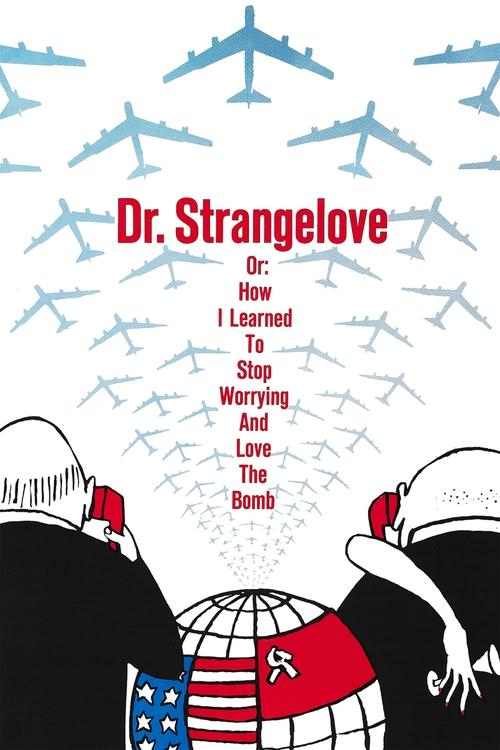
In the ending of Dr. Strangelove or: How I Learned to Stop Worrying and Love the Bomb, the world faces imminent nuclear annihilation as a result of a rogue U.S. bomber's mission to drop an atomic bomb on the Soviet Union. The President, along with his advisors, attempts to recall the bomber but fails. As the situation escalates, Dr. Strangelove, a former Nazi scientist, proposes a plan for survival in a post-apocalyptic world. Ultimately, the film concludes with a series of nuclear explosions, leading to the destruction of humanity.
Now, let's delve into the ending in a more detailed, chronological narrative.
As the film approaches its climax, we find ourselves in the War Room of the Pentagon, where President Merkin Muffley, played by Peter Sellers, is surrounded by his top military advisors, including the eccentric General Buck Turgidson and the enigmatic Dr. Strangelove. The atmosphere is tense, filled with a mix of urgency and absurdity, as they grapple with the fallout from General Jack D. Ripper's unauthorized order to launch a nuclear strike against the Soviet Union.
The President, visibly anxious, tries to maintain control over the situation. He speaks into the phone, attempting to communicate with the bomber crew led by Major T.J. "King" Kong, who is unaware of the recall order due to a malfunction. The camera captures Muffley's strained expressions, reflecting his desperation and the weight of the world on his shoulders. He implores the Soviet Premier to assure him that they can avoid mutual destruction, but the clock is ticking, and the tension mounts.
Meanwhile, in the bomber, Major Kong, played by Slim Pickens, is depicted as a rugged, cowboy-like figure, embodying a sense of bravado. He and his crew are oblivious to the chaos unfolding back on the ground. As they approach their target, Kong's demeanor shifts from casual confidence to a grim realization of the mission's gravity. The crew prepares for the drop, and the camera captures the stark contrast between their nonchalant banter and the impending doom.
Back in the War Room, Dr. Strangelove, portrayed with a mix of humor and menace, suggests a bizarre plan for survival in the event of a nuclear war. He proposes that a select group of people could survive in underground bunkers, ensuring the continuation of the human race. His ideas, while absurd, reflect the dark humor that permeates the film. The other characters react with a mix of disbelief and intrigue, showcasing their varying degrees of sanity in the face of catastrophe.
As the President continues to plead for a solution, the situation spirals out of control. The War Room is filled with frantic discussions, and the tension reaches a fever pitch. The audience can feel the weight of impending doom as the countdown to destruction looms closer. The camera cuts between the War Room and the bomber, heightening the sense of urgency.
In a final, chaotic moment, Major Kong successfully drops the bomb, and the screen fills with a blinding flash of light. The film transitions to a montage of nuclear explosions, accompanied by the haunting strains of "We'll Meet Again." The imagery is stark and surreal, showcasing the devastation wrought by humanity's own hand. The audience is left with a sense of horror and absurdity as the world is engulfed in flames.
As the credits roll, we see Dr. Strangelove, now fully embracing his former Nazi identity, exclaiming, "Mein Führer, I can walk!" as he rises from his wheelchair, symbolizing the triumph of madness over reason. The fate of the main characters is sealed in this apocalyptic vision: President Muffley, General Turgidson, and Dr. Strangelove are all caught in the chaos of their own making, leaving the audience to ponder the futility of their actions and the fragility of human existence. The film concludes with a powerful visual statement about the absurdity of war and the catastrophic consequences of unchecked power.
Is there a post-credit scene?
There is no post-credit scene in the movie "Dr. Strangelove or: How I Learned to Stop Worrying and Love the Bomb." The film concludes with a powerful and darkly comedic sequence that features a montage of nuclear explosions set to the song "We'll Meet Again," performed by Vera Lynn. This ending encapsulates the film's satirical take on the absurdity of nuclear war and the Cold War mentality, leaving the audience with a stark and ironic reflection on the potential consequences of the characters' actions throughout the film. The credits roll immediately after this sequence, with no additional scenes following.
What motivates General Jack D. Ripper to initiate a nuclear strike?
General Jack D. Ripper, played by Sterling Hayden, is driven by a paranoid belief that communists are contaminating the 'precious bodily fluids' of Americans. His obsession with this idea leads him to launch a nuclear attack on the Soviet Union without authorization, believing it to be a necessary act to protect the purity of the American way of life.
How does President Merkin Muffley respond to the crisis in the War Room?
President Merkin Muffley, portrayed by Peter Sellers, remains calm and collected in the War Room despite the escalating crisis. He attempts to communicate with the Soviet Premier, showing a mix of concern and absurdity as he navigates the chaos, trying to prevent a nuclear disaster while dealing with the eccentricities of his military advisors.
What role does Dr. Strangelove play in the film, and what are his motivations?
Dr. Strangelove, played by Peter Sellers, is a former Nazi scientist who now serves as a strategic advisor to the U.S. government. His motivations are complex; he exhibits a fascination with nuclear war and its potential to reshape society. His character oscillates between being a source of dark humor and a chilling representation of the military-industrial complex's detachment from the consequences of nuclear warfare.
What is the significance of the character Major T.J. 'King' Kong and his actions?
Major T.J. 'King' Kong, played by Slim Pickens, is the B-52 bomber pilot who embodies the cowboy spirit of America. His actions are significant as he represents the unthinking execution of orders, ultimately riding the bomb down to its target in a surreal and iconic scene. His character highlights the absurdity of the military's blind adherence to protocol in the face of impending doom.
How does the character of Colonel Bat Guano contribute to the film's plot?
Colonel Bat Guano, portrayed by Keenan Wynn, is a military officer who becomes involved in the efforts to stop the nuclear strike. His character adds to the film's absurdity as he is portrayed as both comically inept and fiercely loyal to the military. His interactions with President Muffley and the War Room staff illustrate the chaotic and often ridiculous nature of military bureaucracy during a crisis.
Is this family friendly?
"Dr. Strangelove or: How I Learned to Stop Worrying and Love the Bomb" is not considered family-friendly due to its satirical and dark themes surrounding nuclear war. Here are some potentially objectionable or upsetting aspects that might occur for children or sensitive viewers:
-
Nuclear War Themes: The film revolves around the absurdity of nuclear warfare, which may be distressing for younger audiences or those sensitive to the topic of war and destruction.
-
Violence and Death: There are discussions and implications of mass destruction and loss of life due to nuclear bombs, which can be unsettling.
-
Dark Humor: The film employs a satirical tone that addresses serious subjects in a comedic way, which may not be appropriate for all viewers, especially children.
-
Innuendos and Adult Humor: There are several instances of sexual innuendos and adult humor that may not be suitable for younger audiences.
-
Character Behavior: Some characters display erratic and unstable behavior, which can be alarming or confusing for sensitive viewers.
-
Political Satire: The film critiques military and political figures, which may be difficult for younger viewers to understand or appreciate.
Overall, the film's complex themes and mature content make it more suitable for adult audiences.





