


Popular
What specific projects does J.J. Abrams discuss during his appearance on The Colbert Report?
How does Stephen Colbert interact with J.J. Abrams regarding the secrecy of his projects?
What humorous anecdotes does J.J. Abrams share about his experiences in Hollywood?
What does J.J. Abrams reveal about his creative process and inspirations?
How does the audience react to J.J. Abrams' comments during the interview?
Should I watch it?
Ask Your Own Question

What is the plot?
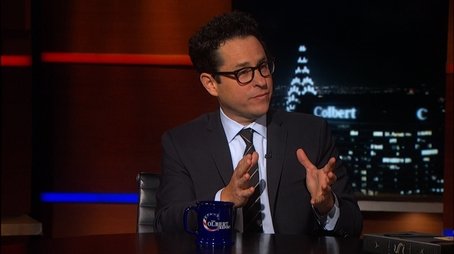
In the episode of The Colbert Report featuring J.J. Abrams, the show opens with Stephen Colbert delivering his signature monologue, filled with sharp wit and humor. He discusses various current events and pop culture topics, setting a light-hearted tone for the episode. Colbert's energy is high as he engages the audience, using exaggerated gestures and facial expressions to emphasize his points. He makes several jokes about the film industry, particularly focusing on the recent works of J.J. Abrams, known for his contributions to franchises like Star Wars and Star Trek.
As the monologue concludes, Colbert introduces his guest, J.J. Abrams, with great enthusiasm. He highlights Abrams' impressive career and his impact on modern cinema. The audience applauds as Abrams walks onto the stage, and the two share a warm handshake. Colbert, visibly excited, begins the interview by asking Abrams about his creative process and the challenges he faces when working on large-scale projects. Abrams responds thoughtfully, discussing the importance of storytelling and character development in his films.
The conversation shifts to specific projects, with Colbert asking Abrams about the secrecy surrounding his films. Abrams, known for his penchant for keeping plot details under wraps, playfully dodges some of Colbert's probing questions. The dynamic between the two is lively, with Colbert often trying to extract more information while Abrams maintains a playful air of mystery. The audience is engaged, laughing at the banter and enjoying the chemistry between the host and the guest.
Colbert then transitions to a segment where he showcases a humorous skit related to Abrams' work. The skit features a parody of a typical J.J. Abrams film, complete with lens flares and dramatic music. Colbert plays a character who is overly dramatic about the plot twists, while other cast members join in to exaggerate the tropes commonly found in Abrams' films. The skit is met with laughter from the audience, highlighting Colbert's comedic timing and the absurdity of the film clichés being portrayed.
After the skit, the interview resumes, and Colbert asks Abrams about his thoughts on fan expectations and the pressure that comes with directing beloved franchises. Abrams candidly shares his experiences, reflecting on the balance between honoring the original material and introducing new ideas. The conversation becomes more introspective, with both men discussing the emotional weight of storytelling and the responsibility filmmakers have to their audiences.
As the interview nears its conclusion, Colbert presents a rapid-fire question segment, where he asks Abrams a series of fun, light-hearted questions about his favorite movies, directors, and personal preferences. Abrams responds with humor and charm, revealing a more personal side to his personality. The audience enjoys this segment, as it showcases Abrams' relatable nature and passion for film.
The episode wraps up with Colbert thanking Abrams for joining him, and they share a final moment of camaraderie on stage. Colbert encourages the audience to look forward to Abrams' upcoming projects, leaving viewers with a sense of excitement. The show ends with Colbert delivering a closing remark, reminding the audience to tune in next time, as the credits roll and the familiar theme music plays.









What is the ending?
In the episode "J.J. Abrams" of The Colbert Report, Stephen Colbert interviews filmmaker J.J. Abrams. The episode concludes with a humorous exchange where Colbert expresses his admiration for Abrams' work, particularly in the realm of science fiction and storytelling. The episode ends with Colbert playfully engaging with Abrams, showcasing their chemistry and mutual respect.
As the episode draws to a close, the scene transitions back to Stephen Colbert at his desk, where he reflects on the conversation he just had with J.J. Abrams. Colbert, with his signature blend of humor and sincerity, expresses his excitement about Abrams' upcoming projects, particularly the new Star Wars film. He emphasizes the impact of Abrams' storytelling on popular culture, highlighting how his work has captivated audiences and redefined genres.
The camera then shifts to a close-up of Colbert, who, with a twinkle in his eye, shares a light-hearted moment about the mysteries and surprises that Abrams is known for in his films. Colbert jokes about how he hopes to be included in one of Abrams' future projects, showcasing his playful ambition and admiration for the director's creative vision.
As the credits begin to roll, the audience is left with a sense of warmth and camaraderie between Colbert and Abrams. The final moments capture Colbert's infectious enthusiasm for storytelling and the joy of engaging with a creative mind like Abrams. The episode concludes on a high note, leaving viewers entertained and eager for more insights into the world of film and storytelling.
Is there a post-credit scene?
In the episode of The Colbert Report featuring J.J. Abrams, there is no post-credit scene. The episode concludes with the typical format of Stephen Colbert wrapping up the show, thanking his guest, and delivering his signature sign-off. The focus remains on the interview and the comedic segments throughout the episode, with no additional content after the credits roll.
What specific projects does J.J. Abrams discuss during his appearance on The Colbert Report?
During his appearance, J.J. Abrams discusses his work on the Star Wars franchise, particularly 'Star Wars: The Force Awakens', and reflects on his experiences with the 'Star Trek' reboot. He shares insights into the creative process behind these iconic films.
How does Stephen Colbert interact with J.J. Abrams regarding the secrecy of his projects?
Stephen Colbert humorously probes J.J. Abrams about the notorious secrecy surrounding his projects. Colbert playfully suggests that Abrams might be hiding plot details, leading to a comedic exchange where Abrams acknowledges the need for secrecy in the film industry.
What humorous anecdotes does J.J. Abrams share about his experiences in Hollywood?
J.J. Abrams shares light-hearted anecdotes about his early career, including his experiences as a young writer and director. He recounts amusing moments from the set of his films, highlighting the challenges and unexpected situations that arise during production.
What does J.J. Abrams reveal about his creative process and inspirations?
Abrams opens up about his creative process, discussing how he draws inspiration from various sources, including his childhood love for storytelling and the influence of classic films. He emphasizes the importance of character development and emotional resonance in his work.
How does the audience react to J.J. Abrams' comments during the interview?
The audience reacts enthusiastically to J.J. Abrams' comments, often laughing and applauding at his witty remarks and engaging storytelling. The atmosphere is lively, reflecting the audience's excitement about his upcoming projects and their admiration for his work.
Is this family friendly?
"The Colbert Report" is generally considered family-friendly, but there are a few aspects in the episode featuring J.J. Abrams that might be sensitive for children or more sensitive viewers.
-
Humor Style: The show often employs satire and irony, which may include references to adult themes or cultural critiques that could be confusing for younger audiences.
-
Language: While the language is typically clean, there may be occasional mild profanity or suggestive jokes that could be inappropriate for younger viewers.
-
Cultural References: The episode may include references to movies or pop culture that children may not understand, which could lead to confusion or disinterest.
-
Parody and Satire: The comedic style often involves parodying serious topics or figures, which might not resonate well with all viewers, especially those who are sensitive to humor that critiques popular culture.
Overall, while the episode is not overtly objectionable, parents might want to preview it to ensure it aligns with their comfort levels for younger viewers.