















Popular
What motivates Rocky Balboa to train with Apollo Creed in Rocky III?
How does Clubber Lang's character serve as a foil to Rocky Balboa?
What role does Mickey Goldmill play in Rocky III, and how does his death impact Rocky?
What is the significance of the rematch between Rocky and Clubber Lang?
How does the relationship between Rocky and Apollo Creed evolve throughout Rocky III?
Should I watch it?
Ask Your Own Question

What is the plot?
Sorry, we aren't able to watch and write up a full detailed plot yet. Check back in a few days.



What is the ending?
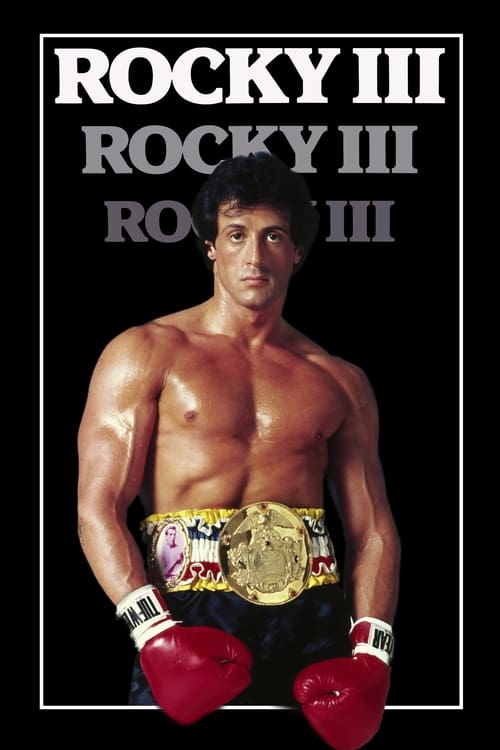
In the ending of Rocky III, Rocky Balboa faces Clubber Lang in a rematch for the heavyweight championship. After a grueling fight, Rocky overcomes his fears and insecurities, ultimately defeating Lang with a knockout. The film concludes with Rocky celebrating his victory alongside his friend Apollo Creed, reaffirming their bond and Rocky's resilience.
As the final act of Rocky III unfolds, the atmosphere is charged with tension and anticipation. The scene opens in the packed arena, where the crowd roars with excitement. Rocky Balboa, now a champion, stands in his corner, his face a mixture of determination and anxiety. He has faced Clubber Lang before and lost, and the weight of that defeat looms heavily over him. His trainer, Mickey Goldmill, offers words of encouragement, but the fear of failure is palpable in Rocky's eyes.
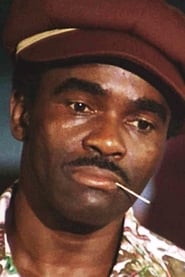
The bell rings, and the fight begins. Clubber Lang, played by Mr. T, bursts out of his corner with ferocity, showcasing his raw power and aggression. Rocky struggles to find his rhythm, dodging punches but unable to land effective blows. The first round is brutal, with Lang dominating the exchanges, landing heavy hits that leave Rocky reeling. The crowd is electrified, sensing the shift in momentum.
As the rounds progress, Rocky's internal conflict becomes evident. He grapples with self-doubt and the fear of losing his title. In a pivotal moment, Mickey, who has been a father figure to Rocky, suffers a heart attack in the corner, collapsing just as Rocky is about to enter the ring for the third round. This devastating event shakes Rocky to his core, and he realizes that he must fight not just for himself but for Mickey's legacy and the bond they shared.
With renewed determination, Rocky seeks the help of Apollo Creed, his former rival turned friend. Apollo trains Rocky, emphasizing the importance of speed and strategy over brute strength. They work tirelessly, and Rocky begins to regain his confidence, learning to embrace his instincts and fight with heart.
The rematch against Clubber Lang is set, and the atmosphere is electric. As the fight begins, Rocky enters the ring with a newfound sense of purpose. The first few rounds are intense, with Lang initially overpowering Rocky. However, Rocky's training with Apollo pays off. He starts to evade Lang's powerful punches and counters with quick jabs, slowly turning the tide.
In the final round, the tension reaches its peak. Rocky, now fully in control, channels his inner strength and resilience. He recalls the lessons learned from both Mickey and Apollo, and with a powerful combination of punches, he knocks Clubber Lang down. The referee counts, and the crowd erupts as Lang fails to rise before the count of ten.
As the fight concludes, Rocky stands victorious, his arms raised in triumph. The emotional weight of the victory is evident on his face, a mixture of relief and joy. He looks over to Apollo, who beams with pride, and they share a moment of camaraderie, solidifying their friendship. The film ends with Rocky celebrating his victory, having not only reclaimed his title but also rediscovered his true self and the importance of those who support him.
In the aftermath, Rocky's journey reflects themes of resilience, friendship, and the importance of overcoming personal demons. Each character's fate is intertwined with Rocky's growth; Mickey's legacy lives on through Rocky's triumph, and Apollo's mentorship solidifies their bond, showcasing the power of support and camaraderie in the face of adversity.
Is there a post-credit scene?
Rocky III does not have a post-credit scene. The film concludes with the climactic fight between Rocky Balboa and Clubber Lang, where Rocky regains his title. After the fight, the movie ends on a triumphant note, showcasing Rocky's victory and his reconciliation with his friend Apollo Creed. The credits roll without any additional scenes or content following them. The focus remains on the resolution of Rocky's journey and his growth as a character throughout the film.
What motivates Rocky Balboa to train with Apollo Creed in Rocky III?
Rocky Balboa, after achieving fame and success as the heavyweight champion, becomes complacent and loses his edge. Following his first defeat against Clubber Lang, he realizes that he needs to regain his fighting spirit and discipline. Apollo Creed, seeing Rocky's struggle, offers to help him train, pushing him to confront his fears and rediscover his passion for boxing.
How does Clubber Lang's character serve as a foil to Rocky Balboa?
Clubber Lang, portrayed as a fierce and relentless challenger, embodies raw aggression and determination. His character contrasts sharply with Rocky's initial complacency and overconfidence. Lang's relentless pursuit of the championship title forces Rocky to confront his own vulnerabilities and ultimately drives him to reclaim his fighting spirit.
What role does Mickey Goldmill play in Rocky III, and how does his death impact Rocky?
Mickey Goldmill, Rocky's longtime trainer and mentor, plays a crucial role in shaping Rocky's career and mindset. His sudden death during the fight with Clubber Lang leaves Rocky devastated and emotionally shattered. This loss serves as a turning point for Rocky, pushing him to confront his grief and ultimately motivating him to honor Mickey's legacy by training harder and fighting with renewed purpose.
What is the significance of the rematch between Rocky and Clubber Lang?
The rematch between Rocky and Clubber Lang is significant as it represents Rocky's journey of redemption and self-discovery. After losing their first fight, Rocky must confront his fears and insecurities. The rematch is not just about reclaiming the title; it symbolizes Rocky's return to his roots, his determination to fight for what he loves, and his ability to overcome personal and professional obstacles.
How does the relationship between Rocky and Apollo Creed evolve throughout Rocky III?
The relationship between Rocky and Apollo Creed evolves from rivalry to a deep friendship and mutual respect. Initially, Apollo is seen as a competitor, but after Rocky's defeat, Apollo steps in as a mentor. Their training sessions are filled with camaraderie and shared experiences, highlighting their bond. By the end of the film, they have developed a brotherly relationship, showcasing how they both grow through their challenges.
Is this family friendly?
Rocky III, produced in 1982, contains several elements that may be considered objectionable or upsetting for children or sensitive viewers. Here are some aspects to consider:
-
Violence and Boxing Matches: The film features intense boxing scenes that include physical violence, blood, and injuries. The portrayal of the sport can be quite graphic, showcasing the brutality of the fights.
-
Death of a Character: A significant character dies early in the film, which can be emotionally distressing. The impact of this loss on the protagonist is a central theme and may evoke strong feelings of grief.
-
Intense Rivalry: The film explores themes of rivalry and competition, particularly between Rocky and his opponent, Clubber Lang. The aggressive nature of their interactions may be unsettling for younger viewers.
-
Emotional Struggles: Rocky faces personal and emotional challenges, including feelings of doubt and fear. These themes may resonate deeply and could be heavy for sensitive audiences.
-
Mild Language: There are instances of mild profanity and strong language that may not be suitable for younger viewers.
-
Depictions of Fear and Anxiety: Rocky experiences moments of vulnerability and anxiety, particularly related to his performance and legacy, which may be intense for some viewers.
Overall, while Rocky III is a sports drama with inspirational themes, it does contain elements that may not be suitable for all children or sensitive individuals.








