
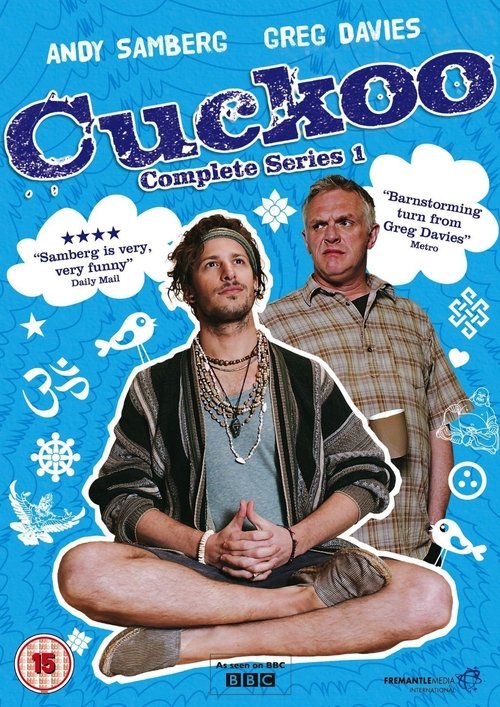







Popular
What is the significance of Cuckoo's arrival in the Thompson family?
How does Rachel's relationship with Cuckoo evolve throughout the season?
What role does Ken Thompson play in the conflict with Cuckoo?
How does the character of Diane Thompson react to Cuckoo?
What are some of the comedic situations that arise from Cuckoo's lifestyle?
Should I watch it?
Ask Your Own Question

What is the plot?
The series opens with the Thompson family, consisting of Ken, Lorna, and their two children, Rachel and Dylan, preparing for Rachel's wedding. The family is excited, and there is a sense of anticipation in the air. However, the mood shifts dramatically when Rachel's fiancé, Cuckoo, arrives unexpectedly. Cuckoo is a free-spirited, laid-back American who embodies a carefree lifestyle, much to the dismay of Ken, who is a traditional and somewhat uptight father.
As the wedding ceremony begins, Cuckoo interrupts with his unconventional behavior, causing chaos. He delivers a heartfelt yet bizarre speech that leaves the guests bewildered. Rachel, enamored by Cuckoo's charm, decides to go through with the wedding despite her family's reservations. The ceremony culminates in a spontaneous and chaotic celebration, highlighting the stark contrast between Cuckoo's lifestyle and the Thompsons' more conventional values.
After the wedding, Cuckoo moves in with the Thompsons, which creates tension within the household. Ken struggles to accept Cuckoo's presence, feeling that he disrupts the family's routine and values. Lorna, on the other hand, is more accepting of Cuckoo, finding his carefree attitude refreshing. Dylan, the younger brother, is intrigued by Cuckoo and begins to idolize him, further complicating the family dynamics.
As the days go by, Cuckoo's influence on the family becomes more pronounced. He encourages Dylan to embrace a more adventurous lifestyle, leading to a series of humorous and awkward situations. Ken's frustration grows as he witnesses Cuckoo's impact on his son, leading to confrontations between him and Cuckoo. Ken's attempts to assert his authority are met with Cuckoo's laid-back attitude, resulting in comedic clashes.
In one notable scene, Ken tries to teach Dylan about responsibility by assigning him chores, but Cuckoo intervenes, suggesting they go on an impromptu adventure instead. This leads to a day of mischief that culminates in a near-disastrous situation, forcing Ken to step in and save the day. This incident highlights the ongoing battle between Ken's desire for order and Cuckoo's free-spirited nature.
As the season progresses, Rachel begins to question her marriage to Cuckoo. She grapples with the reality of living with someone so different from her upbringing. Meanwhile, Cuckoo remains oblivious to the growing tension, continuing to live life on his own terms. Rachel's internal conflict deepens as she tries to reconcile her love for Cuckoo with her family's disapproval.
In a pivotal moment, Rachel confronts Cuckoo about their future. She expresses her concerns about their differing lifestyles and the impact it has on her relationship with her family. Cuckoo, in his typical fashion, brushes off her worries, insisting that love conquers all. This conversation leaves Rachel feeling more uncertain about her marriage.
The climax of the season occurs when Ken decides to take matters into his own hands. He devises a plan to expose Cuckoo's irresponsible behavior to Rachel, hoping it will lead her to reconsider her choices. Ken sets up a series of situations where Cuckoo's antics can be showcased, including a disastrous family outing that ends in chaos. However, instead of driving Rachel away from Cuckoo, these events only serve to strengthen her resolve to stand by her husband.
In the final episodes, the family faces a crisis when Cuckoo's past catches up with him. He reveals that he has been living a lie about his identity, which shocks Rachel and the Thompsons. This revelation forces the family to confront their feelings about Cuckoo and what he truly means to them. Rachel is torn between her love for Cuckoo and the reality of his deception.
The season concludes with a dramatic confrontation between Ken and Cuckoo, where Ken demands that Cuckoo leave the house. Cuckoo, feeling cornered, makes a heartfelt plea to stay, expressing his love for Rachel and his desire to be part of the family. The episode ends on a cliffhanger, leaving viewers uncertain about the future of Rachel and Cuckoo's relationship and the dynamics within the Thompson family.








What is the ending?
In the ending of "Cuckoo," season 1, the family grapples with the chaos that Cuckoo has brought into their lives. After a series of misunderstandings and confrontations, the family ultimately decides to accept Cuckoo as part of their lives, albeit reluctantly. The season concludes with a sense of unresolved tension, as the characters navigate their relationships with one another and with Cuckoo.
As the final episode unfolds, we see the family dynamic shift dramatically. The episode begins with the aftermath of Cuckoo's antics, which have left the family in disarray. Ken, the father, is particularly frustrated with Cuckoo's carefree attitude and the disruption he has caused. He feels a mix of anger and helplessness, struggling to maintain control over his household.
Meanwhile, Rachel, Ken's daughter, finds herself torn between her family's expectations and her feelings for Cuckoo. She is drawn to his free-spirited nature, which contrasts sharply with her parents' more traditional values. This internal conflict is palpable as she navigates her emotions, leading to moments of tension between her and her father.
As the family gathers for a tense dinner, the atmosphere is thick with unspoken grievances. Ken attempts to assert his authority, but Cuckoo's charm and unpredictability disrupt the proceedings. The dinner scene is filled with awkward exchanges and escalating frustrations, highlighting the clash between Cuckoo's laid-back lifestyle and the family's desire for order.
In a pivotal moment, Rachel confronts her father about his rigid views and the impact they have on her happiness. This confrontation serves as a turning point, revealing the depth of her feelings for Cuckoo and her desire for independence. Ken, faced with the reality of his daughter's choices, begins to reconsider his stance on Cuckoo's presence in their lives.
The episode culminates in a chaotic yet revealing scene where the family must come together to address the fallout from Cuckoo's latest escapade. As tensions rise, they are forced to confront their differences and find a way to coexist. The resolution is not neat or tidy; instead, it reflects the complexities of family dynamics and the challenges of acceptance.
By the end of the season, Ken has reluctantly accepted that Cuckoo is not going anywhere. He realizes that Cuckoo's influence on Rachel may not be entirely negative, and he begins to soften his stance. Rachel, on the other hand, embraces her connection with Cuckoo, feeling empowered to make her own choices despite her father's reservations.
The final scenes leave the audience with a sense of ambiguity. While the family has not fully resolved their conflicts, there is a glimmer of hope for understanding and acceptance. Each character is left to navigate their own path, with Cuckoo remaining a wild card in their lives, embodying both chaos and a new perspective on freedom and happiness.
Is there a post-credit scene?
In the first season of "Cuckoo," there are no post-credit scenes. The episodes conclude without any additional content after the credits roll. The focus remains on the main storyline and character development throughout the episodes, with each ending wrapping up the events of that particular episode without extending into a post-credit sequence. The humor and dynamics of the characters are fully explored within the episode's runtime, leaving no additional scenes to be revealed after the credits.
What is the significance of Cuckoo's arrival in the Thompson family?
Cuckoo's arrival disrupts the Thompson family's mundane life, introducing chaos and unpredictability. His carefree attitude and unconventional lifestyle challenge the family's traditional values, particularly affecting Ken, the father, who struggles to accept Cuckoo's laid-back approach to life.
How does Rachel's relationship with Cuckoo evolve throughout the season?
Rachel initially finds Cuckoo's carefree spirit intriguing and exciting, leading to a romantic involvement. However, as the season progresses, she grapples with the consequences of her choices, feeling torn between her family's expectations and her attraction to Cuckoo's free-spirited nature.
What role does Ken Thompson play in the conflict with Cuckoo?
Ken Thompson, the father, embodies the voice of reason and traditional values in the family. His disdain for Cuckoo's lifestyle creates tension, as he attempts to impose his views on his family while struggling with his own insecurities and the fear of losing his daughter to someone so different.
How does the character of Diane Thompson react to Cuckoo?
Diane, the mother, is initially more accepting of Cuckoo than Ken, finding his charm and spontaneity refreshing. However, she also faces her own internal conflict as she navigates her loyalty to her husband and her growing fondness for Cuckoo's unconventional ways.
What are some of the comedic situations that arise from Cuckoo's lifestyle?
Cuckoo's lifestyle leads to numerous comedic situations, such as his outrageous antics, including his attempts to impress the family with his extreme sports skills and his unconventional approach to everyday tasks. These moments often highlight the absurdity of his character and the stark contrast to the Thompsons' more reserved lifestyle.
Is this family friendly?
"Cuckoo," season 1, produced in 2012, contains several elements that may not be considered family-friendly, particularly for children or sensitive viewers. Here are some potentially objectionable aspects:
-
Language: The show features strong language and occasional profanity, which may not be suitable for younger audiences.
-
Substance Use: There are references to drug use and alcohol consumption, which could be concerning for children or those sensitive to such themes.
-
Sexual Content: The series includes innuendos and discussions about sexual relationships, which may be inappropriate for younger viewers.
-
Conflict and Tension: The family dynamics often involve arguments and confrontations that can be intense, potentially upsetting for sensitive viewers.
-
Cultural References: Some humor and situations may rely on cultural references or stereotypes that could be misinterpreted or deemed offensive.
Overall, while "Cuckoo" has comedic elements, its content may not be suitable for all audiences, particularly children.