







Popular
Should I watch it?
Ask Your Own Question

What is the plot?
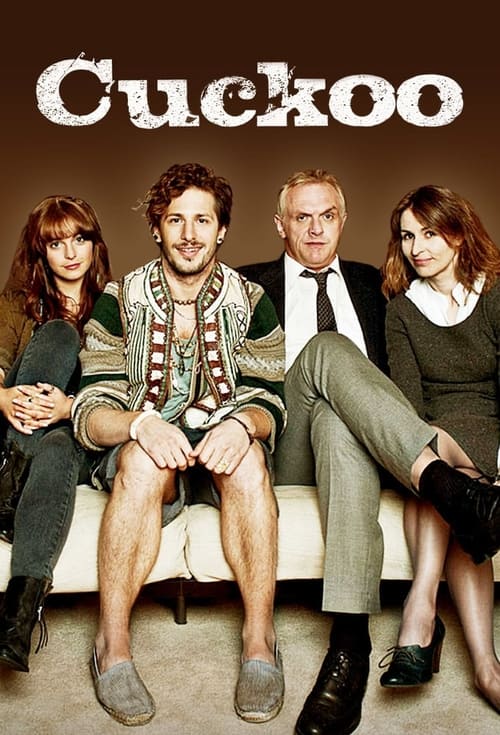
The series begins with the Thompson family, consisting of Ken, Lorna, and their children, Rachel and Dylan, preparing for Rachel's wedding. The family is excited but also nervous about the arrival of Rachel's fiancé, Cuckoo, who is an eccentric and free-spirited American. When Cuckoo arrives, he is portrayed as a laid-back, carefree individual who immediately clashes with the more traditional and conservative Thompsons. His unconventional behavior, including his casual attitude towards marriage and life in general, creates tension within the family.
During the wedding ceremony, Cuckoo surprises everyone by performing a spontaneous and bizarre ritual, which leaves the Thompsons bewildered. Despite the chaos, Rachel is enamored with Cuckoo's charm and spontaneity, leading her to marry him on the spot. The family is left in shock, particularly Ken, who struggles to accept Cuckoo as part of their family. Lorna, on the other hand, is more accepting but still concerned about the implications of Rachel's impulsive decision.
As the series progresses, Cuckoo moves in with the Thompsons, and his presence disrupts their daily lives. Ken's frustration grows as he tries to maintain order in the household while Cuckoo's carefree lifestyle continues to clash with his own values. Cuckoo's antics, such as his unconventional cooking and lack of responsibility, create comedic situations but also highlight the generational and cultural differences between him and the Thompsons.
Rachel begins to question her decision to marry Cuckoo as she realizes the challenges of living with someone so different from her family. Meanwhile, Ken attempts to assert his authority as the patriarch, leading to a series of confrontations with Cuckoo. These moments are filled with humor but also reveal Ken's deeper insecurities about his role as a father and husband.
In a pivotal moment, Cuckoo decides to take the family on a spontaneous trip, which initially frustrates Ken but ultimately leads to a bonding experience for the Thompsons. During the trip, they encounter various mishaps that test their patience and resilience, but they also share moments of laughter and connection. This trip serves as a turning point for the family, as they begin to accept Cuckoo's presence in their lives.
As the season progresses, the Thompsons face various challenges, including financial issues and personal conflicts. Cuckoo's carefree attitude often leads to trouble, such as when he inadvertently causes a rift between Rachel and her parents. The family dynamics become increasingly complicated as they navigate their relationships with one another and with Cuckoo.
In a dramatic twist, Cuckoo's past is revealed when he faces legal issues related to his previous life in America. This revelation puts a strain on his relationship with Rachel and the Thompsons, as they grapple with the implications of his past actions. Ken, feeling protective of his daughter, confronts Cuckoo, leading to a heated argument that forces the family to reevaluate their feelings towards him.
The season culminates in a series of events that test the family's unity. Rachel must decide whether to stand by Cuckoo or distance herself from him due to the complications arising from his past. The Thompsons come together to support Rachel, but tensions remain high as they struggle to accept Cuckoo fully.
In the final moments of the season, a significant decision is made when Rachel chooses to support Cuckoo despite the challenges they face. This decision solidifies her commitment to him and sets the stage for future conflicts and resolutions within the family. The season ends on a cliffhanger, leaving viewers eager to see how the Thompsons will navigate their evolving relationships with Cuckoo and each other.
🔥 Trending TV Shows Now
Browse All TV Shows →






What is the ending?
In the final episode of "Cuckoo," the series culminates in a dramatic confrontation between the characters, leading to significant changes in their lives. The episode wraps up the ongoing tensions and relationships, particularly focusing on the dynamics between the main characters, including Ken, Lorna, and their daughter Rachel.
As the episode unfolds, Ken is faced with the reality of his daughter Rachel's choices and the impact of Cuckoo's presence in their lives. The family dynamics reach a boiling point, and Ken's frustration with Cuckoo's carefree lifestyle and influence on Rachel becomes evident. The tension escalates when Ken confronts Cuckoo, leading to a series of misunderstandings and emotional exchanges.
In the climax, Rachel must choose between her father's expectations and her own desires, ultimately leading to a decision that reflects her growth throughout the series. The episode concludes with a sense of resolution for some characters while leaving others in a state of uncertainty, highlighting the complexities of family relationships and personal growth.
As the final episode of "Cuckoo" begins, the scene opens in the familiar setting of the Thompson family home. The atmosphere is thick with tension as Ken Thompson, played by Greg Davies, paces anxiously in the living room. His brow is furrowed, and his hands are clenched, revealing his internal struggle. He is grappling with the realization that his daughter Rachel, portrayed by Helen George, is becoming increasingly influenced by Cuckoo, the free-spirited character played by Taylor Lautner.
The camera shifts to Rachel, who is in her room, surrounded by posters and mementos of her adventures with Cuckoo. She is excitedly discussing her plans for the future, her voice filled with youthful enthusiasm. However, there is an underlying conflict in her expression as she senses her father's disapproval. This moment captures the essence of her character's journey--caught between the stability her father represents and the adventurous spirit that Cuckoo embodies.
Cutting back to Ken, he is now in the kitchen, where Lorna, played by Helen Baxendale, is preparing dinner. Ken expresses his frustration to Lorna, his voice rising as he articulates his concerns about Cuckoo's influence on Rachel. Lorna, ever the mediator, tries to calm Ken, reminding him of Rachel's need for independence. The tension between Ken and Lorna is palpable, showcasing the strain that Cuckoo has placed on their marriage.
The scene transitions to a park where Cuckoo and Rachel are enjoying a carefree day. Cuckoo is animated, his laughter echoing as he encourages Rachel to embrace life without fear. This moment is visually vibrant, filled with bright colors and the sounds of nature, contrasting sharply with the somber mood at the Thompson home. Rachel's laughter is genuine, but as she glances back towards the camera, a flicker of doubt crosses her face, hinting at her internal conflict.
Back at the house, Ken decides he can no longer tolerate Cuckoo's presence. He storms out, determined to confront Cuckoo. The scene shifts to a confrontation at the park, where Ken finds Cuckoo and Rachel. The air is thick with tension as Ken's anger boils over. He accuses Cuckoo of leading Rachel astray, his voice trembling with emotion. Cuckoo, unfazed, responds with his characteristic nonchalance, which only infuriates Ken further.
Rachel steps in, her voice shaking as she pleads with her father to understand her perspective. She expresses her desire to make her own choices, a pivotal moment that signifies her growth. The camera captures the pain in Ken's eyes as he realizes he may be losing his daughter to a lifestyle he cannot comprehend.
The climax of the episode occurs when Rachel makes a bold decision. She chooses to stand by Cuckoo, declaring her independence. This moment is charged with emotion, as Ken's face falls, a mixture of anger and heartbreak. The scene is shot in close-up, emphasizing the raw emotions of each character. Rachel's choice is a turning point, not just for her but for Ken as well, forcing him to confront his fears about parenting and letting go.
As the episode draws to a close, the family gathers for one last dinner together. The atmosphere is heavy with unspoken words. Ken, still grappling with his emotions, attempts to connect with Rachel, but the distance between them is palpable. Lorna tries to bridge the gap, suggesting they all share their thoughts, but the conversation is stilted and awkward.
In the final moments, the camera pans out, capturing the Thompson family in a moment of quiet reflection. Ken looks at Rachel, a mixture of pride and sadness in his eyes, while Rachel gazes at Cuckoo, who stands at a distance, embodying the freedom she craves. The episode ends on an ambiguous note, leaving viewers to ponder the future of the Thompson family and the impact of Cuckoo on their lives.
In summary, the fates of the main characters are intertwined with the themes of independence, family dynamics, and the challenges of growing up. Ken is left to navigate his role as a father, Lorna continues to support her family, and Rachel embarks on a new chapter of her life, influenced by Cuckoo's adventurous spirit. The ending encapsulates the complexities of their relationships, leaving a lasting impression of both hope and uncertainty.
Is there a post-credit scene?
In the TV show "Cuckoo," produced in 2012, there is no post-credit scene. The series, which revolves around the chaotic and humorous dynamics of a British family after the arrival of an eccentric American named Cuckoo, concludes each episode without any additional scenes after the credits. The focus remains on the unfolding relationships and comedic situations throughout the episodes, rather than teasing future events or providing extra content in a post-credit format.
What is the relationship between Cuckoo and Rachel?
Cuckoo, played by Andy Samberg, is introduced as Rachel's husband in the first season. Their relationship is characterized by a mix of love and chaos, as Cuckoo's free-spirited and carefree nature often clashes with the more traditional values of Rachel's family. Rachel is initially enamored by Cuckoo's adventurous lifestyle, but as the series progresses, she grapples with the consequences of their impulsive marriage and the impact it has on her family dynamics.
How does Ken react to Cuckoo's presence in the family?
Ken, Rachel's father, is initially shocked and disapproving of Cuckoo's unconventional lifestyle and personality. He struggles to accept Cuckoo as part of the family, often expressing his disdain through sarcastic remarks and attempts to undermine Cuckoo's influence on Rachel. Ken's internal conflict is evident as he tries to protect his daughter while also dealing with the absurdity of Cuckoo's antics, leading to comedic yet tense interactions.
What are some of the major conflicts between Cuckoo and the family?
Throughout the series, major conflicts arise between Cuckoo and Rachel's family, particularly with Ken and Lorna. These conflicts often stem from Cuckoo's reckless behavior, such as his lack of responsibility, his unconventional lifestyle choices, and his tendency to disrupt the family's routine. For instance, Cuckoo's impulsive decisions often lead to chaotic situations that force the family to confront their own values and expectations, creating both comedic and dramatic tension.
How does the character of Dale evolve throughout the series?
Dale, Rachel's brother, initially appears as a typical teenager who is annoyed by Cuckoo's presence. However, as the series progresses, Dale's character evolves as he begins to admire Cuckoo's carefree attitude and adventurous spirit. This evolution is marked by moments where Dale seeks Cuckoo's advice and even attempts to emulate his lifestyle, leading to a complex relationship where Dale oscillates between admiration and frustration.
What role does Lorna play in the family dynamics with Cuckoo?
Lorna, Rachel's mother, plays a crucial role in the family dynamics, often acting as a mediator between Cuckoo and the rest of the family. She is more accepting of Cuckoo than Ken, often finding humor in his antics. Lorna's character adds depth to the family interactions, as she navigates her own feelings about Cuckoo while trying to maintain harmony within the household. Her reactions range from supportive to exasperated, reflecting the challenges of integrating Cuckoo into their lives.
Is this family friendly?
"Cuckoo," produced in 2012, is a British sitcom that features a mix of humor and adult themes, making it less suitable for younger audiences or sensitive viewers. Here are some potentially objectionable or upsetting aspects:
-
Language: The show includes strong language and occasional profanity, which may not be appropriate for children.
-
Substance Use: There are references to drug use and alcohol consumption, which could be concerning for younger viewers.
-
Sexual Content: The series contains sexual innuendos and situations that may be uncomfortable for children or sensitive individuals.
-
Family Dynamics: The portrayal of family conflicts and dysfunctional relationships can be intense, showcasing arguments and emotional distress.
-
Cultural References: Some jokes and scenarios may involve cultural or social commentary that could be misinterpreted or deemed inappropriate by some viewers.
Overall, while "Cuckoo" has comedic elements, its adult themes and humor may not be suitable for a family-friendly viewing experience.