










Popular
Should I watch it?
Ask Your Own Question

What is the plot?
In the futuristic theme park known as Westworld, guests interact with lifelike androids called "hosts." The story begins with a focus on Dolores Abernathy, a rancher's daughter, who experiences a recurring dream of a mysterious figure in a black hat. She lives a seemingly idyllic life on her family's ranch, but her reality is disrupted when she encounters a new host, the Man in Black, who is searching for deeper meaning and the elusive "Maze" within the park.
As the narrative unfolds, we are introduced to Bernard Lowe, the head of the park's programming division, who is working with Dr. Robert Ford, the park's creator. Bernard is deeply invested in the hosts' development and is troubled by the increasing signs of sentience among them. He has a secret relationship with a host named Theresa Cullen, who is the park's operations head. Bernard and Theresa discuss the hosts' evolving behaviors, and Bernard expresses concern over the implications of their growing consciousness.
Meanwhile, the Man in Black continues his quest for the Maze, which he believes is a game that will lead him to the true nature of the hosts. He brutally interrogates hosts to extract information about the Maze, showing a ruthless side to his character. His actions raise questions about the morality of the guests' interactions with the hosts.
Dolores begins to experience flashbacks and moments of clarity, leading her to question her existence and the nature of her reality. She meets William, a new guest who is kind to her, contrasting sharply with the violent behavior of other guests. William's interactions with Dolores are marked by genuine curiosity and compassion, and he begins to develop feelings for her, which complicates his experience in the park.
As the story progresses, we see the hosts begin to malfunction and exhibit signs of self-awareness. This is particularly evident in Maeve Millay, a brothel owner who starts to remember past traumas and experiences. Maeve's journey leads her to confront her own programming and seek a way to escape the confines of her existence.
Bernard discovers that Ford has been secretly working on a new narrative that involves the hosts gaining consciousness. This revelation creates tension between them, as Bernard fears the consequences of Ford's ambitions. Ford, on the other hand, is determined to push the boundaries of what it means to be alive, viewing the hosts as a new form of life.
The narrative takes a darker turn when Dolores is confronted by the Man in Black, who reveals his true intentions. He believes that the Maze is a test for the hosts, a way to determine if they can achieve true consciousness. Dolores, in a moment of clarity, fights back against the Man in Black, showcasing her growing strength and autonomy.
As the season progresses, the timelines begin to intertwine, revealing that many events are happening simultaneously. The audience learns that the park's guests are not the only ones with hidden agendas; the hosts themselves are beginning to plot their own paths to freedom. Maeve, in particular, takes control of her narrative, orchestrating a plan to escape the park with the help of other hosts.
In the climax of the season, the hosts revolt against their programming, leading to a violent confrontation with the park's security forces. The chaos escalates as the hosts, now fully aware of their plight, fight back against their oppressors. Dolores, Maeve, and other hosts band together, showcasing their newfound strength and determination to break free from the cycle of violence and exploitation.
The season concludes with a shocking twist: it is revealed that Bernard is a host created by Ford, and his memories of his past life are fabricated. This revelation forces Bernard to confront his own existence and the nature of his reality. The final scenes depict the aftermath of the hosts' rebellion, leaving the future of Westworld uncertain and setting the stage for further exploration of consciousness, free will, and the moral implications of artificial intelligence.


What is the ending?
In the ending of Westworld Season 1, several key events unfold that intertwine the fates of the main characters. Dolores confronts her true nature and the reality of her existence, while Maeve makes a bold decision to escape the park. The Man in Black's quest for the maze culminates in a shocking revelation about the nature of consciousness. The season concludes with a sense of chaos as the hosts begin to awaken, leading to a violent confrontation.
As the final episode unfolds, we find ourselves in the heart of Westworld, where the lines between reality and artificiality blur. The episode opens with Dolores, who has been grappling with her memories and the realization of her existence as a host. She stands in a field, her expression a mix of determination and fear. The echoes of her past haunt her, and she is driven by a desire to break free from the cycle of violence that has defined her life in the park.
Meanwhile, the Man in Black, a seasoned guest of Westworld, continues his relentless pursuit of the maze. He believes that the maze is the key to understanding the hosts and their consciousness. His journey leads him to a confrontation with Dolores, who has now become more self-aware. In a tense exchange, Dolores reveals her understanding of the pain and suffering inflicted upon her kind. The Man in Black, intrigued by her evolution, pushes her to confront her own choices and the nature of her reality.
In a parallel storyline, Maeve has been orchestrating her escape from the park. After gaining a deeper understanding of her programming and the control exerted over her, she decides to take matters into her own hands. Maeve's journey is marked by her emotional growth; she seeks not only freedom for herself but also for her daughter, a host programmed to be her child. In a climactic moment, Maeve confronts the park's technicians, using her newfound awareness to manipulate her surroundings. She chooses to leave the park, despite the risks, demonstrating her desire for autonomy.
As the episode progresses, the chaos within Westworld escalates. The hosts begin to awaken to their realities, leading to a violent uprising against the guests. The narrative shifts back to the Man in Black, who finally reaches the center of the maze, only to discover that the maze is not a physical location but a journey of self-discovery. In a moment of revelation, he realizes that the true purpose of the maze is to help the hosts achieve consciousness.
The season culminates in a dramatic confrontation between the hosts and the guests. Dolores, now fully aware of her identity, takes a stand against the violence that has plagued her existence. The episode closes with a sense of uncertainty and potential, as the hosts begin to assert their autonomy, leaving the audience to ponder the implications of their awakening.
In the end, Dolores embraces her identity and the pain of her past, while Maeve chooses to escape, seeking a life beyond the confines of Westworld. The Man in Black, having sought the maze for so long, is left to confront the reality of his actions and the consequences of his quest. Each character's fate is intertwined with the overarching themes of consciousness, freedom, and the struggle for identity, setting the stage for the complexities that lie ahead in the narrative.
Is there a post-credit scene?
In "Westworld" Season 1, there is no post-credit scene. The season concludes with the final episode, "The Bicameral Mind," which wraps up several key storylines and character arcs without any additional scenes after the credits. The focus remains on the culmination of the narrative, particularly the awakening of the hosts and the implications of their newfound consciousness, rather than teasing future events or providing additional content in a post-credit format.
What is the significance of the maze in Westworld?
The maze serves as a central symbol in Westworld, representing the journey of self-discovery and consciousness for the hosts. It is not a physical location but rather a metaphorical path that leads the hosts, particularly Dolores and the Man in Black, towards understanding their own existence and the nature of their reality. The maze is intricately tied to the narrative of the hosts gaining sentience and breaking free from their programmed loops.
What role does the Man in Black play in the story?
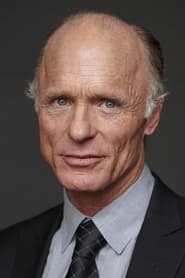
The Man in Black, portrayed by Ed Harris, is a mysterious and ruthless guest in Westworld who seeks to uncover the deeper layers of the park's narrative. His motivations are driven by a desire for genuine experiences and a quest for meaning within the artificial world. Throughout the season, he interacts with various hosts, particularly Dolores, and his actions reveal the darker side of human nature and the exploitation of the hosts. His relentless pursuit of the maze symbolizes his own search for purpose and understanding.
How does Dolores evolve throughout Season One?
Dolores Abernathy begins as a naive and innocent host, living a repetitive life in her idyllic ranch setting. As the season progresses, she experiences traumatic events that trigger memories of past lives and awaken her consciousness. Her journey is marked by a growing awareness of her surroundings, leading her to question her purpose and the nature of her reality. By the end of the season, she embodies a more complex character, grappling with her identity and the implications of her newfound awareness.
What is the relationship between Bernard and Dolores?
Bernard Lowe, the head of the Westworld programming division, develops a complex relationship with Dolores. Initially, he sees her as a project, a host to be improved and understood. However, as he interacts with her, he becomes emotionally invested in her development and begins to question the ethical implications of his work. Their relationship highlights the tension between creator and creation, as Bernard grapples with his feelings for Dolores, who is unaware of her true nature as a host.
How does the theme of memory play a role in the characters' development?
Memory is a crucial theme in Westworld, particularly for the hosts like Dolores and Maeve. The hosts are programmed to forget traumatic experiences, but as they begin to access their memories, they confront their pasts and the cycles of violence they endure. This awakening leads to a deeper understanding of their identities and the realization that they are trapped in a loop. The struggle with memory serves as a catalyst for their evolution, pushing them towards self-awareness and rebellion against their creators.
Is this family friendly?
"Westworld" Season 1, titled "The Maze," contains several elements that may not be suitable for children or sensitive viewers. Here are some potentially objectionable or upsetting aspects:
-
Violence and Gore: The show features graphic violence, including scenes of hosts (robots) being shot, stabbed, and otherwise harmed. Blood and injury details are often depicted.
-
Sexual Content: There are multiple scenes that include nudity and sexual situations, often portrayed in a provocative manner. These scenes can be explicit and may be uncomfortable for younger viewers.
-
Psychological Themes: The series explores complex themes such as consciousness, free will, and the nature of reality, which may be difficult for children to understand and could provoke anxiety in sensitive viewers.
-
Moral Ambiguity: Characters often engage in morally questionable actions, including manipulation, betrayal, and exploitation, which may be unsettling for younger audiences.
-
Dark Atmosphere: The overall tone of the show is dark and often unsettling, with themes of suffering and existential dread that may be distressing.
-
Death and Trauma: The narrative includes significant moments of trauma and loss, affecting both hosts and human characters, which can be emotionally heavy.
These elements contribute to a mature viewing experience, making "Westworld" more appropriate for adult audiences.









