
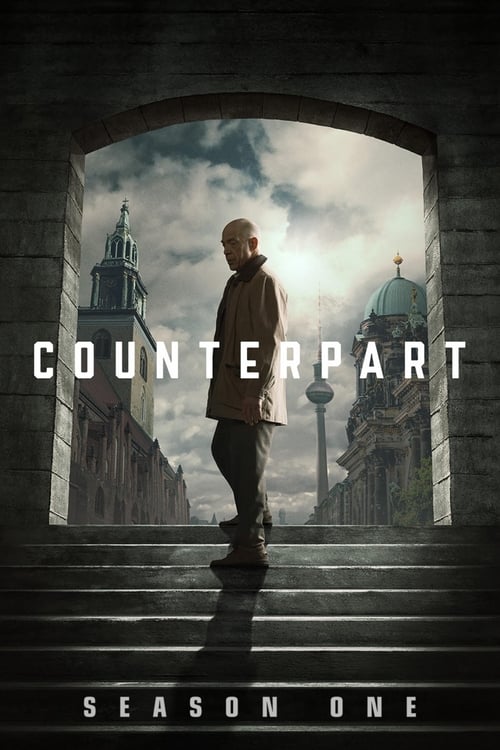









Popular
What is the significance of the two worlds in Counterpart and how do they differ?
How does Howard Silk's character evolve throughout Season 1?
What role does the character of Clare play in Howard Silk's life and the overall plot?
What are the motivations of the character Peter Quayle in Season 1?
How does the theme of identity manifest through the interactions between the two Howards?
Should I watch it?
Ask Your Own Question

What is the plot?
In the opening scenes of "Counterpart," we are introduced to Howard Silk, a low-level bureaucrat working for a mysterious government agency in Berlin. He leads a monotonous life, feeling unfulfilled and overshadowed by his more successful wife, Emily. Howard's routine is disrupted when he learns that his agency is involved in a secretive operation related to a parallel universe. He is unaware that this alternate world, referred to as "the Other Side," has been in existence for decades and is accessible through a portal.
Howard's life takes a dramatic turn when he is summoned to a meeting with his superior, the enigmatic Director of the agency, who reveals that Howard has a counterpart in the Other Side. This counterpart, also named Howard Silk, is a more assertive and confident version of himself. The agency is on high alert due to a recent assassination of a key figure from the Other Side, and Howard is tasked with learning more about his counterpart.
As Howard begins to navigate the complexities of his job, he meets his counterpart, who is revealed to be a more ruthless and capable individual. The two Howards have a tense first encounter, where the Other Howard explains the dangers of their worlds and the ongoing conflict between them. The Other Howard is on a mission to find a rogue agent who has crossed over and is causing chaos.
Meanwhile, we are introduced to Emily Silk, Howard's wife, who is revealed to have a mysterious connection to the Other Side. It becomes clear that she has been involved in a secretive project that has implications for both worlds. As Howard grapples with his feelings of inadequacy and the revelations about his wife, he begins to question his own identity and purpose.
The narrative escalates when Howard learns that the rogue agent, known as "the Man," is a dangerous figure who has been manipulating events on both sides. The agency intensifies its efforts to capture him, leading to a series of tense confrontations. Howard's loyalty is tested as he is drawn deeper into the conflict, and he must decide whether to trust his counterpart or follow his own instincts.
As the story unfolds, Howard discovers that the assassination of the key figure was orchestrated by a faction within the Other Side that seeks to destabilize the balance between the two worlds. This revelation forces Howard to confront the moral complexities of his situation and the implications of his choices.
In a pivotal moment, Howard is faced with a decision that could alter the course of events. He must choose whether to assist his counterpart in capturing the rogue agent or to protect his own world from the fallout of the Other Side's machinations. This choice weighs heavily on him, as he grapples with the consequences of his actions.
The climax of the season occurs when Howard and his counterpart confront the rogue agent in a tense showdown. The encounter is fraught with danger, as both Howards must rely on their wits and skills to outmaneuver the threat. The fight is intense, with both sides employing strategic tactics to gain the upper hand. Ultimately, Howard's determination and newfound confidence allow him to prevail, but not without significant personal cost.
As the season concludes, the ramifications of Howard's choices become apparent. The balance between the two worlds is precarious, and the stakes are higher than ever. Howard is left to ponder the implications of his actions and the future of both worlds, setting the stage for further conflict and exploration in the seasons to come.









What is the ending?
At the end of "Counterpart" Season 1, Howard Silk confronts his counterpart, Howard Alpha, leading to a tense standoff. The season concludes with significant revelations about the nature of the two worlds and the characters' intertwined fates, particularly focusing on the implications of their choices and the ongoing conflict between the two dimensions.
As the final episode unfolds, the tension escalates in the dimly lit corridors of the Office of Interchange. Howard Silk, the mild-mannered bureaucrat from the Prime world, is faced with the reality of his counterpart, Howard Alpha, who has been living a life filled with danger and intrigue in the other world. The two men, though physically identical, are starkly different in their experiences and motivations.
In a pivotal scene, Howard Silk confronts Howard Alpha in a secluded room. The atmosphere is thick with unease as they exchange words, revealing the deep-seated fears and regrets that have shaped their lives. Howard Silk, who has spent his life in the shadows of his more assertive counterpart, grapples with feelings of inadequacy and confusion. He is torn between the desire to understand his counterpart's choices and the instinct to protect his own world from the chaos that Alpha represents.
As the conversation intensifies, Howard Alpha reveals his intentions, which are shrouded in secrecy and manipulation. He has been orchestrating events that threaten the stability of both worlds, and Howard Silk realizes that he must take a stand. The emotional weight of the moment is palpable; Howard Silk's internal struggle is mirrored in his physical demeanor, as he shifts from uncertainty to a newfound resolve.
In a climactic moment, Howard Silk makes a choice that will alter the course of both their lives. He confronts Alpha with a weapon, symbolizing his transition from a passive observer to an active participant in the conflict. The tension peaks as they grapple, and in a moment of desperation, Howard Silk pulls the trigger, resulting in a shocking outcome that leaves both men irrevocably changed.
The scene shifts to the aftermath of the confrontation. Howard Silk is left to grapple with the consequences of his actions. The emotional toll is evident on his face as he processes the gravity of what he has done. Meanwhile, the fate of Howard Alpha hangs in the balance, leaving viewers questioning the implications of their dual existence.
As the episode draws to a close, the narrative expands to reveal the broader conflict between the two worlds. The audience is left with a sense of foreboding as the implications of the confrontation ripple through both dimensions. The final moments hint at the ongoing struggle for power and control, setting the stage for future conflicts.
In the closing scenes, we see the fates of the main characters crystallize. Howard Silk, now irrevocably changed by his encounter with his counterpart, must navigate the complexities of his life with a new understanding of his own identity. The emotional weight of his choices lingers, suggesting that the journey ahead will be fraught with challenges.
The season ends with a lingering sense of uncertainty, as the characters are left to confront the consequences of their actions and the unresolved tensions between the two worlds. The final shot encapsulates the duality of their existence, leaving viewers eager for the next chapter in this intricate narrative.
Is there a post-credit scene?
In "Counterpart" Season 1, there is no post-credit scene. The season concludes with the final episode, "The Crossing," which wraps up the main narrative threads without any additional scenes after the credits. The focus remains on the intense developments between the characters, particularly Howard Silk's journey and the revelations about the parallel world. The absence of a post-credit scene allows the audience to reflect on the complex themes of identity, loyalty, and the consequences of choices made throughout the season.
What is the significance of the two worlds in Counterpart and how do they differ?
The two worlds in Counterpart, referred to as 'Our World' and 'The Other World', are parallel realities that diverged after a catastrophic event. Our World is characterized by a more mundane, bureaucratic existence, while The Other World is more advanced and has experienced a different political landscape, including a more aggressive approach to espionage and control. The differences manifest in technology, societal norms, and the characters' personal lives, creating a rich backdrop for the narrative.
How does Howard Silk's character evolve throughout Season 1?
Howard Silk begins as a low-level bureaucrat in a dull, monotonous job at the Office of Interchange. Initially, he is portrayed as passive and somewhat resigned to his life. However, after encountering his counterpart from The Other World, he becomes more assertive and begins to uncover the complexities of his own identity. His evolution is marked by a growing sense of agency, as he grapples with the moral implications of his actions and the secrets he uncovers.
What role does the character of Clare play in Howard Silk's life and the overall plot?
Clare, Howard Silk's wife, is a pivotal character whose mysterious past and connection to The Other World add layers to the narrative. Her character is initially shrouded in ambiguity, and as the story unfolds, it is revealed that she has a significant history with the other Howard Silk. Clare's motivations and emotional struggles are intricately tied to the themes of love, betrayal, and the search for identity, making her a crucial element in Howard's journey.
What are the motivations of the character Peter Quayle in Season 1?
Peter Quayle, a high-ranking official in the Office of Interchange, is driven by ambition and a desire for power. He is deeply involved in the espionage activities between the two worlds and often operates in morally gray areas. His motivations are complex; he seeks to maintain control over the delicate balance between the worlds while also navigating personal relationships, particularly with Clare and Howard. Quayle's character embodies the tension between loyalty and self-interest.
How does the theme of identity manifest through the interactions between the two Howards?
The interactions between the two Howards--Howard Silk from Our World and his counterpart from The Other World--serve as a profound exploration of identity. Each Howard represents different choices and paths taken in life, leading to contrasting personalities and life experiences. Their encounters force both characters to confront their own fears, regrets, and aspirations, ultimately leading to a deeper understanding of themselves and the nature of their existence. This theme is central to the narrative, highlighting how environment and choices shape identity.
Is this family friendly?
"Counterpart" is a complex and mature series that delves into themes of espionage, identity, and moral ambiguity. While it features a compelling narrative, it contains several elements that may not be suitable for children or sensitive viewers. Here are some potentially objectionable aspects:
-
Violence: The show includes scenes of physical violence, including fights and shootings, which can be intense and graphic.
-
Death: Characters face life-threatening situations, and there are moments that involve the death of key figures, which can be emotionally impactful.
-
Language: There is the use of strong language throughout the series, which may not be appropriate for younger audiences.
-
Sexual Content: The series contains scenes that involve sexual situations and nudity, which may be considered inappropriate for children.
-
Psychological Tension: The show explores themes of paranoia, betrayal, and existential dread, which can be unsettling and may provoke anxiety in sensitive viewers.
-
Mature Themes: The narrative addresses complex issues such as loyalty, sacrifice, and the moral implications of one's choices, which may be difficult for younger audiences to fully grasp.
Overall, "Counterpart" is intended for a mature audience and may not be suitable for children or those who are sensitive to such content.









