






Popular
What happens to Chuck McGill's relationship with Jimmy in Season 2?
How does Kim Wexler's character develop in Season 2?
What role does the character Mike Ehrmantraut play in Season 2?
How does the plot involving the Sandpiper Crossing case unfold in Season 2?
What is the significance of the 'Slippin' Jimmy' persona in Season 2?
Should I watch it?
Ask Your Own Question

What is the plot?
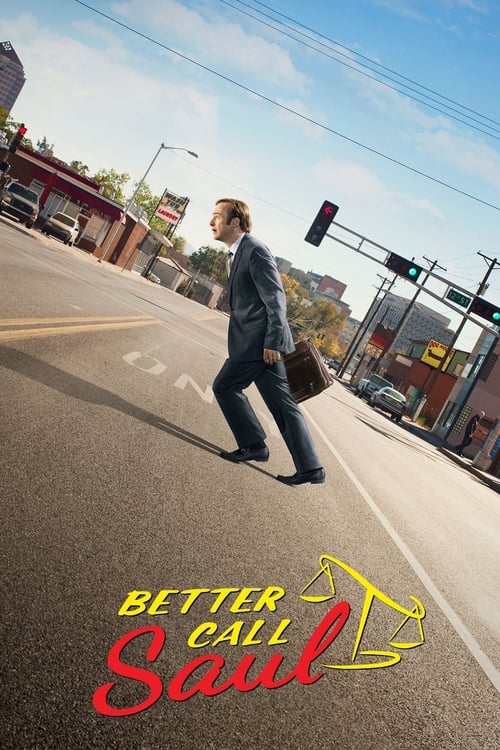
The season opens with a flash-forward to a post-Breaking Bad timeline, where Saul Goodman, now living under the alias "Gene," is managing a Cinnabon store in Omaha, Nebraska. He is shown to be paranoid and fearful of being recognized, constantly looking over his shoulder. This sets a tone of anxiety and regret for the character.
Returning to the main timeline, we see Jimmy McGill struggling with the aftermath of his decision to forge Chuck's signature on a document to secure a client. He is trying to navigate his new role at Davis & Main, where he is expected to work under Kim Wexler and Chuck McGill's watchful eyes. Jimmy is eager to prove himself but feels stifled by the corporate environment.
In the next sequence, Chuck is dealing with the fallout of his condition, electromagnetic hypersensitivity. He is increasingly isolated, refusing to leave his house and relying on his brother Jimmy for support. Chuck's paranoia about technology intensifies, leading him to take drastic measures to protect himself from perceived threats.
Jimmy's relationship with Kim deepens as they work together at Davis & Main. He tries to impress her with his legal skills, but his unorthodox methods often clash with the firm's more traditional approach. Kim is torn between her admiration for Jimmy's creativity and her commitment to the firm's standards.
As the season progresses, Jimmy's ambition leads him to create a new marketing campaign for Davis & Main, which he believes will attract more clients. He devises a plan to use a catchy slogan and flashy advertisements, but the firm's partners are skeptical. Despite their reservations, Jimmy pushes forward, showcasing his determination to succeed.
Meanwhile, Chuck's mental state deteriorates further. He becomes increasingly obsessed with Jimmy's actions, convinced that his brother is trying to undermine him. This culminates in a confrontation where Chuck confronts Jimmy about the forged document, leading to a heated argument that reveals the deep-seated issues in their relationship.
In a pivotal moment, Jimmy decides to take matters into his own hands. He secretly records Chuck's confession about the forgery, believing it will protect him in the future. This decision highlights Jimmy's willingness to manipulate situations for his benefit, showcasing his moral ambiguity.
As the season nears its climax, Kim faces her own challenges at work. She is offered a partnership at Davis & Main, but the pressure of the corporate environment weighs heavily on her. She grapples with her feelings for Jimmy and her professional aspirations, leading to a moment of introspection about her future.
The tension between Jimmy and Chuck escalates when Chuck decides to take legal action against Jimmy for the forgery. This sets the stage for a courtroom battle that will test their relationship and their respective moral compasses. The stakes are raised as both brothers prepare for a confrontation that will have lasting consequences.
In the final episodes, the courtroom drama unfolds. Chuck presents his case against Jimmy, revealing the extent of his brother's deception. The emotional weight of their history comes to a head as both men confront their past and the choices that have led them to this moment. The courtroom scenes are charged with tension, showcasing the deep familial rift and the personal stakes involved.
The season concludes with a shocking twist. After a series of revelations and emotional confrontations, Jimmy's actions lead to a significant turning point in his relationship with Chuck. The fallout from the trial leaves both brothers irrevocably changed, setting the stage for future conflicts and the evolution of Jimmy into Saul Goodman. The season ends on a note of uncertainty, with both characters facing the consequences of their choices and the paths they have chosen.








What is the ending?
At the end of Season 2 of Better Call Saul, Jimmy McGill faces the consequences of his actions as he continues to navigate the moral complexities of his life. He is increasingly drawn into the world of questionable ethics and legal practices, culminating in a pivotal moment that sets the stage for his transformation into Saul Goodman. Chuck McGill's struggle with his mental health and his relationship with Jimmy reaches a critical point, leading to a confrontation that has lasting implications for both brothers. Kim Wexler finds herself at a crossroads, torn between her professional ambitions and her personal feelings for Jimmy. The season concludes with a sense of foreboding, as the characters' choices foreshadow the darker paths they may take in the future.
As the season draws to a close, we find ourselves in the aftermath of the events that have unfolded. The final episode, titled "Klick," opens with a tense atmosphere. Jimmy McGill is in the midst of a moral crisis, grappling with the fallout from his decision to forge Chuck's signature on a document to secure a settlement for a client. This act of desperation reveals the lengths to which Jimmy is willing to go to succeed, but it also highlights his internal conflict between his desire to be a good lawyer and his inclination toward unethical behavior.
In a pivotal scene, we see Chuck McGill, Jimmy's older brother, struggling with his electromagnetic hypersensitivity. He is isolated in his home, surrounded by darkness, as he battles his own demons. Chuck's condition serves as a metaphor for his fraught relationship with Jimmy, and it becomes increasingly clear that their bond is strained to the breaking point. Chuck's paranoia and obsession with his brother's actions lead him to confront Jimmy, resulting in a heated exchange that lays bare their deep-seated resentments.
Meanwhile, Kim Wexler is navigating her own challenges. She is deeply invested in her career at HHM, but her feelings for Jimmy complicate her professional life. In a moment of vulnerability, Kim expresses her concerns about Jimmy's choices, urging him to consider the consequences of his actions. This conversation underscores the emotional stakes for both characters, as Kim grapples with her loyalty to Jimmy while also striving to maintain her integrity as a lawyer.
As the episode progresses, the tension between the brothers escalates. Chuck confronts Jimmy about the forged document, and the confrontation becomes a catalyst for a larger conflict. Chuck's anger and disappointment are palpable, and Jimmy's defensive posture reveals his fear of losing his brother's respect. The scene is charged with emotion, as both men struggle to articulate their feelings and the weight of their shared history.
In the climax of the episode, Chuck's decision to expose Jimmy's wrongdoing becomes a turning point. He chooses to report Jimmy to the bar association, a move that signifies not only a betrayal of their brotherly bond but also a commitment to uphold the law, even at the expense of their relationship. This moment encapsulates the central conflict of the season: the struggle between familial loyalty and professional ethics.
As the season concludes, we see the ramifications of Chuck's decision unfold. Jimmy is left reeling, facing the potential loss of his career and the deepening rift with his brother. The final scenes are imbued with a sense of inevitability, as Jimmy's path toward becoming Saul Goodman becomes clearer. The choices made by each character resonate with the audience, leaving a lingering sense of tension and uncertainty about their futures.
In summary, the ending of Season 2 of Better Call Saul is marked by a series of confrontations and decisions that shape the characters' trajectories. Jimmy McGill stands at a crossroads, Chuck McGill's mental health deteriorates further, and Kim Wexler is left to navigate the fallout of their choices. The season closes with a poignant reminder of the complexities of morality, family, and ambition, setting the stage for the challenges that lie ahead.
Is there a post-credit scene?
In "Better Call Saul" Season 2, there is no post-credit scene. The season concludes without any additional scenes after the credits roll. The final episode, titled "Klick," focuses on the culmination of the season's storylines, particularly the emotional and moral struggles of Jimmy McGill as he navigates his relationship with Chuck and his transformation into Saul Goodman. The absence of a post-credit scene allows the weight of the season's events to linger, emphasizing the gravity of Jimmy's choices and the consequences that follow.
What happens to Chuck McGill's relationship with Jimmy in Season 2?
In Season 2, Chuck McGill's relationship with his brother Jimmy becomes increasingly strained. Chuck's disdain for Jimmy's morally ambiguous tactics grows, especially after Jimmy's successful manipulation of the legal system to win a case. Chuck's jealousy and protectiveness over his reputation as a lawyer lead him to take drastic measures, including sabotaging Jimmy's career. This culminates in a pivotal moment where Chuck refuses to support Jimmy's application for a law license, deepening the rift between them.
How does Kim Wexler's character develop in Season 2?
In Season 2, Kim Wexler's character experiences significant growth as she navigates her professional ambitions and her complicated feelings for Jimmy. She becomes more assertive in her career, taking on a challenging case that showcases her legal skills. However, her relationship with Jimmy complicates her decisions, as she struggles between her loyalty to him and her desire to succeed independently. This internal conflict is highlighted when she ultimately chooses to work with Jimmy on a case, indicating her emotional investment in him despite the risks.
What role does the character Mike Ehrmantraut play in Season 2?
In Season 2, Mike Ehrmantraut's role expands as he becomes more deeply involved in the criminal underworld. After the events of Season 1, Mike is drawn into a conflict with the drug trade, particularly as he begins working for Gus Fring. His meticulous nature and moral code are tested as he navigates the dangerous landscape of Albuquerque's criminal elements. Mike's storyline also explores his relationship with his granddaughter, which adds depth to his character and highlights his motivations beyond just the criminal activities.
How does the plot involving the Sandpiper Crossing case unfold in Season 2?
The Sandpiper Crossing case becomes a central plot point in Season 2, as Jimmy and Chuck work together to build a class-action lawsuit against the nursing home chain. The case is significant for Jimmy, as it represents a chance to prove himself as a legitimate lawyer. However, the complexities of the case, including the ethical dilemmas and the challenges posed by the opposing legal team, create tension. As they gather evidence, the brothers' differing approaches to law and morality come to the forefront, further complicating their relationship.
What is the significance of the 'Slippin' Jimmy' persona in Season 2?
In Season 2, the 'Slippin' Jimmy' persona resurfaces as a point of contention for Jimmy McGill. This alter ego represents his past as a con artist and his struggle to escape that identity. Throughout the season, Jimmy grapples with the temptation to revert to his old ways, especially when faced with professional setbacks. The persona serves as a reminder of his moral ambiguity and the internal conflict he faces between his desire for legitimacy and the allure of easy shortcuts. This struggle is visually represented in various scenes where Jimmy's choices lead him closer to the edge of his former life.
Is this family friendly?
"Better Call Saul" Season 2 contains several elements that may not be suitable for children or sensitive viewers. Here are some potentially objectionable aspects:
-
Violence: There are scenes that depict physical confrontations and threats, which can be intense and unsettling.
-
Language: The show features strong language, including profanity, which may not be appropriate for younger audiences.
-
Mature Themes: The series explores complex themes such as morality, crime, and the consequences of unethical behavior, which may be difficult for children to understand.
-
Substance Use: There are instances of drug use and references to addiction, which could be distressing for some viewers.
-
Emotional Distress: Characters experience significant emotional turmoil, including anxiety, guilt, and desperation, which may resonate deeply and be upsetting for sensitive viewers.
-
Legal and Ethical Dilemmas: The show delves into morally ambiguous situations that may provoke discomfort or confusion regarding right and wrong.
These elements contribute to the show's mature rating and may not be suitable for a family-friendly viewing experience.









