














































Popular
What happens to James Franco's character during the party at his house?
How does Seth Rogen's character react to the apocalypse?
What is the significance of the 'sacrifice' scene involving Jonah Hill?
How does Danny McBride's character behave during the crisis?
What role does the character of Michael Cera play in the story?
Should I watch it?
Ask Your Own Question

What is the plot?
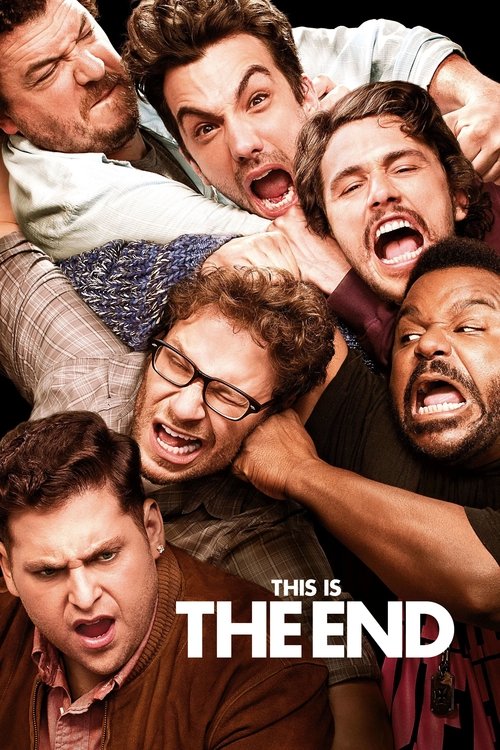
This Is the End: Complete Plot Narrative
Jay Baruchel steps off the plane in Los Angeles with a mixture of anticipation and dread. He's come to reconnect with his old friend Seth Rogen, but the reunion feels complicated--Seth has changed since moving to Hollywood, surrounding himself with celebrities and a lifestyle that Jay finds alienating. When Seth picks him up, he immediately invites Jay to a housewarming party at James Franco's mansion, one of those massive Hollywood bashes that Jay has always despised. Jay protests, mentioning that Jonah Hill will be there, but Seth convinces him to come along anyway, promising it will be fun to reconnect with their mutual friends.
The party at Franco's house is exactly what Jay feared: a sprawling, crowded affair packed with celebrities, hangers-on, and industry types. The mansion is overflowing with people drinking, doing drugs, and engaging in the kind of shallow Hollywood socializing that makes Jay deeply uncomfortable. He watches Michael Cera doing cocaine, sees Jonah Hill being friendly to everyone, and observes the general debauchery unfolding around him. The disconnect between Jay and this world becomes immediately apparent--he doesn't belong here, and everyone seems to sense it. After enduring the party for a while, Jay's discomfort becomes unbearable, so he pulls Seth aside and asks if they can leave to get some cigarettes from a nearby convenience store. Seth agrees, and the two friends escape the mansion, leaving behind the noise and excess.
At the convenience store, everything changes in an instant. As Jay and Seth browse the aisles, the sky suddenly erupts with massive beams of brilliant blue light. People around them are violently sucked upward into the air, their bodies lifted by an invisible force. It's terrifying and surreal--a moment of pure supernatural horror. Jay watches in shock as people are raptured away, but Seth, caught off guard, becomes trapped under a heavy steel cart and misses the entire event. When they manage to escape the store and rush back to Franco's house, Jay tries desperately to warn everyone about what he witnessed. He describes the blue beams, the people being pulled into the sky, the sheer impossibility of what he saw. But no one believes him. Seth, who was under the cart, didn't see anything and can't corroborate Jay's story. The partygoers dismiss it as Jay being paranoid or high, and Jonah Hill, despite being friendly, doesn't take the warning seriously either.
Then the ground itself begins to shake. A massive earthquake strikes Los Angeles with devastating force. The crowd at Franco's house rushes outside in panic, and what they see is apocalyptic. The Hollywood Hills are engulfed in flames. But worse--far worse--a massive sinkhole suddenly opens up in Franco's own yard. People scream as the earth literally swallows them whole. Several celebrities and partygoers are consumed by the sinkhole, their bodies disappearing into the darkness below. Among the victims is Michael Cera, whose death is particularly gruesome and darkly comedic--a moment that perfectly captures the film's blend of horror and absurdist humor. The survivors realize with dawning horror that Jay was telling the truth. This isn't just an earthquake. Something far more catastrophic is happening.
The remaining survivors--Jay, Seth, James Franco, Jonah Hill, Craig Robinson, and Danny McBride--rush back inside Franco's house and turn on the television. The news reports confirm their worst fears: the earthquake has devastated most of Los Angeles. The city is in ruins. Infrastructure is collapsing. They are trapped. The group takes inventory of what they have: food, water, supplies. They establish a rationing system, board up the windows and doors, and try to figure out what's happening. The initial shock gives way to a grim realization--they may be here for a very long time.
As days pass, the house becomes both a sanctuary and a pressure cooker. The group bickers endlessly as supplies dwindle and tensions rise. Danny McBride, true to form, is chaotic and selfish. He wastes resources, mocks everyone relentlessly, and creates constant friction within the group. His behavior becomes so disruptive that the others eventually exile him from the house, forcing him outside to fend for himself. Meanwhile, strange demonic creatures stalk the perimeter of the house, making it abundantly clear that this isn't just a natural disaster--it's biblical judgment day. The apocalypse is real, and they are living through it.
Inside the house, Jay and Seth's friendship becomes strained as they confront each other about past wrongs and personal failures. Their conversation becomes heated, and during an exorcism attempt--a desperate, misguided effort to cleanse the house of evil--they fight and accidentally knock over a candle. The flame spreads rapidly, engulfing Jonah Hill and consuming part of the house. The fire forces everyone outside, where they're exposed to the demonic threats they've been hiding from.
Desperate to escape, James Franco suggests driving to his home in Malibu, hoping it might be safer or offer a way out. The group makes their way to Franco's car, but when they arrive, they discover a demon standing guard over it. The creature is terrifying and blocks their path. Craig Robinson, showing unexpected courage and selflessness, volunteers to sacrifice himself to distract the demon and allow the others to escape. He charges at the creature, drawing its attention, and in that moment of pure selflessness, a brilliant blue beam descends from the sky and lifts Craig upward. He is raptured into Heaven. The others watch in amazement as Craig ascends, and they suddenly understand something crucial: selfless acts can save them. Performing a selfless deed triggers the Rapture and allows ascension to Heaven.
With this knowledge, the survivors make their way toward Malibu. But the journey is treacherous. On the road, they encounter a group of cannibals led by Danny McBride, who has survived outside and has become even more unhinged. McBride has a sex slave with him--Channing Tatum, who is depicted as a gimp-like figure under McBride's control. The cannibals are hungry and dangerous, and a confrontation becomes inevitable.
James Franco, remembering the lesson about selflessness, decides to sacrifice himself for the group. He steps forward, offering himself to the cannibals, and a blue beam begins to descend around him. It looks like he's about to be saved, to be raptured into Heaven. But Franco's arrogance and ego get the better of him. Unable to resist, he taunts and insults Danny McBride, mocking him and his pathetic existence. The moment Franco speaks, the blue beam vanishes. The Rapture rejects him because his act wasn't truly selfless--it was performed with the expectation of reward, and his final act was one of cruelty and arrogance. Without the protective beam, Franco is defenseless. Danny McBride and the other cannibals fall upon him, and he is eaten alive in a horrifying and darkly comedic scene. Seth and Jay watch helplessly as their friend is consumed, then they flee into the night.
Running through the darkness, Seth and Jay encounter Satan himself. The demon is massive and terrifying, attempting to devour them both. They're cornered, desperate, with nowhere to run. In this moment of absolute desperation, Jay finally apologizes to Seth for all his wrongdoings, for his judgment, for his distance. It's a genuine moment of contrition and reconciliation. The apology triggers the Rapture. A blue beam strikes Jay, and he begins to ascend toward Heaven. As he rises, Jay reaches down and grabs Seth's hand, trying to pull him up as well. But Jay's presence prevents Seth from ascending--two people can't be raptured simultaneously in this way. Jay is stuck, unable to leave his friend behind, but also unable to save him.
Seth makes a choice. He forces Jay to let go, pushing his friend away so that Jay can ascend alone. In that moment of ultimate selflessness--sacrificing his own salvation so that his friend can be saved--Seth triggers his own Rapture. A blue beam appears around him, lifting him upward. And in a final absurd twist, as Seth rises, his body inadvertently castrates Satan, the demon shrieking in pain as the two friends escape its grasp.
Seth and Jay ascend together into Heaven, their friendship fully reconciled. They find themselves in a paradise that defies description--a place of pure joy and freedom. It's essentially a giant party, complete with music, dancing, and every pleasure imaginable. Craig Robinson is already there, having arrived earlier, and he greets them with joy. The three friends are reunited in this heavenly paradise, their struggles over, their sins forgiven through their acts of selflessness and redemption.
The film ends with one final, completely absurd scene: the Backstreet Boys appear in Heaven and perform "Everybody (Backstreet's Back)" for the newly saved souls. It's the perfect comedic ending to this apocalyptic journey--a moment of pure, ridiculous joy that encapsulates the film's unique blend of dark humor and genuine emotion. As the Backstreet Boys sing and the saved souls celebrate, we see that even in the end times, even after the apocalypse, friendship, redemption, and a good party can triumph. The movie fades to black as the music plays, leaving the audience with a sense of absurd satisfaction.
The journey from Jay's arrival in Los Angeles to his ascension into Heaven is one of transformation and redemption. What begins as a story about two friends drifting apart becomes a tale of reconciliation and sacrifice. The apocalypse strips away all pretense and superficiality, forcing the characters to confront their true selves and their relationships. Some, like Franco, fail because they cannot overcome their egos. Others, like Craig Robinson and eventually Seth and Jay, succeed by learning the value of selflessness and genuine connection. In the end, This Is the End is not just about surviving the apocalypse--it's about surviving yourself and finding redemption through friendship and sacrifice.







What is the ending?
In the ending of "This Is the End," the remaining characters, Jay Baruchel, Seth Rogen, and James Franco, find themselves in a final confrontation with the apocalypse. They are ultimately taken to heaven after a series of chaotic events, while other characters meet their demise. The film concludes with a comedic yet poignant moment as they are welcomed into a heavenly party with various celebrities.
Now, let's delve into the ending in a more detailed narrative fashion:
As the chaos of the apocalypse unfolds, Jay Baruchel, Seth Rogen, and James Franco are among the last survivors in Franco's house. The atmosphere is tense, filled with fear and uncertainty as they witness their friends being taken by demonic forces. The group is dwindling, and the reality of their situation becomes increasingly dire.
After a series of harrowing events, including the death of their friend Danny McBride, who is consumed by a hellish creature, the remaining trio grapples with their own survival. They barricade themselves in the house, but the tension between them escalates. Franco's desire for validation and his self-centered nature clash with Jay's more grounded perspective, while Seth tries to mediate the growing conflict.
In a moment of desperation, they attempt to escape the house, but the outside world is filled with chaos and destruction. They witness the horrors of the apocalypse firsthand, with fire and brimstone raining down around them. The group is forced to confront their own flaws and the superficiality of their previous lives in Hollywood.
As they navigate through the chaos, they find themselves in a climactic moment where they are confronted by a demonic entity. In a twist of fate, they are given a chance at redemption. The trio realizes that their only hope lies in their ability to work together and support one another. They share heartfelt confessions, revealing their vulnerabilities and fears, which brings them closer together.
In the final moments, they are engulfed in a blinding light, and suddenly, they find themselves in a heavenly realm. The transition is surreal, as they are welcomed into a party filled with familiar faces, including celebrities who had previously perished. The atmosphere is joyous and celebratory, contrasting sharply with the chaos they just escaped.
Jay, Seth, and Franco share a moment of disbelief and relief as they realize they have been granted a second chance. They embrace the absurdity of their situation, laughing and enjoying the company of their friends in this newfound paradise. The film ends on a comedic note, highlighting the absurdity of their journey and the importance of friendship, even in the face of the apocalypse.
In summary, Jay Baruchel, Seth Rogen, and James Franco survive the apocalypse and are welcomed into heaven, while other characters like Danny McBride and Emma Watson meet grim fates. The ending encapsulates the film's themes of friendship, redemption, and the comedic absurdity of life and death.
Is there a post-credit scene?
Yes, "This Is the End" features a post-credit scene. After the credits roll, the scene opens with a shot of a heavenly light illuminating a serene setting. We see a group of familiar faces, including characters played by James Franco, Jonah Hill, Seth Rogen, and others, gathered together in a celestial environment. They are enjoying a blissful afterlife, engaging in light-hearted banter and laughter.
As they converse, the atmosphere is filled with a sense of camaraderie and joy, contrasting sharply with the chaos and destruction they experienced earlier in the film. The scene captures their relief and happiness in this new existence, showcasing their personalities in a more relaxed and carefree manner.
Suddenly, a figure appears, and it is revealed to be a comedic twist on the biblical figure of Jesus, who greets them with a warm smile. The characters express their excitement and disbelief at being in such a place, and the scene ends on a humorous note, emphasizing the film's blend of comedy and absurdity even in the afterlife. This post-credit moment serves as a light-hearted conclusion to the film, reinforcing the themes of friendship and survival amidst the apocalypse.
What happens to James Franco's character during the party at his house?
During the party at James Franco's house, he is excited to host his friends, including Seth Rogen, Jonah Hill, and others. As the night progresses, he shows off his new home and his artistic side, but his character also reveals a more self-centered and egotistical nature. When the apocalypse begins, Franco's character becomes increasingly desperate to maintain control and impress his guests, leading to tension and conflict.
How does Seth Rogen's character react to the apocalypse?
Seth Rogen's character, who is portrayed as a laid-back and humorous individual, initially reacts to the apocalypse with disbelief and humor. As the situation escalates, he becomes more serious and protective of his friends. His emotional state shifts from carefree to anxious as he grapples with the reality of their dire circumstances, ultimately taking on a leadership role among the group.
What is the significance of the 'sacrifice' scene involving Jonah Hill?
In a pivotal scene, Jonah Hill's character is humorously and dramatically revealed to be a potential sacrifice to appease the demonic forces. This moment highlights the absurdity of their situation and the group's desperation. Jonah's character, who initially appears to be a friend, becomes a target for the group's survival, showcasing the tension between self-preservation and loyalty.
How does Danny McBride's character behave during the crisis?
Danny McBride's character exhibits a selfish and chaotic demeanor during the crisis. He initially takes advantage of the situation, indulging in the comforts of the house while others are panicking. His lack of concern for the group's safety creates friction, and he often acts in a way that is both comedic and antagonistic, ultimately leading to his isolation from the group.
What role does the character of Michael Cera play in the story?
Michael Cera plays a fictionalized version of himself, who is introduced at the party as a charming and somewhat naive character. His role serves as comic relief, but he also represents the stark contrast between the carefree Hollywood lifestyle and the impending doom. His unexpected and humorous demise during the chaos adds to the film's dark comedy and highlights the absurdity of their situation.
Is this family friendly?
"This Is the End" is not considered family-friendly due to its explicit content and themes. Here are some potentially objectionable or upsetting aspects that may occur for children or sensitive viewers:
-
Strong Language: The film features frequent use of profanity, including strong curse words and vulgar expressions.
-
Sexual Content: There are several scenes with sexual references, innuendos, and suggestive behavior, including discussions about sexual acts.
-
Violence: The movie includes scenes of violence, including graphic depictions of destruction and characters facing perilous situations.
-
Substance Use: Characters are shown using drugs and alcohol, which may be inappropriate for younger audiences.
-
Dark Humor: The film employs dark humor that revolves around themes of death, apocalypse, and existential dread, which may be unsettling for some viewers.
-
Religious Themes: There are references to religious beliefs and apocalyptic scenarios that may be sensitive for certain audiences.
Overall, the film's comedic approach to serious themes, combined with its explicit content, makes it unsuitable for children and potentially distressing for sensitive viewers.









