























Popular
What motivates Mr. Miyagi to return to Okinawa?
How does Daniel's relationship with Kumiko develop throughout the film?
What is the significance of the fight between Daniel and Chosen?
How does Mr. Miyagi teach Daniel the importance of balance?
What role does the cultural setting of Okinawa play in the story?
Should I watch it?
Ask Your Own Question

What is the plot?
Sorry, we aren't able to watch and write up a full detailed plot yet. Check back in a few days.





What is the ending?
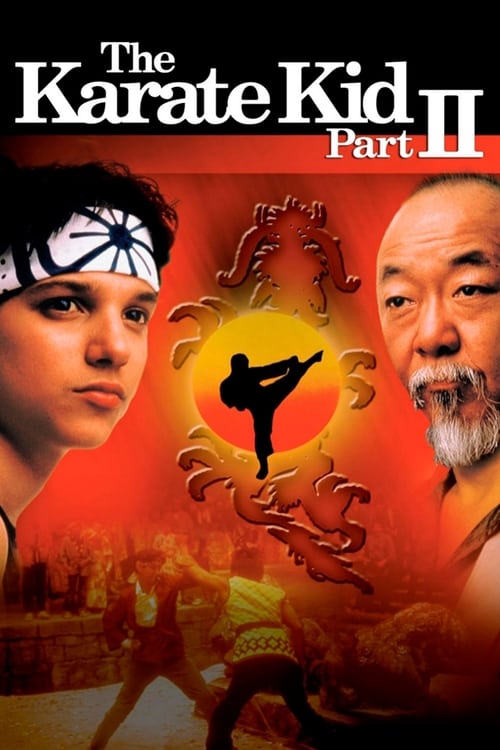
In the ending of The Karate Kid Part II, Daniel LaRusso faces off against Chozen Toguchi in a climactic karate match. After a tense battle, Daniel ultimately triumphs, demonstrating his growth and mastery of karate. The film concludes with Mr. Miyagi and Daniel returning to the United States, having strengthened their bond and learned valuable lessons about honor, respect, and the importance of family.
As the final act of The Karate Kid Part II unfolds, the tension in the air is palpable. The setting is the village of Tomi Village in Okinawa, Japan, where the annual karate tournament is about to commence. Daniel LaRusso stands in the center of the dojo, his heart racing as he prepares to face Chozen Toguchi, the fierce and proud rival who has been a source of conflict throughout their time in Okinawa.
The match begins, and the atmosphere is electric. Chozen, fueled by his desire to prove his superiority, attacks with ferocity. Daniel, however, is not just fighting for himself; he is fighting for the honor of Mr. Miyagi, who has taught him the true meaning of karate. As the fight progresses, Daniel finds himself on the defensive, dodging and weaving to avoid Chozen's powerful strikes. The crowd watches in silence, their eyes glued to the intense confrontation.
In a pivotal moment, Chozen delivers a brutal blow that sends Daniel crashing to the ground. The spectators gasp, and for a moment, it seems as though all hope is lost. But Daniel, drawing on the teachings of Mr. Miyagi, remembers the importance of balance and inner strength. He rises to his feet, determination etched on his face. The camera captures the resolve in his eyes, a reflection of his growth and the lessons learned from his mentor.
As the match continues, Daniel begins to find his rhythm. He counters Chozen's attacks with newfound confidence, showcasing the skills he has honed under Mr. Miyagi's guidance. The fight reaches a climax when Daniel executes a series of impressive moves, culminating in a dramatic crane kick that sends Chozen sprawling to the ground. The crowd erupts in cheers, and Daniel stands victorious, a symbol of perseverance and honor.
In the aftermath of the match, Chozen, humbled by his defeat, approaches Daniel. The tension between them dissipates as Chozen acknowledges Daniel's skill and the honor he has shown. This moment signifies a shift in Chozen's character, as he begins to understand the true spirit of karate, which is not about winning at all costs but about respect and integrity.
As the film draws to a close, Daniel and Mr. Miyagi share a heartfelt moment, reflecting on their journey together. They have not only faced external challenges but have also deepened their bond as mentor and student. The final scenes depict them walking through the serene landscape of Okinawa, a sense of peace enveloping them. They are ready to return to the United States, carrying with them the lessons learned and the memories made.
The film concludes with a sense of closure for all characters involved. Daniel has emerged as a stronger individual, having faced his fears and embraced the values instilled in him by Mr. Miyagi. Chozen, now transformed by the experience, has taken the first steps toward a more honorable path. Mr. Miyagi, proud of his student, has fulfilled his role as a mentor, knowing that Daniel is ready to face whatever challenges lie ahead. The journey has not only been about karate but about understanding oneself and the importance of relationships, leaving the audience with a sense of hope and inspiration.
Is there a post-credit scene?
The Karate Kid Part II does not have a post-credit scene. The film concludes with a climactic showdown and a resolution to the characters' arcs, particularly focusing on Daniel LaRusso and Mr. Miyagi's journey in Okinawa. After the final battle, the film wraps up with a sense of closure, emphasizing themes of honor, friendship, and the passing of wisdom, without any additional scenes after the credits.
What motivates Mr. Miyagi to return to Okinawa?
Mr. Miyagi is motivated to return to Okinawa after receiving news that his father is gravely ill. This news stirs deep emotions within him, as he feels a strong sense of duty and responsibility to be with his family during this critical time.
How does Daniel's relationship with Kumiko develop throughout the film?
Daniel's relationship with Kumiko develops as they share moments of joy and connection in Okinawa. Initially, they bond over traditional Japanese culture and dance, but as the story progresses, their feelings deepen, culminating in a romantic connection that is both tender and heartfelt.
What is the significance of the fight between Daniel and Chosen?
The fight between Daniel and Chosen is significant as it represents not only a physical confrontation but also a clash of values and honor. Chosen, driven by pride and a desire to prove himself, challenges Daniel, who must confront his own fears and insecurities while standing up for what he believes in.
How does Mr. Miyagi teach Daniel the importance of balance?
Mr. Miyagi teaches Daniel the importance of balance through various lessons, including the metaphor of the bonsai tree. He emphasizes that balance is not just physical but also emotional and spiritual, guiding Daniel to find harmony within himself as he faces challenges in Okinawa.
What role does the cultural setting of Okinawa play in the story?
The cultural setting of Okinawa plays a crucial role in the story, as it serves as a backdrop for Daniel's growth and understanding of Mr. Miyagi's heritage. The rich traditions, landscapes, and community interactions deepen the narrative, allowing Daniel to learn about honor, respect, and the significance of his mentor's past.
Is this family friendly?
The Karate Kid Part II is generally considered family-friendly, but there are a few scenes and themes that might be potentially objectionable or upsetting for children or sensitive viewers. Here are some aspects to consider:
-
Violence and Fighting: There are several martial arts fight scenes that, while choreographed and not overly graphic, may be intense for younger viewers. The confrontations can evoke feelings of tension and fear.
-
Death and Loss: The film addresses themes of loss, particularly with the death of Mr. Miyagi's father. This can be an emotional moment that may resonate deeply with sensitive viewers.
-
Cultural Conflict: The film explores cultural differences and conflicts, which may lead to moments of tension and misunderstanding between characters. Some scenes depict hostility and rivalry that could be unsettling.
-
Emotional Struggles: Characters experience emotional turmoil, including feelings of anger, sadness, and fear. These moments may be heavy for younger audiences to process.
-
Romantic Elements: There are romantic subplots that may include mild tension or jealousy, which could be confusing for younger viewers.
Overall, while the film promotes positive messages about friendship, perseverance, and respect, these elements may require parental guidance for younger audiences.








