
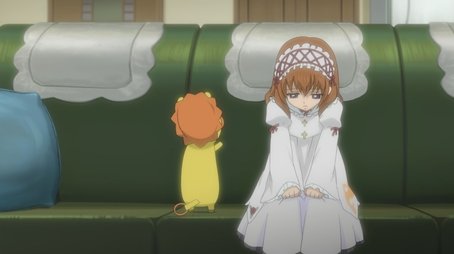


Popular
What is the significance of the chess game between Battler and Beatrice in this episode?
How does Battler's perception of Beatrice change during the episode?
What role does the concept of 'Zugzwang' play in the character dynamics?
What emotional state does Battler exhibit during his confrontation with Beatrice?
How does the episode explore the theme of despair through the characters' interactions?
Should I watch it?
Ask Your Own Question

What is the plot?
The episode begins with a tense atmosphere as the remaining members of the Ushiromiya family gather in the dining room of Rokkenjima. The mood is heavy with suspicion and fear, as they are aware that a series of murders has taken place, and the threat of the witch Beatrice looms over them. The family members are on edge, each grappling with their own paranoia and distrust of one another. Battler Ushiromiya, determined to confront the situation, takes a stand against the witch's influence, vowing to uncover the truth behind the murders.
As the discussion unfolds, Battler challenges the validity of the game being played by Beatrice, insisting that he will not accept her rules. He expresses his desire to prove that the murders can be explained through logic rather than magic. The tension escalates as Beatrice appears, taunting Battler and the family, asserting her power and control over the situation. She presents a new game, one that will test Battler's resolve and intellect even further.
The scene shifts to a chessboard metaphor, where the characters are likened to pieces in a game of chess. Battler is depicted as a pawn, while Beatrice assumes the role of the queen, symbolizing her dominance. The stakes are raised as Battler realizes that every decision he makes could lead to dire consequences for his family. He must navigate this treacherous game carefully, as each move could result in further loss.
As the game progresses, Battler engages in a battle of wits with Beatrice, attempting to outsmart her by presenting logical arguments against her magical claims. He recalls past events and tries to piece together the clues left behind by the murders. The dialogue is intense, filled with emotional weight as Battler's determination to protect his family clashes with Beatrice's cruel amusement.
In a pivotal moment, Battler confronts Beatrice about the nature of the murders, questioning her motives and the reasons behind her actions. Beatrice responds with a chilling smile, revealing her enjoyment in the chaos and despair she has caused. This exchange highlights the psychological warfare at play, as Battler struggles to maintain his composure while facing the embodiment of his fears.
The episode also delves into the backstory of the Ushiromiya family, revealing the deep-seated rivalries and resentments that have fueled the conflict. Flashbacks provide insight into the relationships between family members, showcasing their motivations and the history that has led them to this point. The emotional turmoil is palpable, as each character grapples with their own demons while trying to survive the deadly game.
As the episode nears its climax, Battler makes a bold decision to challenge Beatrice directly, declaring that he will not be a mere pawn in her game. He asserts his agency, vowing to uncover the truth behind the murders and to protect his family at all costs. This declaration marks a turning point in the narrative, as Battler's resolve strengthens in the face of overwhelming odds.
The final scenes are filled with tension as the game reaches a critical juncture. Battler and Beatrice engage in a fierce exchange, with each side presenting their arguments and counterarguments. The atmosphere is charged with anticipation, as the outcome of their confrontation hangs in the balance. Battler's determination to expose the truth clashes with Beatrice's desire to maintain her grip on the game, leading to a dramatic standoff.
The episode concludes with an unresolved tension, leaving viewers on the edge of their seats as the battle between Battler and Beatrice intensifies. The stakes are higher than ever, and the fate of the Ushiromiya family hangs in the balance as they navigate the treacherous waters of deception, magic, and the quest for truth.







What is the ending?
In the ending of "Umineko: When They Cry," Season 1, Episode 20 titled "Zugzwang," the tension escalates as the characters confront the reality of their situation. Battler faces off against Beatrice in a final confrontation, where he must confront the truth of the murders and the existence of magic. The episode culminates in a dramatic revelation about the nature of the game they are playing, leading to a significant shift in Battler's understanding of his own beliefs and the world around him. The episode ends with a sense of unresolved conflict, leaving the fate of the characters ambiguous and the mystery of the murders still unsolved.
As the episode begins, the atmosphere is thick with tension. Battler Ushiromiya stands in the grand hall of the Ushiromiya family mansion, surrounded by the remnants of the previous murders. The air is heavy with the weight of despair and uncertainty. Battler's determination to confront Beatrice, the witch who has orchestrated the events leading to the deaths of his family, is palpable. He is fueled by a mix of anger, confusion, and a desperate need for answers.
In a dramatic confrontation, Battler challenges Beatrice's claims of magic and her role in the murders. The setting shifts to a surreal landscape, where the boundaries between reality and fantasy blur. Beatrice, with her ethereal presence, taunts Battler, presenting him with a series of riddles and challenges that force him to confront his own beliefs about truth and deception. The dialogue is charged with emotion, as Battler grapples with the implications of Beatrice's words and the reality of the situation.
As the confrontation escalates, Battler's internal struggle becomes evident. He is torn between his desire to believe in the possibility of magic and his need for rational explanations. The stakes are raised as Beatrice reveals the depth of her power and the extent of her influence over the events that have transpired. Battler's resolve is tested as he must navigate the complexities of their relationship, which is steeped in both animosity and an unspoken bond.
The episode reaches a climax as Battler makes a pivotal decision. He chooses to reject Beatrice's magic, asserting his belief in the power of human reasoning and the importance of confronting the truth, no matter how painful it may be. This moment is charged with emotion, as Battler's choice signifies a turning point in his character arc. He embraces the reality of the situation, acknowledging the pain and loss that have defined his family's tragic fate.
In the final scenes, the atmosphere shifts once more, as the consequences of Battler's decision become apparent. The characters are left in a state of uncertainty, with their fates hanging in the balance. The episode concludes with a haunting sense of ambiguity, as the unresolved mysteries of the murders and the nature of the game linger in the air. Battler's journey is far from over, and the emotional weight of the episode leaves viewers questioning the true nature of the conflict and the characters' destinies.
As the credits roll, the fates of the main characters remain shrouded in mystery. Battler's struggle against Beatrice signifies a deeper conflict within himself, while the other characters are left to grapple with the aftermath of the events that have unfolded. The episode encapsulates the themes of truth, belief, and the complexities of human relationships, setting the stage for the ongoing narrative that will continue to unfold in subsequent episodes.
Is there a post-credit scene?
In "Umineko: When They Cry," Season 1, Episode 20 titled "Zugzwang," there is no post-credit scene. The episode concludes without any additional content after the credits roll. The focus remains on the intense and complex narrative that unfolds throughout the episode, emphasizing the psychological and strategic battles between the characters, particularly in the context of the ongoing game and the revelations that come to light. The absence of a post-credit scene allows the weight of the episode's events to linger, leaving viewers to reflect on the intricate dynamics and emotional turmoil experienced by the characters.
What is the significance of the chess game between Battler and Beatrice in this episode?
In episode 20, 'Zugzwang', the chess game between Battler and Beatrice serves as a metaphor for their ongoing battle of wits and ideologies. The game reflects their struggle for control over the narrative and the truth of the murders on Rokkenjima. Battler's moves symbolize his attempts to challenge Beatrice's magical assertions, while Beatrice's responses illustrate her confidence in her own power and the inevitability of fate.
How does Battler's perception of Beatrice change during the episode?
Throughout 'Zugzwang', Battler's perception of Beatrice evolves significantly. Initially, he views her as a mere antagonist, a witch who embodies the supernatural elements of the murders. However, as the chess game progresses, he begins to see her as a complex character with her own vulnerabilities and motivations. This shift is highlighted by his emotional turmoil as he grapples with the implications of her existence and the nature of their relationship.
What role does the concept of 'Zugzwang' play in the character dynamics?
The term 'Zugzwang', which refers to a situation in chess where a player is forced to make a disadvantageous move, encapsulates the predicament faced by Battler and Beatrice. In this episode, Battler feels cornered by Beatrice's relentless challenges, forcing him to confront uncomfortable truths about his own beliefs and the nature of the game they are playing. This dynamic heightens the tension between them, as both characters are pushed to their limits.
What emotional state does Battler exhibit during his confrontation with Beatrice?
During his confrontation with Beatrice in 'Zugzwang', Battler exhibits a mix of frustration, determination, and vulnerability. He is frustrated by the constraints of the game and the seemingly insurmountable odds against him. His determination to uncover the truth drives him to challenge Beatrice more aggressively, yet he also reveals moments of vulnerability as he questions his own beliefs and the reality of the situation, showcasing his internal conflict.
How does the episode explore the theme of despair through the characters' interactions?
In 'Zugzwang', despair is a prominent theme that is explored through the interactions between Battler and Beatrice. As the chess game unfolds, Battler's growing sense of hopelessness becomes palpable, especially as he realizes the futility of his efforts against Beatrice's overwhelming power. Beatrice, on the other hand, embodies a resigned acceptance of her role as a witch, which adds to the atmosphere of despair. Their exchanges highlight the emotional weight of their struggle, emphasizing the tragic nature of their fates.
Is this family friendly?
"Umineko: When They Cry" is not considered family-friendly, particularly in episode 20 titled "Zugzwang." The episode contains several potentially objectionable or upsetting aspects, including:
-
Violence and Death: There are graphic depictions of violence and the aftermath of murders, which may be disturbing for younger viewers or sensitive individuals.
-
Psychological Tension: The episode features intense psychological manipulation and emotional distress among characters, creating a heavy atmosphere that may be unsettling.
-
Themes of Betrayal and Despair: The narrative explores deep themes of betrayal, hopelessness, and existential dread, which can be emotionally taxing.
-
Dark Imagery: The visual presentation includes dark and foreboding imagery that contributes to a sense of dread and unease.
-
Complex Relationships: The dynamics between characters often involve manipulation and emotional turmoil, which may be difficult for younger audiences to process.
These elements contribute to a mature viewing experience that may not be suitable for children or those who are sensitive to such themes.