
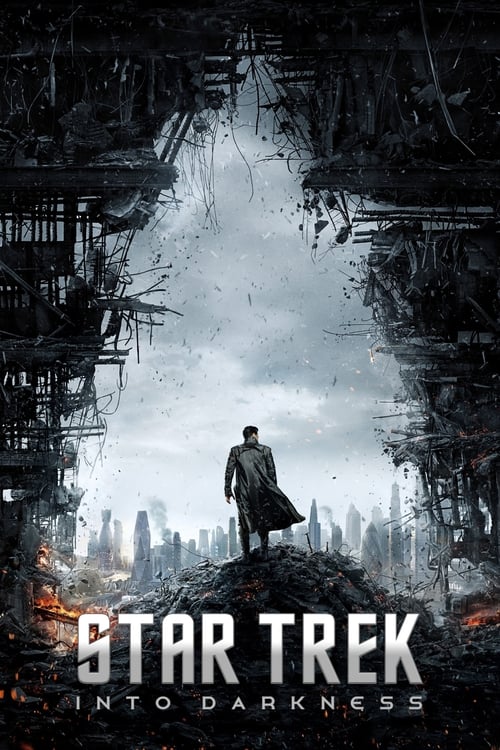












































































Popular
What motivates Admiral Marcus to create the warship USS Vengeance?
How does Khan's character evolve throughout the film?
What is the significance of the 'Kobayashi Maru' scenario in the film?
How does Spock's relationship with Uhura develop in 'Star Trek Into Darkness'?
What role does the planet Nibiru play in the film's opening sequence?
Should I watch it?
Ask Your Own Question

What is the plot?
Sorry, we aren't able to watch and write up a full detailed plot yet. Check back in a few days.







What is the ending?
At the end of Star Trek Into Darkness, Captain James T. Kirk sacrifices himself to save the USS Enterprise and its crew from a catastrophic explosion. He enters the warp core chamber to fix a critical malfunction, and in doing so, he is exposed to lethal radiation. Spock, who is devastated by Kirk's sacrifice, mourns his friend. However, Kirk is later revived by the regenerative properties of Khan's blood, which is used to save him. The film concludes with the crew of the Enterprise united and ready for their next mission, with Kirk now more aware of the responsibilities of command.
As the climax of Star Trek Into Darkness unfolds, the USS Enterprise is in a precarious situation. The ship is in orbit around the planet Qo'noS, the homeworld of the Klingons, and tensions are high. Captain James T. Kirk, played by Chris Pine, is faced with the daunting task of stopping the rogue Starfleet officer, Admiral Marcus, who has unleashed a war against the Klingons using the genetically enhanced superhuman Khan, portrayed by Benedict Cumberbatch.
In a pivotal scene, Kirk and his crew discover that Admiral Marcus has been using the Enterprise to launch a covert attack on the Klingons. The crew, including Spock (Zachary Quinto) and Uhura (Zoe Saldana), confront Marcus in his secret base. A fierce battle ensues, showcasing the crew's loyalty and bravery. Kirk's determination to protect his crew and the principles of Starfleet drives him to confront Marcus directly.
After a tense standoff, Kirk and his crew manage to escape, but not without significant consequences. The Enterprise is severely damaged, and they must make a desperate decision to save their ship and themselves. Kirk realizes that the only way to prevent a catastrophic explosion is to enter the warp core chamber, where he will be exposed to lethal radiation. This moment is filled with tension as Kirk grapples with the weight of his decision, knowing that he may not survive.
As Kirk enters the chamber, he works frantically to stabilize the core. The visuals are intense, with bright lights flashing and alarms blaring, creating a sense of urgency. Kirk's internal struggle is palpable; he reflects on his role as captain and the sacrifices that come with leadership. He knows that his actions could save his crew, but it also means risking his own life.
Meanwhile, Spock, who is outside the chamber, senses the danger Kirk is in. His emotional turmoil is evident as he realizes the depth of their friendship and the bond they share. Spock's voice breaks as he calls out to Kirk, pleading for him to come back. The emotional weight of this moment is underscored by the visuals of Spock's anguish, contrasting with Kirk's determination.
As the core stabilizes, Kirk is exposed to the radiation, and he collapses. The crew rushes to his side, but it is too late. Kirk's sacrifice weighs heavily on them, especially on Spock, who is left to mourn the loss of his friend. The scene is heart-wrenching, filled with the sounds of alarms and the somber expressions of the crew as they grapple with the reality of their captain's fate.
However, the story takes a turn when it is revealed that Khan's blood possesses regenerative properties. In a desperate bid to save Kirk, the crew retrieves Khan, who reluctantly agrees to help. The visuals shift to a sterile medical bay where the crew watches anxiously as Khan's blood is administered to Kirk. The tension is palpable as they wait, unsure if it will work.
In a moment of relief, Kirk awakens, gasping for breath. The crew rejoices, and the emotional reunion is filled with joy and relief. Kirk's revival signifies not only his physical return but also the reaffirmation of the crew's bond and their commitment to one another.
The film concludes with the Enterprise crew united once more, ready to embark on their next mission. Kirk stands at the helm, embodying the growth he has experienced throughout the film. He is now more aware of the responsibilities that come with command and the sacrifices that may be required. The final scenes depict the crew's camaraderie and determination as they set their course for new adventures, symbolizing hope and resilience in the face of adversity.
In summary, the fates of the main characters at the end of the film are as follows: Captain Kirk is revived and continues his role as captain, Spock is deeply affected by Kirk's sacrifice but finds solace in their friendship, and the rest of the crew stands united, ready to face whatever challenges lie ahead. The film closes on a note of optimism, emphasizing the enduring spirit of exploration and the bonds forged through shared experiences.
Is there a post-credit scene?
In "Star Trek Into Darkness," there is no post-credit scene. The film concludes with the crew of the USS Enterprise celebrating their victory and the restoration of peace. The final moments show Captain James T. Kirk and his crew embarking on a new mission, symbolizing hope and the continuation of their journey. The absence of a post-credit scene keeps the focus on the resolution of the story and the characters' development throughout the film.
What motivates Admiral Marcus to create the warship USS Vengeance?
Admiral Marcus is driven by a desire for power and control, believing that Starfleet needs to be prepared for war against potential threats, particularly from the Klingons. He sees the development of the USS Vengeance, a powerful warship equipped with advanced technology, as a means to ensure Starfleet's dominance and security in a galaxy filled with uncertainty.
How does Khan's character evolve throughout the film?
Khan, initially introduced as a cold and calculating villain, reveals layers of complexity as the story unfolds. He is portrayed as a genetically engineered superhuman with a tragic past, driven by a desire to protect his crew and seek revenge against those who wronged him. His interactions with Kirk and the crew of the Enterprise showcase his intelligence, charisma, and ultimately, his vulnerability, especially when he is forced to confront the consequences of his actions.
What is the significance of the 'Kobayashi Maru' scenario in the film?
The 'Kobayashi Maru' scenario serves as a pivotal moment for Captain Kirk, highlighting his character's approach to leadership and problem-solving. It is a no-win simulation designed to test the moral and ethical decision-making of Starfleet cadets. Kirk's decision to cheat the simulation reflects his rebellious nature and desire to find unconventional solutions, setting the stage for his growth as a leader throughout the film.
How does Spock's relationship with Uhura develop in 'Star Trek Into Darkness'?
Spock and Uhura's relationship is tested throughout the film, showcasing both their emotional connection and the challenges they face due to their differing approaches to duty and emotion. Spock struggles with his Vulcan logic, often at odds with Uhura's emotional responses, particularly when she is put in danger. Their relationship evolves as they learn to communicate and support each other, culminating in moments of vulnerability that deepen their bond.
What role does the planet Nibiru play in the film's opening sequence?
The planet Nibiru serves as the backdrop for the film's thrilling opening sequence, where the crew of the Enterprise is on a covert mission to observe a primitive civilization. The mission is complicated when Kirk and Spock must make a moral decision to save the inhabitants from a volcanic eruption, showcasing the themes of sacrifice and the Prime Directive. This sequence sets the tone for the film, emphasizing the tension between duty and ethical responsibility.
Is this family friendly?
"Star Trek Into Darkness" contains several elements that may be considered objectionable or upsetting for children or sensitive viewers. Here are some aspects to be aware of:
-
Violence and Action Sequences: The film features intense action scenes, including space battles, hand-to-hand combat, and explosions. These moments can be quite intense and may be frightening for younger viewers.
-
Death and Injury: There are scenes depicting characters being injured or killed, which can be emotionally impactful. The stakes are high, and the consequences of actions lead to significant loss.
-
Tension and Suspense: The film has a strong sense of tension, particularly in scenes where characters face life-threatening situations. This can create a sense of fear or anxiety.
-
Mature Themes: The story explores themes of revenge, sacrifice, and moral ambiguity, which may be complex for younger audiences to fully understand.
-
Language: There are instances of mild profanity, which may not be suitable for all viewers.
-
Emotional Distress: Characters experience significant emotional turmoil, including grief and betrayal, which may resonate deeply and be upsetting for sensitive viewers.
Overall, while "Star Trek Into Darkness" is a science fiction adventure, its themes and content may not be suitable for all children or sensitive individuals. Parental discretion is advised.








