


Popular
What characters from Doctor Who appear in the National Television Awards Sketch 2011?
How does the Eleventh Doctor react to winning the National Television Award?
What is the significance of the Daleks' appearance in the sketch?
How do Amy and Rory react to the events during the sketch?
What comedic elements are present in the interactions between the Doctor and the Daleks?
Should I watch it?
Ask Your Own Question

What is the plot?
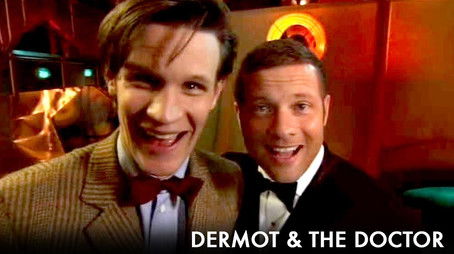
The sketch begins with a lively atmosphere at the National Television Awards, where the audience is buzzing with excitement. The camera pans across the venue, showcasing various celebrities and fans, all eagerly awaiting the show. Suddenly, the lights dim, and the iconic TARDIS materializes on stage, drawing gasps from the crowd. The TARDIS door swings open, and out steps Matt Smith, portraying the Eleventh Doctor, dressed in his signature tweed jacket and bow tie. He is met with enthusiastic applause and cheers from the audience, highlighting his popularity as the Doctor.
As the Doctor steps forward, he begins to address the audience, expressing his gratitude for their support and excitement about being part of the awards ceremony. He humorously reflects on the various adventures he has had, mentioning his encounters with Daleks and Cybermen, which elicits laughter and cheers from the crowd. The Doctor's charm and wit are on full display as he engages with the audience, showcasing his charismatic personality.
The scene shifts as the Doctor is interrupted by a sudden commotion. A group of Cybermen bursts onto the stage, creating chaos and panic among the attendees. The Cybermen, with their imposing metallic bodies and emotionless faces, demand that the Doctor surrender. The Doctor, unfazed by the threat, stands his ground, showcasing his bravery and quick thinking. He begins to devise a plan to outsmart the Cybermen, using his intelligence and resourcefulness.
In a tense standoff, the Doctor engages in a battle of wits with the Cybermen leader, trying to buy time while he formulates a strategy. The audience watches in suspense as the Doctor cleverly distracts the Cybermen with witty banter, all while looking for an opportunity to escape or turn the tables. His internal motivation is clear: he wants to protect the audience and ensure that the awards ceremony continues without further disruption.
As the confrontation escalates, the Doctor suddenly spots a nearby trophy on a table. Seizing the moment, he grabs the trophy and uses it as a makeshift weapon. With a swift motion, he throws the trophy at the Cybermen, causing a momentary distraction. This allows him to make a quick escape, darting off the stage and into the audience, where he cleverly blends in with the crowd.
The Cybermen, momentarily confused, begin to search for the Doctor among the audience. The tension builds as the Doctor navigates through the crowd, using his quick thinking to evade capture. He overhears the audience members discussing the situation, and their fear and excitement mirror his own adrenaline-fueled state. The Doctor's determination to outsmart the Cybermen is palpable as he continues to strategize his next move.
In a climactic moment, the Doctor returns to the stage, where he confronts the Cybermen once more. He uses his sonic screwdriver, a signature tool of the Doctor, to disable their systems. The Cybermen begin to malfunction, their movements becoming erratic as the Doctor's clever use of technology turns the tide in his favor. The audience erupts in cheers as they witness the Doctor's triumph over the Cybermen.
With the Cybermen defeated, the Doctor takes a moment to bask in the applause and admiration of the audience. He delivers a heartfelt message about the importance of bravery and standing up against fear, resonating with the crowd. The sketch concludes with the Doctor thanking the audience for their support and promising more adventures to come, leaving them with a sense of excitement and anticipation for the future. The lights dim once more as the TARDIS reappears, and the Doctor steps inside, waving goodbye to the audience as he dematerializes, leaving behind a memorable and entertaining moment at the National Television Awards.





What is the ending?
In the ending of "National Television Awards Sketch 2011," the Doctor, portrayed by Matt Smith, is seen in a humorous and light-hearted sketch where he interacts with various characters from the show. The sketch culminates in a comedic moment where the Doctor is faced with a dilemma involving the TARDIS and the other characters, ultimately leading to a playful resolution that emphasizes the show's whimsical nature.
As the sketch unfolds, the scene opens with the Doctor standing in a brightly lit, colorful setting, surrounded by the glitz and glamour of the National Television Awards. The atmosphere is lively, filled with laughter and excitement as the audience anticipates the comedic antics that are about to ensue. The Doctor, dressed in his iconic tweed jacket and bow tie, exudes a sense of charm and mischief, embodying the essence of his character.
The first key moment occurs when the Doctor is approached by various characters from the show, including companions and other notable figures. Each character brings their own unique energy to the scene, creating a dynamic interplay of personalities. The Doctor's internal motivation is clear; he is eager to entertain and engage with his friends while showcasing the fun and adventurous spirit of the series.
As the sketch progresses, the Doctor finds himself in a humorous predicament involving the TARDIS. The iconic blue police box stands prominently in the background, symbolizing the Doctor's adventures and the limitless possibilities of time travel. The tension builds as the Doctor must navigate the comedic chaos that ensues, with characters playfully vying for his attention and involvement.
In a particularly funny moment, the Doctor attempts to explain the complexities of time travel to his companions, who respond with a mix of confusion and amusement. This scene highlights the show's signature blend of science fiction and humor, showcasing the Doctor's intelligence and the light-hearted nature of his relationships with those around him.
The climax of the sketch arrives when the Doctor, in a moment of comedic brilliance, devises a clever solution to the chaos. With a twinkle in his eye, he uses the TARDIS in an unexpected way, leading to a resolution that leaves the audience in stitches. The characters share a moment of camaraderie, reinforcing the bonds of friendship that are central to the series.
As the sketch draws to a close, the Doctor stands triumphantly, basking in the laughter and applause of the audience. His expression reflects a mix of joy and satisfaction, knowing that he has once again brought a sense of wonder and fun to those around him. The other characters join him in celebration, their faces beaming with happiness as they revel in the success of their comedic adventure.
In the final moments, the Doctor gives a cheeky wink to the camera, embodying the playful spirit of "Doctor Who." The screen fades to black, leaving the audience with a sense of joy and anticipation for future adventures, encapsulating the essence of the show and its beloved characters. Each character exits the scene with a smile, their fates intertwined in the shared experience of laughter and friendship, a testament to the enduring legacy of "Doctor Who."
Is there a post-credit scene?
In the "National Television Awards Sketch 2011," there is no post-credit scene. The sketch is a light-hearted, comedic segment featuring Matt Smith as the Eleventh Doctor and Karen Gillan as Amy Pond, along with other characters from the show. The sketch is designed to entertain the audience during the awards ceremony, showcasing the Doctor's quirky personality and his interactions with the other characters in a humorous context. The focus remains on the live performance and the comedic elements throughout, without any additional scenes or credits following the main sketch.
What characters from Doctor Who appear in the National Television Awards Sketch 2011?
The sketch features the Eleventh Doctor, portrayed by Matt Smith, along with companions Amy Pond, played by Karen Gillan, and Rory Williams, portrayed by Arthur Darvill. Additionally, there are appearances by other notable characters such as River Song, played by Alex Kingston.
How does the Eleventh Doctor react to winning the National Television Award?
The Eleventh Doctor is initially excited and proud to win the National Television Award for Best Drama, showcasing his characteristic enthusiasm. However, his joy is quickly overshadowed by the unexpected arrival of the Daleks, which leads to a humorous and chaotic turn of events.
What is the significance of the Daleks' appearance in the sketch?
The Daleks' appearance serves as a comedic twist, interrupting the celebratory atmosphere of the awards ceremony. Their presence highlights the Doctor's ongoing battle against them, while also providing a humorous contrast to the glamorous setting of the National Television Awards.
How do Amy and Rory react to the events during the sketch?
Amy and Rory display a mix of amusement and concern during the sketch. They are supportive of the Doctor but also show exasperation at the chaos caused by the Daleks, reflecting their roles as companions who are accustomed to the Doctor's unpredictable adventures.
What comedic elements are present in the interactions between the Doctor and the Daleks?
The interactions are filled with humor, as the Doctor engages in witty banter with the Daleks, mocking their threats and showcasing his cleverness. The absurdity of the situation, combined with the Doctor's playful demeanor, creates a lighthearted tone amidst the tension.
Is this family friendly?
The "National Television Awards Sketch 2011" from Doctor Who is generally family-friendly, as it is a light-hearted comedic sketch rather than a full episode. However, there are a few aspects that might be considered potentially objectionable or upsetting for children or sensitive viewers:
-
Mild Humor: The sketch includes some humor that may be slightly sarcastic or satirical, which could be confusing for younger viewers who may not fully grasp the context.
-
Character Reactions: There are moments where characters express frustration or disappointment, which could be interpreted as negative emotions, though they are presented in a comedic light.
-
Silly Scenarios: The sketch features exaggerated situations that might be perceived as silly or absurd, which could be unsettling for some viewers who prefer more straightforward narratives.
Overall, the content is designed to be humorous and entertaining, with no significant objectionable material.