
























Popular
What role does Jim Garrison play in the investigation of JFK's assassination?
How does Garrison's investigation lead him to suspect Clay Shaw?
What evidence does Garrison present during the trial against Clay Shaw?
What is the significance of the character David Ferrie in Garrison's investigation?
How does the film depict the relationship between Garrison and his family?
Should I watch it?
Ask Your Own Question

What is the plot?
Sorry, we aren't able to watch and write up a full detailed plot yet. Check back in a few days.


What is the ending?
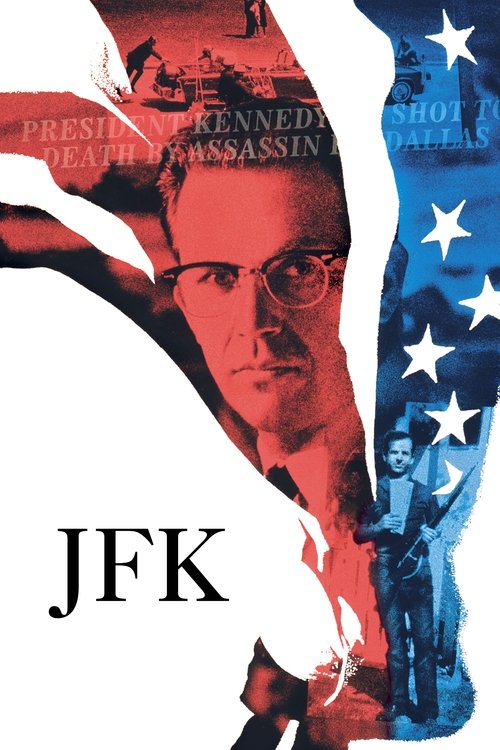
In the ending of the movie "JFK," Jim Garrison delivers a closing argument in the trial of Clay Shaw, asserting that there was a conspiracy to assassinate President John F. Kennedy. The film concludes with Garrison reflecting on the implications of the assassination and the ongoing struggle for truth, while the screen fades to black with a powerful message about the importance of questioning authority.
As the film approaches its climax, we find ourselves in the courtroom where Jim Garrison, portrayed by Kevin Costner, is preparing to deliver his closing argument in the trial against Clay Shaw, played by Tommy Lee Jones. The atmosphere is tense, filled with anticipation as Garrison stands before the jury, his face a mixture of determination and weariness. He has spent years investigating the assassination of President Kennedy, and this moment is the culmination of his relentless pursuit of justice.
Garrison begins his speech by recounting the events of November 22, 1963, the day Kennedy was assassinated in Dallas, Texas. He paints a vivid picture of the chaos that ensued, the shots ringing out, and the immediate aftermath that left the nation in shock. As he speaks, the audience can feel the weight of his conviction; he believes wholeheartedly that there was a conspiracy involving high-ranking officials and that Lee Harvey Oswald was not acting alone.
The scene shifts to flashbacks of Garrison's investigation, showing the various witnesses he interviewed, the evidence he gathered, and the obstacles he faced from government officials who sought to discredit him. The emotional toll of the investigation is evident on Garrison's face; he is driven not just by a desire for truth but also by a deep sense of responsibility to honor Kennedy's legacy and the trust of the American people.
As Garrison continues, he emphasizes the importance of questioning the official narrative surrounding the assassination. He argues that the truth has been obscured by layers of deception and that the American public deserves to know what really happened. His voice rises with passion, and the jury is visibly moved by his words. Garrison's internal struggle is palpable; he knows that he is up against powerful forces, yet he remains undeterred, fueled by a sense of justice and a desire to expose the truth.
The courtroom scene culminates with Garrison's emotional plea, urging the jury to consider the evidence and the implications of their verdict. He implores them to recognize the broader significance of their decision, not just for the case at hand but for the future of democracy itself. The tension in the room is thick as the jury deliberates, and Garrison's fate hangs in the balance.
As the film nears its conclusion, we see Garrison reflecting on the outcome of the trial. The jury ultimately finds Clay Shaw not guilty, a verdict that leaves Garrison devastated but resolute. He understands that the fight for truth is far from over. The final scenes depict Garrison walking through the streets of New Orleans, his expression a mix of disappointment and determination. He knows that the conspiracy he uncovered is still alive, and he is committed to continuing his quest for justice, no matter the personal cost.
The film closes with a powerful message on the screen, urging viewers to remain vigilant and to question the narratives presented to them. Garrison's journey serves as a reminder of the importance of seeking truth in the face of overwhelming opposition, and the emotional weight of his struggle lingers long after the credits roll. The fate of Garrison is one of perseverance; he may not have achieved the justice he sought in the courtroom, but his resolve to uncover the truth remains unbroken. Clay Shaw, on the other hand, walks free, a symbol of the powerful forces that can manipulate the truth and evade accountability. The film leaves the audience with a haunting sense of unresolved conflict, echoing the complexities of history and the ongoing quest for transparency in governance.
Is there a post-credit scene?
The movie "JFK," directed by Oliver Stone and released in 1991, does not have a post-credit scene. The film concludes with a powerful and emotional ending that encapsulates the themes of conspiracy, truth, and the impact of the assassination of President John F. Kennedy. After the final credits roll, there are no additional scenes or content that follow. The film leaves viewers with a sense of unresolved questions and the weight of the historical events it portrays.
What role does Jim Garrison play in the investigation of JFK's assassination?
Jim Garrison, portrayed by Kevin Costner, is the New Orleans District Attorney who becomes obsessed with uncovering the truth behind President John F. Kennedy's assassination. His character is driven by a deep sense of justice and a desire to expose what he believes is a conspiracy involving high-ranking officials. Garrison's internal conflict is palpable as he faces skepticism from the public and the media, yet he remains resolute in his pursuit of the truth, often at great personal and professional cost.
How does Garrison's investigation lead him to suspect Clay Shaw?
Garrison's investigation leads him to Clay Shaw, played by Tommy Lee Jones, after he uncovers connections between Shaw and the alleged conspirators. Garrison's suspicions are fueled by witness testimonies and the discovery of Shaw's involvement in the New Orleans business community, which he believes is a cover for more sinister activities. The tension escalates as Garrison confronts Shaw, revealing his determination to connect the dots despite the mounting pressure and threats against him.
What evidence does Garrison present during the trial against Clay Shaw?
During the trial against Clay Shaw, Garrison presents a variety of evidence, including witness testimonies that suggest Shaw's involvement in a conspiracy to assassinate JFK. He highlights the inconsistencies in the official narrative and introduces the idea of a broader conspiracy involving the CIA and organized crime. Garrison's emotional state is one of urgency and desperation as he tries to convince the jury of the truth, often facing challenges from Shaw's defense team, which seeks to discredit his claims.
What is the significance of the character David Ferrie in Garrison's investigation?
David Ferrie, portrayed by Joe Pesci, is a pivotal character in Garrison's investigation. He is a former pilot with a mysterious past and connections to both Shaw and the alleged conspiracy. Ferrie's erratic behavior and paranoia add layers of complexity to the narrative, as Garrison attempts to extract information from him. Ferrie's eventual fate serves as a stark reminder of the dangers surrounding Garrison's quest for truth, highlighting the emotional toll the investigation takes on all involved.
How does the film depict the relationship between Garrison and his family?
The film portrays Jim Garrison's relationship with his family as strained and tumultuous due to his obsessive pursuit of the JFK case. His wife, Liz, played by Sissy Spacek, expresses concern for their family's well-being and the toll Garrison's obsession takes on their marriage. The emotional distance between them grows as Garrison becomes increasingly consumed by the investigation, leading to moments of tension and conflict that underscore the personal sacrifices he makes in his quest for justice.
Is this family friendly?
The movie "JFK," directed by Oliver Stone, is not considered family-friendly due to its intense subject matter and mature themes. Here are some potentially objectionable or upsetting aspects that may affect children or sensitive viewers:
-
Graphic Violence: The film includes depictions of violence, particularly related to the assassination of President John F. Kennedy, which may be disturbing.
-
Murder and Conspiracy: The narrative revolves around conspiracy theories involving murder, which can be unsettling for younger audiences.
-
Political Corruption: Themes of political intrigue and corruption are prevalent, showcasing the darker side of government and power.
-
Emotional Distress: Characters experience significant emotional turmoil, including grief and betrayal, which may be heavy for sensitive viewers.
-
Historical Trauma: The film addresses the trauma surrounding the assassination and its impact on the nation, which can evoke strong emotional responses.
-
Language: There are instances of strong language that may not be suitable for younger viewers.
Overall, the film's complex themes and intense scenes make it more appropriate for mature audiences.








