











































Popular
How does Laurie Strode's character develop throughout the film?
What is Michael Myers' backstory in the 2007 Halloween film?
How does Dr. Loomis' character differ in the 2007 Halloween compared to the original?
What motivates Michael Myers to return to Haddonfield?
What is the significance of the mask in Michael Myers' character?
Should I watch it?
Ask Your Own Question

What is the plot?
Sorry, we aren't able to watch and write up a full detailed plot yet. Check back in a few days.




What is the ending?
In the ending of the 2007 film "Halloween," Laurie Strode confronts Michael Myers in a final showdown. After a tense chase, she manages to stab him and seemingly defeat him. However, in a shocking twist, Michael rises again, and Laurie is left traumatized. The film concludes with Michael's fate ambiguous, leaving the audience with a sense of dread.
As the climax of the film unfolds, we find ourselves in the Strode household, where Laurie Strode, portrayed by Scout Taylor-Compton, is grappling with the terror that has enveloped her life since Michael Myers escaped from the institution. The atmosphere is thick with tension as she hears the sounds of Michael's pursuit. The once safe haven of her home transforms into a battleground, filled with shadows and the echoes of her frantic heartbeat.
Laurie, now fully aware of the danger, takes on a determined demeanor. She gathers her courage and prepares herself for the inevitable confrontation with her brother, the masked killer who has haunted her since childhood. The camera captures her fear and resolve, showcasing her internal struggle as she fights against the instinct to flee.
In a pivotal moment, Laurie finds herself face-to-face with Michael in the darkened halls of her home. The air is electric with fear as she brandishes a knife, her hands trembling but her spirit unyielding. The confrontation is brutal and raw, with Laurie using her wits and agility to evade Michael's relentless attacks. The choreography of their struggle is visceral, highlighting the primal nature of their conflict--sibling versus sibling, predator versus prey.
As the fight escalates, Laurie manages to stab Michael, a moment that feels like a victory. The audience is led to believe that she has finally overcome the monster that has tormented her. However, in a shocking turn, Michael rises once more, embodying the relentless evil that has defined his character throughout the film. This moment is chilling, as it underscores the idea that evil cannot be easily vanquished.
In the aftermath of the confrontation, Laurie is left in a state of shock and trauma. The camera lingers on her face, capturing the mix of relief and horror as she realizes that the nightmare may not be over. The film closes with a haunting image of Michael's mask, suggesting that he remains a looming threat, his fate uncertain. The final moments leave the audience with a sense of dread, emphasizing the cyclical nature of violence and the inescapable grip of fear.
As for the fates of the main characters, Laurie survives the encounter but is left deeply scarred, both physically and emotionally. Michael, despite being wounded, remains alive, symbolizing the enduring nature of evil. The film concludes without a clear resolution, leaving viewers to ponder the implications of their confrontation and the darkness that lingers in the shadows.
Is there a post-credit scene?
The 2007 film "Halloween," directed by Rob Zombie, does not have a post-credit scene. The movie concludes with a tense and climactic finale, focusing on the confrontation between Michael Myers and Laurie Strode. After the final showdown, the film ends on a haunting note, leaving the audience with a sense of dread and uncertainty about Michael's fate. The credits roll without any additional scenes or content following them.
How does Laurie Strode's character develop throughout the film?
Laurie Strode, portrayed by Scout Taylor-Compton, undergoes significant character development in the 2007 Halloween. Initially, she is depicted as a typical high school girl, dealing with teenage issues such as friendships and crushes. However, as the film progresses and Michael begins his killing spree, Laurie is forced to confront her own survival instincts. Her character evolves from a naive girl into a resourceful and resilient survivor. The terror she experiences transforms her, and by the end of the film, she is no longer just a victim but a fighter, determined to escape Michael's grasp and protect her friends.
What is Michael Myers' backstory in the 2007 Halloween film?
In the 2007 version of Halloween, directed by Rob Zombie, Michael Myers is portrayed as a troubled child who comes from a dysfunctional family. He is bullied at school and has a violent streak, which is exacerbated by his abusive home life. His mother, Deborah, is a stripper who struggles to provide for him, while his stepfather is an alcoholic. After a series of violent incidents, including the murder of a school bully and the brutal killing of his older sister Judith, Michael is institutionalized at Smith's Grove Sanitarium. There, he becomes mute and is studied by Dr. Loomis, who recognizes the darkness within him. This backstory sets the stage for Michael's eventual escape and return to Haddonfield, where he resumes his killing spree.
How does Dr. Loomis' character differ in the 2007 Halloween compared to the original?
In the 2007 Halloween, Dr. Samuel Loomis, played by Malcolm McDowell, is depicted as a more cynical and jaded character compared to the original portrayal by Donald Pleasence. Loomis is shown to have a deep understanding of Michael's psyche, but he also feels a sense of guilt and responsibility for not being able to prevent the violence. He is portrayed as somewhat exploitative, having written a book about Michael's case, which adds a layer of complexity to his character. Loomis is determined to stop Michael, but his methods and motivations are more self-serving, reflecting a man who has been deeply affected by his experiences with Michael.
What motivates Michael Myers to return to Haddonfield?
Michael Myers' return to Haddonfield in the 2007 film is driven by a combination of instinctual urges and a desire to reconnect with his past. After years of being institutionalized, he escapes from Smith's Grove Sanitarium, and his primal need to kill resurfaces. The film suggests that he is drawn back to his childhood home, where he experienced trauma and violence, and he seeks to confront the remnants of his past. This return is not just about killing; it is also about reclaiming his identity and confronting the ghosts of his childhood.
What is the significance of the mask in Michael Myers' character?
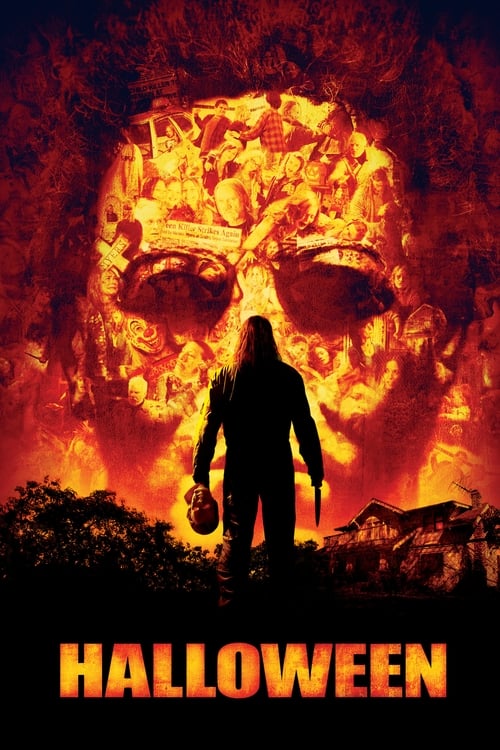
In the 2007 Halloween, the mask worn by Michael Myers is a crucial element of his character. It symbolizes his transformation from a troubled boy into a remorseless killer. The mask, which is a simple white face with hollow eyes, serves to dehumanize him and create a sense of fear. When Michael puts on the mask, he becomes an embodiment of pure evil, allowing him to detach from his humanity and commit horrific acts without remorse. The mask also represents his desire to hide his true self, as he struggles with his identity throughout the film.
Is this family friendly?
The movie "Halloween" (2007), directed by Rob Zombie, is not family-friendly and contains several potentially objectionable or upsetting scenes and aspects that may be distressing for children or sensitive viewers. Here are some key elements:
-
Graphic Violence: The film features intense and graphic scenes of violence, including brutal murders and physical assaults that are depicted in a very explicit manner.
-
Strong Language: There is frequent use of harsh profanity throughout the film, which may be inappropriate for younger audiences.
-
Psychological Trauma: The backstory of the main character, Michael Myers, includes themes of abuse, neglect, and psychological instability, which may be unsettling for some viewers.
-
Disturbing Imagery: The film contains disturbing visuals, including scenes of bloodshed and the aftermath of violent acts, which can be quite graphic and unsettling.
-
Themes of Mental Illness: The portrayal of mental illness and the impact of a traumatic childhood can be heavy and may evoke strong emotional responses.
-
Sexual Content: There are instances of sexual situations and suggestive content that may not be suitable for younger viewers.
Overall, the film's intense themes, graphic content, and dark atmosphere make it more appropriate for mature audiences.








