










Popular
What is the significance of the term 'Banana Fish' in the story?
What motivates Ash Lynx to protect Eiji Okumura?
How does the relationship between Ash Lynx and Eiji Okumura evolve throughout the season?
What role does the character Dino Golzine play in Ash's life?
What is the impact of Griffin's condition on Ash's character development?
Should I watch it?
Ask Your Own Question

What is the plot?
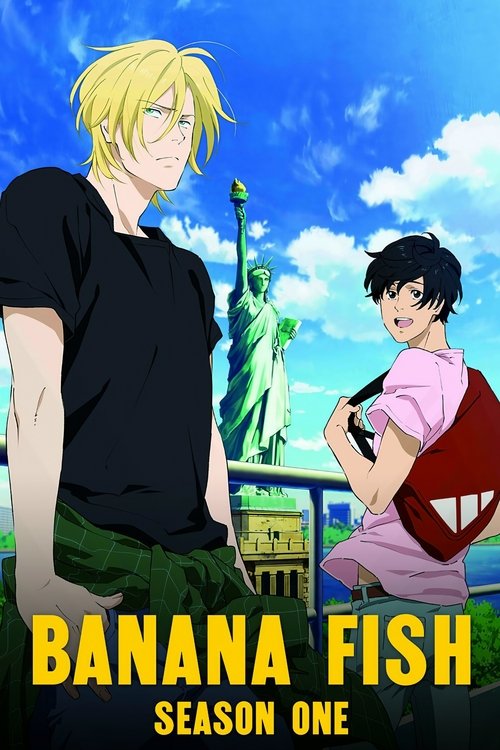
In the bustling streets of New York City, the story begins with Ash Lynx, a young gang leader known for his striking looks and intelligence. He is deeply involved in the criminal underworld, but his life takes a dramatic turn when he encounters a mysterious substance called "Banana Fish." This substance is linked to a traumatic event from his childhood, involving his older brother, Griffin, who was a soldier in Vietnam. Griffin, now mentally unstable, has been whispering the words "Banana Fish" repeatedly, which piques Ash's curiosity.
As Ash navigates his life, he is approached by Eiji Okumura, a Japanese photographer's assistant who has come to New York to document the city. Eiji is innocent and naive, contrasting sharply with Ash's hardened demeanor. Their paths cross when Eiji witnesses Ash's brutal confrontation with a rival gang. Despite the violence, Eiji is drawn to Ash's charisma and strength, and Ash, in turn, feels a protective instinct towards Eiji.
The plot thickens when Ash learns that Griffin has escaped from a mental institution and is being hunted by the mafia. Ash's loyalty to his brother drives him to seek out Griffin, hoping to uncover the truth behind the "Banana Fish" and its connection to their past. Meanwhile, Eiji becomes more entangled in Ash's world, witnessing the dangers that come with Ash's lifestyle. Their bond deepens as they share personal stories, revealing Ash's traumatic upbringing and Eiji's sheltered life in Japan.
As Ash investigates the "Banana Fish" case, he discovers that it is a drug being used by a powerful crime syndicate led by the ruthless Arthur "Shorter" Wong. Shorter is a former friend of Ash's who has been manipulated into working for the syndicate. Ash's determination to save Griffin leads him to confront Shorter, resulting in a tense standoff where Ash tries to convince Shorter to help him instead of continuing to serve the mafia.
The stakes rise when Ash learns that the mafia is planning to eliminate Griffin to cover up their involvement in the drug trade. In a desperate attempt to save his brother, Ash orchestrates a plan to rescue Griffin from the mafia's clutches. This plan involves a series of dangerous confrontations, including a violent showdown with the mafia's enforcers. Ash's tactical skills and street smarts come into play as he navigates through the chaos, showcasing his ability to outmaneuver his enemies.
During the rescue attempt, Ash and Eiji face numerous obstacles, including betrayal from those they thought they could trust. Eiji's unwavering support for Ash becomes crucial as they work together to evade capture. Their relationship evolves from mere acquaintances to a deep emotional connection, with Eiji becoming a source of strength for Ash amidst the turmoil.
As the climax approaches, Ash finally confronts the mafia's leader, who reveals the true nature of the "Banana Fish" and its implications. The confrontation is intense, filled with action and emotional weight as Ash fights not only for his brother's life but also for his own freedom from the chains of his past. The battle culminates in a heart-wrenching moment where Ash must make a choice between saving Griffin or ensuring Eiji's safety.
In the aftermath of the confrontation, Ash's world begins to unravel. The consequences of his decisions lead to tragic outcomes, including the loss of key allies and the realization that the fight against the mafia is far from over. Eiji, now fully aware of the dangers surrounding Ash, grapples with his feelings of helplessness and fear for Ash's safety.
The season concludes with Ash standing at a crossroads, burdened by the weight of his choices and the looming threat of the mafia. Eiji's presence offers a glimmer of hope, but the path ahead is fraught with uncertainty. Their bond, forged in the fires of conflict, remains a beacon of light in the darkness that surrounds them, setting the stage for the challenges that lie ahead.



What is the ending?
In the ending of "Banana Fish," Ash Lynx confronts his fate as he battles against the forces that have pursued him throughout the series. After a series of intense confrontations, Ash is fatally wounded. In his final moments, he shares a poignant farewell with Eiji Okumura, expressing his deep feelings for him. The story concludes with Ash's death, leaving Eiji devastated and heartbroken, while the implications of Ash's life and struggles linger in the air.
As the final episodes of "Banana Fish" unfold, the tension escalates dramatically. The scene opens with Ash Lynx, who has been relentlessly pursued by the criminal underworld, particularly by the powerful figure, Dino Golzine. Ash, having uncovered the truth about the mysterious drug known as "Banana Fish," is determined to protect Eiji Okumura, the Japanese photographer who has become his closest ally and love interest.
In a climactic confrontation, Ash and his allies, including Shorter Wong and the members of the gang, prepare for a showdown against Dino's men. The atmosphere is thick with anticipation and dread as they strategize their next moves. Ash's internal struggle is palpable; he is torn between his desire for freedom and the weight of his past. He knows that the stakes are higher than ever, not just for himself but for Eiji, who has become a beacon of hope in his tumultuous life.
As the confrontation unfolds, Ash and Eiji find themselves cornered. The tension reaches a peak when Ash is ambushed by Dino's henchmen. In a fierce battle, Ash fights valiantly, showcasing his skills and determination. However, the odds are stacked against him. In a heartbreaking moment, Ash is shot, and the world around him begins to blur. The pain is evident on his face, but there is also a sense of acceptance. He has fought for so long, and now he must confront the reality of his situation.
In his final moments, Ash collapses, and Eiji rushes to his side. The emotional weight of the scene is overwhelming as Ash, with his last breath, confesses his love for Eiji. The vulnerability in Ash's voice contrasts sharply with the hardened exterior he has maintained throughout the series. Eiji, filled with anguish, holds Ash close, tears streaming down his face as he realizes the depth of their bond and the tragedy of their circumstances.
As Ash takes his last breath, the camera lingers on Eiji's devastated expression, capturing the profound loss and heartbreak. The world around them fades, leaving only the echo of Ash's final words. The scene transitions to a somber atmosphere, highlighting the impact of Ash's life and the sacrifices he made in his fight against the darkness that surrounded him.
In the aftermath, Eiji is left to grapple with the loss of Ash. The series concludes with him reflecting on their time together, the love they shared, and the harsh realities of their lives. The emotional weight of Ash's death resonates deeply, leaving Eiji forever changed. The final moments serve as a poignant reminder of the fragility of life and the enduring power of love, even in the face of overwhelming adversity.
The fates of the main characters are sealed in this tragic ending. Ash Lynx, the protagonist, succumbs to his injuries, leaving behind a legacy of resilience and love. Eiji Okumura is left heartbroken, carrying the memory of Ash with him as he navigates a world that feels emptier without him. The story closes on a note of sorrow, emphasizing the harsh realities of their lives and the impact of their choices, leaving viewers with a lingering sense of loss and reflection on the complexities of love and sacrifice.
Is there a post-credit scene?
In "Banana Fish," Season 1, there is no post-credit scene. The series concludes its episodes without any additional content after the credits. The focus remains on the intense narrative and character development throughout the episodes, leaving viewers with a strong emotional impact as the story unfolds. The absence of a post-credit scene allows the weight of the concluding moments to resonate without distraction, emphasizing the themes of loss, friendship, and the harsh realities faced by the characters.
What is the significance of the term 'Banana Fish' in the story?
In 'Banana Fish', the term 'Banana Fish' refers to a mysterious drug that is central to the plot. It is a powerful substance that causes users to become addicted and can lead to violent behavior. The drug is linked to the criminal underworld and is tied to the character Ash Lynx's traumatic past, as well as the overarching conspiracy involving his brother, Griffin. The term itself is derived from a short story by J.D. Salinger, which adds layers of meaning regarding loss and the search for truth.
What motivates Ash Lynx to protect Eiji Okumura?
Ash Lynx is initially drawn to Eiji Okumura due to his innocence and kindness, which starkly contrasts with Ash's own violent and tumultuous life. As their relationship develops, Ash becomes increasingly protective of Eiji, motivated by a deep emotional connection and a desire to shield him from the dangers of the criminal world. Ash's protective instincts are fueled by his own experiences of betrayal and loss, making him determined to ensure Eiji's safety at all costs.
How does the relationship between Ash Lynx and Eiji Okumura evolve throughout the season?
Throughout the season, the relationship between Ash Lynx and Eiji Okumura evolves from a chance encounter to a deep bond marked by trust and mutual support. Initially, Ash is guarded and wary of forming connections, but Eiji's unwavering compassion and loyalty gradually break down his defenses. As they face numerous threats together, including rival gangs and Ash's own troubled past, their relationship deepens, showcasing a blend of friendship and romantic undertones that highlight their emotional reliance on one another.
What role does the character Dino Golzine play in Ash's life?
Dino Golzine serves as a significant antagonist in Ash Lynx's life, representing the dark forces of the criminal underworld. As a powerful mobster, Dino has a complicated and abusive relationship with Ash, having manipulated and exploited him since childhood. Dino's obsession with Ash is both possessive and predatory, as he seeks to control Ash while simultaneously being drawn to his strength and resilience. This toxic dynamic fuels Ash's desire for freedom and revenge, driving much of the narrative tension in the series.
What is the impact of Griffin's condition on Ash's character development?
Griffin's condition, as a victim of the 'Banana Fish' drug, profoundly impacts Ash Lynx's character development. Griffin, Ash's older brother, suffers from severe mental health issues due to his past experiences, which include being a test subject for the drug. Ash's memories of Griffin and the trauma associated with his brother's decline shape Ash's motivations and fears. This relationship instills in Ash a sense of responsibility and guilt, pushing him to confront the darker aspects of his life while also seeking to protect others from similar fates.
Is this family friendly?
"Banana Fish" is not considered family-friendly due to its mature themes and content. Here are some potentially objectionable or upsetting aspects that may occur:
-
Violence: The series contains graphic depictions of violence, including gang-related confrontations and physical assaults, which can be intense and disturbing.
-
Drug Use: The narrative revolves around drug trafficking, with scenes depicting drug use and its consequences, which may be unsettling for younger viewers.
-
Sexual Assault: There are references to sexual violence and exploitation, which are handled in a serious and impactful manner, potentially triggering for sensitive viewers.
-
Death and Trauma: Characters experience significant loss and trauma, leading to emotional distress that is portrayed realistically, which may be heavy for children.
-
Mental Health Issues: Themes of mental illness and the psychological impact of violence and trauma are explored, which may be difficult for younger audiences to process.
-
Gang Culture: The portrayal of gang dynamics and criminal activities can be intense and may not be suitable for younger viewers.
Overall, "Banana Fish" deals with complex and dark themes that require a mature understanding, making it more appropriate for older teens and adults.