














Popular
Who are the main death row convicts introduced in the saga?
What motivates Baki Hanma to confront the death row convicts?
How does Biscuit Oliva's character influence the story?
What is the significance of the fight between Baki and Jack Hanma?
How does the character of Dorian impact the dynamics among the convicts?
Should I watch it?
Ask Your Own Question

What is the plot?
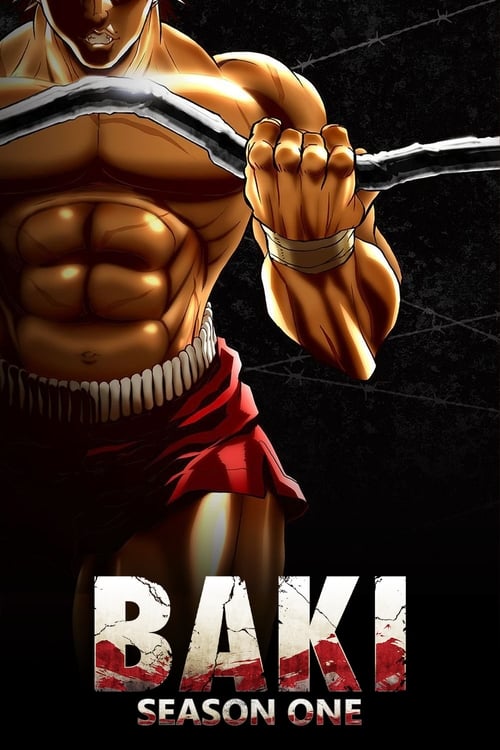
The story begins with the introduction of Baki Hanma, a young martial artist who is training intensely in preparation for a confrontation with his father, Yujiro Hanma, known as the "Strongest Creature on Earth." Baki's motivation is deeply rooted in his desire to surpass his father and prove himself as a formidable fighter. The narrative quickly shifts to a prison where the most dangerous death row convicts are held. These convicts, known for their brutal fighting skills, are being transported to a special facility for a tournament.
As the convicts are being moved, they manage to escape from their transport. The first convict introduced is Biscuit Oliva, a massive and muscular man who is known for his incredible strength and fighting prowess. He breaks free from his restraints and begins to wreak havoc, showcasing his power by easily overpowering the guards. The scene is filled with chaos as the convicts take control of the situation, demonstrating their lethal capabilities.
Following the escape, the convicts make their way to the outside world, where they begin to challenge various martial artists. The first major confrontation occurs when Oliva encounters a group of fighters. He engages in a brutal fight, showcasing his overwhelming strength and combat skills. The fight is intense, with Oliva displaying a mix of brute force and tactical fighting, ultimately defeating his opponents with ease.
Meanwhile, Baki is informed about the escape of the convicts and the potential threat they pose. He feels a sense of urgency to confront them, knowing that they are not only dangerous but also a challenge he must face to prove his strength. Baki's internal struggle is evident as he grapples with the fear of facing such formidable opponents while also feeling the pressure to live up to his father's legacy.
As the convicts continue their rampage, they encounter other martial artists, including Baki's friends and rivals. One notable confrontation occurs between the convict known as Dorian and a skilled fighter named Retsu Kaioh. Dorian, who possesses a unique fighting style that combines agility and deception, engages Retsu in a fierce battle. The fight is characterized by quick movements and strategic maneuvers, with Retsu showcasing his martial arts expertise. However, Dorian's cunning tactics allow him to gain the upper hand, leading to a tense and dramatic showdown.
Baki eventually decides to confront the convicts directly. He seeks out Oliva, knowing that defeating him would be a significant step in proving his strength. The two engage in a fierce battle, with Baki utilizing his speed and agility against Oliva's raw power. The fight is intense, with both fighters pushing their limits. Baki's determination and skill shine through as he manages to land several critical hits, but Oliva's resilience makes him a formidable opponent.
As the battles unfold, the convicts begin to turn on each other, revealing their own internal conflicts and motivations. This leads to a series of confrontations among the convicts themselves, showcasing their individual fighting styles and philosophies. The tension escalates as alliances shift and rivalries emerge, culminating in a chaotic series of fights that further highlight the brutality of their nature.
In a climactic moment, Baki faces off against another convict, the sadistic and powerful Jack Hanma, who is revealed to be Baki's half-brother. Their fight is emotionally charged, as it represents not only a physical battle but also a clash of ideologies and familial ties. The fight is brutal, with both fighters pushing each other to their limits. Baki's resolve to surpass his father is tested as he confronts the darkness within his own bloodline.
The saga reaches its peak as Baki and the remaining convicts engage in a final showdown. The battles are fierce and relentless, with each fighter showcasing their unique abilities and fighting styles. The stakes are high, as the outcome of these fights will determine not only their fates but also the future of martial arts itself.
In the end, Baki emerges victorious, having defeated the convicts and proven his strength. However, the victory is bittersweet, as he realizes that the path to becoming the strongest is fraught with challenges and sacrifices. The season concludes with Baki reflecting on his journey, the battles fought, and the relationships forged, setting the stage for future confrontations and growth in his quest to surpass his father.



What is the ending?
In the ending of BAKI, season 1 titled "Most Evil Death Row Convicts Saga," the intense battles culminate in a showdown between Baki Hanma and the convicts. Baki faces off against the formidable convicts, showcasing his growth and determination. The season concludes with Baki emerging victorious, having proven his strength and resolve, while the convicts are defeated, each meeting their end in various ways. The story leaves viewers with a sense of Baki's potential and the challenges that lie ahead.
As the final episodes unfold, the atmosphere is charged with tension and anticipation. The scene opens with Baki Hanma standing in a dimly lit arena, the remnants of previous battles scattered around him. The air is thick with the scent of sweat and blood, a testament to the ferocity of the fights that have taken place. Baki's expression is one of fierce determination; he knows that he must confront the most dangerous of the death row convicts to protect those he cares about and to prove himself.
The first major confrontation occurs between Baki and the convict known as Jack Hanma, who is revealed to be a half-brother of Baki. Their fight is brutal and intense, showcasing their shared bloodline and the deep-seated rivalry that exists between them. Jack, fueled by a desire to surpass Baki and prove his own worth, unleashes a series of devastating attacks. Baki, however, remains focused, drawing on his training and the lessons learned from his father, Yujiro Hanma. The clash of their fists echoes through the arena, each blow resonating with their emotional struggles and aspirations.
As the battle rages on, Baki's internal monologue reveals his thoughts--he grapples with the weight of his lineage and the expectations placed upon him. He reflects on the sacrifices made by those who came before him and the importance of forging his own path. This moment of introspection adds depth to his character, highlighting his growth from a young fighter seeking validation to a determined warrior ready to face his destiny.
The fight reaches its climax when Baki, drawing on his inner strength, executes a powerful finishing move that leaves Jack incapacitated. The scene is visually striking, with Baki's movements fluid and precise, a testament to his training and resolve. As Jack lies defeated, there is a moment of silence, a recognition of their shared history and the pain that has driven them apart.
Following this confrontation, Baki faces off against the remaining convicts, each battle more intense than the last. The audience witnesses the brutal fates of these characters--some are defeated through sheer strength, while others meet their end through cunning and strategy. The visual storytelling captures the raw power of each fighter, their muscles rippling as they unleash their full potential. The stakes are high, and the emotional weight of each fight is palpable, as Baki fights not just for victory, but for the honor of his family and the safety of his friends.
In the final moments of the season, Baki stands victorious, surrounded by the remnants of the battlefield. The convicts lie defeated, their ambitions crushed. Baki's expression is a mix of relief and determination; he has proven himself, but he knows that this victory is just the beginning. The season closes with a sense of unresolved tension, hinting at the challenges that await Baki in the future. The camera pans out, leaving viewers with a lingering sense of anticipation for what lies ahead in Baki's journey.
Is there a post-credit scene?
In the 2018 season of BAKI, titled "Most Evil Death Row Convicts Saga," there is indeed a post-credit scene that adds an intriguing layer to the narrative.
As the credits roll, the scene opens in a dimly lit, underground arena, where the atmosphere is thick with tension and anticipation. The camera pans across a crowd of eager spectators, their faces illuminated by the flickering lights of the arena. The sound of muffled cheers and the clinking of glasses create a sense of excitement, hinting at the brutal spectacle about to unfold.
In the center of the arena, a massive cage stands, and the audience's attention is drawn to it. The camera zooms in on the cage, revealing two figures inside: Baki Hanma and a mysterious, hulking opponent. Baki, with his trademark determination and fierce expression, is poised for battle, his muscles taut and ready. His eyes reflect a mix of focus and anticipation, revealing his internal struggle as he prepares to face yet another formidable foe.
The opponent, a towering figure with a menacing presence, exudes an aura of raw power. His body is covered in scars, each telling a story of past battles and victories. As he cracks his knuckles, the sound echoes ominously, heightening the tension in the air. The crowd's excitement reaches a fever pitch, their shouts blending into a cacophony of adrenaline-fueled energy.
As the scene unfolds, the camera shifts to Baki's face, capturing a fleeting moment of doubt. He recalls the intense battles he has faced, the sacrifices made, and the relentless pursuit of strength that drives him. This internal conflict is palpable, as he grapples with the weight of his legacy and the expectations placed upon him.
Just as the fight is about to commence, the screen fades to black, leaving viewers on the edge of their seats, eager for what lies ahead. The post-credit scene serves as a tantalizing teaser for future confrontations, emphasizing Baki's journey and the relentless challenges he must overcome in his quest for greatness.
Who are the main death row convicts introduced in the saga?
The main death row convicts introduced in the 'Most Evil Death Row Convicts Saga' are Biscuit Oliva, Dorian, and the infamous Jack Hanma. Each character brings a unique fighting style and backstory that adds depth to the narrative.
What motivates Baki Hanma to confront the death row convicts?
Baki Hanma is motivated by his desire to prove himself as the strongest fighter and to protect his loved ones. The arrival of the death row convicts poses a significant threat, pushing Baki to confront them and test his limits.
How does Biscuit Oliva's character influence the story?
Biscuit Oliva, known for his immense size and strength, serves as a formidable opponent for Baki. His character embodies the theme of raw power versus technique, challenging Baki to adapt and grow as a fighter.
What is the significance of the fight between Baki and Jack Hanma?
The fight between Baki and Jack Hanma is significant as it represents a clash of ideologies and fighting styles. Jack, driven by a desire to surpass his father, Yujiro Hanma, sees Baki as a stepping stone, while Baki fights to establish his own identity and strength.
How does the character of Dorian impact the dynamics among the convicts?
Dorian, with his cunning and manipulative nature, creates tension among the death row convicts. His psychological tactics and ability to exploit weaknesses lead to conflicts, showcasing the darker aspects of their personalities and the brutal world they inhabit.
Is this family friendly?
"BAKI" Season 1, titled "Most Evil Death Row Convicts Saga," is not considered family-friendly due to its intense themes and graphic content. Here are some potentially objectionable or upsetting aspects that may affect children or sensitive viewers:
-
Extreme Violence: The series features brutal hand-to-hand combat, with characters inflicting severe injuries on one another. Blood and gore are prevalent throughout the fights.
-
Death Row Convicts: The central theme revolves around dangerous criminals, including murderers and psychopaths, which may be disturbing for younger audiences.
-
Psychological Themes: The show explores dark psychological elements, including the motivations of violent characters, which can be unsettling.
-
Graphic Imagery: There are scenes depicting graphic injuries and the aftermath of violent encounters, which may be distressing.
-
Mature Language: The dialogue includes strong language and themes that may not be suitable for children.
-
Moral Ambiguity: Characters often display morally questionable behavior, which can be confusing or troubling for younger viewers trying to understand right from wrong.
These elements contribute to a mature viewing experience, making it more appropriate for older teens and adults.