
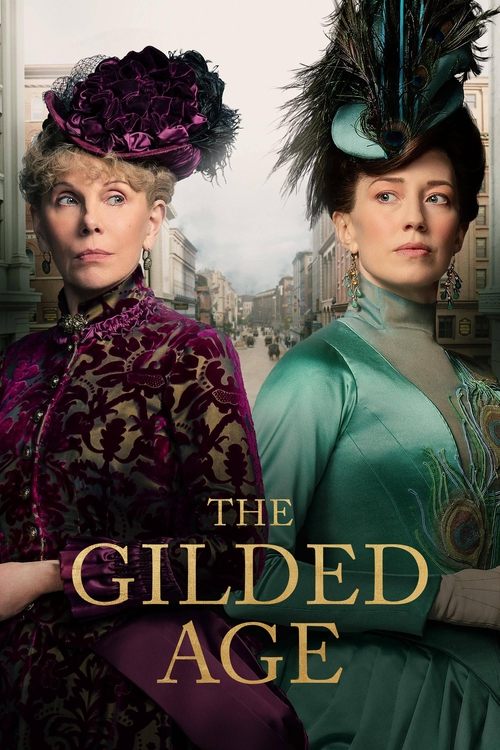

























Popular
What is the significance of Marian Brook's move to New York City?
How does the rivalry between the old money and new money families manifest in the series?
What role does Peggy Scott play in Marian's life and the broader narrative?
What are the motivations behind George Russell's actions throughout the season?
How does Agnes van Rhijn's character reflect the values of old money?
Should I watch it?
Ask Your Own Question

What is the plot?
In the opening scenes of "The Gilded Age," we are introduced to Marian Brook, a young woman who has recently lost her father. She is sent to live with her wealthy aunts, Agnes van Rhijn and Ada Brook, in New York City. The aunts are part of the old money elite, and they are both strict and traditional in their views. Marian is eager to fit into this new world but feels the weight of her family's expectations and the societal norms of the time.
As Marian settles into her new life, she meets her aunts' neighbor, George Russell, a self-made railroad magnate who represents the new money class. George is ambitious and determined to elevate his social status. He is married to Bertha Russell, who is equally determined to break into high society. Bertha is frustrated by the snobbishness of the old money families and is willing to do whatever it takes to gain acceptance.
Marian attends a lavish party hosted by the Russells, where she is introduced to the complexities of social hierarchy. Bertha is eager to impress and uses the event to showcase her wealth and connections. Marian feels out of place but is drawn to the excitement of the new world around her. During the party, she meets a young man named Tom Raikes, who is charming and flirtatious, sparking her interest.
As the story progresses, tensions rise between the old money families and the new money class. Agnes and Ada are dismissive of Bertha and George, viewing them as socially inferior. Meanwhile, Bertha is determined to prove herself and begins to strategize ways to gain acceptance from the old guard. She hosts a grand ball, hoping to impress the elite and secure her family's place in society.
Marian's relationship with Tom deepens, but she is conflicted about her feelings. Tom is ambitious and has his own aspirations, which complicates their romance. He encourages her to embrace her independence, but Marian is torn between her loyalty to her aunts and her desire for a life of her own.
The narrative takes a turn when Marian discovers a secret about Tom's past that raises doubts about his intentions. She confronts him, leading to a heated argument where Tom reveals his true ambitions. This confrontation forces Marian to reevaluate her feelings and her future.
Meanwhile, Bertha's efforts to gain acceptance lead to a series of social missteps, including a disastrous encounter with Agnes at a charity event. Agnes publicly humiliates Bertha, further deepening the rift between the two families. Bertha's frustration grows, and she becomes more determined to assert her place in society.
As the season progresses, Marian becomes more involved in the social scene, attending various events and navigating the complexities of her relationships. She begins to form friendships with other young women, including the ambitious and outspoken Gladys Russell, Bertha's daughter. Gladys is eager to break free from her mother's shadow and forge her own path.
The climax of the season occurs during the grand ball hosted by the Russells. Tensions reach a boiling point as old money and new money clash. Marian, caught in the middle, must make a choice about where her loyalties lie. The event is filled with drama, as secrets are revealed, alliances shift, and the characters confront their true desires.
In the aftermath of the ball, Marian's relationship with Tom comes to a head. She ultimately decides to break away from him, realizing that his ambitions do not align with her own values. This decision marks a turning point for Marian as she begins to assert her independence and carve out her own identity.
The season concludes with Marian standing at a crossroads, contemplating her future in a rapidly changing society. The tensions between the old and new money continue to simmer, setting the stage for further conflicts and developments in the lives of the characters.









What is the ending?
At the end of "The Gilded Age," Season 1, several key characters face pivotal moments that shape their futures. Marian Brook finds herself torn between her past and her future, while the tensions between the old money and new money families come to a head. The season concludes with unresolved conflicts, setting the stage for future developments.
In a detailed narrative of the ending:
The final episode opens with Marian Brook, who has been navigating the complexities of her new life in New York City. She stands at a crossroads, feeling the weight of her decisions. After a tumultuous season filled with social maneuvering and personal growth, Marian is faced with the choice of whether to align herself with the established old money society or embrace the new opportunities presented by her friendship with the ambitious and wealthy Bertha Russell.
As the scene shifts, we see Bertha Russell hosting a lavish party at her opulent home, showcasing her determination to secure her family's place in high society. The atmosphere is electric, filled with the chatter of guests and the clinking of glasses. Bertha, dressed in an extravagant gown, exudes confidence, but there is an underlying tension as she senses the scrutiny of the old guard, particularly from the likes of Agnes van Rhijn and her circle.
Meanwhile, Agnes van Rhijn, representing the old money elite, grapples with her own feelings of resentment and protectiveness over her social standing. She watches the party unfold with a mix of disdain and curiosity, aware that the landscape of New York society is shifting beneath her feet. Her internal conflict is palpable as she reflects on the changing times and her place within them.
As the evening progresses, Marian finds herself drawn into a conversation with Larry Russell, Bertha's son. Their chemistry is undeniable, but Marian is conflicted, torn between her attraction to Larry and her loyalty to her old friends. This moment encapsulates her struggle for identity and belonging in a world that is rapidly evolving.
In a pivotal scene, Bertha confronts Agnes, leading to a heated exchange that highlights the class tensions at play. Bertha's ambition clashes with Agnes's traditional values, and the audience can feel the stakes rising. This confrontation serves as a microcosm of the broader societal changes occurring in America during this period.
The episode culminates in a dramatic revelation when Marian receives a letter from her estranged father, which forces her to confront her past and the choices she must make for her future. The weight of her family history looms large, and she realizes that her decisions will not only affect her but also those around her.
As the season closes, the camera pans out from the party, capturing the vibrant yet tumultuous world of Gilded Age New York. The final moments leave viewers with a sense of anticipation, as the characters' fates hang in the balance. Marian's journey is just beginning, and the conflicts between the old and new money families are far from resolved, setting the stage for the next chapter in their lives.
Is there a post-credit scene?
The Gilded Age, Season 1, does not feature a post-credit scene. The episodes conclude without any additional scenes or content after the credits roll. Each episode wraps up its narrative arcs and character developments within the main storyline, leaving viewers to reflect on the events that have transpired without any further teasers or additional scenes.
What is the significance of Marian Brook's move to New York City?
Marian Brook, the daughter of a recently deceased Civil War general, moves to New York City to live with her wealthy aunts, Agnes van Rhijn and Ada Brook. This move symbolizes her transition from a life of modest means to one filled with the opulence and social intricacies of high society. It also sets the stage for her internal conflict between her values and the expectations of her new social environment.
How does the rivalry between the old money and new money families manifest in the series?
The rivalry is prominently showcased through the interactions between the established van Rhijn family and the newly wealthy Russell family. Agnes van Rhijn represents the old money elite, who look down upon the Russells, led by George Russell, a self-made industrialist. This tension is highlighted during social events, where the Russells' attempts to gain acceptance are met with disdain and snobbery from the old guard.
What role does Peggy Scott play in Marian's life and the broader narrative?
Peggy Scott, an ambitious young African American woman, becomes a close friend and confidante to Marian Brook. Her character introduces themes of race and class, as she navigates her own struggles for acceptance in a society that marginalizes her. Peggy's journey intertwines with Marian's, as they both seek to assert their identities and ambitions in a rapidly changing world.
What are the motivations behind George Russell's actions throughout the season?
George Russell is driven by a desire to secure his family's place in high society and to expand his business empire. His ruthless ambition leads him to make strategic alliances and engage in manipulative tactics, such as attempting to undermine the van Rhijns. His character embodies the cutthroat nature of the Gilded Age, where wealth and power dictate social standing.
How does Agnes van Rhijn's character reflect the values of old money?
Agnes van Rhijn embodies the values of old money through her adherence to tradition, social etiquette, and a disdain for the newly wealthy. Her character is marked by a strong sense of propriety and a commitment to maintaining her family's reputation. Throughout the season, her interactions with the Russells reveal her deep-seated beliefs about class and the importance of lineage, as she often judges others based on their social status.
Is this family friendly?
"The Gilded Age" is set in the late 19th century and explores themes of wealth, class, and social dynamics in New York City. While it is a period drama that showcases the opulence of the era, there are several elements that may be considered objectionable or upsetting for children or sensitive viewers:
-
Class Conflict: The show delves into the tensions between the old money elite and the new money industrialists, which can lead to heated arguments and confrontations that may be intense for younger viewers.
-
Social Stratification: The portrayal of the struggles of the working class and the stark differences in living conditions can be distressing, highlighting issues of poverty and inequality.
-
Death and Grief: There are references to death and the impact it has on families, which may evoke strong emotions and could be upsetting for children.
-
Romantic Relationships: The show includes complex romantic entanglements, some of which may involve themes of betrayal or heartbreak that could be difficult for younger audiences to process.
-
Mature Themes: Discussions around marriage, societal expectations, and personal ambition may touch on mature themes that require a certain level of understanding.
-
Violence and Conflict: While not graphic, there are moments of conflict that may involve shouting or emotional outbursts, which could be unsettling.
Overall, while "The Gilded Age" is rich in historical detail and character development, its exploration of societal issues and emotional conflicts may not be suitable for all children or sensitive viewers.








