
























Popular
What is the relationship between Marian Brook and her aunts, Agnes van Rhijn and Ada Brook?
How does the rivalry between the Russells and the van Rhijns develop throughout the series?
What role does Peggy Scott play in Marian Brook's life and the larger narrative?
What are George Russell's motivations for wanting to climb the social ladder?
How does Bertha Russell's character evolve throughout the series?
Should I watch it?
Ask Your Own Question

What is the plot?
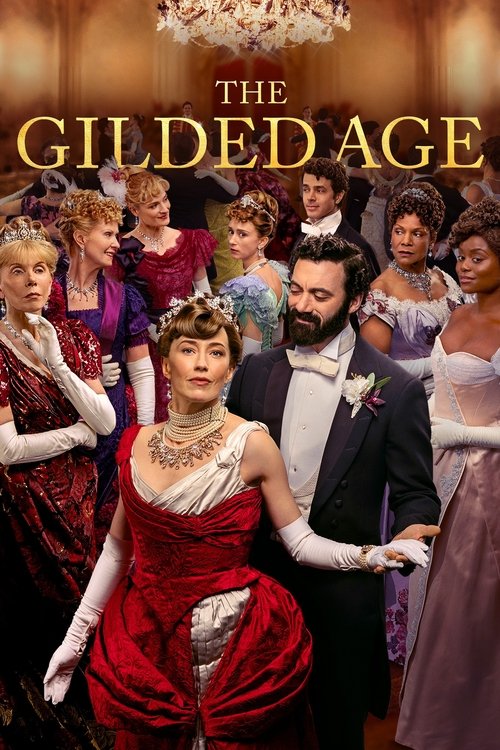
In 1882, the story begins with Marian Brook, a young woman from Pennsylvania, who moves to New York City after the death of her father. She is taken in by her wealthy aunts, Agnes van Rhijn and Ada Brook, who are part of the old money elite. Marian is introduced to the opulence of her aunts' home, which is filled with lavish decor and reflects their status. However, she quickly realizes that her aunts are deeply entrenched in the social hierarchy and are resistant to change, particularly regarding the new money families that are emerging in society.
Marian's arrival coincides with the rise of the Russell family, led by George Russell, a self-made railroad tycoon, and his ambitious wife, Bertha. Bertha is determined to break into high society and host a grand ball to establish their place among the elite. Meanwhile, Marian meets the Russells' son, Larry, who is charming and shows interest in her. This connection creates tension as Marian's aunts disapprove of the Russells and their social aspirations.
As the story unfolds, Marian becomes increasingly drawn to the Russells and their world, which contrasts sharply with her aunts' traditional values. Bertha, eager to impress, invites Marian to her ball, which is a pivotal moment for Marian as it represents a choice between her aunts' old-world values and the new opportunities presented by the Russells. At the ball, Marian experiences the extravagance of the new money and begins to question her place in society.
Tensions rise when Agnes and Ada learn of Marian's growing friendship with the Russells. They express their disapproval, warning her about the dangers of associating with those who lack the refinement of old money. Despite their warnings, Marian's curiosity about the Russells deepens, and she finds herself increasingly entangled in their lives.
As the season progresses, Bertha's efforts to secure her family's social standing lead to various confrontations with established families, including Agnes. Bertha's ambition is met with resistance, particularly from Agnes, who is determined to maintain the status quo. This rivalry culminates in a series of social events where both families vie for influence and recognition.
Marian's internal conflict intensifies as she navigates her feelings for Larry Russell and her loyalty to her aunts. She grapples with her desire for independence and the expectations placed upon her by her family. This struggle is further complicated when she discovers secrets about her family's past, including the truth about her father's financial struggles and the sacrifices made by her aunts.
In a dramatic turn of events, Marian learns that her father had been involved in a scandal that could tarnish her reputation. This revelation forces her to confront her identity and the legacy of her family. As she seeks to forge her own path, she becomes more aligned with the Russells, who represent a new era of opportunity and ambition.
The season reaches a climax during a pivotal charity event hosted by Bertha, where tensions between the old and new money come to a head. Agnes and Bertha engage in a fierce battle of wits, each trying to outmaneuver the other socially. Marian, caught in the middle, must decide where her loyalties lie. In a moment of defiance, she chooses to support the Russells, signaling her break from her aunts' traditional values.
As the season concludes, the fallout from Marian's decision reverberates through both families. Agnes feels betrayed by Marian's choice, while Bertha sees it as a victory in her quest for acceptance. Marian's relationship with Larry deepens, but it is fraught with complications as they navigate the expectations of their respective families. The final scenes leave viewers with a sense of uncertainty about Marian's future and the ongoing struggle between old money and new money in the rapidly changing landscape of Gilded Age New York.









What is the ending?
In the final episode of The Gilded Age, the tensions between the old money and new money families come to a head, leading to significant personal and social revelations. Marian Brook finds her place in society, while Bertha Russell faces the consequences of her ambitions. The episode concludes with a sense of unresolved conflict, setting the stage for future struggles.
As the episode opens, we find Marian Brook at a pivotal moment in her life. She is grappling with her feelings for Larry Russell, who is the son of Bertha Russell, a woman determined to climb the social ladder of New York's elite. Marian's internal conflict is palpable; she is torn between her affection for Larry and the societal expectations that dictate her choices. The scene is set in the opulent surroundings of the Russell home, where the lavish decor contrasts sharply with the emotional turmoil within Marian.
Meanwhile, Bertha Russell is in the midst of her grand plans to secure her family's place among the upper echelons of society. She is hosting a lavish party, showcasing her wealth and determination. The atmosphere is electric, filled with the chatter of guests and the clinking of glasses. Bertha's ambition is evident as she navigates the social landscape, attempting to win over the old money families, particularly the van Rhijns, who represent the established elite. Her desperation to be accepted is underscored by her interactions with the guests, revealing her vulnerability beneath the confident facade.
As the party unfolds, tensions rise when the van Rhijns, particularly Agnes van Rhijn and her brother, Oscar, arrive. Their presence is a reminder of the social divide that Bertha is trying to bridge. The interactions are charged with unspoken animosities and class distinctions. Bertha's attempts to impress are met with subtle disdain, highlighting the challenges she faces in her quest for acceptance.
In a pivotal moment, Marian confronts her feelings for Larry. They share a private conversation that reveals their deep connection, but also the barriers that their families represent. Marian's struggle is evident as she weighs her desire for love against the expectations of her social standing. This scene is intimate, filled with longing and uncertainty, as both characters grapple with their identities in a world that seeks to define them.
As the evening progresses, a scandal erupts when a secret about Bertha's past is revealed, threatening to undermine her social ambitions. The revelation sends shockwaves through the party, and Bertha's carefully constructed image begins to crumble. The guests' reactions are a mix of shock and schadenfreude, illustrating the cutthroat nature of high society. Bertha's emotional state shifts from confidence to desperation as she realizes the fragility of her position.
In the final moments of the episode, Marian makes a choice that signifies her growth. She decides to embrace her own identity rather than conform to societal expectations. This decision is a turning point for her character, symbolizing a break from the constraints of her upbringing. The scene is filled with a sense of liberation as Marian steps into her own power, leaving behind the shadows of her past.
The episode concludes with a sense of ambiguity. Bertha is left to confront the fallout from the scandal, her dreams of acceptance hanging by a thread. Marian's future is uncertain, but she stands poised to carve her own path. The final shot lingers on the contrasting fates of the characters, encapsulating the ongoing struggle between old money and new, ambition and acceptance, love and societal constraints. The stage is set for future conflicts, leaving viewers with a sense of anticipation for what lies ahead.
Is there a post-credit scene?
The Gilded Age does not feature a post-credit scene. The series concludes its episodes without any additional scenes after the credits roll. Each episode wraps up its narrative arcs and character developments within the main storyline, leaving viewers to reflect on the events that have transpired without any further teasers or additional content. The focus remains on the intricate social dynamics and personal conflicts of the characters throughout the series.
What is the relationship between Marian Brook and her aunts, Agnes van Rhijn and Ada Brook?
Marian Brook, a young woman from Pennsylvania, moves to New York City to live with her wealthy aunts, Agnes van Rhijn and Ada Brook, after the death of her father. Agnes is a strong-willed and traditional woman who is deeply entrenched in the old social order, while Ada is more gentle and supportive. Their relationship is complex; Agnes often imposes her views on Marian, pushing her to conform to societal expectations, while Ada provides a softer, more nurturing presence. Marian's desire for independence and her modern views often clash with Agnes's rigid adherence to social norms.
How does the rivalry between the Russells and the van Rhijns develop throughout the series?
The rivalry between the Russells, led by the ambitious George Russell and his wife, Bertha, and the van Rhijns, particularly Agnes, intensifies as both families navigate the high society of New York. The Russells, new money, seek to establish themselves among the old guard represented by Agnes, who views them with disdain. Tensions rise as Bertha attempts to gain acceptance and social standing, leading to various confrontations, including a pivotal moment at a ball where social snubs and power plays highlight the animosity between the two families.
What role does Peggy Scott play in Marian Brook's life and the larger narrative?
Peggy Scott is a young African American woman aspiring to be a writer, who becomes a close friend of Marian Brook. Their friendship is significant as it highlights the social and racial dynamics of the Gilded Age. Peggy's struggles for recognition and her determination to succeed in a predominantly white society resonate with Marian's own quest for independence. Their bond deepens as they support each other through personal challenges, and Peggy's presence in the narrative serves to challenge the status quo and bring attention to issues of race and gender.
What are George Russell's motivations for wanting to climb the social ladder?
George Russell is driven by a fierce ambition to secure his family's place in New York's elite society. Coming from humble beginnings, he is determined to prove himself and gain respect among the old-money families. His motivations are rooted in a desire for power, prestige, and the validation that comes with social acceptance. This ambition often leads him to make ruthless decisions, including manipulating social events and leveraging his wealth to gain influence, showcasing the lengths he will go to achieve his goals.
How does Bertha Russell's character evolve throughout the series?
Bertha Russell begins as a determined and somewhat naive woman eager to establish her family's status in New York society. As the series progresses, her character evolves into a more complex figure, revealing her fierce intelligence and strategic thinking. Faced with constant rejection from the old-money elite, Bertha becomes increasingly assertive and willing to challenge societal norms. Her journey reflects her struggle for acceptance and her desire to protect her family's interests, leading her to make bold moves that often put her at odds with established social conventions.
Is this family friendly?
"The Gilded Age" is a period drama that explores themes of wealth, class, and social dynamics in late 19th-century America. While it is visually stunning and rich in historical detail, there are several aspects that may be considered objectionable or upsetting for children or sensitive viewers:
-
Class Conflict and Social Struggles: The show depicts the stark contrasts between the wealthy elite and the working class, which can include scenes of poverty and hardship that may be distressing.
-
Adult Themes: There are discussions and portrayals of marriage, infidelity, and societal expectations that may not be suitable for younger audiences.
-
Violence and Threats: Some scenes may include verbal confrontations, threats, or implied violence, reflecting the tensions of the era.
-
Racial Issues: The show addresses racism and discrimination, particularly in the context of the African American experience during this time, which may be uncomfortable for some viewers.
-
Mature Language: There are instances of strong language and adult conversations that may not be appropriate for children.
-
Emotional Turmoil: Characters experience significant emotional struggles, including betrayal, loss, and societal pressure, which could be heavy for younger viewers to process.
Overall, while "The Gilded Age" offers a rich narrative and historical context, its mature themes and emotional depth may not be suitable for all audiences, particularly children.