







Popular
What motivates Sheldon Sampson to uphold the code of justice despite the changing world around him?
How does the relationship between Chloe Sampson and her father Sheldon evolve throughout the season?
What are the key events that lead to the conflict between the younger generation of heroes and their parents?
What role does Walter Sampson play in the unfolding drama of the family dynamics?
How does the theme of legacy manifest in the character arcs of the Sampson family?
Should I watch it?
Ask Your Own Question

What is the plot?
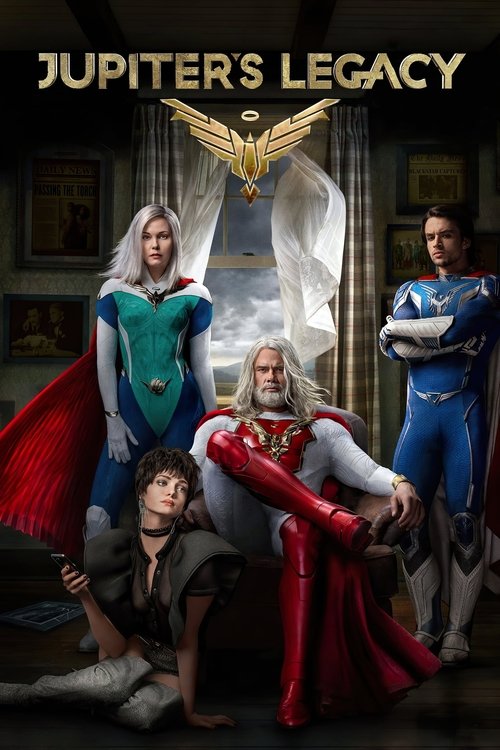
In the year 1929, a group of explorers, including Sheldon Sampson, Grace Sampson, and their friends, embark on a journey to a mysterious island in the South Pacific. They are searching for answers about the origins of their powers. After a harrowing experience, they encounter a strange, glowing structure that grants them superhuman abilities. Sheldon, who becomes the leader, adopts the superhero persona of "The Utopian." The group returns to America, where they decide to use their powers to protect humanity and uphold justice.
Fast forward to the present day, the narrative shifts to the next generation of heroes, particularly focusing on Sheldon's children, Chloe and Brandon. Chloe struggles with her identity and the weight of her father's expectations, often rebelling against the superhero lifestyle. Brandon, on the other hand, is eager to follow in his father's footsteps and prove himself worthy of the Utopian legacy. Tensions rise as the siblings navigate their complicated relationship and differing views on heroism.
Sheldon is depicted as a strict and idealistic leader, often clashing with his son Brandon, who feels the pressure to live up to his father's legacy. Brandon's desire for approval leads him to make questionable decisions, including seeking out a more aggressive approach to dealing with villains. Meanwhile, Chloe is disillusioned with the superhero life and is involved in a tumultuous relationship with a character named Hutch, who has his own complicated past.
As the story unfolds, a new threat emerges in the form of a villain named Blackstar, who poses a significant danger to the world. The Utopian and his team, including fellow heroes like Lady Liberty and Brainwave, must confront this new menace. The heroes struggle with their own internal conflicts, particularly as they grapple with the moral implications of their actions and the consequences of their powers.
In a pivotal moment, Brandon decides to take matters into his own hands and confront Blackstar directly, leading to a violent showdown. The confrontation escalates, resulting in significant destruction and loss. During this battle, the heroes are forced to confront their own limitations and the reality of their powers. The emotional stakes rise as they face the consequences of their choices, leading to a rift between Sheldon and Brandon.
Chloe, feeling increasingly alienated from her family, makes a choice to align herself with Hutch and explore a different path. This decision creates further tension within the family, as Sheldon struggles to understand his daughter's motivations. The narrative delves into the complexities of their relationships, highlighting the generational divide between the original heroes and their children.
As the season progresses, the backstory of the original heroes is revealed through flashbacks, showcasing their struggles and the sacrifices they made to uphold their ideals. These moments provide context for the current conflicts, illustrating how the weight of legacy impacts each character's choices.
The climax of the season builds towards a confrontation between the Utopian and Blackstar, where the stakes are raised even higher. The battle tests the heroes' resolve and forces them to confront their own beliefs about justice and morality. In the heat of the moment, Sheldon must make a critical decision that will affect not only his family but the future of heroism itself.
The season concludes with unresolved tensions and a sense of impending conflict. The characters are left to grapple with their choices, setting the stage for further exploration of their relationships and the challenges they face as both heroes and individuals. The final moments leave viewers questioning the future of the Utopian legacy and the path that each character will choose moving forward.


What is the ending?
In the ending of "Jupiter's Legacy," the conflict between the older generation of heroes and their children reaches a climax. The series concludes with a significant confrontation that leads to the death of a key character, revealing deep fractures within the family and the superhero legacy. The fate of the characters is left uncertain, setting the stage for potential future conflicts.
As the final episodes unfold, we see the tension between the original heroes, led by Sheldon Sampson (The Utopian), and their children, particularly Brandon Sampson (Paragon) and Chloe Sampson. The Utopian's strict adherence to his moral code clashes with the more pragmatic and often rebellious approach of the younger generation.
In a pivotal scene, Sheldon confronts his son Brandon about his choices and the path he has taken. Brandon, feeling the weight of his father's expectations and the burden of their legacy, struggles with his identity and the morality of their mission. This confrontation is charged with emotion, as Sheldon expresses his disappointment in Brandon's willingness to consider more violent methods to achieve justice.
Meanwhile, Chloe, who has been grappling with her own issues of self-worth and the shadow of her father's legacy, finds herself at a crossroads. She has been trying to forge her own identity outside of her family's expectations, but the pressure mounts as the conflict escalates.
The climax occurs when the tensions boil over into a violent confrontation between the two generations. In a tragic turn of events, a fight breaks out, and the stakes are raised when a beloved character, Grace (Sheldon's wife), is killed. This moment shatters the family and serves as a catalyst for the characters to confront their beliefs and the consequences of their actions.
As the dust settles, the emotional fallout is palpable. Sheldon is devastated by the loss of Grace, and his idealism is challenged as he grapples with the reality of their situation. Brandon, feeling the weight of his father's expectations and the loss of his mother, is left in turmoil, questioning his role in the legacy of heroes. Chloe, witnessing the destruction of her family, is forced to confront her own choices and the impact of their superhero lives on their personal relationships.
The series ends on a note of uncertainty, with the characters facing the consequences of their actions and the fractured state of their family. The legacy of the Utopian and the ideals he fought for are left in question, as the younger generation must now navigate a world that is far more complex than the black-and-white morality their parents adhered to. The final scenes leave viewers with a sense of unresolved tension, hinting at the potential for further conflict and character development in the future.
Is there a post-credit scene?
In "Jupiter's Legacy," Season 1, titled "Volume 1," there is no post-credit scene. The season concludes without any additional scenes after the credits, focusing instead on wrapping up the main narrative arcs and character developments established throughout the episodes. The final moments of the season leave viewers with a sense of unresolved tension and the implications of the characters' choices, particularly regarding the legacy of the Union and the conflicts between the generations of heroes.
What motivates Sheldon Sampson to uphold the code of justice despite the changing world around him?
Sheldon Sampson, also known as The Utopian, is deeply motivated by his belief in the code of justice that he and his brother Walter received from their father. This code emphasizes the importance of protecting humanity and maintaining moral integrity, even as the world becomes increasingly chaotic and morally ambiguous. Sheldon's internal struggle is evident as he grapples with the consequences of his rigid adherence to this code, especially when it leads to conflict with his children and other heroes who question its relevance.
How does the relationship between Chloe Sampson and her father Sheldon evolve throughout the season?
Chloe Sampson's relationship with her father, Sheldon, is fraught with tension and disappointment. Chloe feels burdened by the expectations placed upon her as the daughter of The Utopian. Throughout the season, her desire for independence clashes with Sheldon's strict adherence to the superhero code. This culminates in emotional confrontations where Chloe expresses her frustration over her father's inability to understand her struggles, leading to a deepening rift between them as she seeks to forge her own identity apart from his legacy.
What are the key events that lead to the conflict between the younger generation of heroes and their parents?
The conflict between the younger generation of heroes, including Chloe and Hutch, and their parents, primarily Sheldon and Grace, escalates due to differing ideologies about heroism and responsibility. Key events include the younger heroes' attempts to navigate their powers and identities in a world that has changed since their parents' time. Tensions rise when they witness the consequences of their parents' rigid moral code, leading to a pivotal moment where they decide to take matters into their own hands, ultimately challenging the established order and their parents' authority.
What role does Walter Sampson play in the unfolding drama of the family dynamics?
Walter Sampson, also known as Brainwave, plays a crucial role in the family dynamics as the more pragmatic and morally flexible brother of Sheldon. His motivations are driven by a desire for power and control, which often puts him at odds with Sheldon's idealism. Walter's internal conflict is highlighted as he grapples with his feelings of inadequacy and jealousy towards Sheldon, leading him to make decisions that threaten the family's unity. His actions, including manipulating situations to gain an advantage, create significant tension and ultimately contribute to the larger conflict within the superhero community.
How does the theme of legacy manifest in the character arcs of the Sampson family?
The theme of legacy is central to the character arcs of the Sampson family, particularly as each member grapples with the weight of their inherited powers and responsibilities. Sheldon embodies the ideal of the legacy he wishes to uphold, while Chloe struggles against it, feeling suffocated by her father's expectations. Meanwhile, Walter's desire to redefine their legacy through power leads him down a darker path. Each character's journey reflects their personal struggles with the concept of legacy, as they confront the expectations set by their parents and the impact of their choices on future generations.
Is this family friendly?
"Jupiter's Legacy" is a superhero drama that explores complex themes of legacy, morality, and family dynamics, which may not be suitable for younger audiences or sensitive viewers. Here are some potentially objectionable or upsetting aspects:
-
Violence: The show contains several intense action sequences, including fights and battles that result in injury and death. The violence can be graphic and may be distressing for some viewers.
-
Death and Loss: Characters experience significant loss, including the deaths of loved ones, which can evoke strong emotional responses.
-
Mature Themes: The series delves into themes of betrayal, moral dilemmas, and the pressures of living up to family expectations, which may be complex for younger viewers to understand.
-
Substance Use: There are instances of characters using alcohol and engaging in reckless behavior, which may not be appropriate for children.
-
Emotional Turmoil: Characters grapple with deep emotional issues, including feelings of inadequacy, anger, and conflict within family relationships, which could be upsetting for sensitive viewers.
-
Mature Language: The dialogue includes strong language and adult conversations that may not be suitable for younger audiences.
Overall, while "Jupiter's Legacy" offers a rich narrative and character development, its themes and content may be more appropriate for older teens and adults.