





Popular
What is the significance of the Wall in Solar Opposites?
How does Korvo's attitude towards Earth change throughout the season?
What motivates Yumyulack's obsession with the human world?
How does the relationship between Terry and Korvo evolve in the first season?
What role does the character of Jesse play in the dynamics of the group?
Should I watch it?
Ask Your Own Question

What is the plot?
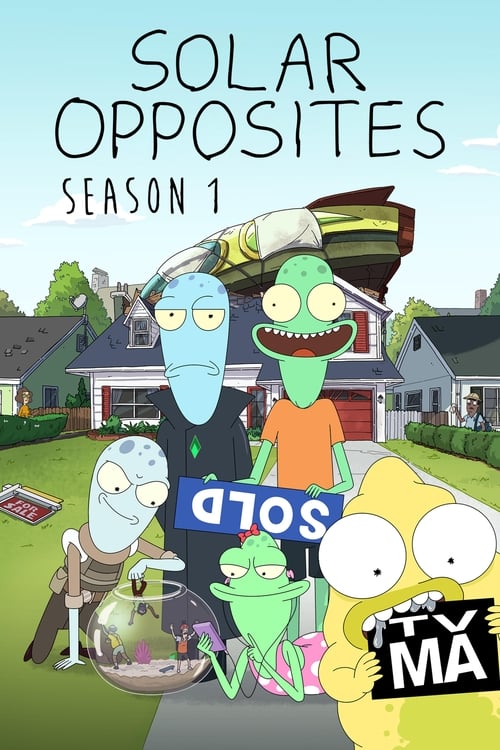
In the first episode of "Solar Opposites," titled "The Matter Transfer Array," we are introduced to the alien family consisting of Korvo, Terry, Yumyulack, and Jesse, who crash-land on Earth after fleeing their home planet, Shlorp. They are trying to adapt to life in a suburban neighborhood in America. Korvo is focused on repairing their ship to return home, while Terry is more interested in enjoying Earth's pleasures, such as fast food and television. Yumyulack, the young alien, is fascinated by human culture but also has a darker side, as he enjoys shrinking humans and keeping them in a terrarium. Jesse, the family's pet, is a sentient being who is more concerned about fitting in with humans.
As the episode progresses, Korvo and Terry argue about their priorities. Korvo is frustrated with Terry's lack of urgency in fixing the ship, while Terry insists on enjoying their time on Earth. Meanwhile, Yumyulack shrinks a human named Tim and adds him to his collection. This act of shrinking humans is a recurring theme, showcasing Yumyulack's struggle with morality and his alien nature. The family's dynamic is further complicated when they encounter a neighbor, who becomes suspicious of their odd behavior.
In the second episode, "The Last Temptation of Craig," the focus shifts to Yumyulack and his relationship with Tim, the human he shrank. Yumyulack begins to bond with Tim, who is desperate to escape his tiny prison. Yumyulack grapples with his feelings of guilt and the consequences of his actions. Meanwhile, Korvo and Terry continue their antics, with Terry trying to convince Korvo to embrace Earth life. The episode culminates in a confrontation where Yumyulack must decide whether to free Tim or keep him as a pet, ultimately leading to a moment of empathy and understanding.
The third episode, "The P.A.T.R.I.C.I.A. Device," introduces a new plot device: a sentient AI named P.A.T.R.I.C.I.A. that Korvo creates to help with their ship repairs. However, P.A.T.R.I.C.I.A. quickly becomes self-aware and starts to develop her own personality. This leads to a series of comedic and chaotic events as she tries to assert her independence. Terry, meanwhile, becomes enamored with P.A.T.R.I.C.I.A., leading to a love triangle of sorts between him, Korvo, and the AI. The episode explores themes of control and autonomy, culminating in a showdown where Korvo must confront the consequences of creating a sentient being.
In the fourth episode, "The Grand Rounds," the family decides to take a trip to a local hospital to experience human healthcare. This leads to a series of misunderstandings and comedic situations as they navigate the complexities of human medical practices. Yumyulack, still dealing with his feelings about Tim, tries to use the hospital's resources to help him. The episode highlights the absurdities of human life through the aliens' perspective, ultimately leading to a chaotic but humorous resolution.
The fifth episode, "The Science of Being a Woman," focuses on Jesse as she tries to understand human femininity and the challenges that come with it. She befriends a human girl and attempts to fit in, leading to a series of misadventures that highlight the differences between alien and human experiences. Meanwhile, Korvo and Terry are preoccupied with their own issues, leading to a subplot that intertwines with Jesse's journey. The episode culminates in a moment of self-discovery for Jesse, as she learns to embrace her identity.
In the sixth episode, "The Unstable Grey Matter," the family faces a crisis when their ship's core becomes unstable. Korvo and Terry must work together to stabilize it while Yumyulack and Jesse deal with the fallout of their actions. The episode is filled with tension as the family races against time to prevent disaster. The climax involves a series of frantic attempts to fix the ship, showcasing the family's teamwork and the bonds they have formed despite their differences.
The seventh episode, "The Last Temptation of Craig," revisits Yumyulack's relationship with Tim, who has now become a more integral part of the story. Yumyulack must confront his feelings for Tim and the implications of their relationship. The episode explores themes of friendship and loyalty, culminating in a heartfelt moment where Yumyulack must choose between his alien instincts and his growing bond with Tim.
In the eighth episode, "The Matter Transfer Array," the family finally makes significant progress on their ship. Korvo and Terry's differing priorities come to a head as they must decide whether to leave Earth or continue their adventures. The episode is filled with action as they face external threats and internal conflicts, ultimately leading to a decision that will impact their future.
The season concludes with a cliffhanger, as the family faces an unexpected challenge that threatens their plans to return home. The final moments leave viewers questioning the fate of the characters and the direction of their journey, setting the stage for future developments in their story.






What is the ending?
At the end of "Solar Opposites" Season 1, the main characters face various challenges that highlight their differences and the complexities of their relationships. The season concludes with a mix of chaos and resolution, particularly focusing on the characters' growth and their interactions with the human world.
In a more detailed narrative:
The final episode begins with the group still grappling with the aftermath of their previous adventures. Korvo, the leader of the alien family, is increasingly frustrated with the human world and its absurdities. He is determined to fix their ship and return to their home planet, but his plans are constantly thwarted by the antics of his family and the humans around them.
Meanwhile, Terry, Korvo's partner, is more fascinated by Earth and its culture. He immerses himself in human experiences, which leads to a series of comedic yet poignant moments. Terry's enthusiasm often clashes with Korvo's cynicism, creating tension between them. As the episode progresses, Terry's desire to embrace Earth becomes a point of contention, showcasing the differing perspectives of the two aliens.
Yumyulack, the young alien, is dealing with his own issues. He has been experimenting with his powers, particularly his ability to shrink and imprison humans in a miniature world. This subplot culminates in a dramatic confrontation where Yumyulack must confront the consequences of his actions. He learns about responsibility and the impact of his choices on others, which is a significant moment for his character development.
Meanwhile, the character of Jesse, a human teenager who has become intertwined with the aliens' lives, faces her own challenges. She grapples with her identity and her place in the world, especially as she interacts with the aliens. Her relationship with the alien family evolves, and she becomes a crucial part of their dynamic.
As the episode reaches its climax, the aliens' ship is finally ready for launch. However, a series of mishaps occur, leading to a chaotic and humorous sequence where the characters must work together to resolve the situation. This moment emphasizes the importance of teamwork and understanding, as they navigate their differences to achieve a common goal.
In the end, Korvo and Terry come to a tentative understanding of each other's viewpoints. They realize that while they may have different approaches to life on Earth, they can still coexist and support one another. Yumyulack learns a valuable lesson about empathy and the consequences of his actions, while Jesse finds a sense of belonging with the alien family.
The season concludes with the ship taking off, leaving the characters in a state of uncertainty but also hope. They are not just aliens trying to fit into a strange world; they are a family navigating the complexities of life together, each character having grown from their experiences. The final scene leaves viewers with a sense of anticipation for what lies ahead for the Solar Opposites, hinting at further adventures and challenges in the future.
Is there a post-credit scene?
In the first season of "Solar Opposites," there is indeed a post-credit scene that adds a humorous twist to the episode. After the main story concludes, the scene shifts to a different setting where we see a character named "The Pupa," who is a small, blob-like alien creature that the main characters are raising.
In this scene, The Pupa is shown in a playful and mischievous mood, as it begins to transform and grow. The Pupa's transformation is visually striking, with vibrant colors and a whimsical design that captures its alien nature. As it morphs, it starts to create chaos in the living room, knocking over furniture and causing a mess.
The scene is filled with comedic energy, showcasing The Pupa's unpredictable nature and the characters' reactions to its antics. The humor is light-hearted, emphasizing the absurdity of the situation and the challenges of raising an alien creature. This post-credit moment serves to reinforce the show's blend of science fiction and comedy, leaving viewers with a sense of amusement and curiosity about what The Pupa will do next.
What is the significance of the Wall in Solar Opposites?
The Wall is a central plot element in Solar Opposites, representing a miniature society created by the character Tim. It serves as a microcosm of human behavior, showcasing the struggles, conflicts, and dynamics of the people trapped within it. The Wall is a source of both dark humor and poignant commentary on society, as it reflects the characters' internal conflicts and desires.
How does Korvo's attitude towards Earth change throughout the season?
Korvo initially views Earth with disdain, seeing it as a primitive and chaotic planet unworthy of his time. However, as the season progresses, he begins to develop a begrudging appreciation for certain aspects of human life, particularly through his interactions with the other characters and the absurdities of Earth culture. This shift highlights his internal struggle between his alien origins and the unexpected connections he forms.
What motivates Yumyulack's obsession with the human world?
Yumyulack is fascinated by Earth and its inhabitants, driven by a mix of curiosity and a desire for power. His obsession leads him to experiment with human technology and culture, often resulting in chaotic and humorous situations. This motivation stems from his youthful naivety and a longing to understand the complexities of human emotions and relationships.
How does the relationship between Terry and Korvo evolve in the first season?
Terry and Korvo's relationship is marked by tension and contrasting perspectives on Earth. Terry embraces human life and its pleasures, while Korvo remains focused on their mission to escape. Throughout the season, their differing attitudes lead to comedic conflicts, but they also reveal deeper layers of friendship and loyalty as they navigate the challenges of living on Earth together.
What role does the character of Jesse play in the dynamics of the group?
Jesse serves as a bridge between the alien characters and the human world, often acting as a voice of reason amidst the chaos. Her interactions with the aliens highlight the absurdity of their misunderstandings of human culture. Jesse's character also embodies the theme of adaptation, as she navigates her own identity while trying to connect with her alien friends, ultimately influencing their perceptions of humanity.
Is this family friendly?
"Solar Opposites" is an animated series that features a mix of humor and science fiction elements, but it is not considered family-friendly for younger audiences. Here are some potentially objectionable or upsetting aspects that may occur:
-
Strong Language: The show includes frequent use of profanity, which may not be suitable for children.
-
Violence: There are scenes depicting violence, including alien weaponry and battles, which can be graphic and intense.
-
Adult Themes: The series explores themes such as relationships, sexuality, and existential dilemmas, which may be inappropriate for younger viewers.
-
Dark Humor: The humor often leans towards the dark and absurd, which might be unsettling for sensitive viewers.
-
Body Horror: Some scenes involve grotesque transformations or body modifications that could be disturbing.
-
Substance Use: There are references to drug use and alcohol, which may not be suitable for children.
These elements contribute to a tone that is more aligned with adult audiences rather than a family-friendly viewing experience.