




















Popular
What new characters are introduced in Hetalia: World Stars, and how do they interact with the existing cast?
How does Italy's personality manifest in the new episodes of Hetalia: World Stars?
What role does Germany play in the new season, and how does he react to Italy's antics?
How does the relationship between America and England evolve in this season?
What comedic situations arise from the cultural misunderstandings between the characters?
Should I watch it?
Ask Your Own Question

What is the plot?
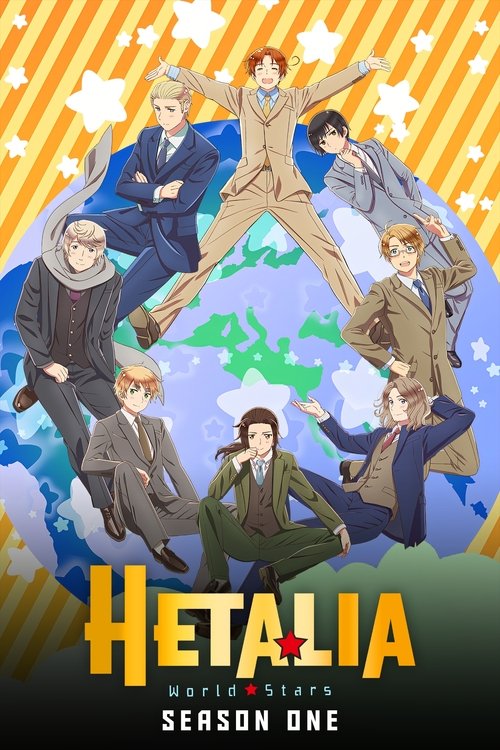
In the first episode of "Hetalia: World Stars," the scene opens with a vibrant and colorful depiction of various countries personified as characters. The focus is on Italy, who is depicted as cheerful and carefree, enjoying a sunny day. He is seen lounging around, indulging in pasta, and expressing his love for food and relaxation. His carefree attitude is juxtaposed with the more serious demeanor of Germany, who is trying to maintain order and discipline among the group. Germany's frustration is palpable as he attempts to rally the other nations for a meeting, emphasizing the importance of cooperation.
As the meeting begins, Italy's antics continue to disrupt the proceedings. He is distracted by the presence of Japan, who is quietly observing and sipping tea. Italy's playful nature leads to a series of humorous misunderstandings, particularly when he misinterprets Germany's serious tone as an invitation to eat. This results in a comedic exchange where Germany's attempts to assert authority are continually undermined by Italy's lightheartedness.
The narrative shifts to a discussion about the current state of the world, with various nations chiming in. France, with his flamboyant personality, makes grandiose statements about romance and culture, while England expresses his skepticism and rivalry with France. The tension between these two characters is evident, showcasing their long-standing feud. Meanwhile, America bursts into the scene with his usual boisterous energy, declaring his intentions to lead the group in a new initiative, which only adds to the chaos.
As the episode progresses, the characters engage in a series of comedic skits that highlight their national stereotypes. Each nation showcases their unique traits, leading to humorous interactions. For instance, Japan's calm demeanor contrasts sharply with America's loud and brash personality, creating a comedic dynamic. The episode also features a segment where the characters participate in a cooking competition, further emphasizing their cultural differences and culinary specialties.
In a pivotal moment, the nations decide to collaborate on a project that aims to promote peace and understanding among them. However, their differing approaches lead to a series of comedic mishaps. Italy's carefree attitude clashes with Germany's strict planning, resulting in a chaotic but humorous attempt to organize the project. The characters' motivations become clearer as they express their desires for recognition and camaraderie, despite their differences.
The episode culminates in a chaotic scene where the nations attempt to present their project to an audience. The presentation quickly spirals out of control, with each nation trying to outdo the others, leading to a humorous and chaotic finale. The characters' personalities shine through as they navigate the challenges of working together, ultimately reinforcing their bonds despite the comedic turmoil.
As the episode concludes, the nations reflect on their experiences, acknowledging the importance of collaboration while also embracing their unique identities. The final moments showcase a sense of camaraderie and friendship, setting the stage for future episodes where their adventures and misadventures will continue to unfold.


What is the ending?
In the ending of "Hetalia: World Stars," the characters come together for a final celebration, reflecting on their experiences and the bonds they have formed. Each nation expresses their unique traits and quirks, leading to humorous interactions and heartfelt moments. The series concludes with a sense of unity and camaraderie among the nations, emphasizing the importance of friendship despite their differences.
As the final episode unfolds, the scene opens in a vibrant, sunlit park where the nations have gathered for a festival. Colorful banners flutter in the breeze, and laughter fills the air as various activities are set up. Italy, with his characteristic enthusiasm, is seen organizing a pasta-eating contest, his eyes sparkling with excitement. He is determined to showcase the best of Italian cuisine, and his passion is infectious, drawing in the other nations.
Germany, standing nearby, watches Italy with a mix of exasperation and fondness. He is trying to maintain order, but Italy's antics make it difficult. Germany's internal struggle is evident; he wants to ensure everything runs smoothly, yet he can't help but feel a sense of warmth at Italy's joy. As the contest begins, Germany reluctantly joins in, showcasing his own culinary skills, which leads to a humorous rivalry between the two.
Meanwhile, Japan is quietly observing the festivities, a small smile gracing his lips as he takes in the scene. He is approached by America, who is excitedly discussing his plans for a new superhero comic. America's boisterous personality contrasts sharply with Japan's calm demeanor, yet Japan listens patiently, appreciating the enthusiasm. This interaction highlights their differing approaches to life, yet it also showcases the respect they have for one another.
As the day progresses, France arrives, flamboyantly announcing his presence and immediately drawing attention. He begins to flirt with everyone, particularly with England, who rolls his eyes but can't hide a slight blush. Their banter is filled with playful jabs, revealing the underlying tension and camaraderie that has developed over the series. England's irritation is palpable, yet there's a sense of familiarity that suggests a deeper bond.
The festival culminates in a grand fireworks display as night falls. The nations gather together, their faces illuminated by the colorful bursts in the sky. Each character reflects on their journey, the challenges they faced, and the friendships they forged. Italy, with his carefree spirit, suggests they all make a toast to their unity, and they raise their glasses in agreement.
In this moment, the camera pans across the group, capturing the diverse expressions of joy, nostalgia, and hope. Germany, despite his usual stoicism, allows a small smile to break through as he acknowledges the importance of these connections. Japan's serene demeanor remains, but there's a glimmer of happiness in his eyes. America is animatedly recounting stories, while England and France continue their playful rivalry, showcasing their unique relationship.
As the fireworks light up the night sky, the series closes with a sense of optimism. The final scene shows the nations standing together, united despite their differences, embodying the message of friendship and cooperation. The screen fades to black, leaving viewers with a lingering sense of warmth and the hope that these bonds will endure.
In summary, the ending of "Hetalia: World Stars" encapsulates the essence of the series: a celebration of diversity, friendship, and the shared experiences that bring nations together. Each character finds their place within this tapestry, contributing to a collective narrative that emphasizes unity in a world filled with differences.
Is there a post-credit scene?
In "Hetalia: World Stars," Season 1, there is indeed a post-credit scene that adds a humorous touch to the episode. After the main credits roll, viewers are treated to a brief segment featuring Italy and Germany.
In this scene, Italy is energetically trying to convince Germany to join him in a fun activity, showcasing his typical cheerful and carefree demeanor. Germany, on the other hand, is portrayed with his usual stern and serious expression, clearly reluctant to engage in Italy's antics. The contrast between Italy's exuberance and Germany's stoicism creates a comedic tension.
As Italy continues to plead with exaggerated gestures and an enthusiastic tone, Germany's internal struggle is palpable. He wants to maintain his disciplined demeanor but is also unable to resist Italy's infectious enthusiasm completely. The scene captures the essence of their relationship, highlighting Italy's carefree spirit and Germany's responsible nature, ultimately leaving viewers with a light-hearted and warm feeling as the episode concludes.
This post-credit moment serves as a delightful reminder of the characters' dynamics and the humor that defines "Hetalia," making it a fitting end to the episode.
What new characters are introduced in Hetalia: World Stars, and how do they interact with the existing cast?
In Hetalia: World Stars, several new characters are introduced, including nations that were not previously featured in the series. These characters bring fresh dynamics to the existing cast, often leading to humorous misunderstandings and cultural exchanges. For instance, the introduction of nations like South Korea and Taiwan adds layers to the interactions, as they often clash or bond over their unique cultural identities and histories with the other characters.
How does Italy's personality manifest in the new episodes of Hetalia: World Stars?
Italy's personality remains consistent with his previous portrayals, characterized by his carefree and cheerful demeanor. In the new episodes, he often finds himself in comedic situations where his love for pasta and his laid-back attitude lead to humorous outcomes. His interactions with Germany highlight his playful nature, as he often tries to avoid responsibility while still managing to charm those around him.
What role does Germany play in the new season, and how does he react to Italy's antics?
Germany continues to be the responsible and serious counterpart to Italy's carefree nature. In Hetalia: World Stars, his frustration with Italy's antics is palpable, often leading to comedic moments where he tries to maintain order. Despite his stern exterior, there are moments where he shows a softer side, especially when he realizes that Italy's carefree attitude brings joy to their group, showcasing his internal struggle between duty and friendship.
How does the relationship between America and England evolve in this season?
The relationship between America and England is filled with rivalry and camaraderie in Hetalia: World Stars. Their interactions often oscillate between playful banter and serious discussions about their historical ties. In this season, there are moments where their competitive nature leads to humorous challenges, but also instances where they reflect on their shared past, revealing deeper layers of their friendship and mutual respect.
What comedic situations arise from the cultural misunderstandings between the characters?
Cultural misunderstandings are a central theme in Hetalia: World Stars, leading to various comedic situations. For example, when characters from different nations attempt to share their traditional foods, the results are often chaotic and hilarious, as tastes clash and preferences are misinterpreted. These moments not only provide humor but also serve to highlight the unique traits of each character, showcasing their cultural backgrounds in a lighthearted manner.
Is this family friendly?
Hetalia: World Stars is generally considered family-friendly, but there are a few aspects that might be sensitive for children or those who are more sensitive to certain themes.
-
Cultural Stereotypes: The show often uses exaggerated stereotypes of different countries, which can be humorous but may also be seen as offensive or inappropriate by some viewers.
-
Historical References: The series includes references to historical events and conflicts, which may be upsetting for some, especially if they touch on sensitive topics like war or colonialism.
-
Humor Style: The humor can be quite absurd and sometimes relies on misunderstandings or conflicts between characters, which might not resonate well with all audiences.
-
Character Dynamics: Some character interactions may involve teasing or rivalry that could be interpreted as bullying, which might be concerning for younger viewers.
Overall, while the show is light-hearted and comedic, parents may want to preview episodes to ensure they align with their values and the sensitivities of their children.