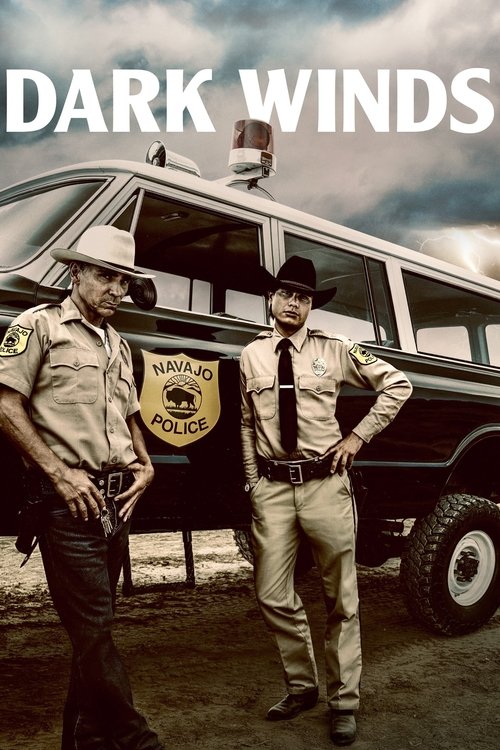






Popular
What is the significance of the murder investigation in the story?
How does Joe Leaphorn's character evolve throughout the season?
What role does Jim Chee play in the investigation?
What are the implications of the supernatural elements in the story?
How does the setting of the Navajo Nation influence the plot?
Should I watch it?
Ask Your Own Question

What is the plot?
In the first episode of "Dark Winds," we are introduced to Joe Leaphorn, a Navajo police officer, who is investigating a series of mysterious events in the 1970s Southwest. The story begins with a shocking scene where a man is found dead in a remote area, and the circumstances surrounding his death are suspicious. Leaphorn is portrayed as a dedicated officer, grappling with the complexities of his job and the cultural tensions in the region.
As Leaphorn delves deeper into the investigation, he encounters a young officer named Jim Chee, who is eager but inexperienced. Chee is also dealing with personal issues, including his relationship with his girlfriend, who is a strong-willed woman with her own ambitions. Their dynamic is strained as Chee tries to balance his duties with his personal life.
Leaphorn and Chee begin to uncover connections between the dead man and a local cult that practices rituals tied to ancient Navajo beliefs. They discover that the cult is involved in a series of thefts and that the dead man may have been a victim of their activities. The investigation leads them to a remote location where they find evidence of the cult's rituals, including disturbing symbols and artifacts.
As the investigation progresses, Leaphorn faces pressure from his superiors to close the case quickly, but he is determined to seek the truth. He struggles with the expectations placed on him as a Native American officer in a predominantly white police force. This internal conflict is compounded by his memories of his late wife, which haunt him throughout the investigation.
Chee, meanwhile, is drawn deeper into the case and begins to question his own beliefs and the traditions of his people. He experiences a crisis of faith as he grapples with the implications of the cult's activities and what it means for his identity. His relationship with his girlfriend becomes increasingly strained as he becomes more consumed by the case.
The plot thickens when Leaphorn and Chee discover that the cult is planning a major ritual that could have dire consequences for the community. They race against time to prevent the ritual from taking place, leading to a tense confrontation with the cult members. The scene is fraught with danger as Leaphorn and Chee navigate the treacherous terrain, both physically and emotionally.
In a climactic moment, Leaphorn confronts the cult leader, who reveals shocking truths about the cult's motivations and their connection to the dead man. The confrontation escalates into a physical struggle, showcasing Leaphorn's determination to protect his community and uphold justice. Chee, witnessing the confrontation, is forced to confront his own fears and insecurities, ultimately stepping up to assist Leaphorn.
The episode concludes with the aftermath of the confrontation, leaving both Leaphorn and Chee to reflect on the events that transpired. They are left with more questions than answers, setting the stage for further exploration of the themes of identity, culture, and justice in the episodes to come. The emotional weight of their experiences lingers, hinting at the personal growth and challenges they will face as the series progresses.








What is the ending?
In the ending of "Dark Winds" Season 1, Joe Leaphorn confronts the truth behind the murders and the conspiracy surrounding the case. He faces off against the antagonist, ultimately leading to a resolution of the central mystery. Meanwhile, Jim Chee grapples with his own personal struggles and the impact of the events on his life. The season concludes with a sense of unresolved tension, hinting at future challenges for the characters.
As the final episode unfolds, the tension escalates in the arid landscape of the Navajo Nation. Joe Leaphorn, portrayed with a stoic determination, is deep in the investigation of the murders that have haunted him throughout the season. The sun sets, casting long shadows across the desert, symbolizing the darkness that has enveloped his life and the lives of those around him.
Scene 1: Joe stands at the edge of a cliff, overlooking the vast expanse of the land. His mind races with the pieces of the puzzle he has been trying to solve. The weight of his responsibilities presses heavily on his shoulders. He reflects on the loss of his wife, the betrayal he has faced, and the ghosts of his past that linger in the air. The camera captures the rugged terrain, mirroring Joe's internal struggle.
Scene 2: Meanwhile, Jim Chee is in a different emotional space. He is wrestling with his own demons, feeling the strain of his relationship with Joe and the expectations placed upon him. He sits in his car, staring at the dashboard, the weight of his badge feeling heavier than ever. The internal conflict is palpable as he contemplates his role in the investigation and his desire to uphold justice while navigating the complexities of his personal life.
Scene 3: The climax arrives when Joe finally confronts the antagonist, a figure shrouded in mystery and malice. The confrontation takes place in an abandoned building, the air thick with tension. Joe's resolve is tested as he faces the man responsible for the chaos that has unfolded. The dialogue is sharp, filled with accusations and revelations. Joe's determination to seek justice for the victims fuels his actions, and the stakes are higher than ever.
Scene 4: As the confrontation escalates, Jim arrives just in time to support Joe. Their partnership, strained throughout the season, finds a moment of clarity as they work together to bring the antagonist to justice. The scene is charged with emotion, showcasing their growth as characters and the bond they have forged through adversity.
Scene 5: The resolution comes as the antagonist is apprehended, but not without a cost. Joe and Jim stand together, breathing heavily, the weight of their victory tempered by the losses they have endured. The camera lingers on their faces, capturing the mixture of relief and sorrow. They have solved the case, but the scars of their experiences remain.
Scene 6: In the aftermath, Joe visits the grave of his wife, a poignant moment that encapsulates his journey. He lays flowers, a silent tribute to the love he lost and the pain he carries. The landscape around him is vast and empty, reflecting his solitude but also the hope for healing.
Scene 7: The season closes with Jim Chee looking out over the horizon, contemplating his future. The unresolved tension in his life is evident, hinting at the challenges that lie ahead. The final shot captures the beauty of the Navajo landscape, a stark contrast to the turmoil the characters have faced, leaving viewers with a sense of anticipation for what is to come.
In the end, Joe Leaphorn emerges as a man changed by his experiences, still haunted by the past but resolute in his pursuit of justice. Jim Chee, while finding some clarity, is left with questions about his path forward. The season concludes with a lingering sense of uncertainty, setting the stage for future conflicts and character development.
Is there a post-credit scene?
In "Dark Winds," Season 1, there is no post-credit scene. The season concludes without any additional scenes after the credits, focusing instead on wrapping up the main narrative threads established throughout the episodes. The final moments of the season emphasize the emotional and thematic resolutions of the characters, particularly the struggles and growth of Joe Leaphorn and Jim Chee as they navigate their personal and professional challenges. The absence of a post-credit scene allows the audience to reflect on the story's conclusion without any additional distractions.
What is the significance of the murder investigation in the story?
The murder investigation serves as the central plot device that drives the narrative forward. It begins with the discovery of a body on a Navajo reservation, which leads to the involvement of two main characters, Joe Leaphorn and Jim Chee. The investigation reveals deep-seated tensions within the community and uncovers connections to a larger conspiracy involving the drug trade and historical injustices faced by the Navajo people.
How does Joe Leaphorn's character evolve throughout the season?
Joe Leaphorn starts as a dedicated and methodical police officer, grappling with personal loss and the weight of his responsibilities. As the investigation unfolds, he confronts his own beliefs and the cultural complexities of his heritage. His internal struggle is highlighted by flashbacks to his late wife, which influence his decisions and deepen his emotional state, ultimately leading him to a more profound understanding of his identity and the community he serves.
What role does Jim Chee play in the investigation?
Jim Chee is introduced as a young, idealistic officer who is eager to prove himself. His character contrasts with Leaphorn's experience and skepticism. Chee's connection to the Navajo culture and his intuitive approach to the case provide a fresh perspective. Throughout the season, he grapples with his own sense of duty and the expectations placed upon him, which adds layers to his character as he seeks to balance tradition with modern law enforcement.
What are the implications of the supernatural elements in the story?
The supernatural elements, such as visions and cultural beliefs, play a crucial role in shaping the characters' motivations and actions. They reflect the deep connection the Navajo people have with their land and heritage. These elements often manifest in Leaphorn's and Chee's experiences, influencing their understanding of the case and their personal journeys. The interplay between the spiritual and the tangible world adds depth to the narrative, highlighting the characters' struggles with their identities.
How does the setting of the Navajo Nation influence the plot?
The setting of the Navajo Nation is integral to the plot, providing a rich backdrop that influences the characters' interactions and the unfolding mystery. The vast landscapes, cultural landmarks, and the community's history are woven into the narrative, affecting the investigation's dynamics. The isolation of the reservation and the complexities of tribal law versus federal law create tension and conflict, shaping the characters' motivations and the story's progression.
Is this family friendly?
"Dark Winds," while a compelling narrative, contains several elements that may not be suitable for children or sensitive viewers. Here are some potentially objectionable aspects:
-
Violence: The show features scenes of crime and violence, including gunfights and physical confrontations, which may be intense and unsettling.
-
Mature Themes: The storyline delves into themes of crime, betrayal, and the impact of trauma, which may be heavy for younger audiences.
-
Death: There are instances of death and the aftermath of violent events, which could be distressing.
-
Cultural Tensions: The series explores complex cultural dynamics and historical injustices, which may be challenging for some viewers to process.
-
Language: There may be instances of strong language that could be inappropriate for younger viewers.
These elements contribute to a darker tone that may not be suitable for all audiences, particularly children.