









Loading additional questions...
Popular
What motivates Leo to quit being a hero?
How does Leo's relationship with the Demon Lord evolve throughout the season?
What role do the supporting characters play in Leo's journey?
What challenges does Leo face when he tries to integrate into the Demon Lord's army?
How does the theme of redemption manifest in Leo's character arc?
Should I watch it?
Ask Your Own Question

What is the plot?
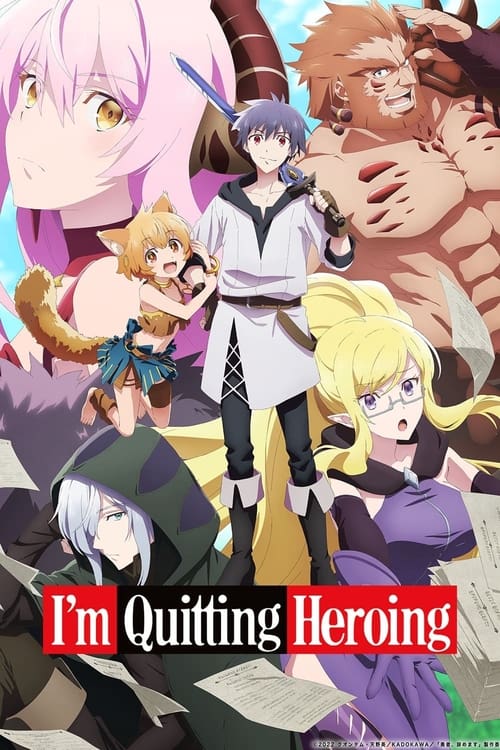
In the kingdom of Altar, a powerful hero named Leo Demonheart is celebrated for his strength and bravery. He has single-handedly defeated numerous monsters and is revered by the people. However, despite his accomplishments, Leo feels increasingly isolated and unappreciated. He struggles with the burden of being a hero, as he is constantly expected to save the day without any acknowledgment of his personal sacrifices. This internal conflict sets the stage for his eventual decision to quit being a hero.
After a particularly grueling battle against a formidable demon, Leo returns to the hero guild, where he is met with indifference from his fellow heroes. They are more focused on their own glory and do not recognize the toll that the constant fighting has taken on him. Feeling disheartened, Leo decides that he can no longer continue in this role. He announces his intention to quit being a hero, which shocks his comrades. They are unable to comprehend his decision, as they view heroism as a noble and unending duty.
Leo's departure from the guild is met with mixed reactions. Some heroes express concern for his well-being, while others dismiss his feelings as weakness. This moment highlights the emotional disconnect between Leo and the other heroes, emphasizing his loneliness. As he leaves the guild, Leo reflects on his journey and the sacrifices he has made, feeling a sense of relief mixed with uncertainty about his future.
In the aftermath of his resignation, Leo attempts to reintegrate into normal life. He struggles to find a new purpose outside of heroism. He takes on mundane jobs, such as working in a local tavern, but finds it difficult to adjust to a life without the thrill of battle and the admiration of the people. His internal struggle deepens as he grapples with feelings of worthlessness and the fear that he will be forgotten.
Meanwhile, the kingdom faces a new threat as a powerful demon lord begins to rise, causing chaos and destruction. The remaining heroes, lacking Leo's strength, struggle to combat this new menace. They attempt to rally together, but their efforts are disorganized and ineffective. As the situation worsens, the people of Altar begin to lose hope, and whispers of Leo's departure circulate among the citizens.
As the demon lord's attacks escalate, the heroes realize they need Leo's strength to stand a chance against this formidable foe. They reach out to him, pleading for his return. Initially, Leo is resistant, feeling that he has already given everything he could to the kingdom. However, he is haunted by the memories of his past battles and the people he fought to protect. This internal conflict leads him to reconsider his decision.
Ultimately, Leo decides to return to the battlefield, driven by a sense of duty and the desire to protect those he cares about. He reunites with his former comrades, who are overjoyed at his return. Together, they strategize to confront the demon lord, combining their strengths and skills. Leo's leadership and experience become crucial as they prepare for the impending battle.
The climactic confrontation occurs in a desolate wasteland where the demon lord has established his lair. The heroes engage in a fierce battle, showcasing their abilities and teamwork. Leo leads the charge, demonstrating his unmatched combat skills. The fight is intense, with the heroes facing overwhelming odds. They work together to exploit the demon lord's weaknesses, but the battle takes a toll on them, both physically and emotionally.
As the fight reaches its peak, Leo faces the demon lord in a one-on-one duel. The demon lord taunts Leo, attempting to undermine his resolve. However, Leo draws strength from his memories of the people he fights for and the bonds he has formed with his comrades. In a climactic moment, he unleashes a powerful attack, ultimately defeating the demon lord and saving the kingdom.
In the aftermath of the battle, the heroes are celebrated for their victory, but Leo reflects on the cost of heroism. He realizes that while he may have returned to the role of a hero, he must also find a balance between his duties and his personal well-being. The season concludes with Leo contemplating his future, acknowledging that being a hero is not just about strength, but also about understanding oneself and the importance of connection with others.




What is the ending?
In the ending of "I'm Quitting Heroing," Leo, the once-heroic figure, confronts the reality of his choices and the consequences of his actions. After a series of conflicts and emotional revelations, he ultimately decides to leave behind his role as a hero to pursue a more peaceful life. The other characters, including the Demon Queen, come to terms with their own identities and the relationships they have formed throughout the series. The story concludes with a sense of resolution, as Leo finds a new path, and the characters reflect on their growth and the bonds they have created.
As the final episode unfolds, the atmosphere is charged with tension and anticipation. The scene opens in the aftermath of a fierce battle, where Leo, the once-celebrated hero, stands amidst the ruins of what was once a vibrant town. The remnants of the conflict linger in the air, a stark reminder of the chaos that has ensued. Leo's expression is a mix of exhaustion and determination; he is grappling with the weight of his past decisions and the expectations placed upon him.
In a quiet moment, Leo reflects on his journey, the sacrifices he has made, and the toll that heroism has taken on him. He feels a profound sense of disconnection from the very people he sought to protect. This internal struggle is palpable as he walks through the desolate streets, haunted by memories of battles fought and lives lost. The emotional turmoil within him is evident; he longs for a sense of belonging and purpose beyond the title of "hero."
Meanwhile, the Demon Queen, who has been a formidable adversary and a complex character throughout the series, is also experiencing her own transformation. She stands in her castle, contemplating her role in the ongoing conflict. The once-clear lines between good and evil have blurred, and she begins to understand the nuances of her own identity. Her interactions with Leo have shifted her perspective, and she is torn between her past as a villain and her desire for a different future.
As the climax approaches, Leo and the Demon Queen find themselves face to face once more. The tension is thick as they engage in a heartfelt conversation, revealing their vulnerabilities and the burdens they carry. Leo expresses his desire to step away from the life of a hero, seeking a more peaceful existence. The Demon Queen, in turn, acknowledges her own struggles and the impact of their encounters on her growth. This pivotal moment serves as a turning point for both characters, as they recognize the importance of choice and the possibility of redemption.
In the final scenes, Leo makes the decision to leave his heroics behind. He bids farewell to the friends and allies he has made along the way, each farewell imbued with a sense of bittersweet nostalgia. The emotional weight of these goodbyes is palpable, as Leo acknowledges the bonds he has formed and the lessons he has learned. His departure is not just a physical one; it symbolizes a profound shift in his identity and purpose.
The series concludes with Leo walking away from the remnants of his past, stepping into an uncertain but hopeful future. The final shot captures him against a backdrop of a rising sun, symbolizing new beginnings and the promise of a life lived on his own terms. The other characters, including the Demon Queen, are left to reflect on their own journeys, having been irrevocably changed by their experiences with Leo.
In the end, Leo's fate is one of self-discovery and liberation from the burdens of heroism. The Demon Queen, too, embarks on a path of introspection, hinting at her own potential for change. The story closes with a sense of resolution, emphasizing the themes of identity, choice, and the complexities of human relationships. Each character has grown, and while their paths may diverge, the connections forged throughout their journey remain a testament to their shared experiences.
Is there a post-credit scene?
In "I'm Quitting Heroing," Season 1, there is indeed a post-credit scene that adds an intriguing layer to the narrative.
As the credits roll, the scene opens in a dimly lit room filled with various magical artifacts and scrolls. The camera pans slowly across the cluttered space, revealing a figure shrouded in shadows. This figure is revealed to be a mysterious sorceress, her face partially obscured by a hood. She is examining a glowing crystal that pulses with energy, suggesting it holds significant power.
The sorceress speaks softly to herself, contemplating the recent events involving Leo, the hero who has decided to quit his role. Her voice is laced with a mix of curiosity and concern as she reflects on the implications of Leo's departure from the hero's path. She mentions that the balance of power in the world is shifting and hints at a looming threat that could arise from Leo's decision.
As she places the crystal back on the table, the camera zooms in on her hand, revealing a ring adorned with a dark gemstone. The scene ends with her looking directly at the camera, a sly smile creeping across her face, suggesting that she has her own plans in motion that could intertwine with Leo's journey.
This post-credit scene leaves viewers with a sense of anticipation, hinting at future conflicts and the potential for new alliances or adversaries in the unfolding story. It effectively sets the stage for the next developments in the series, emphasizing the ongoing struggle between heroes and the forces that challenge them.
What motivates Leo to quit being a hero?
Leo, the protagonist, is driven by a deep sense of disillusionment with the hero lifestyle. After years of fighting against the Demon Lord and his minions, he feels unappreciated and misunderstood by the very people he has saved. His internal conflict revolves around the realization that despite his heroic deeds, he is seen as a mere tool for others' ambitions, leading him to seek a new path away from heroism.
How does Leo's relationship with the Demon Lord evolve throughout the season?
Initially, Leo views the Demon Lord as his enemy, but as the story progresses, he learns that the Demon Lord, named Eleanora, has her own struggles and motivations. Their encounters shift from adversarial to more complex, as Leo begins to understand her perspective and the burdens she carries. This evolution leads to moments of unexpected camaraderie, challenging Leo's preconceived notions about good and evil.
What role do the supporting characters play in Leo's journey?
The supporting characters, including the members of the Demon Lord's army, serve as both foils and allies to Leo. Characters like the loyal warrior and the cunning mage each represent different aspects of the world Leo is trying to leave behind. Their interactions with Leo highlight his internal struggles and provide him with new insights into what it means to be a hero, ultimately influencing his decision to redefine his identity.
What challenges does Leo face when he tries to integrate into the Demon Lord's army?
When Leo attempts to join the Demon Lord's army, he faces skepticism and hostility from the other members, who view him as a former hero and a potential threat. His struggle to prove himself and earn their trust is fraught with tension, as he must navigate their prejudices while also confronting his own past. This journey is marked by moments of vulnerability, as Leo grapples with feelings of inadequacy and the desire for acceptance.
How does the theme of redemption manifest in Leo's character arc?
Leo's quest for redemption is central to his character arc. As he distances himself from his past as a hero, he seeks to atone for the collateral damage caused by his previous battles. This manifests in his efforts to help the Demon Lord's army in ways that are not traditionally heroic, such as using his skills to protect rather than to conquer. His journey reflects a deeper understanding of what it means to be a hero, ultimately leading him to redefine his purpose.