









Popular
What motivates Leo to quit being a hero?
How does the Demon Lord react to Leo's decision to quit?
What role do the other heroes play in Leo's journey?
How does Leo's relationship with his former allies evolve throughout the series?
What challenges does Leo face after quitting, and how do they shape his character?
Should I watch it?
Ask Your Own Question

What is the plot?
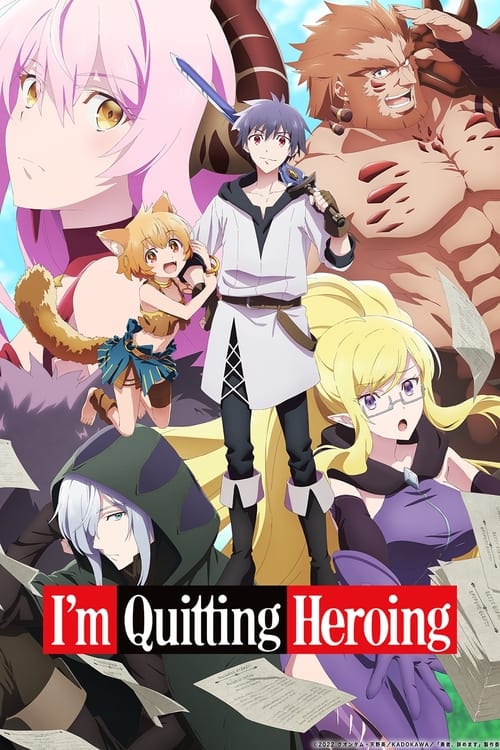
In the kingdom of Althea, the story begins with the hero, Leo Demonheart, who has been celebrated for his incredible strength and bravery in defeating the Demon Lord. The opening scene showcases Leo in a grand ceremony, where he is honored by the king and the citizens for his heroic deeds. Despite the accolades, Leo feels a deep sense of disillusionment and isolation, as he realizes that his life has been defined solely by his role as a hero.
After the ceremony, Leo returns to his home, where he reflects on his life. He feels unfulfilled and questions the purpose of his heroism. In a moment of vulnerability, he decides that he wants to quit being a hero and live a normal life. This decision sets the stage for the central conflict of the story, as Leo grapples with the expectations placed upon him by society and his own desires.
Leo approaches the Hero Association to formally announce his resignation. The members, including his former companions, are shocked and try to convince him to stay. They argue that the world still needs heroes, especially with the lingering threat of demons. Leo, however, is resolute in his decision, stating that he wants to find his own path and live without the burden of heroism. This confrontation highlights the tension between Leo's personal desires and the expectations of those around him.
As Leo leaves the Hero Association, he encounters a group of adventurers who are struggling to fend off a minor demon attack. Despite his desire to step away from heroics, Leo instinctively intervenes to help them. He dispatches the demon with ease, but afterward, he feels conflicted about his actions. This moment illustrates the internal struggle Leo faces as he tries to distance himself from his past.
Determined to start anew, Leo travels to a small village where he hopes to blend in and live a quiet life. He takes on a job at a local inn, where he meets a variety of colorful characters, including the innkeeper, a kind-hearted woman named Mira, and a group of villagers who are initially wary of him due to his reputation. Leo works hard, trying to earn their trust and prove that he is more than just a hero.
As Leo settles into village life, he begins to form bonds with the villagers, particularly with Mira. He helps them with their daily struggles, such as repairing homes and assisting with farming. Through these interactions, Leo starts to rediscover joy and a sense of belonging, which he had long been missing. However, he is still haunted by his past and the fear that he will be pulled back into the life of a hero.
Meanwhile, the Demon Lord's forces are regrouping, and a new threat emerges as a powerful demon named Gorgon begins to terrorize nearby villages. The Hero Association, desperate for help, sends out a call for heroes to combat this new menace. Leo learns of this through the villagers, who express their concern and fear. Despite his desire to remain uninvolved, Leo feels a sense of responsibility to protect those he has come to care for.
In a pivotal moment, Leo decides to confront Gorgon, not as a hero, but as someone who wants to protect his new home. He gathers the villagers and trains them to defend themselves, empowering them to fight back against the demon. This decision marks a significant shift in Leo's character, as he begins to embrace a new identity that blends his past with his present.
The climactic battle against Gorgon takes place in the village. The demon attacks with ferocity, causing chaos and destruction. Leo leads the villagers in a coordinated effort to fend off Gorgon, using both his strength and the skills he has taught them. The fight is intense, with moments of despair as the villagers face overwhelming odds. Leo's determination and leadership inspire them to keep fighting, showcasing his growth from a solitary hero to a community leader.
As the battle reaches its peak, Leo confronts Gorgon directly. The demon taunts him, reminding Leo of his past as a hero. In a moment of clarity, Leo realizes that he can be both a protector and a person who chooses his own path. He channels his strength and defeats Gorgon, but not without sustaining injuries. The villagers rally around him, celebrating their victory and solidifying their bond.
In the aftermath, Leo reflects on his journey. He understands that quitting heroism does not mean abandoning the values of courage and protection. He has found a new purpose in helping others and being part of a community. The series concludes with Leo fully embracing his new life, surrounded by friends and allies, ready to face whatever challenges may come, not as a lone hero, but as a member of a united village.


What is the ending?
In the ending of "I'm Quitting Heroing," Leo, the former hero, confronts the reality of his past actions and the consequences they have had on the world. After a series of events that lead him to question his role as a hero, he ultimately decides to step away from the life of heroism. The story concludes with Leo finding a new purpose, focusing on rebuilding relationships and contributing to society in a different way.
As the final episodes unfold, we see Leo grappling with his identity. The scene opens with Leo standing alone in a desolate landscape, reflecting on his past battles and the toll they have taken on him and those around him. His expression is a mix of determination and sorrow, as he realizes that his heroics have not brought the peace he envisioned.
In the next scene, Leo visits the remnants of the village he once saved, now in ruins due to the conflicts he was involved in. The villagers, once grateful, now look at him with a mix of resentment and disappointment. This moment is heavy with emotion, as Leo feels the weight of their judgment. He attempts to apologize, but the words feel inadequate against the backdrop of their suffering.
Transitioning to a pivotal moment, Leo encounters his former allies, who have also been affected by the chaos that ensued. They gather in a dimly lit tavern, where the atmosphere is thick with tension. Each character expresses their feelings of betrayal and loss, revealing how Leo's decisions have impacted their lives. The dialogue is raw and honest, showcasing their internal struggles and the fractures in their relationships.
As the confrontation escalates, Leo listens intently, absorbing their pain. He realizes that being a hero does not solely mean fighting battles; it also involves understanding and supporting those he claims to protect. This epiphany marks a turning point for him. He acknowledges his mistakes and vows to make amends, not through grand gestures, but by being present and helping rebuild the community.
In the final scenes, we see Leo taking on a new role. He is seen working alongside the villagers, helping to repair homes and restore the land. The once somber atmosphere begins to shift as laughter and camaraderie return to the village. Leo's transformation is evident; he is no longer the distant hero but a part of the community, sharing in their struggles and triumphs.
The series concludes with a poignant image of Leo standing with the villagers, a sense of hope and renewal in the air. The camera pans out, capturing the vibrant life returning to the village, symbolizing the healing process. Each main character, including Leo, finds a new path forward, emphasizing the importance of connection, understanding, and the true essence of heroism beyond mere battles.
Is there a post-credit scene?
In "I'm Quitting Heroing," there is indeed a post-credit scene that adds a layer of depth to the narrative. After the main credits roll, the scene opens in a serene forest setting, where the sun filters through the leaves, casting dappled shadows on the ground.
The camera pans to a small clearing where Leo Demonheart, the protagonist, is seen sitting on a log, looking contemplative. His expression is a mix of relief and uncertainty, reflecting his internal struggle after stepping away from his role as a hero. He gazes at a small, vibrant flower growing nearby, symbolizing new beginnings and the potential for growth outside of his previous identity.
As he sits there, a soft rustling in the bushes catches his attention. The scene shifts to reveal a group of adventurers, who are discussing their plans to confront a new threat. They are animated and full of enthusiasm, contrasting sharply with Leo's more subdued demeanor. One of them mentions the legendary hero, Leo, and how they hope to find him to join their cause.
Leo's expression shifts from contemplation to a hint of longing as he listens to their conversation. The scene captures the weight of his past and the allure of heroism that still lingers within him. He stands up, brushes off his clothes, and takes a deep breath, as if contemplating whether to re-enter that world or continue on his path of self-discovery.
The scene fades out with Leo walking away from the clearing, leaving the audience with a sense of ambiguity about his future. This moment encapsulates the central theme of the series: the struggle between personal identity and societal expectations, leaving viewers pondering what Leo's next steps might be.
What motivates Leo to quit being a hero?
Leo, the protagonist, is driven by a deep sense of disillusionment with the hero's life. After years of fighting against the Demon Lord and his minions, he feels unappreciated and burdened by the expectations placed upon him. His internal struggle is highlighted by his desire for a more peaceful existence, away from the constant battles and the toll they take on his emotional well-being.
How does the Demon Lord react to Leo's decision to quit?
The Demon Lord, initially taken aback by Leo's unexpected resignation, views it as an opportunity. He believes that without Leo's interference, he can pursue his own goals more freely. This reaction showcases the Demon Lord's cunning nature and his ability to adapt to changing circumstances, as he begins to plot new strategies to assert his dominance.
What role do the other heroes play in Leo's journey?
The other heroes serve as a contrasting force to Leo's character. They embody the traditional ideals of heroism, often pushing Leo to reconsider his decision to quit. Their interactions with him reveal their own motivations and insecurities, creating a complex dynamic where Leo feels both alienated and compelled to reflect on his choices.
How does Leo's relationship with his former allies evolve throughout the series?
As Leo distances himself from his former allies, their relationships become strained. Initially, they struggle to understand his decision, leading to feelings of betrayal and confusion. However, as the series progresses, some allies begin to empathize with Leo's plight, leading to moments of reconciliation and deeper understanding of the burdens of heroism.
What challenges does Leo face after quitting, and how do they shape his character?
After quitting, Leo faces numerous challenges, including societal rejection and the struggle to find a new identity outside of being a hero. These experiences force him to confront his past actions and the impact they had on others. As he navigates these challenges, Leo undergoes significant character development, learning to embrace vulnerability and the importance of personal choice.
Is this family friendly?
"I'm Quitting Heroing" is generally suitable for a mature audience, and while it may not be explicitly inappropriate for children, there are several elements that could be considered objectionable or upsetting for younger viewers or sensitive individuals.
-
Violence: The show features scenes of combat and battles, which may include depictions of injuries or intense confrontations. While not excessively graphic, the action can be intense.
-
Themes of Betrayal and Isolation: The protagonist, Leo, experiences feelings of betrayal and isolation, which may resonate deeply with some viewers. These emotional struggles can be heavy and might be difficult for younger audiences to process.
-
Mature Themes: The narrative explores complex themes such as the burden of heroism, societal expectations, and personal identity, which may be more suitable for older teens and adults.
-
Character Struggles: Characters face significant personal challenges, including feelings of inadequacy and existential crises, which could be distressing for sensitive viewers.
-
Mild Language: There may be instances of mild language or suggestive dialogue that could be inappropriate for younger audiences.
Overall, while the show does not contain explicit content, its emotional depth and thematic complexity may not be ideal for children or those who are particularly sensitive to such topics.