









Popular
What motivates Leo to quit being a hero?
How does the relationship between Leo and the Demon Queen evolve throughout the specials?
What challenges does Leo face when trying to reintegrate into normal life?
What role do the supporting characters play in Leo's journey during the specials?
How does the animation style contribute to the storytelling in the specials?
Should I watch it?
Ask Your Own Question

What is the plot?
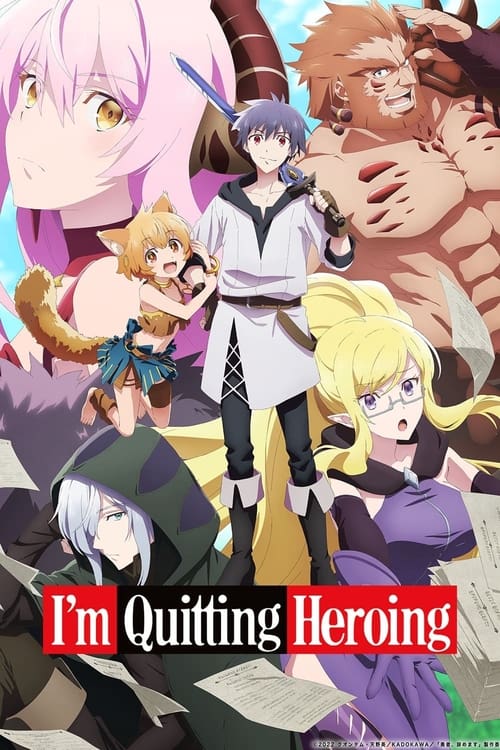
In the first special of "I'm Quitting Heroing," we are introduced to Leo Demonheart, a once-celebrated hero who has grown disillusioned with his role. The story opens with Leo reflecting on his past victories against the Demon Lord and the monsters he has fought. Despite his accomplishments, he feels unappreciated and decides to leave the hero's life behind. This decision is fueled by a sense of betrayal from those he once fought to protect, as they now view him as a threat rather than a savior.
As Leo embarks on his journey away from heroism, he encounters a group of adventurers who are in dire need of assistance. They are struggling against a powerful monster that has been terrorizing their village. Initially, Leo is hesitant to help, still grappling with his feelings of rejection and his desire to quit being a hero. However, witnessing the fear and desperation in the villagers' eyes stirs something within him. He ultimately decides to lend his strength, albeit reluctantly.
The scene shifts to the confrontation with the monster, a massive, fearsome creature that wreaks havoc in the village. Leo steps forward, showcasing his incredible combat skills. He engages the monster in a fierce battle, using a combination of agility and powerful magic. The fight is intense, with Leo dodging the creature's attacks and countering with his own. The villagers watch in awe as he demonstrates his prowess, but Leo remains emotionally distant, focused solely on defeating the monster rather than embracing his role as a hero.
After a grueling battle, Leo manages to defeat the monster, but not without sustaining injuries. As he stands victorious, the villagers cheer and express their gratitude. However, Leo feels a mix of emotions--pride in his victory but also a deep-seated sadness. He realizes that despite his desire to quit, he still possesses the heart of a hero. This internal conflict becomes a central theme as he grapples with his identity and purpose.
In the aftermath of the battle, Leo is approached by the village leader, who offers him a place among them as a protector. The villagers, having witnessed his bravery, urge him to reconsider his decision to quit heroism. Leo is torn; he longs for acceptance but is also wary of the responsibilities that come with being a hero. He ultimately declines the offer, stating that he needs time to find himself away from the expectations of others.
The special concludes with Leo walking away from the village, contemplating his next steps. He reflects on the impact he has had on the lives of others, realizing that even if he chooses to step back from being a hero, he can still make a difference in his own way. The final scene leaves viewers with a sense of uncertainty about Leo's future, as he continues his journey of self-discovery, caught between the desire to help and the need to find his own path.


What is the ending?
In the ending of "I'm Quitting Heroing," Leo, the once-heroic figure, confronts the reality of his decision to leave behind his role as a hero. He faces the consequences of his actions and the impact they have on those around him. Ultimately, he finds a new path that allows him to reconcile his past while forging a new identity. The other characters, including the members of the Demon Lord's army, come to terms with their own roles and relationships, leading to a resolution that emphasizes personal growth and acceptance.
As the final scenes of "I'm Quitting Heroing" unfold, the atmosphere is charged with a mix of tension and resolution. The setting is a dimly lit chamber within the Demon Lord's castle, where Leo stands at a crossroads, grappling with the weight of his past as a hero. The air is thick with unspoken words, and the flickering torches cast shadows that dance across the stone walls, mirroring the turmoil within Leo's heart.
Scene 1: Leo's Confrontation Leo, clad in his familiar hero attire, feels the burden of his past actions pressing down on him. He recalls the battles fought and the lives saved, but now, those memories are tinged with regret. He looks around the chamber, where the members of the Demon Lord's army are gathered, their expressions a mix of curiosity and apprehension. Leo's internal struggle is palpable; he is torn between the hero he once was and the man he wishes to become.
Scene 2: The Demon Lord's Perspective The Demon Lord, observing Leo's turmoil, steps forward. There is a moment of silence as the two figures lock eyes. The Demon Lord, once an adversary, now appears more like a mentor, urging Leo to embrace his true self. The tension in the room shifts as the Demon Lord shares his own journey of self-discovery, revealing that even those labeled as villains can seek redemption. This moment serves as a catalyst for Leo, igniting a flicker of hope within him.
Scene 3: The Decision As the conversation deepens, Leo realizes that quitting heroism does not mean abandoning his values. He understands that he can still protect those he cares about without the title of a hero. The emotional weight of this realization washes over him, and he feels a sense of liberation. The chamber, once a place of conflict, transforms into a sanctuary of acceptance. Leo's decision to redefine his identity resonates with the others present, who begin to see him not just as a hero, but as a person.
Scene 4: The Farewell In a poignant farewell, Leo addresses the members of the Demon Lord's army. He expresses gratitude for their support and acknowledges the growth they have all experienced together. Each character reflects on their journey, revealing their own struggles and triumphs. The bonds formed through shared experiences become evident, and the atmosphere shifts from one of tension to camaraderie. Leo's departure is bittersweet, filled with promises of future encounters and a shared understanding of their intertwined fates.
Scene 5: New Beginnings As Leo steps out of the castle, the sun breaks through the clouds, casting a warm glow over the landscape. He takes a deep breath, feeling the weight of his past lift as he embraces the possibilities of the future. The final shot captures Leo walking away from the castle, a determined look on his face, symbolizing his commitment to forging a new path. The camera pans to the members of the Demon Lord's army, who watch him leave with a sense of hope and newfound purpose.
In the end, Leo's journey culminates in a powerful message about self-acceptance and the importance of personal growth. Each character, including the Demon Lord and his army, finds their own resolution, illustrating that change is possible for everyone, regardless of their past. The story closes on a note of optimism, leaving viewers with the understanding that true heroism lies not in titles, but in the choices we make and the connections we forge with others.
Is there a post-credit scene?
In the "I'm Quitting Heroing" specials, there is indeed a post-credit scene that adds a humorous and light-hearted touch to the overall narrative.
As the credits roll, the scene opens in a cozy tavern where the main characters, including Leo, the former hero, and the members of the Demon Lord's army, are gathered around a table. The atmosphere is lively, filled with laughter and the clinking of mugs. Leo, still adjusting to his new life away from heroics, is animatedly recounting a story of his past adventures, exaggerating details for comedic effect.
The camera pans to the faces of his companions, who are both amused and skeptical, rolling their eyes at his embellishments. The Demon Lord, sitting at the head of the table, smirks, clearly enjoying Leo's antics but also teasing him about his tendency to overstate his heroics.
As the scene progresses, a new character, a young aspiring hero, enters the tavern, looking wide-eyed and eager. He approaches Leo, asking for advice on how to become a great hero. Leo, caught off guard, stumbles over his words, realizing that he is no longer in that role. The scene ends with Leo awkwardly trying to give advice while the others chuckle, highlighting his struggle to adapt to his new identity and the comedic potential of his situation.
This post-credit scene encapsulates the themes of growth and the humorous challenges of transitioning from a life of heroism to a more mundane existence, leaving viewers with a light-hearted conclusion to the specials.
What motivates Leo to quit being a hero?
Leo, the protagonist, is driven by a deep sense of disillusionment with the hero lifestyle. Despite his immense power and past successes, he feels unappreciated and burdened by the expectations placed upon him. His internal struggle is highlighted by his desire for a more meaningful existence beyond the heroics that have defined him.
How does the relationship between Leo and the Demon Queen evolve throughout the specials?
The relationship between Leo and the Demon Queen is complex and evolves from adversarial to one of mutual understanding. Initially, they are at odds, with Leo seeking to leave his hero role and the Demon Queen representing the very forces he fought against. As they interact, they begin to see each other's vulnerabilities, leading to a reluctant alliance and a deeper emotional connection.
What challenges does Leo face when trying to reintegrate into normal life?
Leo faces numerous challenges when attempting to reintegrate into normal life, including societal rejection and the struggle to find a new identity outside of being a hero. He grapples with feelings of isolation and inadequacy, as he is constantly reminded of his past glory while trying to adapt to a mundane existence.
What role do the supporting characters play in Leo's journey during the specials?
The supporting characters play crucial roles in Leo's journey by providing contrasting perspectives on heroism and personal fulfillment. They challenge his views, offer support, and sometimes serve as obstacles, forcing him to confront his past and the implications of his choices. Their interactions help to flesh out Leo's character and highlight the themes of redemption and self-discovery.
How does the animation style contribute to the storytelling in the specials?
The animation style in the specials enhances the storytelling by vividly portraying the emotional states of the characters and the fantastical elements of the world. The use of vibrant colors and dynamic action sequences contrasts with quieter, more introspective moments, allowing viewers to feel the weight of Leo's decisions and the stakes of his journey.
Is this family friendly?
"I'm Quitting Heroing" season 0, titled "Specials," contains several elements that may not be suitable for all children or sensitive viewers. Here are some potentially objectionable or upsetting aspects:
-
Violence: There are scenes depicting battles and confrontations that may include mild violence, which could be unsettling for younger audiences.
-
Dark Themes: The narrative explores themes of betrayal, loneliness, and the struggles of a hero who feels unappreciated, which may resonate deeply and evoke emotional responses.
-
Character Struggles: Characters experience significant internal conflict and emotional turmoil, including feelings of inadequacy and rejection, which might be distressing for sensitive viewers.
-
Mature Humor: Some jokes or situations may contain innuendo or references that could be inappropriate for younger viewers.
-
Fantasy Elements: The presence of magical creatures and dark fantasy elements might be frightening for some children.
Overall, while the show has comedic and light-hearted moments, the underlying themes and certain scenes may require parental discretion.