
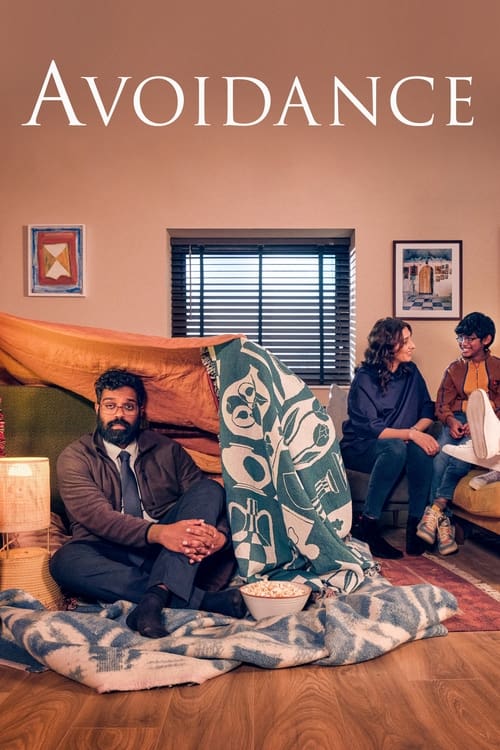







Popular
What are the main character's motivations throughout the series?
How does Jonathan's relationship with his father evolve in the series?
What role does the character of Claire play in Jonathan's life?
How does the series depict Jonathan's struggles with social situations?
What significant events lead to Jonathan's turning point in the series?
Should I watch it?
Ask Your Own Question

What is the plot?
In the first episode of "Avoidance," we are introduced to the main character, Jonathan, who is a man in his late thirties struggling with his fear of confrontation and emotional intimacy. The episode opens with Jonathan at his workplace, where he is seen avoiding a colleague who wants to discuss a project. His discomfort is palpable as he fidgets and looks for ways to escape the conversation. This sets the tone for his character, showcasing his tendency to evade difficult situations.
Later, Jonathan attends a family gathering where he is confronted by his mother about his lack of a romantic relationship. The atmosphere is tense, and Jonathan's internal struggle is evident as he tries to deflect his mother's probing questions. He feels a mix of embarrassment and frustration, leading him to retreat to a quieter area of the house. This moment highlights his deep-seated issues with familial expectations and his own self-worth.
As the episode progresses, Jonathan's best friend, who is more outgoing and assertive, encourages him to take risks in his personal life. They have a conversation at a bar where Jonathan expresses his desire to change but feels paralyzed by his fears. His friend pushes him to ask a woman out, which Jonathan reluctantly agrees to do. This decision marks a pivotal moment for him, as it signifies his willingness to confront his avoidance behavior.
The next significant event occurs when Jonathan finally approaches the woman, who is named Sarah. He stumbles over his words and ultimately backs out of asking her out, retreating to the safety of his friend. This failure reinforces his internal conflict and leads to a moment of self-loathing. He feels defeated and questions whether he will ever be able to overcome his avoidance.
In a subsequent scene, Jonathan has a heart-to-heart with his friend, who shares his own struggles with relationships. This conversation serves as a catalyst for Jonathan, who begins to realize that he is not alone in his fears. He decides to take a more proactive approach to his life, vowing to confront his avoidance head-on.
The climax of the episode occurs when Jonathan unexpectedly runs into Sarah again at a local event. This time, he is determined to make a connection. He approaches her with a newfound confidence, engaging her in conversation. However, as they talk, Jonathan's old habits resurface, and he begins to feel overwhelmed. He almost backs out again but manages to stay present in the moment, leading to a genuine exchange between them.
The episode concludes with Jonathan leaving the event feeling a mix of exhilaration and anxiety. He reflects on his progress, recognizing that while he still has a long way to go, he has taken a significant step forward. The final scene shows him looking at his phone, contemplating whether to text Sarah, symbolizing his ongoing struggle with avoidance and the potential for change.









What is the ending?
In the ending of "Avoidance," the main character, Jonathan, confronts his fears and insecurities, leading to a pivotal moment of self-realization. He faces the consequences of his avoidance behavior, ultimately making a choice that impacts his relationships and personal growth. The series concludes with Jonathan taking a step towards embracing vulnerability, hinting at a more hopeful future.
As the final episode unfolds, we find Jonathan in a state of turmoil. The scene opens with him sitting alone in his dimly lit apartment, the weight of his decisions pressing heavily on his shoulders. He reflects on the series of events that have led him to this moment, his mind racing with thoughts of missed opportunities and strained relationships. The camera captures the flickering light of a nearby streetlamp, casting shadows that mirror his internal conflict.
In the next scene, Jonathan receives a phone call from his estranged friend, who expresses concern over their fractured friendship. The conversation is tense, filled with pauses that highlight Jonathan's reluctance to engage. He fidgets with his phone, his anxiety palpable as he grapples with the fear of vulnerability. The emotional stakes rise as he realizes that avoiding this conversation could lead to further isolation.
Transitioning to a pivotal moment, Jonathan decides to meet his friend in a local café. The atmosphere is bustling, filled with the sounds of laughter and clinking cups, contrasting sharply with Jonathan's internal struggle. As he enters, he scans the room, his heart racing. The camera focuses on his hesitant steps, emphasizing his discomfort in facing the situation head-on.
When they finally sit down, the conversation begins awkwardly. Jonathan's friend opens up about their feelings of abandonment, and for the first time, Jonathan feels the weight of his actions. The dialogue is raw and emotional, with Jonathan's expressions shifting from defensiveness to vulnerability. He struggles to articulate his feelings, but as he listens to his friend, he begins to understand the impact of his avoidance.
In a moment of clarity, Jonathan admits his fears and regrets. The scene is charged with emotion, the café's background noise fading as their conversation deepens. Jonathan's friend responds with empathy, and the tension begins to dissolve. This exchange marks a turning point for Jonathan, as he realizes that facing his fears can lead to healing rather than further pain.
The final scene shifts to Jonathan standing outside the café, the sun setting in the background, casting a warm glow. He takes a deep breath, a sense of relief washing over him. The camera captures his contemplative expression, hinting at newfound hope. As he walks away, there's a sense of determination in his stride, symbolizing his commitment to change.
The series concludes with a montage of Jonathan engaging more openly with those around him, suggesting a shift in his approach to relationships. The final shot lingers on his face, a mixture of apprehension and optimism, as he steps into a future where avoidance no longer dictates his life. Each character's fate is intertwined with Jonathan's journey, as they all begin to navigate their own paths towards connection and understanding, leaving viewers with a sense of closure and possibility.
Is there a post-credit scene?
In "Avoidance," Season 1, there is no post-credit scene. The series concludes its episodes without any additional scenes after the credits roll. The focus remains on the narrative and character development throughout the episodes, leaving no extra content or cliffhangers in the post-credit sequence. The storytelling is tightly woven, emphasizing the emotional journeys of the characters without extending into post-episode material.
What are the main character's motivations throughout the series?
The main character, Jonathan, is driven by a deep-seated fear of confrontation and a desire to avoid uncomfortable situations. His internal struggle is highlighted through various interactions, particularly with his estranged father and his romantic interest, as he grapples with his tendency to escape rather than face his problems.
How does Jonathan's relationship with his father evolve in the series?
Jonathan's relationship with his father is strained and filled with unresolved tension. Initially, Jonathan avoids any direct communication, but as the series progresses, he is forced to confront his father's expectations and their shared past, leading to moments of vulnerability and ultimately a tentative reconciliation.
What role does the character of Claire play in Jonathan's life?
Claire serves as both a love interest and a catalyst for Jonathan's growth. Her patience and understanding challenge Jonathan to confront his avoidance behavior. Throughout the series, her presence pushes him to reflect on his fears and encourages him to take risks, both emotionally and socially.
How does the series depict Jonathan's struggles with social situations?
The series vividly portrays Jonathan's anxiety in social settings through various comedic yet poignant scenarios. From awkward encounters at parties to his attempts to navigate friendships, the visual storytelling captures his physical discomfort and internal monologue, showcasing his desire to connect while being paralyzed by fear.
What significant events lead to Jonathan's turning point in the series?
Several key events serve as turning points for Jonathan, including a confrontation with his father, a pivotal moment with Claire that forces him to be honest about his feelings, and a public mishap that exposes his vulnerabilities. These moments collectively push him towards self-reflection and the realization that avoidance is not a sustainable solution.
Is this family friendly?
"Avoidance" is a comedy-drama that explores themes of emotional avoidance and personal relationships, which may not be entirely suitable for younger audiences or sensitive viewers. Here are some potentially objectionable or upsetting aspects:
-
Emotional Turmoil: The characters often grapple with complex emotions, including anxiety, depression, and interpersonal conflict, which may be intense for younger viewers.
-
Adult Themes: The show delves into adult relationships, including romantic entanglements and the challenges of commitment, which may not be appropriate for children.
-
Mature Language: There are instances of strong language that could be considered unsuitable for a family audience.
-
Conflict and Tension: Scenes depicting arguments or emotional confrontations may be distressing for sensitive viewers, as they highlight the struggles of the characters in their personal lives.
-
Mental Health Issues: The portrayal of mental health struggles, while important, may be triggering for some viewers who have experienced similar issues.
Overall, while "Avoidance" has comedic elements, its exploration of deeper emotional issues and adult situations may make it more suitable for mature audiences.








