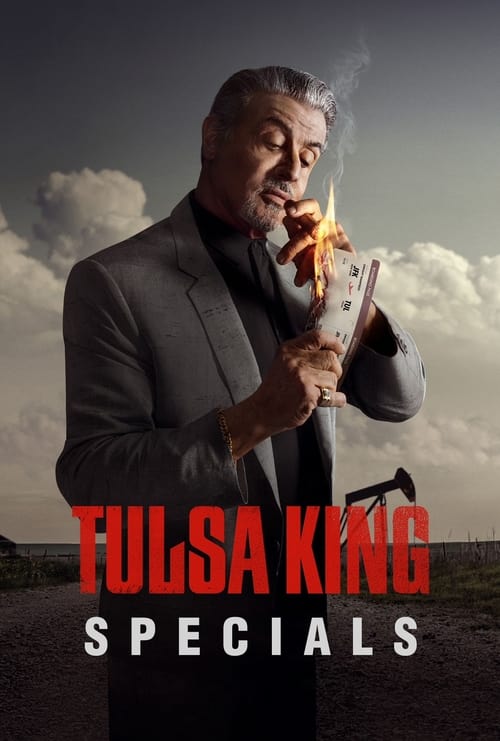
















Popular
What challenges does Dwight face when trying to establish his criminal operations in Tulsa?
What motivates Dwight Manfredi to return to Tulsa after serving 25 years in prison?
How does Dwight's relationship with his daughter evolve throughout the series?
How does Dwight's past influence his actions and decisions in Tulsa?
What role does the character of Bodhi play in Dwight's journey in Tulsa?
Should I watch it?
Ask Your Own Question

What is the plot?
In the "Tulsa King" special, the story begins with Dwight "The General" Manfredi, played by Sylvester Stallone, being released from prison after serving 25 years for a crime he committed. As he steps out into the world, he is met with a mix of excitement and apprehension. The world has changed significantly during his incarceration, and he struggles to adapt to the new environment. He is greeted by his former boss, who informs him that he is being sent to Tulsa, Oklahoma, to establish a new operation for the family.
Upon arriving in Tulsa, Dwight is struck by the stark contrast between the bustling city and the quiet life he had known. He quickly realizes that he is not welcomed with open arms. The local crime scene is dominated by a different group, and he must navigate this new territory carefully. His first encounter is with a local bar owner, who is skeptical of his intentions. Dwight tries to assert his authority but is met with resistance, highlighting his struggle to regain his footing in a world that has moved on without him.
As Dwight begins to establish himself, he seeks out potential allies. He meets a group of misfits, including a young woman named Tina, who is drawn to his charisma and confidence. He also encounters a former associate, who provides him with information about the local crime dynamics. Dwight's determination to build a new empire drives him to make bold decisions, including recruiting individuals who may not fit the traditional mold of his former associates.
In a pivotal scene, Dwight confronts a rival gang leader, showcasing his willingness to assert dominance. The confrontation escalates into a tense standoff, where Dwight's past experiences in the mob come into play. He uses a combination of intimidation and negotiation to secure a temporary truce, but the underlying tension remains. This moment solidifies his reputation in Tulsa, but it also sets the stage for future conflicts.
As Dwight continues to build his operation, he faces personal challenges as well. He grapples with feelings of isolation and the weight of his past decisions. Flashbacks reveal moments from his time in prison, where he reflects on the choices that led him there. These introspective moments add depth to his character, showcasing his internal struggles alongside his external ambitions.
The plot thickens when Dwight discovers that his former boss has ulterior motives for sending him to Tulsa. He learns that he is being used as a pawn in a larger game, which fuels his desire to prove himself and regain control. This revelation prompts him to take more aggressive actions, including forming alliances with unexpected characters who share his vision for power.
In a climactic sequence, Dwight orchestrates a major operation that involves a high-stakes deal with a local drug supplier. The plan is fraught with danger, and tensions run high as he navigates the complexities of the deal. The operation culminates in a dramatic confrontation, where Dwight must rely on his instincts and the loyalty of his newfound allies to emerge victorious. The scene is filled with suspense, showcasing the stakes involved and the lengths Dwight is willing to go to secure his place in Tulsa.
As the special concludes, Dwight stands at a crossroads. He has made significant strides in establishing his presence in Tulsa, but the challenges are far from over. The final moments hint at the ongoing conflicts he will face, both from rival gangs and within his own circle. Dwight's journey is just beginning, and the audience is left with a sense of anticipation for what lies ahead in his quest for power and redemption.









What is the ending?
In the ending of "Tulsa King," the story culminates in a tense confrontation that tests the loyalties and resolve of the main characters. Dwight "The General" Manfredi faces off against his enemies, leading to a violent showdown that ultimately determines his fate and the future of his operations in Tulsa.
As the narrative unfolds, Dwight, having established himself in Tulsa, finds himself at odds with both local criminals and his former associates. The tension escalates as he navigates the complexities of his new life, balancing his criminal past with the relationships he has built in the community. The climax reveals the depth of his character, showcasing his determination to protect those he cares about while also confronting the ghosts of his past.
In the final scenes, Dwight's actions lead to a decisive moment where he must choose between vengeance and the possibility of a new beginning. The resolution of the conflict leaves him at a crossroads, ultimately shaping his future and the lives of those around him.
Expanded Narrative:
The final act of "Tulsa King" begins with Dwight "The General" Manfredi standing in his modest office, the walls adorned with reminders of his past life in New York. The atmosphere is thick with tension as he receives a call that sets the stage for the impending confrontation. His expression is a mix of determination and weariness, reflecting the weight of his choices. He knows that the peace he has fought to establish in Tulsa is under threat.
Scene breaks to a dimly lit warehouse where Dwight's adversaries gather, plotting their next move. The camera pans over their faces, revealing a mix of anger and desperation. They are determined to reclaim their territory, and Dwight is their primary target. The stakes are high, and the air is charged with anticipation.
Back in Tulsa, Dwight meets with his closest allies, including his loyal friend and confidant, Bodhi. The camaraderie is palpable, but there is an underlying tension as they discuss their next steps. Dwight's leadership is evident as he strategizes, his voice steady but laced with urgency. He knows that every decision could lead to life or death.
As night falls, the scene shifts to a deserted street where Dwight and his crew prepare for the confrontation. The streetlights cast long shadows, creating an ominous atmosphere. Dwight's face is set in determination, his eyes reflecting a mix of resolve and the burden of his past. He knows that this fight is not just for survival but for the future he envisions for himself and his newfound family in Tulsa.
The confrontation erupts in a flurry of chaos. Gunfire echoes through the night as Dwight and his crew engage in a fierce battle against their enemies. The choreography of the fight is intense, with close-ups of Dwight's face showing his grit and determination. Each shot fired is a testament to his unwillingness to back down, even in the face of overwhelming odds.
In the midst of the chaos, Dwight's internal struggle becomes evident. He fights not only for his life but for the relationships he has built in Tulsa. The camera captures moments of vulnerability as he glances at Bodhi, who fights valiantly by his side. Their bond is tested, and the stakes have never been higher.
As the dust settles, the aftermath of the confrontation reveals the fates of the main characters. Dwight stands amidst the wreckage, breathing heavily, his expression a mix of relief and sorrow. He has emerged victorious, but the cost is evident. Bodhi, though injured, survives, and their friendship is solidified through the trials they have faced together.
In the final moments, Dwight reflects on his journey. He stands alone, looking out over the city he has fought to protect. The weight of his past lingers, but there is a glimmer of hope for the future. He has carved out a place for himself in Tulsa, and while the road ahead is uncertain, he is ready to embrace it.
The ending of "Tulsa King" encapsulates the themes of loyalty, redemption, and the complexities of a life steeped in crime. Each character's fate is intertwined with Dwight's choices, and as the screen fades to black, the audience is left with a sense of closure, yet an understanding that the journey is far from over.
Is there a post-credit scene?
In the "Tulsa King" special, there is indeed a post-credit scene that adds an intriguing layer to the narrative. The scene opens with a dimly lit bar, the atmosphere thick with tension and the low hum of conversation. The camera pans across the room, revealing a few patrons lost in their own worlds, before settling on a corner booth where Dwight "The General" Manfredi sits alone, nursing a drink.
As he gazes into his glass, his expression is a mix of contemplation and determination. The weight of his past decisions hangs heavily on him, and the audience can sense his internal struggle. He reflects on his new life in Tulsa, the challenges he faces, and the loyalty he feels towards his newfound associates.
Suddenly, the door swings open, and a figure steps inside, silhouetted against the bright light from outside. The figure approaches Dwight, and as they draw closer, the audience can see it's a familiar face from his past--a former associate who brings news that could change everything. The tension in the air thickens as Dwight's demeanor shifts from introspection to alertness, his eyes narrowing with curiosity and caution.
The scene ends on a cliffhanger, leaving viewers eager to know what this unexpected encounter means for Dwight and his future in Tulsa. The post-credit moment encapsulates the themes of loyalty, betrayal, and the complexities of starting anew, setting the stage for the unfolding drama in the series.
What challenges does Dwight face when trying to establish his criminal operations in Tulsa?
Upon arriving in Tulsa, Dwight encounters a series of challenges, including local rival gangs, law enforcement scrutiny, and the need to build a new network of associates. His old-school methods clash with the modern criminal landscape, forcing him to adapt while also dealing with the skepticism of those who doubt his capabilities.
What motivates Dwight Manfredi to return to Tulsa after serving 25 years in prison?
Dwight Manfredi, played by Sylvester Stallone, is driven by a mix of loyalty and a desire to reclaim his place in the criminal underworld. After being released from prison, he feels abandoned by his former associates in New York and is determined to establish his own power base in Tulsa, which he sees as an opportunity to reinvent himself and assert his dominance.
How does Dwight's relationship with his daughter evolve throughout the series?
Dwight's relationship with his daughter, who he has been estranged from during his time in prison, is fraught with tension and unresolved feelings. Initially, she is wary of him and his lifestyle, but as the series progresses, Dwight's attempts to reconnect and prove himself as a father lead to moments of vulnerability and understanding, showcasing his desire for redemption.
How does Dwight's past influence his actions and decisions in Tulsa?
Dwight's past, marked by loyalty to his former mob family and the betrayal that led to his imprisonment, heavily influences his actions in Tulsa. He often reflects on his experiences, which shape his approach to new alliances and conflicts, as he grapples with trust issues and the fear of being betrayed again.
What role does the character of Bodhi play in Dwight's journey in Tulsa?
Bodhi, a local bar owner and aspiring entrepreneur, becomes an unexpected ally for Dwight. Their relationship evolves from one of skepticism to mutual respect, as Bodhi represents the new generation of business in Tulsa. He helps Dwight navigate the local scene, and their partnership highlights the blending of old and new criminal strategies.
Is this family friendly?
"Tulsa King," particularly in its "Specials" season, contains several elements that may not be considered family-friendly. Here are some potentially objectionable or upsetting aspects:
-
Violence: The show features scenes of physical confrontations, including fights and gun violence, which may be intense and graphic.
-
Strong Language: There is frequent use of profanity throughout the series, which may not be suitable for younger audiences.
-
Mature Themes: The narrative explores themes of crime, betrayal, and moral ambiguity, which may be complex and unsettling for children or sensitive viewers.
-
Substance Use: There are depictions of drug use and alcohol consumption, which could be concerning for some viewers.
-
Emotional Turmoil: Characters experience significant emotional struggles, including feelings of isolation, loss, and conflict, which may be distressing for sensitive individuals.
These elements contribute to a tone that is more appropriate for mature audiences.