

Popular
What are the main scandals or cases explored in The Dark Money Game, season 1 Miniseries?
Who are some of the key figures interviewed or featured in the series?
How does The Dark Money Game depict the impact of the Citizens United Supreme Court decision?
What ethical or political issues does the series raise about campaign financing?
What narrative techniques or storytelling approaches does the miniseries use to present its investigation?
Should I watch it?
Ask Your Own Question

What is the plot?
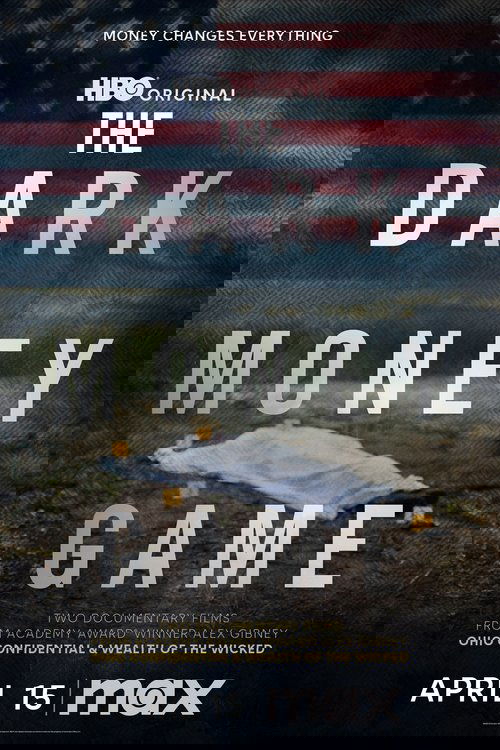
The Dark Money Game is a two-part documentary miniseries directed by Alex Gibney, produced by HBO, and released in April 2025. The series is inspired by Jane Mayer's book Dark Money: The Hidden History of the Billionaires Behind the Rise of the Radical Right and explores the influence of untraceable political donations in the United States, particularly in the wake of the Supreme Court's Citizens United decision. The miniseries is divided into two films: Ohio Confidential and Wealth of the Wicked, each focusing on distinct but interconnected stories about the role of dark money in American politics.
Ohio Confidential begins with the 2019 Ohio nuclear bailout scandal, where Ohio lawmakers passed a bill, House Bill 6, that provided a $1.3 billion bailout to two aging nuclear power plants owned by FirstEnergy Solutions. The film details how FirstEnergy executives, led by CEO Chuck Jones, orchestrated a complex scheme to secure the bailout. They funneled over $60 million in dark money through a network of nonprofit organizations and super PACs to support the campaigns of Ohio politicians who would vote for the bill. The film shows how the company hired lobbyists, including former Ohio House Speaker Larry Householder, to push the legislation. Householder, motivated by a desire for political power and financial gain, uses the dark money to fund attack ads against opponents of the bill and to reward allies with campaign support.
As the bill moves through the Ohio legislature, the film documents the behind-the-scenes negotiations, including secret meetings between FirstEnergy executives, lobbyists, and lawmakers. The filmmakers interview whistleblowers who reveal that the company's executives were aware the bailout was unpopular with the public and sought to hide their involvement by laundering donations through third-party groups. The film shows how the FBI, tipped off by an anonymous source, begins investigating the scheme. Agents wiretap phones, surveil suspects, and gather evidence of bribery and racketeering. The tension escalates as the FBI raids the homes and offices of key figures, including Householder and several FirstEnergy executives. The film captures the shock and fear among the conspirators as they realize the extent of the investigation.
The climax of Ohio Confidential occurs when federal prosecutors indict Householder and four associates on racketeering charges, alleging they ran a criminal enterprise to pass the bailout bill in exchange for dark money payments. The film shows Householder's arrest, his defiant public statements, and the subsequent trial, where prosecutors present evidence of text messages, bank records, and testimony from cooperating witnesses. The film ends with Householder's conviction and sentencing, as well as the resignation of several FirstEnergy executives. The fallout includes public outrage, calls for campaign finance reform, and a renewed debate over the influence of dark money in state politics.
Wealth of the Wicked opens with a historical overview of campaign finance in the United States, tracing the evolution of laws regulating political donations from the early 20th century to the present. The film highlights key Supreme Court decisions, including Buckley v. Valeo and Citizens United, which removed limits on corporate and union spending in elections and allowed for the rise of super PACs and dark money groups. The filmmakers interview legal experts, including James Bopp, the lawyer who argued the Citizens United case, who defends the decision as a victory for free speech. Opponents, including journalists and reform advocates, argue that the ruling has enabled wealthy individuals and corporations to buy disproportionate influence over elections and policy.
The film then shifts to the present day, examining how dark money flows through nonprofits and super PACs to support candidates and political movements across the country. Through interviews with lawmakers, judges, and insiders, the film reveals how donors use legal loopholes to hide their identities and avoid disclosure requirements. The filmmakers follow the money trail, showing how wealthy individuals and corporations fund attack ads, grassroots organizing, and lobbying efforts to advance their agendas. The film documents specific examples, such as the Koch network's spending on conservative causes and the role of religious groups in shaping policy on issues like abortion and climate change.
A key sequence in Wealth of the Wicked focuses on the 2020 and 2024 presidential elections, where dark money groups spend hundreds of millions of dollars to influence the outcome. The film shows how super PACs coordinate with campaigns to bypass contribution limits, and how nonprofit organizations act as conduits for undisclosed donations. The filmmakers interview campaign staff, donors, and reformers, who describe the internal debates over whether to accept dark money and the ethical dilemmas it poses. The film also highlights efforts by some politicians to reject dark money and advocate for transparency, but shows how these efforts are often overwhelmed by the sheer volume of undisclosed spending.
The film concludes with a look at the consequences of dark money for American democracy. It shows how the lack of transparency erodes public trust, creates conflicts of interest, and allows a small group of wealthy individuals to dominate the political process. The final scenes feature ordinary citizens expressing frustration and powerlessness, while reformers call for legislative and judicial action to address the problem. The film ends without resolution, underscoring the ongoing struggle over money and power in American politics.
Throughout both films, the series relies on interviews with journalists (including Jane Mayer), lawmakers, judges, FBI investigators, whistleblowers, and insiders to provide firsthand accounts of the events and decisions that drive the story. The narrative is structured to show cause and effect, with each major decision by a character--whether to accept a bribe, to blow the whistle, to prosecute a case, or to advocate for reform--directly influencing the next sequence of events. The series does not offer commentary or analysis, but instead presents a detailed, chronological account of how dark money shapes American politics, from backroom deals to courtroom battles to the ballot box.
Related Titles
Browse All Titles →





What is the ending?
The ending of The Dark Money Game (2025) miniseries concludes with the fallout from the Ohio nuclear bribery scandal, focusing on the legal and political consequences for the main players involved. Larry Householder, the former Ohio House Speaker, is sentenced to 20 years in federal prison for his role in securing a $1 billion bailout through bribery. FirstEnergy, the utility company at the center of the scandal, pays a $230 million penalty and admits guilt in a deferred prosecution agreement. The company's CEO Charles Jones and lobbyist Michael Dowling are indicted on federal charges. The miniseries closes by highlighting the ongoing impact of dark money in American politics and the challenges of transparency and accountability.
Expanded narrative ending, scene by scene:
The final scenes open with the federal investigation's culmination, showing the courtroom where Larry Householder faces sentencing. The camera lingers on Householder's expression--stoic yet defeated--as the judge delivers a 20-year prison sentence. This moment marks the legal reckoning for Householder's orchestration of a bribery scheme that funneled millions from FirstEnergy to secure a bailout for nuclear and coal plants in Ohio.
Cut to a corporate boardroom at FirstEnergy, where executives grapple with the fallout. The CEO, Charles Jones, and top lobbyist Michael Dowling are shown being confronted by legal counsel and media scrutiny. Shortly after, archival footage and news clips reveal their indictments on federal criminal charges, underscoring the depth of the scandal within the company's leadership.
The narrative then shifts to the political landscape, illustrating how the scandal exposed vulnerabilities in campaign finance laws and the influence of dark money. Interviews with journalists, whistleblowers, and lawmakers emphasize the difficulty of tracing anonymous political donations and the blurred lines between legal contributions and bribes.
The miniseries closes with a montage of public protests, media coverage, and expert commentary, underscoring the ongoing struggle to reform political financing in the United States. The final shot is a somber reflection on the power of dark money to shape policy and governance, leaving viewers with a sense of unresolved tension about the future of American democracy.
Fate of main characters at the end:
-
Larry Householder: Sentenced to 20 years in federal prison for bribery and racketeering related to the Ohio bailout scheme.
-
Charles Jones (FirstEnergy CEO): Fired and later indicted on federal criminal charges.
-
Michael Dowling (FirstEnergy lobbyist): Fired and indicted alongside Jones.
-
FirstEnergy: Paid a $230 million legal penalty and admitted guilt in a deferred prosecution agreement to avoid trial.
The miniseries ends by emphasizing the systemic nature of dark money's influence, using the Ohio scandal as a case study to reveal broader issues in U.S. political finance.
Is there a post-credit scene?
There is no available information in the search results about a post-credit scene for the TV show titled The Dark Money Game, season 1 "Miniseries," produced in 2025. None of the sources mention this show or its post-credit content specifically.
If you are looking for details about a post-credit scene for this particular series, it appears that such information is not publicly documented or released as of now.
What are the main scandals or cases explored in The Dark Money Game, season 1 Miniseries?
The miniseries explores two main stories: the Ohio nuclear bribery scandal in the film "Ohio Confidential" and the broader history and influence of campaign finance law in the United States, focusing on super PACs, religious groups, and the blurred lines between bribes and donations in "Wealth of the Wicked".
Who are some of the key figures interviewed or featured in the series?
The series features interviews with investigative journalist Jane Mayer, lawmakers, judges, FBI investigators, whistleblowers, and insiders on both sides of the political finance issue.
How does The Dark Money Game depict the impact of the Citizens United Supreme Court decision?
The series investigates the consequences of the Citizens United decision, showing how it enabled unlimited spending by hidden sources in political campaigns, leading to a shadowy web of money flowing through non-profits and super PACs to influence elections and political movements.
What ethical or political issues does the series raise about campaign financing?
The series raises concerns about legalized bribery, pay-to-play politics, and the dominance of wealthy individuals and corporations in controlling political outcomes, suggesting that unchecked money in politics threatens democratic processes.
What narrative techniques or storytelling approaches does the miniseries use to present its investigation?
The Dark Money Game combines investigative documentary filmmaking with interviews, archival footage, and expert commentary to reveal the complex networks of dark money, though some critics note it prioritizes important content over traditional storytelling techniques.
Is this family friendly?
The Dark Money Game (2025) is rated TV-MA and is not considered family friendly. It contains mild sexual content, mild violence, moderate profanity, and mild alcohol/drug use, but no frightening or intense scenes.
Potentially objectionable or upsetting aspects for children or sensitive viewers include:
- Discussions and depictions of political corruption and bribery, which may involve complex and morally troubling themes.
- Mild instances of violence and references to criminal activities related to political scandals.
- Moderate use of profanity throughout the miniseries.
- Mild sexual references or content.
- Mild depiction or mention of alcohol and drug use.
Overall, the documentary's mature themes about dark money in politics and its TV-MA rating indicate it is intended for adult audiences and not suitable for children or sensitive viewers.









