
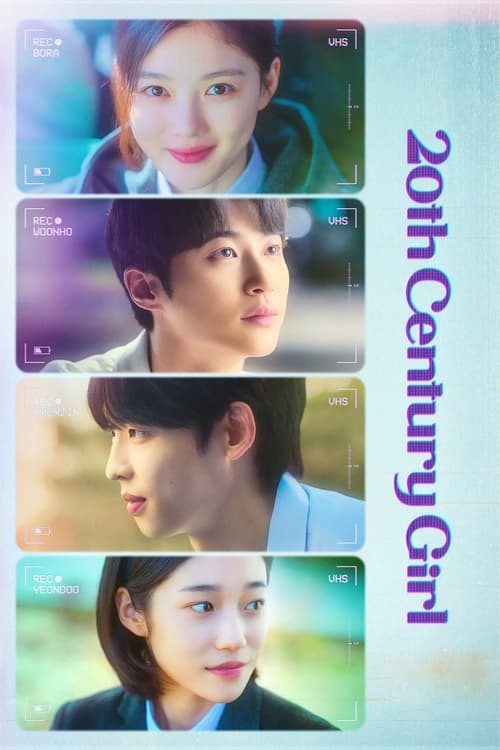

























Popular
What motivates the main character, Bo-ra, to spy on her crush's love life?
How does Bo-ra's relationship with her best friend Yeon-du evolve throughout the film?
What role does the character Poong-won play in the development of the plot?
How does the film depict the theme of unrequited love through Bo-ra's experiences?
What significant events lead to the climax of Bo-ra's emotional journey?
Should I watch it?
Ask Your Own Question

What is the plot?
Sorry, we aren't able to watch and write up a full detailed plot yet. Check back in a few days.








What is the ending?
In the ending of "20th Century Girl," the main character, Na Bo-ra, finally confronts her feelings for the boy she has loved from afar, while also coming to terms with the past and the impact of her actions on her friendships. The film concludes with a sense of closure and hope for the future.
As the final scenes unfold, Na Bo-ra, now a young adult, reflects on her teenage years and the relationships that shaped her. She finds herself at a pivotal moment where she must choose between holding onto the past or embracing the present. The film ends with her taking a step forward, symbolizing growth and the possibility of new beginnings.
As the film approaches its conclusion, we find Na Bo-ra in a moment of deep reflection. The camera captures her sitting alone in her room, surrounded by remnants of her teenage years--posters of her favorite bands, photographs of her friends, and mementos that evoke nostalgia. The soft light filtering through the window casts a warm glow, highlighting her contemplative expression.
Scene by scene, we see her grappling with the memories of her first love, Baek Hyun-jin, and the sacrifices she made for her friend, Yeon-doo. The emotional weight of her past choices hangs heavily on her, and she feels a mix of regret and longing. The audience can sense her internal struggle as she recalls the moments spent with Hyun-jin, the laughter, the shared secrets, and the bittersweet realization that their paths diverged.
In a pivotal scene, Na Bo-ra attends a gathering with her friends, where they reminisce about their youth. The atmosphere is filled with laughter, but there is an undercurrent of sadness as they acknowledge how much they have changed. Na Bo-ra's gaze drifts to Hyun-jin, who is now a part of her present life, yet she feels the distance that time has created. The camera zooms in on her face, capturing the flicker of hope and uncertainty in her eyes.
As the night progresses, Na Bo-ra finds herself alone with Hyun-jin. The tension is palpable as they share a quiet moment, both aware of the unspoken feelings that linger between them. Na Bo-ra's heart races as she contemplates confessing her feelings, but she hesitates, fearing the potential consequences on their friendship. The scene is charged with emotion, and the audience can feel her vulnerability.
In a moment of courage, Na Bo-ra finally speaks up, revealing her feelings for Hyun-jin. The confession is raw and heartfelt, and the camera captures the surprise and warmth in Hyun-jin's expression. He responds with sincerity, acknowledging the bond they share and the time they lost. This moment serves as a turning point for both characters, as they confront their past and the possibility of a future together.
The film concludes with a montage of Na Bo-ra embracing her new life, interspersed with scenes of her reconnecting with her friends and pursuing her passions. The final shot shows her walking confidently down a sunlit street, a smile on her face, symbolizing her growth and the acceptance of her journey. The audience is left with a sense of hope, as Na Bo-ra steps into her future, ready to embrace whatever comes next.
In the end, Na Bo-ra finds closure with her past, while Hyun-jin acknowledges the depth of their connection. Yeon-doo, having been a significant part of Na Bo-ra's journey, also finds her own path, illustrating the theme of friendship and the complexities of love. Each character's fate reflects their growth and the lessons learned throughout their experiences, culminating in a poignant reminder of the beauty of youth and the importance of moving forward.
Is there a post-credit scene?
In the movie "20th Century Girl," there is no post-credit scene. The film concludes its narrative without any additional scenes after the credits roll. The story wraps up with a poignant resolution that ties together the emotional arcs of the characters, particularly focusing on the themes of love, friendship, and the bittersweet nature of growing up. The absence of a post-credit scene allows the audience to reflect on the journey of the characters without any further distractions.
What motivates the main character, Bo-ra, to spy on her crush's love life?
Bo-ra is motivated by her deep-seated feelings for her best friend, Yeon-du, who is in love with a boy named Poong-won. She wants to understand his feelings and the dynamics of their relationship, which leads her to take on the role of a spy.
How does Bo-ra's relationship with her best friend Yeon-du evolve throughout the film?
Bo-ra's relationship with Yeon-du is initially characterized by loyalty and a strong bond. However, as Bo-ra becomes more involved in Yeon-du's romantic life, she grapples with jealousy and the fear of losing her friend, which ultimately tests their friendship and leads to moments of tension and emotional conflict.
What role does the character Poong-won play in the development of the plot?
Poong-won serves as the object of affection for both Yeon-du and Bo-ra, creating a love triangle that drives much of the narrative. His interactions with both girls reveal their vulnerabilities and desires, and he becomes a catalyst for Bo-ra's personal growth as she navigates her feelings.
How does the film depict the theme of unrequited love through Bo-ra's experiences?
Bo-ra's experiences of unrequited love are depicted through her internal struggles and emotional turmoil as she realizes her feelings for Poong-won while trying to support Yeon-du. This theme is illustrated through her secretive actions, her longing glances, and the bittersweet moments she shares with both Yeon-du and Poong-won.
What significant events lead to the climax of Bo-ra's emotional journey?
Significant events leading to the climax include Bo-ra's discovery of her own feelings for Poong-won, the moments of tension between her and Yeon-du, and the eventual confrontation that forces Bo-ra to confront her emotions. These events culminate in a pivotal scene where Bo-ra must choose between her loyalty to her friend and her own desires.
Is this family friendly?
"20th Century Girl" is generally considered suitable for a family audience, but it does contain some themes and scenes that may be sensitive for younger viewers or those who are particularly sensitive. Here are some potentially objectionable or upsetting aspects:
-
Romantic Relationships: The film explores teenage romance, which includes emotional complexities and heartbreak that may resonate deeply with some viewers.
-
Friendship Dynamics: There are moments of conflict and misunderstandings among friends that could be upsetting, particularly for younger audiences who may be sensitive to themes of betrayal or loss.
-
Health Issues: The story touches on themes of illness and the impact it has on relationships, which could be distressing for some viewers.
-
Emotional Turmoil: Characters experience significant emotional struggles, including feelings of loneliness, longing, and anxiety, which may be intense for sensitive viewers.
-
Mature Themes: While not explicit, the film does address themes of growing up, identity, and the challenges of adolescence, which may include discussions or implications of more mature topics.
Overall, while the film is not overtly inappropriate, it does delve into emotional and relational complexities that may require parental guidance for younger viewers.








