
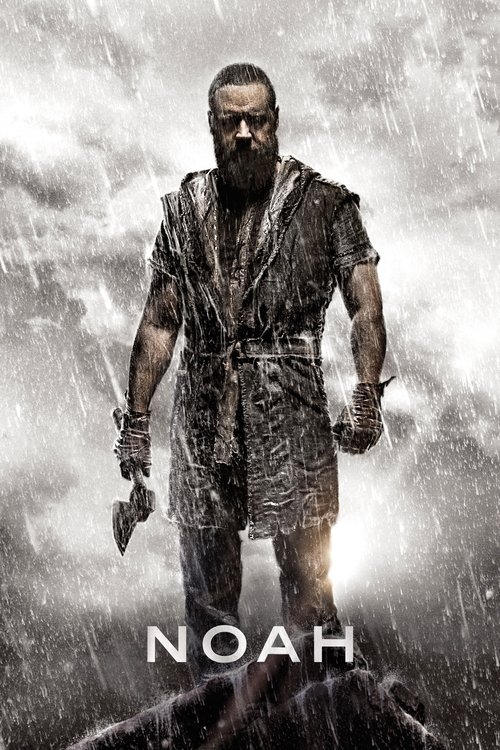























































Popular
What motivates Noah to build the ark?
How does Noah's relationship with his family evolve throughout the film?
What role does Tubal-cain play in the story?
How does the film depict the creation of the animals and the gathering of them onto the ark?
What internal conflict does Noah face regarding the fate of humanity?
Should I watch it?
Ask Your Own Question

What is the plot?
Sorry, we aren't able to watch and write up a full detailed plot yet. Check back in a few days.
More Movies Like This
Browse All Movies →







What is the ending?
In the ending of the movie "Noah," the flood has receded, and Noah and his family emerge from the ark to a desolate world. Noah, having lost his faith and struggling with the burden of his actions, ultimately finds a new beginning. The film concludes with Noah planting a vineyard, getting drunk, and falling asleep naked in his tent. His son Ham discovers him in this vulnerable state, leading to a rift between them. The story ends with Noah's family beginning to rebuild their lives in a new world.
Now, let's delve into the ending in a more detailed narrative fashion.
As the floodwaters begin to recede, the ark, once a sanctuary, now drifts upon a barren landscape, surrounded by the remnants of a world that has been washed away. Noah, played by Russell Crowe, steps out of the ark, his face a mixture of relief and sorrow. The sky is clear, but the devastation is palpable. The once vibrant earth is now a desolate expanse, and the weight of his actions weighs heavily on him. He had been chosen to save life, yet the cost of that salvation is the destruction of nearly all humanity.
Noah's family--his wife Naameh, his sons Shem, Ham, and Japheth--follow him out, each grappling with their own emotions. Naameh, portrayed by Jennifer Connelly, looks around in despair, mourning the loss of their former life and the lives of those who perished. Shem, the eldest son, is filled with a sense of duty to rebuild, while Ham, played by Logan Lerman, is conflicted and restless, struggling with the burden of their father's expectations.
As they begin to explore the new world, Noah is haunted by visions of the destruction he has witnessed. He feels the weight of his role as the chosen one, and the moral implications of his actions begin to gnaw at him. He is tormented by the thought that he may have been wrong in his interpretation of God's will. This internal conflict culminates when Noah, seeking solace, plants a vineyard. The act of planting symbolizes hope and the potential for new life, yet it also foreshadows his descent into despair.
In a poignant scene, Noah harvests the grapes and ferments them into wine. As he drinks, he becomes increasingly intoxicated, losing himself in the haze of alcohol. This moment is significant as it represents his attempt to escape the overwhelming guilt and grief that have consumed him. He eventually collapses in his tent, naked and vulnerable, a stark contrast to the strong leader he was meant to be.
Ham, seeking to assert his independence and distance himself from his father's shadow, stumbles upon Noah in this compromised state. The sight of his father in such a vulnerable position shatters the idealized image Ham had of him. Instead of showing compassion, Ham reacts with mockery and shame, which leads to a deep rift between father and son. This moment encapsulates the theme of familial conflict and the struggle for identity in the aftermath of catastrophe.
The film concludes with Noah waking up, disoriented and ashamed, realizing the consequences of his actions and the fractured relationship with Ham. The family stands at a crossroads, with the future uncertain. They are left to navigate their new reality, carrying the scars of their past and the hope for a better future.
In the final scenes, Noah's family begins to rebuild their lives, but the emotional distance between them lingers. The film closes on a note of ambiguity, leaving the audience to ponder the complexities of faith, duty, and the human condition in the face of divine judgment. Noah, now a flawed and broken figure, symbolizes the struggle of humanity to find redemption and purpose in a world that has been irrevocably changed.
Is there a post-credit scene?
The movie "Noah," produced in 2014, does not have a post-credit scene. The film concludes with Noah and his family emerging from the ark after the floodwaters recede, establishing a new beginning for humanity. The final moments focus on Noah's emotional state as he grapples with the weight of his actions and the responsibility of rebuilding life on Earth. The absence of a post-credit scene emphasizes the film's themes of renewal and the complexities of faith and morality, leaving the audience to reflect on the story's conclusion without additional content after the credits.
What motivates Noah to build the ark?
Noah is driven by a profound sense of duty and a vision he receives from God, which reveals the impending flood meant to cleanse the earth of humanity's wickedness. This divine message instills in him a deep urgency to save his family and the animals, as he grapples with the weight of his responsibility and the moral implications of his actions.
How does Noah's relationship with his family evolve throughout the film?
Noah's relationship with his family, particularly with his wife Naameh and his sons, Shem, Ham, and Japheth, becomes increasingly strained as the story progresses. Initially united by their shared mission, tensions arise as Noah's obsession with the ark and his interpretation of God's will lead to conflict, especially with Ham, who feels marginalized and questions his father's decisions.
What role does Tubal-cain play in the story?
Tubal-cain serves as the primary antagonist, representing humanity's defiance against divine will. He is a ruthless leader who seeks to undermine Noah's efforts, believing that he can conquer nature and defy the flood. His relentless pursuit of Noah and the ark symbolizes the struggle between human arrogance and divine judgment.
How does the film depict the creation of the animals and the gathering of them onto the ark?
The film presents a visually stunning sequence where animals are drawn to the ark in pairs, guided by a mystical force. This moment is filled with awe and wonder, showcasing the beauty of creation and the urgency of Noah's mission. The animals, depicted in various forms, create a sense of harmony amidst the chaos of the impending flood.
What internal conflict does Noah face regarding the fate of humanity?
Noah grapples with a profound internal conflict as he contemplates the destruction of humanity. While he is committed to following God's command, he struggles with the moral implications of condemning people, including his own family, to death. This turmoil culminates in a moment of despair when he questions whether he should save anyone at all, reflecting his deep emotional struggle between obedience and compassion.
Is this family friendly?
The movie "Noah" (2014) contains several elements that may be considered objectionable or upsetting for children or sensitive viewers. Here are some aspects to be aware of:
-
Violence and Death: The film includes scenes of violence, including battles and the destruction of humanity. There are moments where characters are harmed or killed, which may be distressing.
-
Dark Themes: The overarching themes of judgment, sin, and the end of the world can be heavy and unsettling, particularly for younger audiences.
-
Depictions of Suffering: There are scenes that show suffering and despair among people and animals, which can evoke strong emotional reactions.
-
Intense Emotional Moments: Characters experience significant emotional turmoil, including fear, desperation, and conflict, which may be intense for some viewers.
-
Religious and Mythological Elements: The film presents a reinterpretation of the biblical story of Noah, which may be confusing or controversial for some audiences, especially those unfamiliar with the source material.
-
Environmental Destruction: The portrayal of a world in chaos and the consequences of humanity's actions can be distressing, particularly in the context of natural disasters.
These elements contribute to a tone that may not be suitable for all viewers, especially younger children or those sensitive to such themes.







