



















Popular
Should I watch it?
Ask Your Own Question

What is the plot?
Spirited Away: Complete Plot Narrative
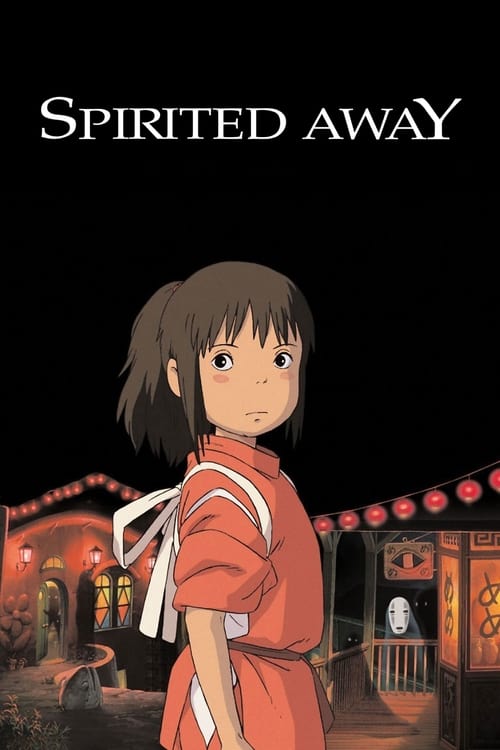
Ten-year-old Chihiro Ogino sits sulkily in the back seat of her parents' car, her face pressed against the window as they drive toward their new home in the suburbs. Her parents, Akio and Yūko, chat cheerfully about the move while Chihiro stares out at the passing landscape with visible displeasure. She doesn't want to leave her old life behind, and her reluctance hangs heavy in the air of the vehicle. Akio, eager to explore, suddenly takes a shortcut off the main road, and the car winds through increasingly narrow streets until they arrive at a tunnel. The tunnel is old and weathered, its entrance dark and uninviting. Chihiro protests immediately, sensing something wrong about the place, but Yūko insists on exploring, dismissing her daughter's concerns with the casual confidence of adults who rarely listen to children.
They emerge from the tunnel into a strange, abandoned resort town frozen in time. The streets are eerily quiet, lined with shops and restaurants that appear to have been closed for years. Dust settles on everything, and an unnatural silence pervades the air. Chihiro follows her parents as they wander deeper into this peculiar place, her unease growing with each step. They discover a restaurant with tables laden with food--steaming bowls of noodles, fresh vegetables, grilled meats, and delicate pastries arranged as if the diners had simply vanished moments before. Despite the obvious strangeness of the situation, Akio and Yūko sit down and begin eating without hesitation or permission, their hunger overriding any caution. Chihiro watches in disgust, unable to shake the feeling that something terrible is about to happen.
As the sun begins to set, painting the sky in shades of orange and purple, Chihiro leaves her parents to their meal and wanders through the town alone. The streets grow darker, and she notices that the buildings around her are beginning to glow with an otherworldly light. Lanterns flicker to life along the streets, and the air itself seems to shimmer and transform. Chihiro realizes with growing horror that the town is changing, becoming something more alive and more dangerous. She hurries back to find her parents, but when she reaches the restaurant, she stops dead in her tracks. Where her mother and father sat eating, there are now two pigs, bloated and content, still chewing on the food before them. Chihiro's scream catches in her throat as she realizes the terrible truth: her parents have been transformed, trapped in this spirit world by their own greed and carelessness.
Panicked and alone, Chihiro runs through the increasingly crowded streets. The town has fully awakened now, and spirits of all shapes and sizes move through the darkness--some humanoid, others grotesque and alien. She stumbles through the chaos, desperate and terrified, until a hand reaches out and grabs her arm. It belongs to a young boy with striking features and an air of quiet authority. His name is Haku, and he speaks to her with an urgency that cuts through her panic. He tells her that she must get across the river before the sun fully sets, or she will be trapped in this world forever. He instructs her to find work at the bathhouse, a massive structure that dominates the landscape, its windows glowing warmly against the darkness. Haku warns her that the bathhouse is run by a powerful witch named Yubaba, who controls the spirits and steals the names of her workers to enslave them. If Chihiro can find employment there, she might survive. Before she can ask him more questions, Haku disappears into the crowd, leaving her alone once more.
Chihiro makes her way toward the bathhouse, her heart pounding. The building is magnificent and terrifying in equal measure--a sprawling structure of red pillars, curved roofs, and countless windows. Inside, the bathhouse is a maze of corridors, staircases, and chambers filled with spirits of every conceivable type. Some are elegant and refined, others are grotesque and unsettling. Chihiro navigates the chaos, searching desperately for someone who might help her. She eventually finds her way to the boiler room, a vast underground chamber where a six-armed yōkai spirit named Kamaji works, commanding an army of tiny soot sprites called susuwatari. The soot sprites scurry about, carrying coal and tending to the massive furnace that heats the bathhouse. Kamaji is initially dismissive of Chihiro, refusing to hire her, but he eventually takes pity on her desperation and directs her to Yubaba's office.
Climbing the endless staircases of the bathhouse, Chihiro finally reaches Yubaba's private chambers. The witch is a grotesque figure--impossibly tall with an elongated face, sharp features, and an air of absolute authority. Her office is opulent and intimidating, filled with strange objects and an atmosphere of power. Yubaba is initially occupied with her son, Boh, a massive baby-like creature who demands constant attention and throws tantrums when he doesn't get his way. Chihiro, desperate and exhausted, pleads with Yubaba for work. She begs, "Please, let me work here. I'll do anything." Yubaba, amused by the girl's desperation, agrees--but only on her terms.
Yubaba produces a contract and forces Chihiro to sign it. As Chihiro's pen touches the paper, something extraordinary happens. The contract glows, and Chihiro feels a strange sensation, as if something essential is being pulled from deep within her. Yubaba's lips curl into a cruel smile as she announces that Chihiro's name is no longer Chihiro. From this moment forward, she will be called Sen. The theft of her name is complete--Yubaba now has complete control over her, and Chihiro struggles to remember who she really is. The name feels foreign on her tongue, and she realizes with horror that she is now enslaved to the bathhouse, bound by the contract she signed.
The next morning, Chihiro--now Sen--wakes in a small room in the bathhouse, disoriented and afraid. A kind worker named Lin finds her and takes her under her wing, showing her the ropes of bathhouse life. Lin explains the hierarchy, the rules, and the dangers of the spirit world. She warns Sen that if she ever forgets her real name, she will never be able to leave the bathhouse. This knowledge becomes Sen's lifeline--she must hold onto the memory of being Chihiro, no matter what happens. Lin assigns her to work in the bathhouse, and Sen begins her days performing menial and often dangerous tasks. She scrubs floors, carries supplies, and assists with the care of the bathhouse's many guests. Despite the hardship, Sen gradually earns the respect of the bathhouse staff through her courage, determination, and genuine kindness.
Days pass in the bathhouse, and Sen becomes increasingly skilled at her work. She learns the layout of the building, the names of the workers, and the unspoken rules that govern the spirit world. She develops a friendship with Kamaji in the boiler room, who begins to treat her with something approaching affection. She also grows closer to Lin, who becomes her closest confidant and protector. But Sen's most important connection is with Haku, the mysterious boy who first helped her. Haku appears periodically, always watching over her, always concerned for her safety. There is something deeper in their relationship, though neither of them fully understands it yet.
One day, a strange guest arrives at the bathhouse--a massive spirit covered in mud and filth, emanating a terrible stench. The spirit is so foul that the other workers refuse to approach him, and the bathhouse staff is in chaos. The spirit is growing increasingly agitated, and his presence is corrupting the bathhouse itself. Sen, moved by compassion for the suffering creature, decides to help him. She approaches the spirit carefully, speaking to him gently, and begins to clean him. As she works, she discovers that beneath the mud and filth is a river spirit--a kami who has been corrupted over years by human pollution and waste. With the help of the other workers, Sen pulls objects from the spirit's body--a bicycle, pieces of metal, and an entire junkyard of human garbage that has accumulated in his form. As the spirit is cleansed, he begins to transform, his true form emerging--beautiful and radiant, a magnificent river spirit restored to his former glory.
Grateful for her kindness and her service, the river spirit gives Sen a precious gift: a magic purgative pill of extraordinary power. He tells her that this pill will be useful to her in the future, though he cannot say how. The river spirit then departs the bathhouse, leaving Sen with a sense of accomplishment and a mysterious object that she carefully preserves.
But trouble is brewing in the bathhouse. A new guest arrives--a strange, silent spirit with a white, featureless face. This is No-Face, a creature of the spirit world who is neither inherently good nor evil, but rather a mirror of the environment around him. At first, No-Face is quiet and unobtrusive, but as he observes the bathhouse staff's obsession with gold and material wealth, he begins to change. He produces gold nuggets and offers them to the workers, who eagerly accept his gifts, hoping for more. The more gold he gives, the more the workers fawn over him, bringing him endless food and wine. No-Face's appetite grows insatiable, and he begins to consume not just food, but the workers themselves. Staff members who approach him hoping for gold are swallowed whole, disappearing into his expanding form.
The bathhouse descends into chaos as No-Face grows larger and more grotesque, his body bloating with consumption. The workers who have accepted his gold become increasingly desperate and greedy, fighting over his offerings. Sen watches this unfold with growing alarm, realizing that she inadvertently caused this catastrophe by allowing No-Face into the bathhouse in the first place. She had seen him on a bridge and, moved by what she perceived as loneliness, had invited him inside. Now she must find a way to stop him.
Meanwhile, a crisis unfolds involving Haku. Zeniba, Yubaba's twin sister, sends enchanted paper birds fashioned as shikigami to attack Haku in his dragon form. These paper birds are vicious and relentless, and Haku is gravely wounded in the battle. One of the paper birds attaches itself to Sen's back as she pursues Haku through the bathhouse, desperate to help him. She finds him crashing into Yubaba's penthouse, bleeding and barely conscious. Sen risks everything to reach him, climbing through the upper levels of the bathhouse despite the danger. She holds him, whispering words of comfort, and realizes that she and Haku share a mysterious bond from their past--a connection that transcends the present moment.
Zeniba's interference creates a new problem. She transforms Yubaba's son, Boh, into a smaller, more manageable form and creates a false copy of him to replace the original. This sets off a chain of events that will ultimately lead to Sen's liberation. Realizing that Boh is missing, Yubaba falls into a panic. She nearly orders that Sen's parents be slaughtered in her rage, but Haku intervenes. Though still wounded, Haku reveals that Boh is missing and offers a bargain: if Yubaba releases Sen and her parents, he will retrieve Boh for her. Yubaba, desperate to recover her son, agrees--but only on one condition. Sen must pass a final test.
Before the test, Sen must resolve the No-Face crisis. She confronts the engorged spirit, who has grown to monstrous proportions from all the food and workers he has consumed. No-Face offers her gold, as he has offered it to everyone else, but Sen refuses. She reaches into her pocket and produces the magic purgative pill given to her by the river spirit. She feeds No-Face the pill, and the effect is immediate and violent. The spirit begins to vomit uncontrollably, expelling everything he has consumed--food, wine, and the bathhouse workers he had swallowed whole. As the workers emerge from No-Face's body, they seem dazed but unharmed, as if waking from a dream. The pill purges No-Face completely, and as his body shrinks and returns to its normal size, his senses are restored. He looks at Sen with something approaching gratitude and says, "I'll get you for this, Sen," but his tone is no longer threatening--it is almost affectionate.
With No-Face purged and the bathhouse staff rescued, Sen must now journey to see Zeniba to make amends and retrieve Boh. Kamaji provides her with train tickets, and Sen, the transformed Boh, a harpy, and No-Face board a mysterious train that crosses a vast sea to a land where Zeniba resides. The train journey is surreal and dreamlike, a moment of strange peace in the midst of chaos. The train is filled with spirits, some sleeping, others staring out at the endless water. Sen sits quietly, reflecting on everything that has happened to her.
When they arrive at Zeniba's house, Sen is surprised to find that the witch is far less malevolent than her sister. Zeniba is almost kind, in her own way. She reveals to Sen that Yubaba used a slug to control Haku, keeping him enslaved to her will. This revelation explains so much--Haku's apparent loyalty to Yubaba, his inability to resist her commands, his desperation to help Sen despite the danger. Zeniba tells Sen that she cannot directly help her parents, but she makes Sen a gift: a magic protective hairband that will serve as a charm against harm. More importantly, Zeniba's revelation about the slug gives Sen the knowledge she needs to free Haku.
Using his dragon form, Haku flies Sen and Boh back to the bathhouse, while No-Face decides to stay with Zeniba, finding peace and acceptance in her home rather than returning to the corrupting influence of the bathhouse. During the flight, something extraordinary happens. As Chihiro--for she is still Chihiro beneath the name Sen--looks down at the landscape below, a memory surfaces. She recalls falling into the Kohaku River years earlier, when she was very young. She remembers the sensation of the water, the fear, and then the gentle current carrying her safely to shore. She realizes with sudden clarity that it was not a random act of nature--it was Haku who saved her. Haku is the spirit of the Kohaku River, and he has been protecting her all along because of a debt of gratitude from their shared past. She speaks his true name aloud, and the memory restores Haku's own recollection of who he truly is. The spell that bound him to Yubaba begins to crack and shatter.
Back at the bathhouse, Yubaba is waiting. She has undone the enchantment on the Daruma heads and now sees through Zeniba's deception--the false Boh is revealed to be a fake. But Haku has already retrieved the real Boh, and he presents the child to Yubaba. The witch is so relieved to have her son back that she honors her bargain. She agrees to release Sen and her parents from the bathhouse, but only if Sen can pass the final test.
The test is simple but challenging. Yubaba presents Sen with a group of pigs and tells her to identify her parents among them. It is a cruel test designed to trick her, for many of the pigs look similar, and Yubaba is confident that Sen will choose incorrectly and remain enslaved to her forever. But Sen has learned something crucial during her time in the bathhouse--she has learned to trust her intuition, to rely on her instincts, and to believe in herself. She looks at each pig carefully, and then, with absolute confidence, she states that none of them are her parents. She is correct. Yubaba's face darkens with rage, but she is bound by her word. She must release Sen and her parents.
Chihiro's parents are restored to their human forms, confused and disoriented, with no memory of their transformation or their time in the spirit world. They scold Chihiro mildly for running off, but they do not understand the magnitude of what has happened. Haku escorts Chihiro to the exit of the bathhouse, to the tunnel that leads back to the human world. As they stand at the threshold between worlds, Haku tells her something that will stay with her forever: "I think you'll be alright now. But don't look back. Just keep walking forward." He promises that they will meet again someday, though neither of them knows when or how that will happen.
Chihiro crosses back through the tunnel, and as she does, the spirit world fades away like a dream dissolving in the morning light. The bathhouse, the spirits, the endless corridors--all of it vanishes. She emerges on the other side to find her parents standing beside their car, looking confused and slightly embarrassed. They have no memory of what happened. The car is dusty and covered with leaves, suggesting that far more time has passed in the spirit world than the few hours that have elapsed in the human world. Chihiro's father looks at the car with bewilderment and says, "A new home and new school--it is a bit scary." But Chihiro, transformed by her ordeal, replies with quiet confidence, "I think I can handle it."
As they drive away from the tunnel and back toward their new home, Chihiro sits in the back seat--the same position where she started--but she is no longer the sullen, reluctant child who began this journey. She has faced a world of spirits and magic, she has learned compassion and courage, she has discovered the power of her own identity and the importance of remembering who she truly is. She has saved her parents, freed Haku from slavery, and shown kindness even to creatures like No-Face who were corrupted by greed. Most importantly, she has learned that she is capable of handling whatever challenges life presents to her.
The car disappears down the road, and the tunnel fades into the distance behind them. The spirit world remains hidden, accessible only to those who stumble upon it by accident or by fate. Somewhere in that world, Haku watches over the river that bears his name, remembering the girl he saved and the girl who saved him in return. No-Face remains with Zeniba, finally at peace in a place where he is accepted for what he is. And Chihiro--still called Sen by those in the spirit world, but forever Chihiro in her own heart--moves forward into her new life, carrying with her the lessons and memories of the magical world she has left behind. She will never forget the bathhouse, the spirits, or the boy who promised to meet her again someday. And though the spirit world may fade from her conscious memory as she grows older, as such magical experiences often do, the person she became in that world will remain with her always, shaping every choice she makes and every challenge she faces.

What is the ending?
In the ending of Spirited Away, Chihiro successfully frees her parents from their pig transformations and returns to the human world. She passes through the tunnel with Haku, who reveals his true form as a river spirit. After a final confrontation with Yubaba, Chihiro demonstrates her growth and determination. She recognizes her parents among a group of pigs, and they are transformed back into humans. Chihiro and her family leave the spirit world, and she bids farewell to Haku, promising to remember him.
As Chihiro and her parents drive away, she reflects on her experiences, showing a sense of maturity and understanding of her journey.
As the story unfolds towards its conclusion, Chihiro stands at the threshold of the spirit world, her heart heavy with the weight of her experiences. She has grown from a timid girl into a determined young woman, ready to confront the challenges that lie ahead. The final scenes are rich with emotional depth and visual splendor, encapsulating her journey.
In the first scene of the ending, Chihiro confronts Yubaba, the powerful witch who has held her captive. Yubaba, with her imposing presence and sharp wit, attempts to undermine Chihiro's resolve. However, Chihiro, now brimming with confidence, stands her ground. She recalls the lessons learned throughout her time in the spirit world, her voice steady as she declares her intent to free her parents. This moment marks a significant turning point; Chihiro's character has evolved, and she is no longer the frightened child who first entered the bathhouse.
Next, Chihiro is faced with a crucial task: to identify her parents among a group of pigs. Yubaba has transformed them into swine, and the challenge is daunting. Chihiro's heart races as she scans the herd, her mind racing with doubt. Yet, she remembers the love she has for her parents, and with a deep breath, she confidently asserts that they are not pigs. This moment is pivotal; it showcases her growth and the strength of her bond with her family. When she finally recognizes her parents, the transformation is immediate and magical. The pigs revert to their human forms, and the reunion is filled with joy and relief. Chihiro's tears of happiness reflect the culmination of her journey, a testament to her resilience and love.
As they prepare to leave the spirit world, Haku appears one last time. In a serene and ethereal moment, he reveals his true identity as a river spirit, a revelation that deepens the connection between him and Chihiro. Their bond, forged through trials and tribulations, is palpable. Haku's gentle demeanor and the sadness in his eyes convey the bittersweet nature of their farewell. Chihiro promises to remember him, a vow that signifies her growth and the impact of their shared experiences.
The final scene transitions to Chihiro and her parents driving through the tunnel back to the human world. The landscape shifts from the vibrant, otherworldly colors of the spirit realm to the familiar sights of the human world. Chihiro gazes out the window, her expression contemplative. She reflects on the lessons learned, the friends made, and the challenges overcome. The journey has changed her, and she carries the memories of the spirit world with her.
As they emerge from the tunnel, Chihiro's parents are oblivious to the events that transpired, their memories of the spirit world erased. Chihiro, however, is forever altered. The film closes with a sense of hope and renewal, as she looks forward to the future, equipped with newfound strength and understanding. The fate of each character is intertwined with Chihiro's journey; Haku remains a cherished memory, while her parents return to their lives, unaware of the magic that once surrounded them. The ending encapsulates the themes of growth, identity, and the enduring power of love and memory.
Is there a post-credit scene?
In the movie "Spirited Away," there is no post-credit scene. The film concludes with Chihiro and Haku parting ways after their journey in the spirit world. As Chihiro walks away with her parents, who have returned to their human forms, the screen fades to black, and the credits roll without any additional scenes or content following them. The ending emphasizes Chihiro's growth and the bittersweet nature of her experiences, leaving the audience with a sense of closure regarding her adventure.
What happens to Chihiro's parents in Spirited Away?
Chihiro's parents are transformed into pigs after they eat food meant for the spirits in the spirit world. This transformation occurs when they disregard Chihiro's warnings and indulge in a feast at an abandoned restaurant. Their greed leads to their downfall, and they become trapped in the spirit world as pigs, which deeply affects Chihiro and motivates her to find a way to save them.
Who is No-Face and what role does he play in the story?
No-Face is a mysterious spirit who initially appears as a shadowy figure with a white mask. He becomes fascinated with Chihiro and follows her, offering her gold and gifts in an attempt to gain her attention and affection. However, as he consumes the greed and excess of the bathhouse, he becomes monstrous and out of control. Chihiro ultimately helps him by showing kindness, leading him to leave the bathhouse and find his own identity.
What is the significance of the river spirit that Chihiro helps?
The river spirit, who arrives at the bathhouse in a polluted state, represents the importance of nature and the consequences of human actions on the environment. Chihiro helps him by cleaning him, revealing his true form as the River God, which is a massive, beautiful creature. This act of kindness not only earns Chihiro a reward but also symbolizes her growth and understanding of the interconnectedness of all beings.
How does Chihiro's name change affect her journey?
Chihiro's name is changed to Sen by Yubaba, the witch who runs the bathhouse. This name change is significant as it symbolizes her loss of identity and the struggle to remember who she is. Throughout her journey, Chihiro fights to retain her true name, which is tied to her memories and her ability to return to the human world. The act of reclaiming her name becomes a pivotal moment in her character development.
What is the relationship between Haku and Chihiro?
Haku is a mysterious boy who helps Chihiro navigate the spirit world. He is revealed to be a river spirit, the Kohaku River, which Chihiro had forgotten. Their relationship is deeply intertwined, as Haku represents Chihiro's past and her connection to nature. He aids her in her quest to save her parents and regain her identity, and their bond grows stronger as they face challenges together, highlighting themes of friendship and loyalty.
Is this family friendly?
"Spirited Away" is generally considered a family-friendly film, but it does contain some scenes and themes that may be unsettling for younger children or sensitive viewers. Here are some potentially objectionable or upsetting aspects:
-
Transformation and Loss: Characters undergo transformations that can be frightening. For example, Chihiro's parents are turned into pigs, which may be distressing for children.
-
Monsters and Spirits: The film features various spirits and creatures, some of which are depicted in a grotesque or intimidating manner. The No-Face spirit, in particular, can be unsettling as it exhibits unpredictable behavior.
-
Themes of Greed and Consumption: The film explores themes of greed, particularly in the bathhouse where spirits indulge in excess. This can be represented through scenes of gluttony that might be confusing or alarming for younger viewers.
-
Isolation and Fear: Chihiro experiences feelings of isolation and fear as she navigates the spirit world. Her initial panic and confusion can resonate with children who may empathize with her plight.
-
Dark Imagery: Some scenes contain dark or surreal imagery, such as the appearance of the River Spirit, which is initially depicted as a polluted, monstrous figure. This may be visually disturbing.
-
Emotional Struggles: Chihiro faces significant emotional challenges, including the fear of losing her parents and the struggle to find her identity in a strange world. These themes may be heavy for younger audiences.
While these elements contribute to the film's depth and emotional resonance, they may require parental guidance for younger viewers to help them process the more intense moments.