
Popular
What motivates Rio to seek revenge against Dad Longworth?
How does the relationship between Rio and Louisa develop throughout the film?
What role does the setting of Monterey play in the story?
How does Dad Longworth manipulate the situation to his advantage?
What is the significance of the poker game scene in the film?
Should I watch it?
Ask Your Own Question

What is the plot?
Sorry, we aren't able to watch and write up a full detailed plot yet. Check back in a few days.
More Movies Like This
Browse All Movies →
What is the ending?
In the ending of One-Eyed Jacks, Rio confronts his former partner, Dad Longworth, in a final showdown. After a tense standoff, Rio kills Longworth in a moment of vengeance for the betrayal he suffered. The film concludes with Rio riding away, leaving behind the remnants of his past and the life he once knew.
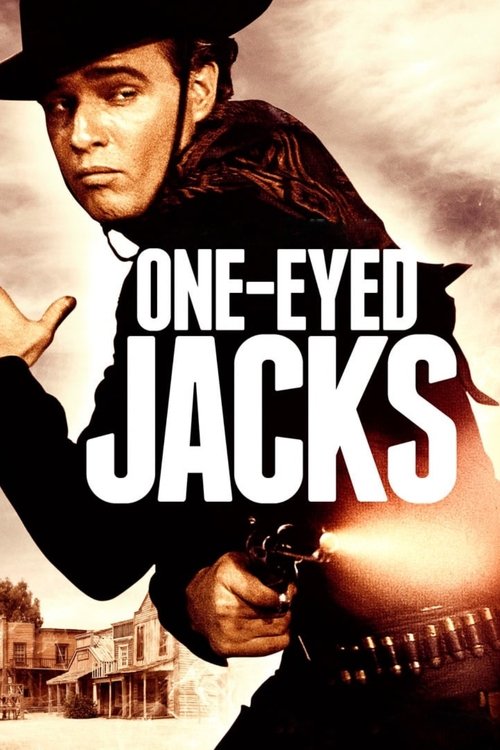
As the climax of One-Eyed Jacks unfolds, the tension builds in the dusty, sun-soaked town where Rio, played by Marlon Brando, has been grappling with his feelings of betrayal and revenge. The scene opens with Rio, now a hardened man shaped by his experiences, standing in the middle of the street, his eyes scanning the surroundings for the man who wronged him--Dad Longworth, portrayed by Karl Malden. The air is thick with anticipation, and the townsfolk watch from a distance, sensing the impending confrontation.
Rio's internal conflict is palpable as he recalls the past--the friendship and partnership he once shared with Longworth, who had betrayed him by stealing his money and running off with his girlfriend, Louisa. The emotional weight of this betrayal fuels Rio's desire for retribution. He is not just seeking vengeance; he is also trying to reclaim his lost honor and the life that was taken from him.
As the sun begins to set, casting long shadows across the town, Rio finally spots Longworth. The two men face each other, the tension crackling in the air. Longworth, now a lawman, tries to assert his authority, but Rio stands firm, his resolve unyielding. The dialogue between them is charged with history and pain, each word a reminder of their shared past and the betrayal that has led them to this moment.
In a dramatic turn, the confrontation escalates into violence. Rio draws his gun, and in a swift, decisive action, he shoots Longworth. The sound of the gunshot echoes through the empty streets, a stark punctuation to their tumultuous relationship. Longworth falls to the ground, his life extinguished in an instant, leaving behind the weight of his choices and the consequences of his betrayal.
As the dust settles, Rio stands over Longworth's body, a mixture of triumph and sorrow washing over him. He has avenged his past, but the victory feels hollow. The emotional toll of the confrontation is evident on his face; he has lost not only a friend but also a part of himself in the process. The camera lingers on Rio, capturing the complexity of his emotions--relief, anger, and a profound sense of loss.
In the final moments of the film, Rio mounts his horse and rides away from the town, leaving behind the chaos and the memories that haunt him. The landscape stretches out before him, vast and empty, symbolizing both freedom and isolation. As he disappears into the horizon, the audience is left to ponder the cost of revenge and the emptiness that often accompanies it.
The fates of the main characters are sealed in this final act. Rio, having avenged his betrayal, is left to navigate a future that is uncertain and lonely. Longworth, having met his end, serves as a reminder of the consequences of betrayal and the fragility of trust. Louisa, who has been caught in the crossfire of their conflict, is left to grapple with the aftermath of their choices, her future now uncertain as well. The film closes on a note of ambiguity, leaving the audience to reflect on the themes of loyalty, betrayal, and the cyclical nature of violence.
Is there a post-credit scene?
One-Eyed Jacks, produced in 1961, does not have a post-credit scene. The film concludes with a dramatic and emotional climax, focusing on the resolution of the central conflict between the characters. After a tense showdown, the story wraps up without any additional scenes or epilogues after the credits. The film ends on a poignant note, emphasizing themes of betrayal, revenge, and the complexities of friendship, leaving the audience to reflect on the characters' fates as the credits roll.
What motivates Rio to seek revenge against Dad Longworth?
Rio, played by Marlon Brando, is driven by a deep sense of betrayal and a desire for justice after Dad Longworth, portrayed by Karl Malden, double-crosses him during a robbery. This betrayal not only costs Rio his freedom but also leads to the death of his partner. The emotional weight of this betrayal fuels Rio's quest for revenge, as he grapples with feelings of anger, loss, and the need to reclaim his honor.
How does the relationship between Rio and Louisa develop throughout the film?
Rio's relationship with Louisa, played by Pina Pellicer, evolves from initial attraction to a deeper emotional connection. Louisa represents a chance for Rio to find redemption and a new life away from his past. As they grow closer, Rio's protective instincts surface, and he becomes increasingly conflicted about his violent past and the implications of his revenge on their future together.
What role does the setting of Monterey play in the story?
The coastal town of Monterey serves as a backdrop that enhances the film's themes of isolation and conflict. The picturesque yet rugged landscape mirrors Rio's internal struggles and the tumultuous relationships he navigates. The setting also provides a stark contrast to the violent events that unfold, emphasizing the tension between the beauty of the environment and the darkness of Rio's quest for vengeance.
How does Dad Longworth manipulate the situation to his advantage?
Dad Longworth uses his position of power and influence to manipulate those around him, particularly Rio and the townspeople. He presents himself as a respectable figure while hiding his treacherous nature. His ability to charm and deceive allows him to maintain control over the narrative, making it difficult for Rio to rally support against him. This manipulation deepens Rio's sense of isolation and fuels his determination to confront Longworth.
What is the significance of the poker game scene in the film?
The poker game scene serves as a pivotal moment that encapsulates the themes of chance, risk, and betrayal. It highlights the tension between the characters, particularly between Rio and Dad Longworth, as they engage in a high-stakes game that mirrors their larger conflict. The stakes are not just monetary; they represent their fates and the unresolved animosities between them. This scene underscores the film's exploration of trust and deception, setting the stage for the inevitable confrontation.
Is this family friendly?
One-Eyed Jacks, produced in 1961, is not considered family-friendly due to several potentially objectionable or upsetting scenes and themes. Here are some aspects that may be concerning for children or sensitive viewers:
-
Violence: The film contains scenes of gunfights and physical confrontations that can be intense and graphic, showcasing the harsh realities of life in the Old West.
-
Murder: There are instances of murder and betrayal that are central to the plot, which may be disturbing for younger audiences.
-
Themes of Betrayal and Revenge: The emotional weight of betrayal and the quest for revenge are prominent throughout the film, leading to dark and heavy moments that may be unsettling.
-
Sexual Content: There are suggestive themes and scenes involving relationships and seduction that may not be appropriate for younger viewers.
-
Emotional Turmoil: Characters experience deep emotional struggles, including guilt, anger, and despair, which may be difficult for sensitive viewers to process.
Overall, the film's mature themes and content make it more suitable for adult audiences.