





























Popular
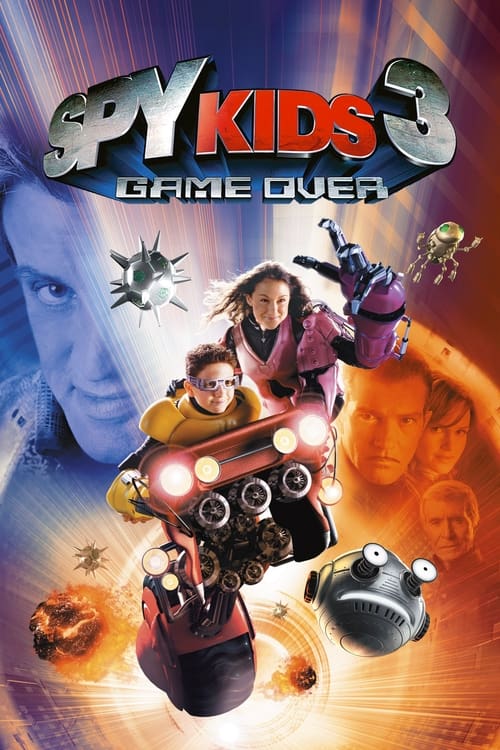
What is the significance of the Game Over device in Spy Kids 3-D: Game Over?
How does Juni Cortez's character develop throughout the film?
What role does the Toymaker play in the story, and what are his motivations?
What challenges do Juni and Carmen face in the virtual game?
How does the film incorporate 3D technology, and what impact does it have on the story?
Should I watch it?
Ask Your Own Question

What is the plot?
Sorry, we aren't able to watch and write up a full detailed plot yet. Check back in a few days.







What is the ending?
At the end of Spy Kids 3-D: Game Over, Juni Cortez successfully defeats the villain, the Toymaker, in the virtual game. He rescues his sister, Carmen, and they escape the game together. The siblings reunite with their family, and the Toymaker is ultimately defeated, losing his power over the game.
As the climax of the film unfolds, Juni Cortez enters the virtual world of the game, determined to save his sister, Carmen, who has been trapped inside. The game is a high-stakes environment filled with various challenges and obstacles, all designed by the Toymaker, a villainous character who seeks to control the minds of children through his game.
Juni, equipped with a new set of skills and a strong sense of determination, navigates through the game's levels. He encounters various characters, including the mysterious and wise figure known as the "Grandpa," who provides him with guidance. Juni's internal motivation is fueled by his desire to prove himself and to save his sister, showcasing his growth from a hesitant young boy to a brave hero.
As he progresses, Juni faces off against the Toymaker's minions and overcomes numerous challenges, each one testing his courage and ingenuity. The stakes rise as he finally confronts the Toymaker in a dramatic showdown. The Toymaker, who has been manipulating the game and its players, underestimates Juni's resolve. In a thrilling battle, Juni uses his quick thinking and the skills he has acquired throughout the game to outsmart the Toymaker.
In a pivotal moment, Juni manages to defeat the Toymaker, causing the game to destabilize. Carmen, who has been fighting her own battles within the game, is freed from her virtual prison. The siblings share a heartfelt reunion, filled with relief and joy, as they realize they have overcome the odds together.
As they escape the collapsing game, the siblings are transported back to the real world, where they are greeted by their family. Their parents, Gregorio and Ingrid Cortez, express their pride in their children, acknowledging their bravery and teamwork. The family embraces, symbolizing the strength of their bond and the importance of working together in the face of adversity.
In the final moments, the Toymaker is left powerless, his plans thwarted. The film concludes with a sense of hope and unity, as the Cortez family stands together, ready to face whatever challenges may come next, having proven that they can rely on each other and that love and courage can conquer even the most formidable foes.
Is there a post-credit scene?
In "Spy Kids 3-D: Game Over," there is no post-credit scene. The film concludes with the resolution of the main plot, where Juni Cortez successfully defeats the villain, Toymaker, and saves his sister, Carmen. The story wraps up with a sense of family unity and the importance of teamwork, leaving no additional scenes or content after the credits. The focus remains on the adventure and the bond between the siblings throughout the film.
What is the significance of the Game Over device in Spy Kids 3-D: Game Over?
The Game Over device is a powerful virtual reality game created by the villainous Toymaker, which traps players inside the game. It serves as the central conflict of the film, as the characters must navigate through various levels to rescue their friends and family who are stuck in the game. The device symbolizes the dangers of technology and the importance of teamwork and bravery.
How does Juni Cortez's character develop throughout the film?
Juni Cortez starts as a reluctant hero, feeling overshadowed by his sister Carmen and doubting his abilities. As he enters the virtual world of the game, he faces numerous challenges that force him to confront his fears and insecurities. His journey is marked by moments of self-discovery, where he learns to trust himself and ultimately embraces his role as a spy, culminating in his determination to save Carmen and defeat the Toymaker.
What role does the Toymaker play in the story, and what are his motivations?
The Toymaker, portrayed by Sylvester Stallone, is the main antagonist of the film. He is a brilliant but twisted inventor who creates the Game Over device to trap children in his virtual world, seeking to control them and use their energy for his own gain. His motivations stem from a desire for power and control, as well as a deep-seated resentment towards the world outside his game, which he views as flawed and unworthy.
What challenges do Juni and Carmen face in the virtual game?
In the virtual game, Juni and Carmen face a series of increasingly difficult challenges, including battling various enemies, navigating treacherous landscapes, and overcoming obstacles that test their skills and teamwork. They encounter characters like the mysterious and wise 'Grandpa' who provides guidance, and they must also confront the Toymaker's minions, all while racing against time to save their captured allies.
How does the film incorporate 3D technology, and what impact does it have on the story?
Spy Kids 3-D: Game Over utilizes 3D technology to enhance the visual experience, immersing the audience in the virtual world of the game. The use of 3D effects is particularly impactful during action sequences, where objects appear to leap off the screen, creating a sense of depth and excitement. This technology not only serves as a visual gimmick but also emphasizes the film's themes of adventure and the blurring of reality and virtual experiences.
Is this family friendly?
"Spy Kids 3-D: Game Over" is generally considered a family-friendly film, aimed at children and young audiences. However, there are a few scenes and aspects that might be potentially objectionable or upsetting for some children or sensitive viewers:
-
Intense Action Sequences: The film features various action scenes that include high-stakes challenges and confrontations, which may be intense for younger viewers.
-
Villainous Characters: The main antagonist, the Toymaker, has a somewhat sinister presence, and his motivations can be unsettling. His ability to trap characters in a virtual world may evoke feelings of fear or anxiety.
-
Virtual Reality Dangers: The concept of being trapped in a video game can be distressing, especially for children who may not fully understand the distinction between reality and virtual experiences.
-
Mild Frightening Imagery: Some visual effects and creatures within the game may be startling or frightening, particularly for younger children.
-
Emotional Stakes: The film explores themes of family, bravery, and overcoming fears, which may evoke strong emotions. Characters face challenges that test their courage and resolve, which could resonate deeply with sensitive viewers.
Overall, while the film is designed for a younger audience, these elements may require parental guidance for particularly sensitive children.





