





Popular
Who is Seong-hee, and why does she install home cameras in her house?
Who is Ji-woo, and what happens to her during the story?
What role does the babysitter or nanny play in Homecam?
What is the unfamiliar presence or sinister force that appears through the home cameras?
Why is the house investigation important to the story?
Should I watch it?
Ask Your Own Question

What is the plot?
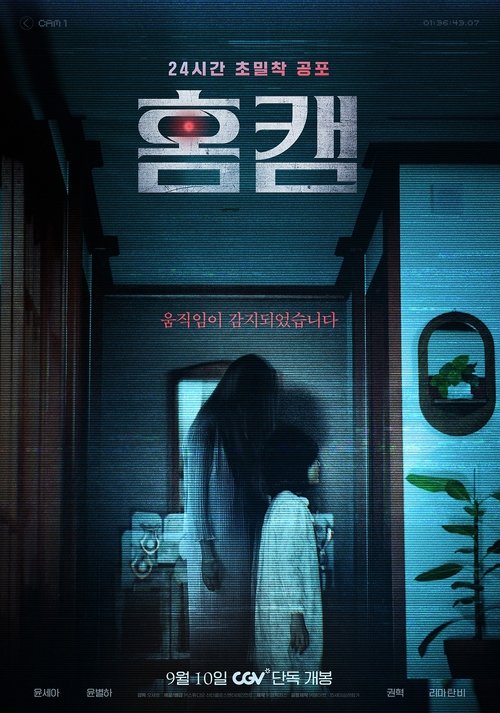
Sung-hee's life is already strained before the horror begins: she is a single mother trying to hold a fragile household together while caring for her young, sick daughter Ji-woo in a new apartment, and the practical solution she chooses is to install home cameras everywhere so she can watch over her child while she works. In other source framings, she is an insurance investigator named Seong-hee, and the film's first turning point comes when she is drawn into a case involving a mysterious death and begins noticing an unfamiliar presence through the very home camera she relies on for safety. Those two versions of the premise converge on the same idea: the camera that is supposed to protect her becomes the thing that exposes her to something far more sinister.
The story opens in the quiet, watchful routine of a mother trying to impose order on uncertainty. Sung-hee moves through the apartment with the anxious efficiency of someone who has had to become both parent and guard dog, checking feeds, scanning rooms, and trusting the tiny black lenses mounted around the home more than her own exhausted eyes. Ji-woo, meanwhile, is presented as vulnerable and hard to read; she is ill, and that illness makes Sung-hee's fear feel ordinary at first, like the kind of fear any parent feels when a child is sick and the night stretches long and dark. To help manage the situation, she hires a babysitter, a woman whose name is rendered inconsistently in the available material as Sujene, Sugene, or a similar transliteration. That small domestic arrangement immediately introduces tension, because the house is no longer only a family space; it becomes a monitored, contested environment where every movement can be replayed, questioned, and misunderstood.
At first, the cameras seem to do what they are meant to do. They turn the apartment into a controlled grid of domestic surveillance, a web of screens that promises proof, clarity, and reassurance. But that promise is poisoned almost immediately when Sung-hee notices that the feed shows something that should not be there: a strange little girl in a white dress standing in Ji-woo's room. The image is brief, but it lands like a cold shock. Sung-hee reacts exactly as a frightened mother would--she calls the babysitter at once and asks whether anyone else has been brought into the apartment. The babysitter insists otherwise, and the scene ends with the unnerving possibility that the camera has captured either a haunting, a mistake, or a lie. The film then uses the ordinary rhythm of the next day to sharpen the dread. Sung-hee apologizes to Ji-woo for the previous day's disturbance, but Ji-woo acts as though nothing happened, which only makes the situation more disturbing rather than less. The child's calmness feels wrong; it creates the impression that she knows something her mother does not, or that the event has already slipped beyond the boundaries of a simple explanation.
The babysitter returns with her face heavily made up, a detail that in the moment appears ordinary but slowly takes on the feel of concealment. Sung-hee, now fully suspicious, brings her into the bedroom and presses her about what happened. She asks whether the babysitter has ever given lipstick to Ji-woo and directly brings up the little girl in the white dress seen on camera. The confrontation is important because it shows the film's central mechanism: the camera does not simply reveal the supernatural, it also becomes an instrument of accusation, turning mundane objects like lipstick, makeup, and a child's room into possible evidence of guilt or possession. The babysitter remains composed and admits that she did give lipstick to Ji-woo, but she denies any connection to the other child, insisting that the little girl really has nothing to do with her. That denial does not settle anything. Instead, it deepens the uncertainty, because calmness can read as innocence, guilt, or a practiced ability to hide panic.
As the story pushes forward, the household starts feeling less like a home and more like a sealed chamber of surveillance. Sung-hee repeatedly checks the security camera feeds from work and from elsewhere, trying to stabilize reality by watching it in real time, but the cameras keep returning the same impossible image: the little girl in the white dress reappears on screen. This recurring apparition intensifies the sense that the apartment is being infiltrated by something that can only be seen through technology, as though the camera is not merely recording an intrusion but translating a haunting into visible form. The intercom becomes another source of terror. Sung-hee uses it to call out repeatedly to the babysitter, but the other person does not seem to hear her, reinforcing the idea that communication itself is breaking down inside the apartment. The house is full of devices meant to connect and protect, yet every device only seems to widen the gap between the mother and whatever is unfolding around her daughter.
The film's other major thread, as reflected in the alternative synopsis, frames Sung-hee or Seong-hee as an insurance investigator probing a mysterious death. In that version of the story, she encounters footage or testimony tied to a house where someone has died under suspicious circumstances, and the home camera becomes the tool that traps her in the truth rather than shielding her from it. A key revelation in the recap material concerns a woman whose mother calls her and insists that her daughter's death "wasn't an accident." That line is crucial because it turns the film from a pure ghost story into a story about contested interpretation. Someone believes possession is responsible; another investigation suggests the daughter had a history of mental illness, making the behavior in the video less supernatural than tragic or misunderstood. The film thus keeps forcing the viewer to hold two explanations at once: a rational one anchored in family history and psychiatric illness, and a supernatural one grounded in the image of a child who may not be what she seems.
That tension becomes the engine of the middle act. Sung-hee's distrust of the babysitter grows as she replays the footage, compares what she sees with what the adults tell her, and begins to believe that the apartment is not merely haunted but compromised by someone with a hidden relationship to the past. The unexplained little girl in white keeps functioning as a visual riddle. She appears suddenly, often in liminal spaces like Ji-woo's room, and the camera catches her with an eerie stillness that makes the domestic setting feel hostile. The apartment lights, hallways, and bedroom corners become charged with the possibility that another child is present, a child who should not exist in the way the family understands it. The result is escalating paranoia: every glance at a feed becomes a test, every absence becomes suspicious, and every silence feels like the pause before something lunges forward.
A further revelation hinted in the recap snippet is the existence of a photograph of a woman taken abroad, which seems to play into the backstory surrounding the haunting and the babysitter's connection to the larger mystery. Although the available sources do not provide the full chain of events, they do indicate that the investigation leads toward the babysitter's family and toward the possibility that a daughter's death was concealed, misrepresented, or spiritually unresolved. The line "wasn't an accident" is the emotional fulcrum of this section of the film. It suggests that the central trauma is not only supernatural possession but also grief corrupted by denial, and that the family's version of events has been shaped to protect someone, or something, from scrutiny. In a horror film built around cameras, this matters enormously: the devices capture images, but they do not automatically produce truth. They can reveal the outline of a body in a white dress, yet still leave the human meaning of that sight unsettled.
As the suspense tightens, the cameras stop feeling like helpful eyes and begin to resemble traps. The house, described in the more action-oriented synopsis as being filled with cams everywhere, becomes the stage for Sung-hee's descent into panic. The images no longer simply confirm her fears; they overwhelm her with them, boxing her into a loop of watching, doubting, and watching again. The film's visual grammar, at least as described in the available material, centers on that feeling of being cornered by one's own technology. Each feed is a possible witness, but also a possible liar. Each room is observed, but not made safe. The protagonist's emotional state follows suit: she shifts from tired vigilance to active fear, then to mounting terror as the possibility of an external presence gives way to the dread that the threat may have already entered her daughter's life in a deeper, more intimate way.
The climax arrives when the mystery around the babysitter, the little girl in white, and the girl in the white dress on camera converges with the story of the "death" that sits beneath the plot. The recap material points toward a revelation that the child's behavior and the haunting are tied to a death that someone refuses to accept as accidental, and that the explanation offered by one side--possession--conflicts with the investigative evidence that points to mental illness. That clash is the movie's central confrontation: not only between believer and skeptic, but between an image and an interpretation. Sung-hee's desperate efforts to verify what is happening through the cameras do not resolve the contradiction; instead, they force her to confront the possibility that the thing haunting the apartment is rooted in a human tragedy that has been distorted by fear, blame, and concealment. In horror terms, the answer is never comforting. Whether the presence is genuinely supernatural or the manifestation of unresolved trauma, the result is the same: the home is no longer governable.
The final movement, according to the sources available, does not provide a fully detailed scene-by-scene ending, but it does make clear the film's endpoint: Sung-hee is trapped in terror inside her own home as the cameras continue recording her unraveling. That image is the ending's emotional logic, even if the exact last exchange is not fully preserved in the accessible material. The film closes on the collapse of the safety system she built for Ji-woo. The homecam network, once intended as a shield, becomes the architecture of fear itself. Whatever final revelation occurs around the babysitter, the child in white, and the family death, it confirms that the surveillance did not protect anyone from the past. It merely made the past visible long enough to destroy the illusion that the apartment was separate from it.
What remains strongest at the end is the image of Sung-hee staring into a feed that should have been ordinary and finding, instead, the impossible staring back at her. The movie's horror comes from that reversal: the mother watches in order to protect, but the act of watching exposes the hidden wound, the buried family truth, and the presence moving through the child's room. By the time the terror reaches its peak, the apartment feels less like a place of refuge than a sealed container for grief, suspicion, and something that may be either a ghost or a lie given form. The last feeling the story leaves behind is not just dread, but helplessness--the knowledge that every camera in the house has seen too much, and yet still not enough to save Ji-woo, or Sung-hee, from what has already entered their lives.


What is the ending?
Seong-hee installs home cameras to protect her daughter, but the footage leads her into a terrifying series of events. By the ending, the child's condition and the strange presence in the house are tied together, and Seong-hee is left facing the full horror that has been building inside her home.
In the final stretch of the story, Seong-hee keeps watching the camera feeds as the disturbances in the apartment grow worse. The cameras, which she installed to make the home feel safer, instead become the thing that exposes the danger inside it. The footage reveals an unsettling presence connected to the daughter, and the situation stops being something Seong-hee can explain away as a strange noise or a bad night.
As the ending unfolds, Seong-hee is forced to confront what has been happening to her child and in the house itself. The film's final movement centers on her trying to respond to the threat before it fully consumes the family, with the camera images serving as the last place where the truth becomes visible. The daughter's fate is tied to the possession-like terror described in the film's synopsis, and the ending leaves her as the person most directly affected by the evil that entered the home.
Sung-hee/Seong-hee's fate is that she remains the central survivor figure still confronting the aftermath of what the cameras captured, while the daughter is shown as the most endangered main character at the climax of the story. The babysitter's role is part of the household setup that the film uses to build the final crisis, but the available results do not provide a full scene-by-scene breakdown of her exact ending.
I can give you a more exact scene-by-scene ending only if you want me to base it on the recap video and summarize that version closely.
Is there a post-credit scene?
No. According to What's After the Credits?, Home, The (2025) has no extra scene during or after the credits.
The listing also notes that the first part of the credits plays over an extreme close-up of a human eye, but it does not describe any postcredit or mid-credits scene.
Who is Seong-hee, and why does she install home cameras in her house?
Seong-hee is the film's central character: a single mother who is trying to balance work and parenting while caring for her young daughter, Ji-woo. She installs multiple home cameras because she wants to watch over her child more closely and feel safer about what is happening inside the house in real time.
Who is Ji-woo, and what happens to her during the story?
Ji-woo is Seong-hee's young daughter and the child Seong-hee is trying to protect. As the story develops, the strange events in the house intensify and the reports indicate that Ji-woo becomes possessed, forcing Seong-hee to fight to keep her family safe.
What role does the babysitter or nanny play in Homecam?
After struggling to manage work and home life, Seong-hee hires a full-time nanny or babysitter to help watch her daughter. That choice is part of the setup for the horror at home, because the cameras are meant to reassure Seong-hee but instead capture unsettling and sinister events in the house.
What is the unfamiliar presence or sinister force that appears through the home cameras?
The available plot descriptions say that Seong-hee first notices an unfamiliar presence through the home camera system, and then a sinister force begins creeping into the house. The sources do not fully identify the force in the brief summaries, but they clearly establish that the cameras are the medium through which the threat is first seen and experienced.
Why is the house investigation important to the story?
One version of the synopsis says Seong-hee becomes involved after investigating a house tied to a mysterious death, and that is where she encounters the presence through the home camera feed. This makes the house investigation central to the plot, because it connects her professional role to the supernatural terror that follows.
Is this family friendly?
No--based on the available information, Homecam (2025) is not family-friendly because it is a horror film centered on a mother using home cameras and then encountering "strange things" in the house.
Potentially upsetting or objectionable elements for children or sensitive viewers may include: - Scary supernatural or suspenseful content involving a child's home and surveillance cameras. - Disturbing imagery or jump scares, since the film is described as horror and the trailer notes "creepy stuff." - Child-in-danger tension or scenes that make a parent-child setting feel unsafe, which may be especially unsettling for younger viewers. - Anxiety-provoking home invasion / watched-at-home atmosphere, since the premise involves cameras throughout the house and unexplained events.
I don't have a detailed scene-by-scene content advisory from the available sources, so I can't confirm specific levels of violence, language, or gore; however, the horror premise alone makes it unsuitable for most children.